Blog › Business
AI in Business: Business
Insights on private AI, on-premise deployment, and building AI systems you actually own.
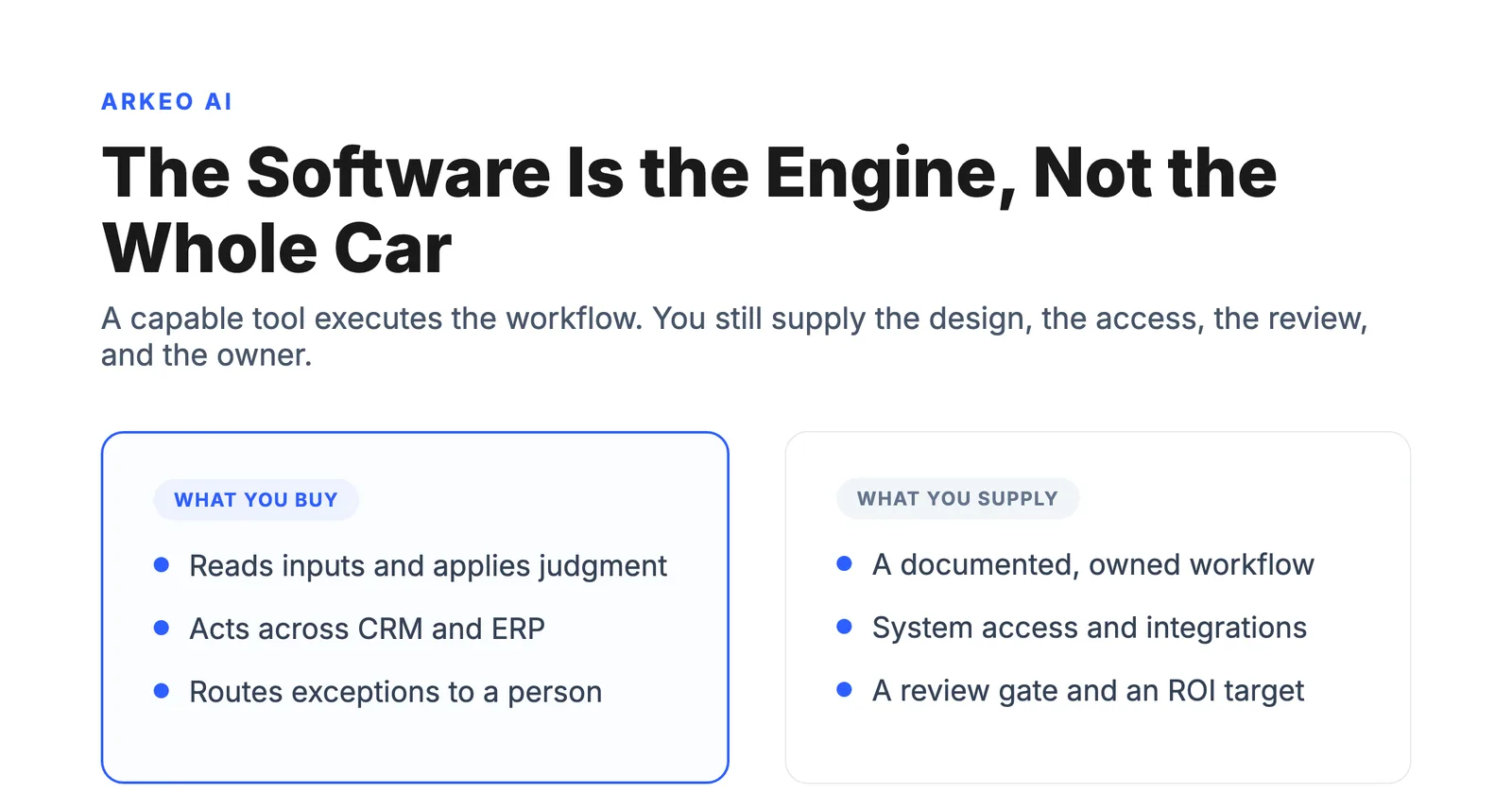 AIAI Workflow Automation Software: Buyer's LogicAI workflow automation software is necessary but not sufficient. Here is the buying logic that separates a tool that delivers from one that gets switched off.
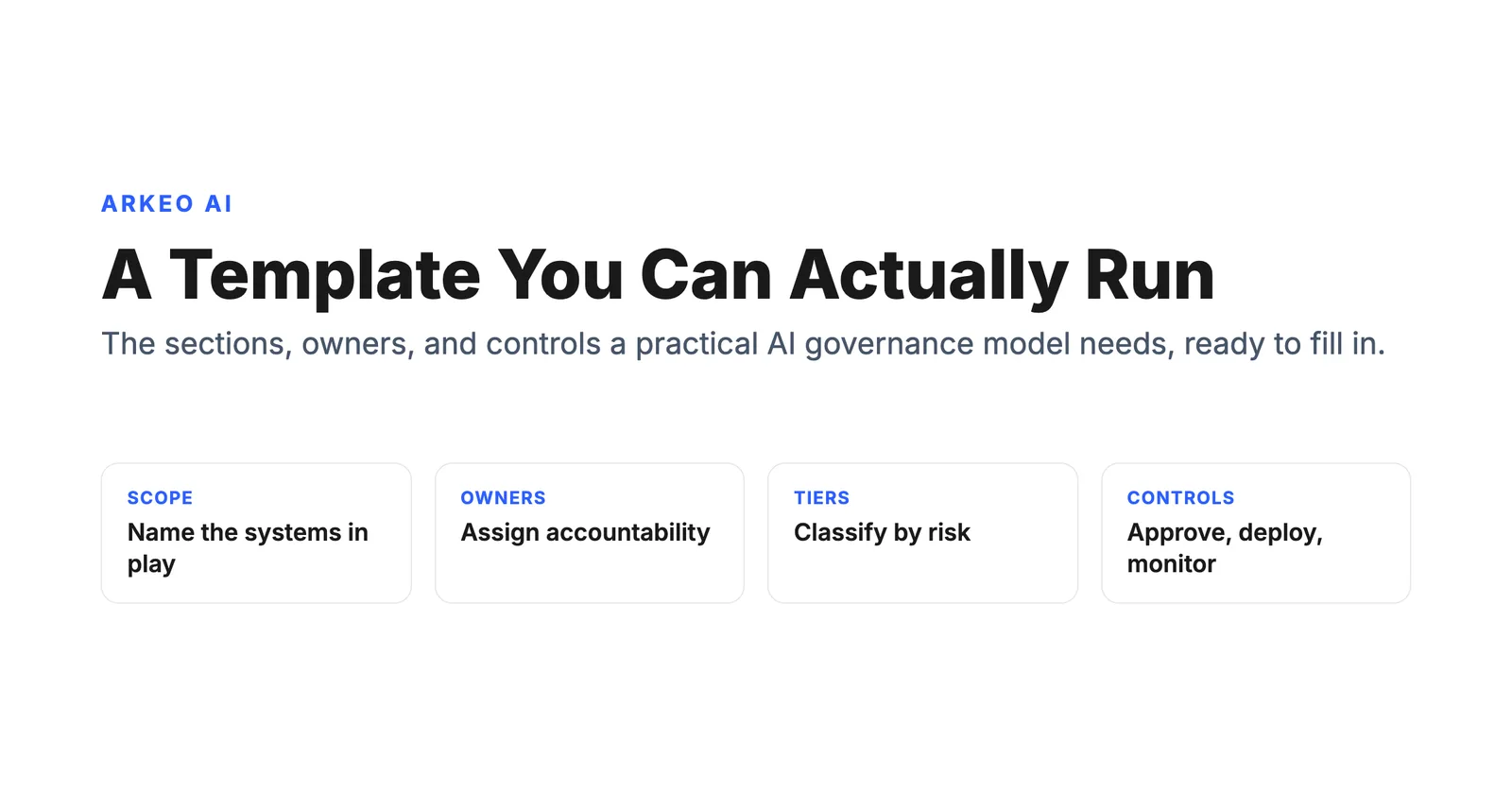 AIAI Governance Framework Template You Can RunThe sections every AI governance framework template should contain, how to run a lean version or a mature one, the mistakes that make templates useless, and how to operationalize it.
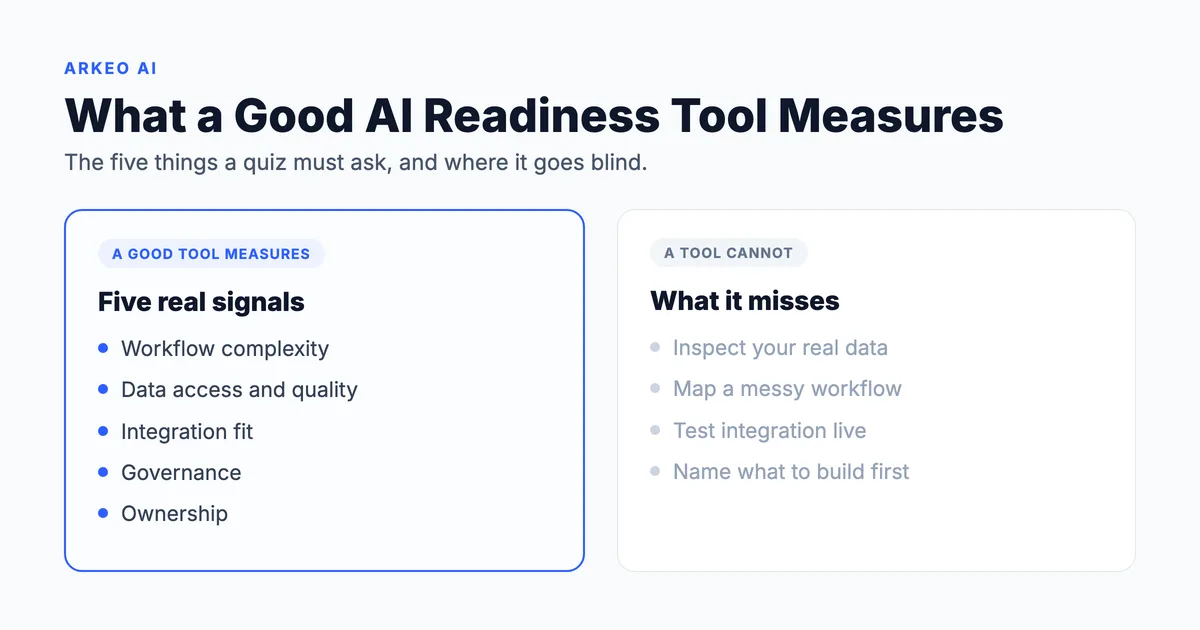 AIWhat a Good AI Readiness Assessment Tool MeasuresA free AI readiness assessment tool is great for a first-pass screen, but a generic quiz cannot plan your implementation. Here is what a good tool actually measures and the signals that mean you have outgrown it.
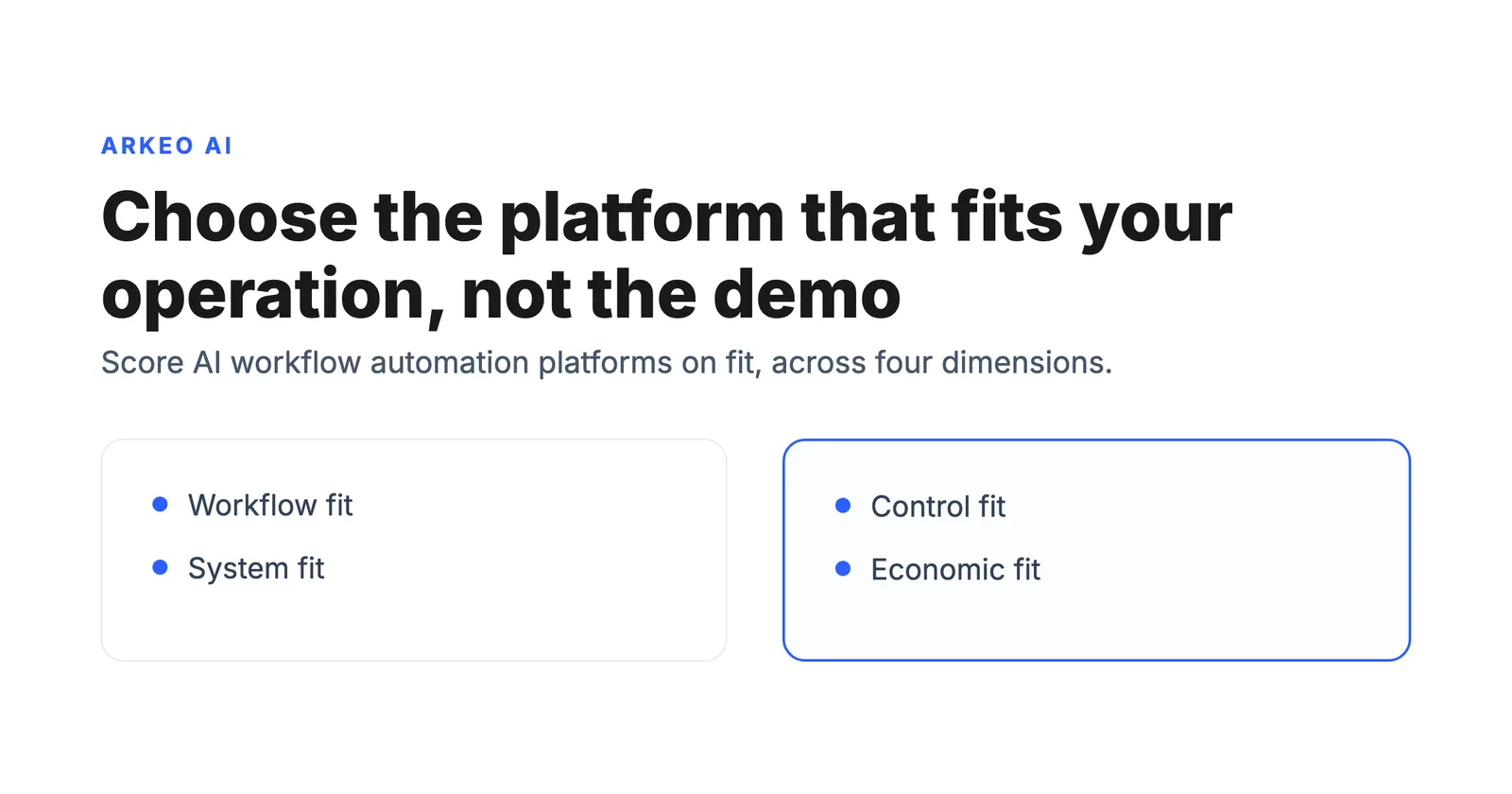 AIAI Workflow Automation Platform: How to ChooseA buyer's framework for evaluating an AI workflow automation platform on workflow fit, system access, control, and economics, not feature count.
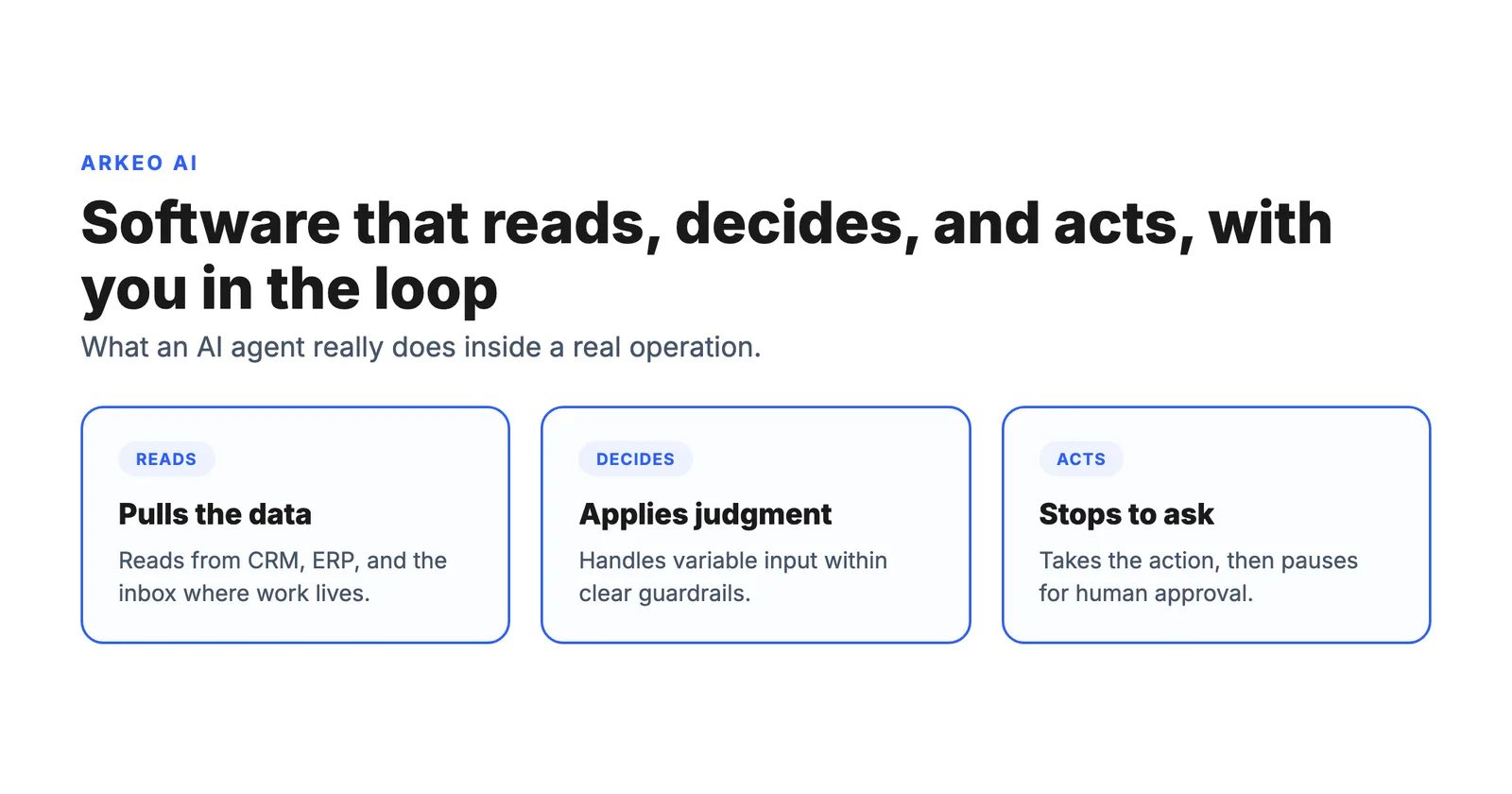 AIAI Agents for Business: A Practical GuideAI agents read, decide, and act inside your workflows with human checkpoints. This guide covers what they do, where they fit across sales, admin, finance, and operations, where most companies get them wrong, and how to decide what to build first.
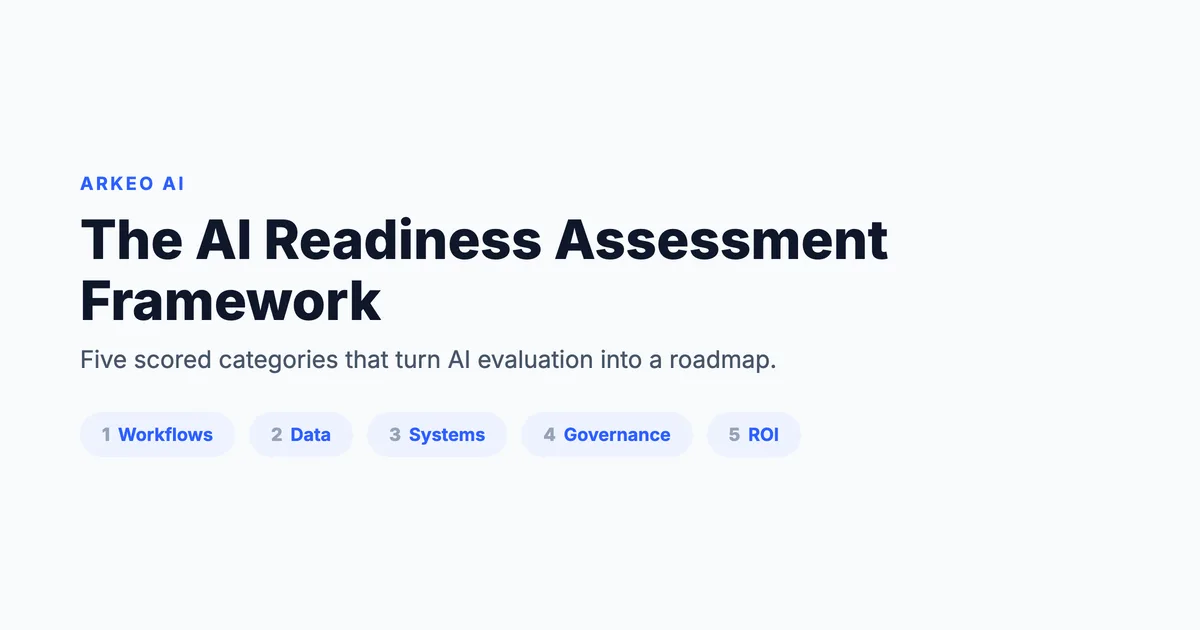 AIAI Readiness Assessment Framework: A Working ModelA working AI readiness assessment framework: five scored categories, diagnostic questions, and maturity bands that turn evaluation into a roadmap.
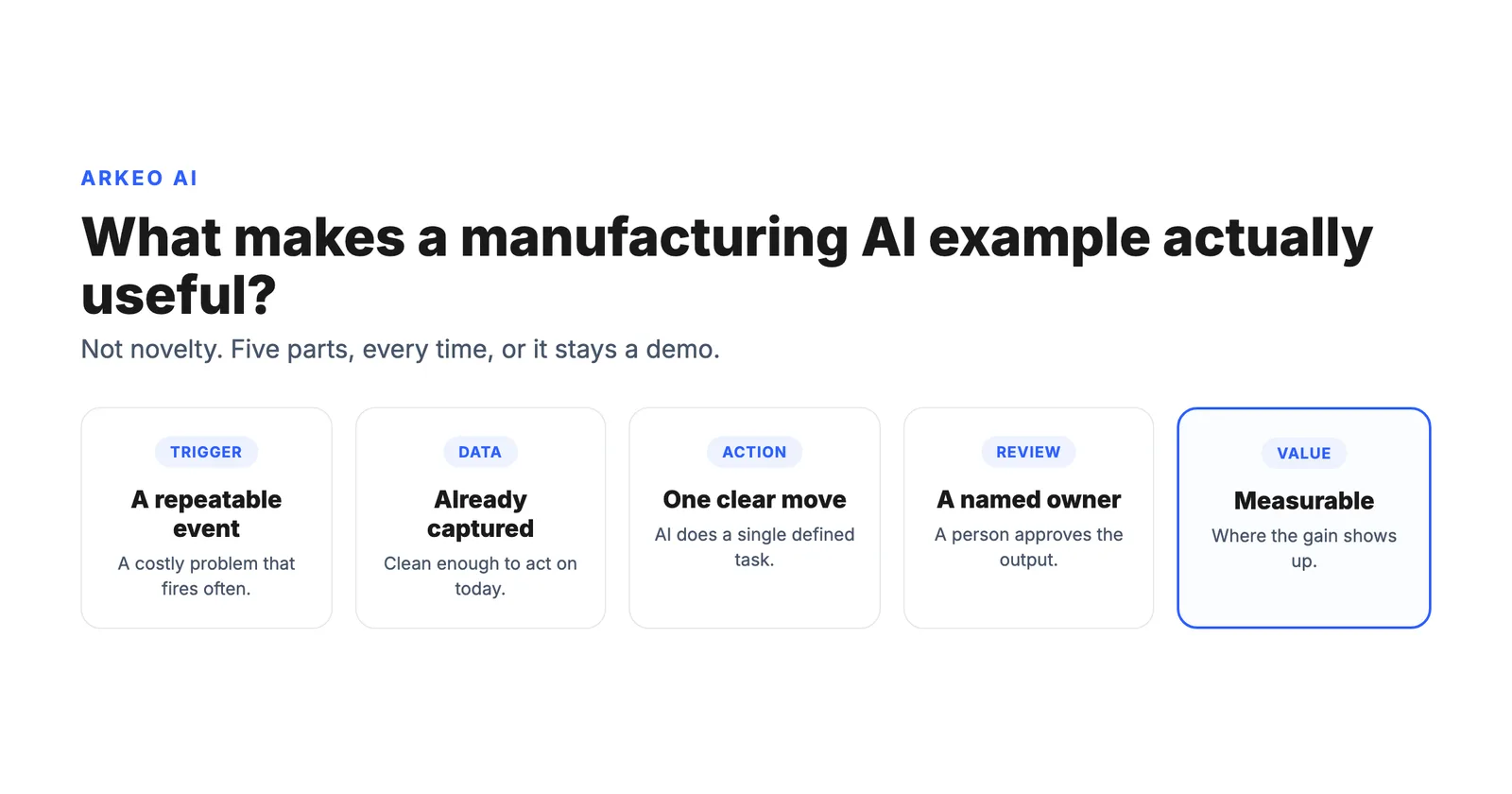 AIAI in Manufacturing Examples That Actually WorkA pattern library of AI in manufacturing examples organized by workflow, each with its trigger, data, the action AI takes, who reviews it, and where value shows up.
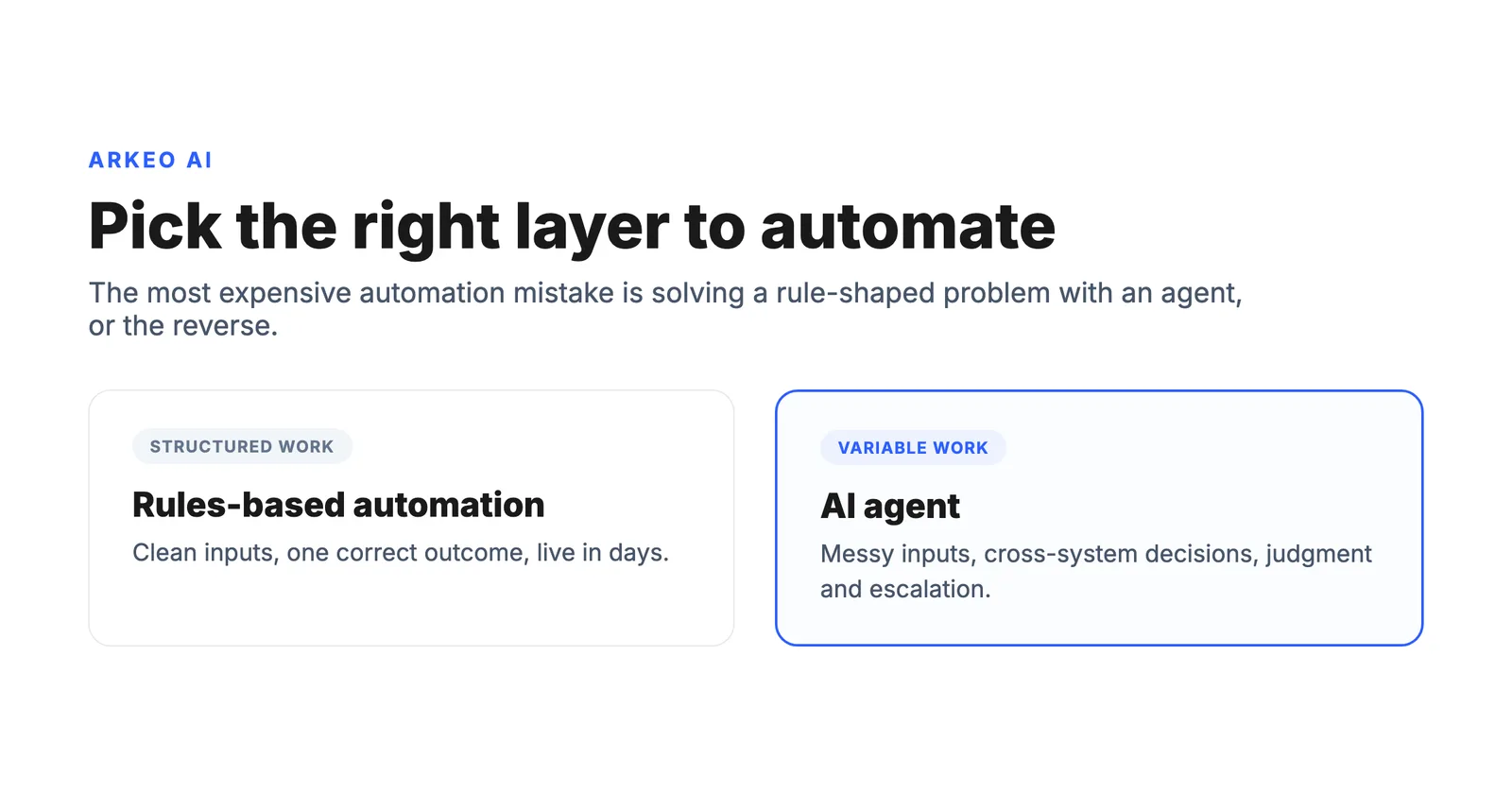 AIAI Agents for Business Automation: When You Need OneNot every automation problem needs an agent. A practical decision framework for when AI agents beat rules-based automation, and what to automate first.
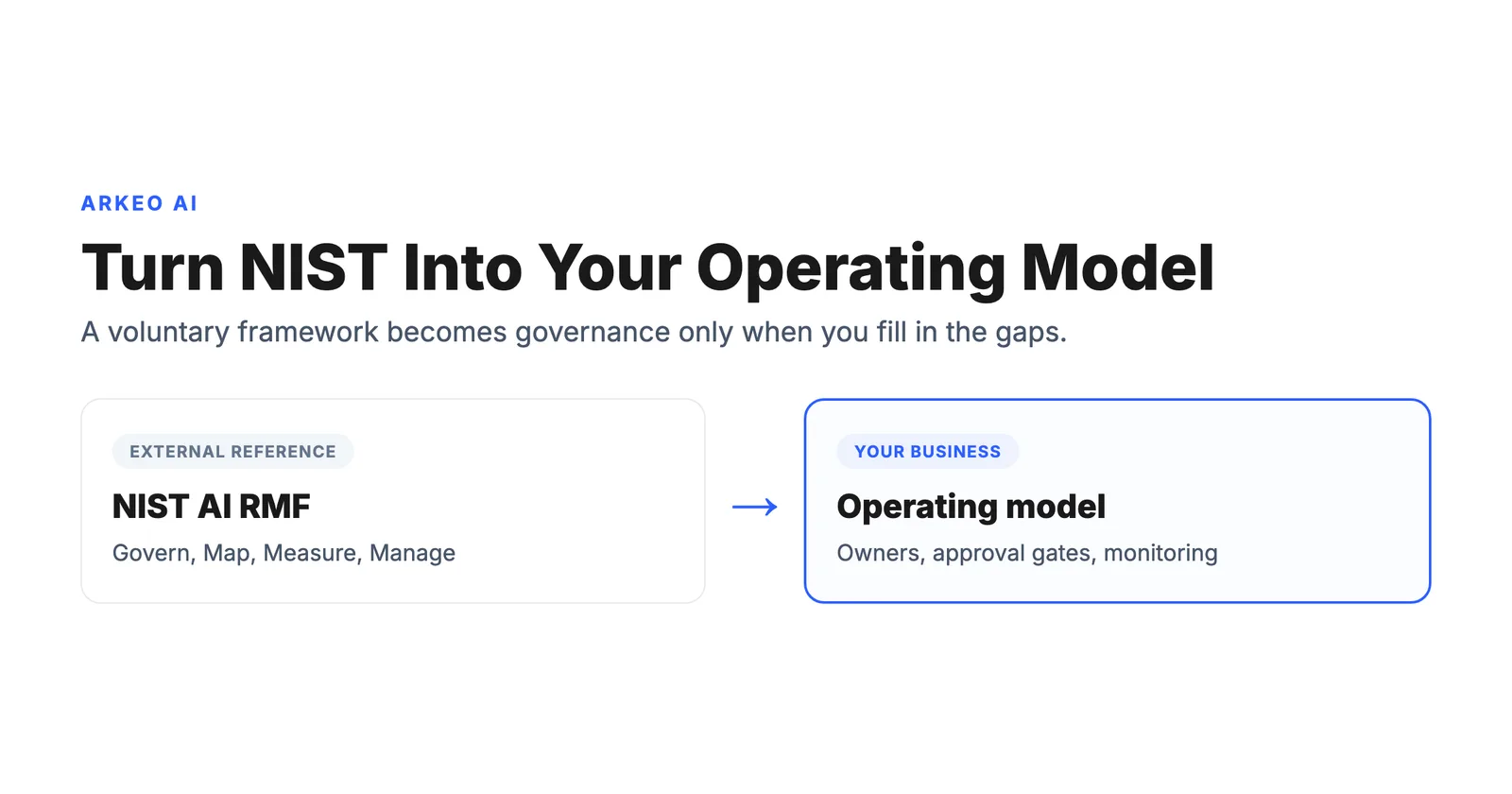 AIThe NIST AI Governance Framework, In PracticeNIST gives you a shared language for AI risk, not a ready-made operating model. Here is what the framework covers, what it leaves for you to define, and how to apply it to real deployment decisions.
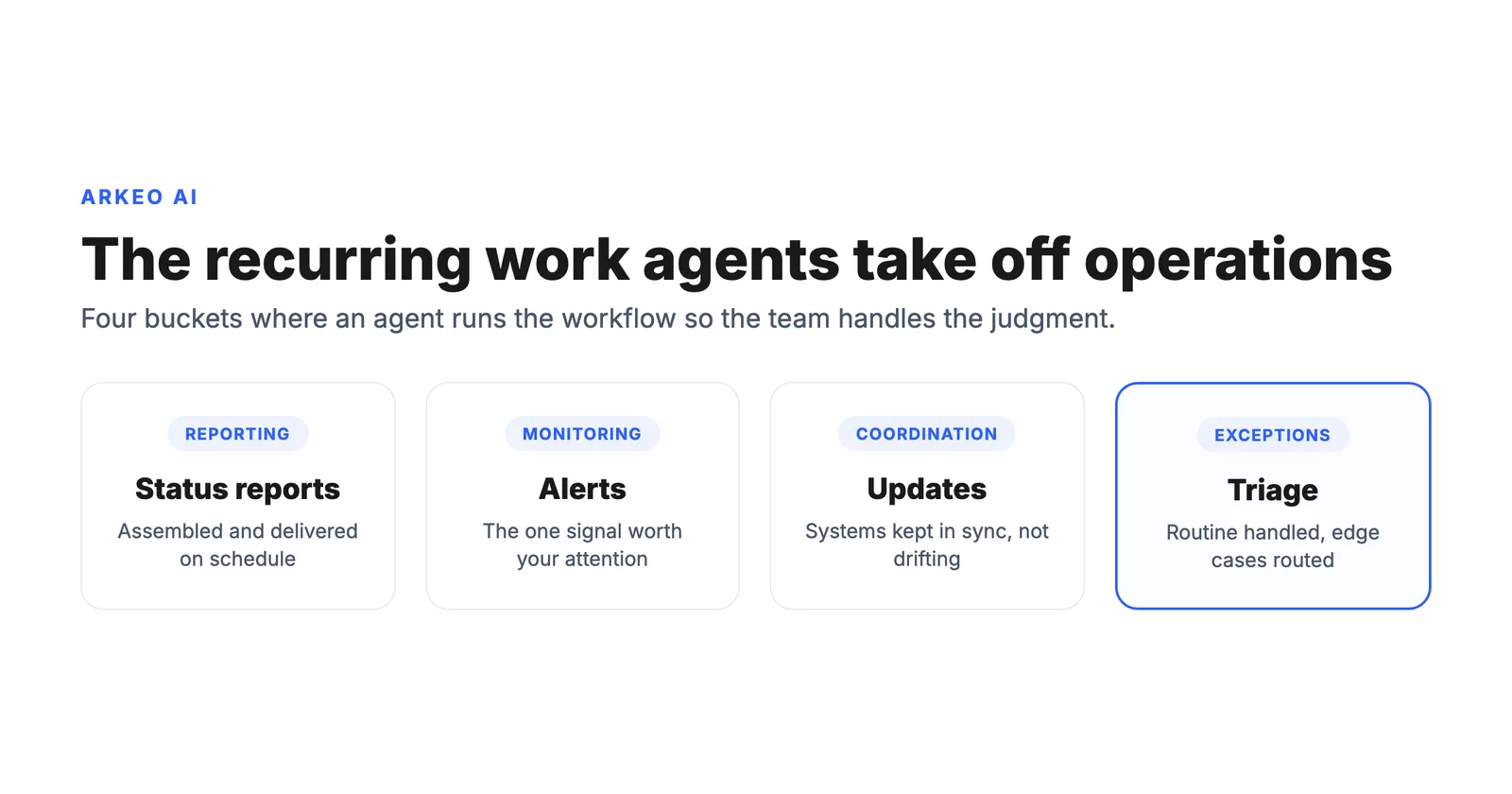 AIAI Agents for Operations TeamsA grounded look at AI agents for operations: the recurring reporting, monitoring, coordination, and exception-handling work they actually take off your team, and how to pick the first one.
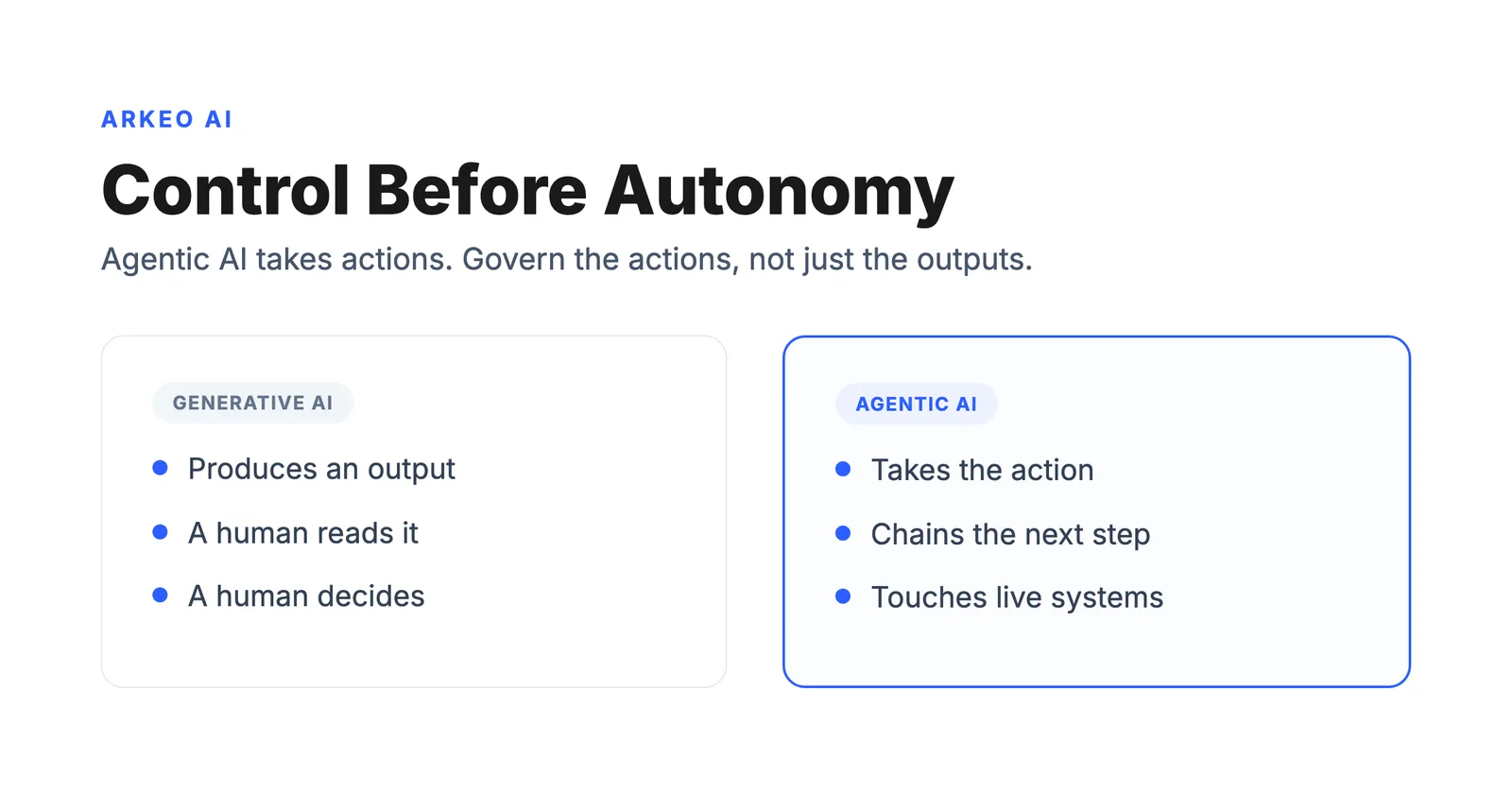 AIBuilding an Agentic AI Governance FrameworkAgentic AI takes actions, not just outputs. Here is what an agentic AI governance framework must control: permissions, approvals, rollback, monitoring, and escalation.
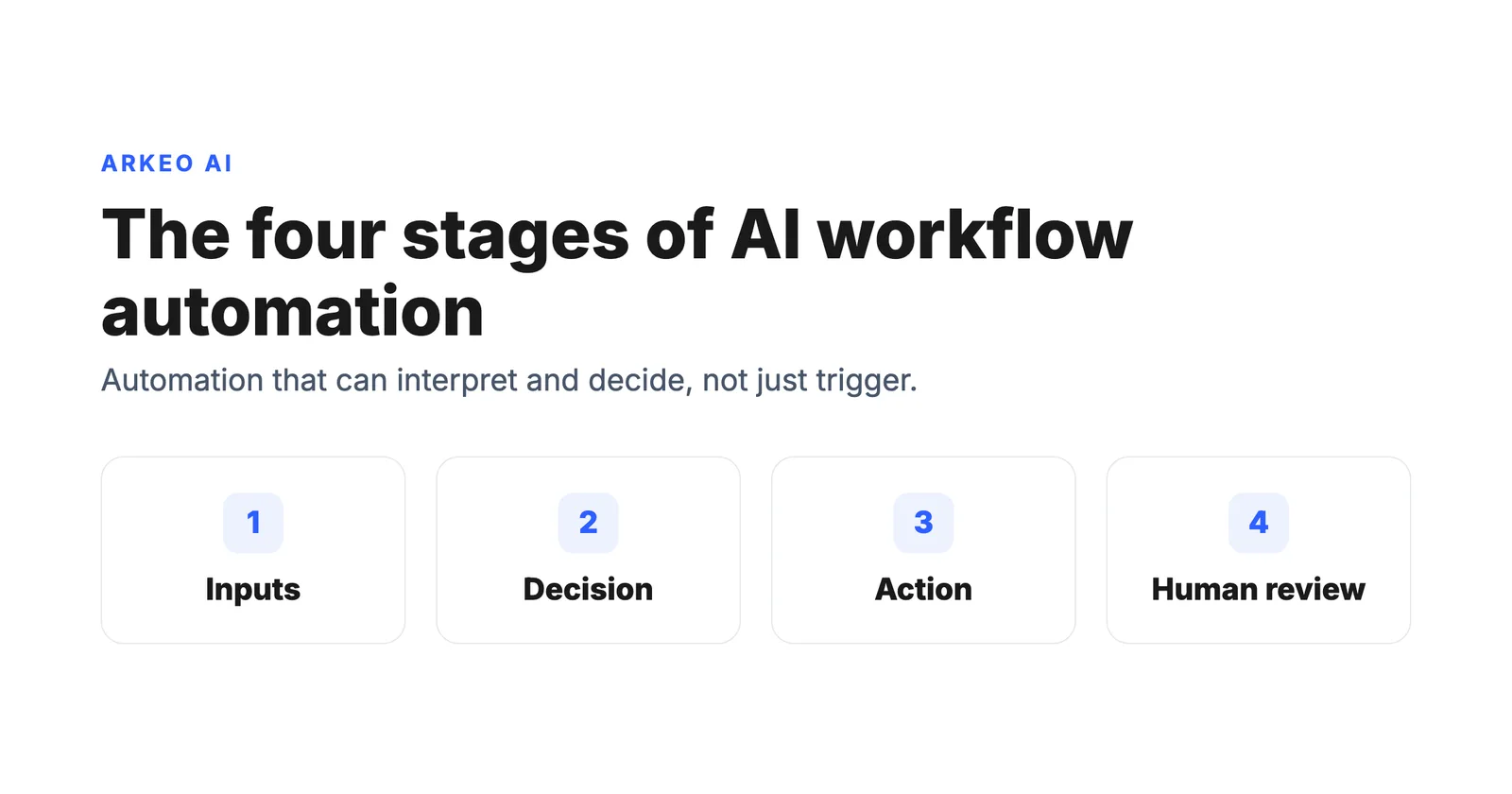 AIWhat Is AI Workflow Automation?AI workflow automation runs a business process end to end, reading inputs, deciding, acting across systems, and routing to a human for review. Here is the clean definition and a simple mental model.
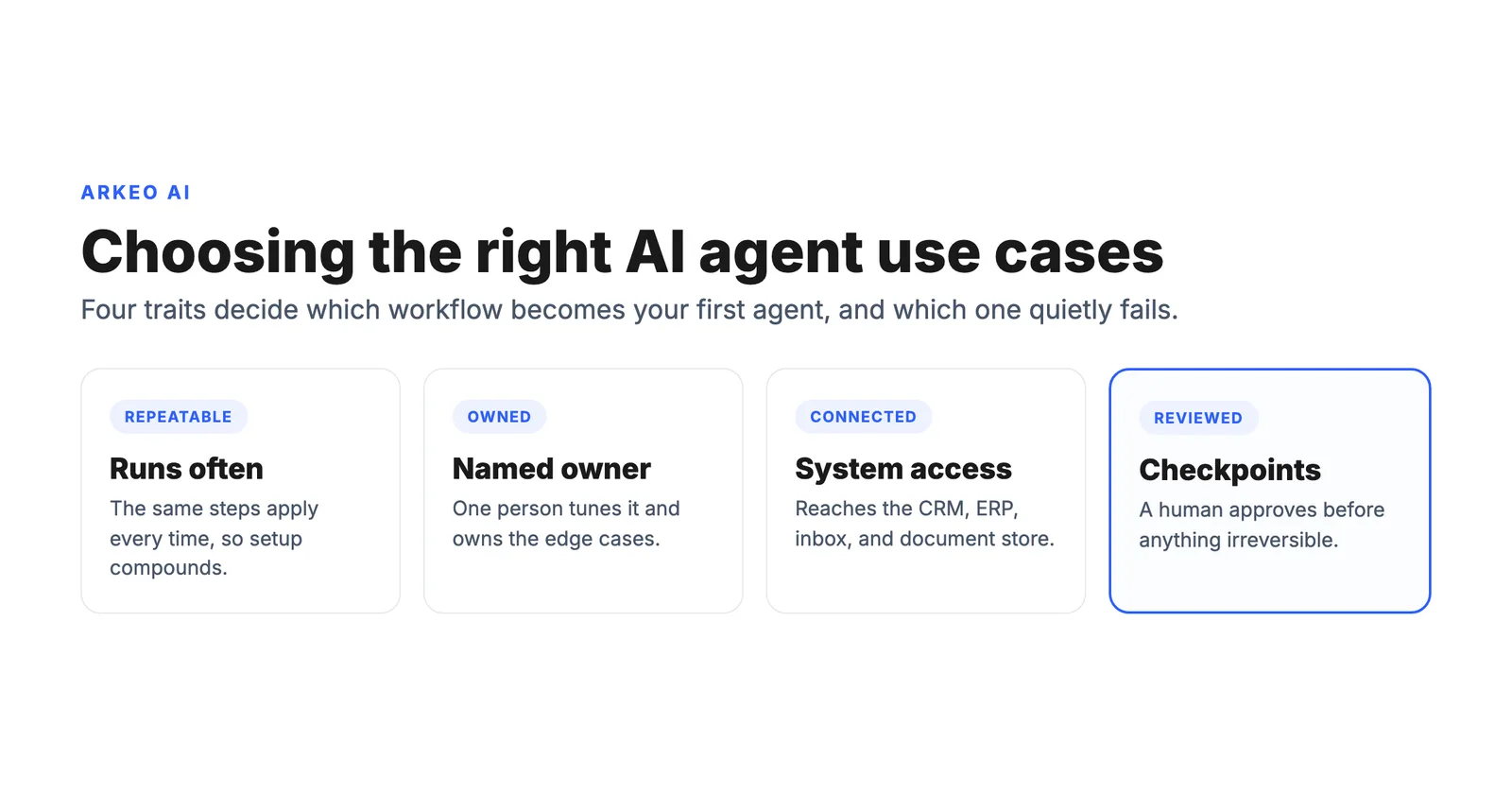 AIAI Agent Use Cases for Business OperationsA business-process guide to AI agent use cases by function, with a scoring table and selection criteria to identify your best first three deployment targets.
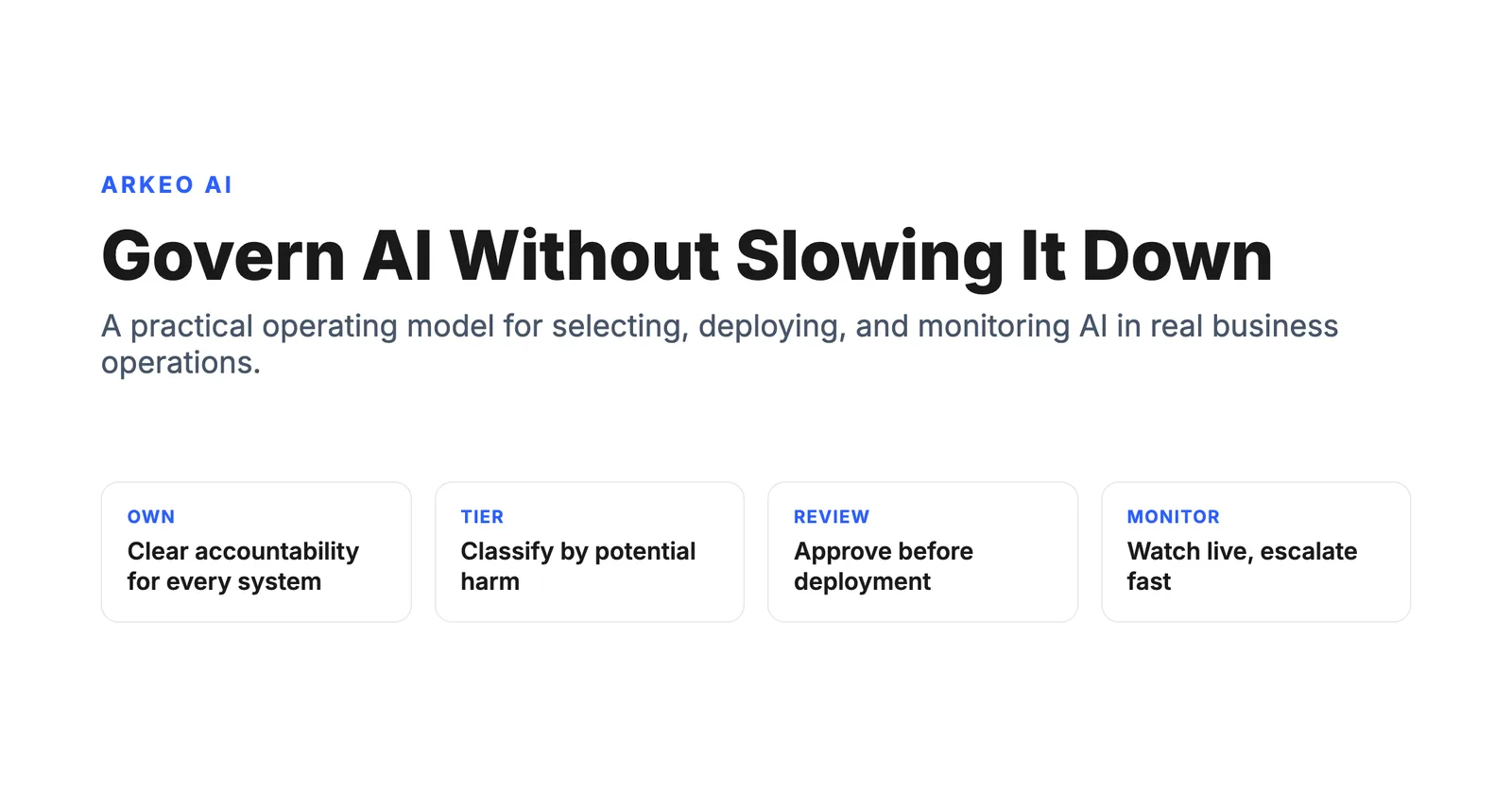 AIWhat an AI Governance Framework Should IncludeWhat an AI governance framework is, the seven components it needs, how NIST and the EU AI Act fit in, and how to build one that speeds adoption instead of stalling it.
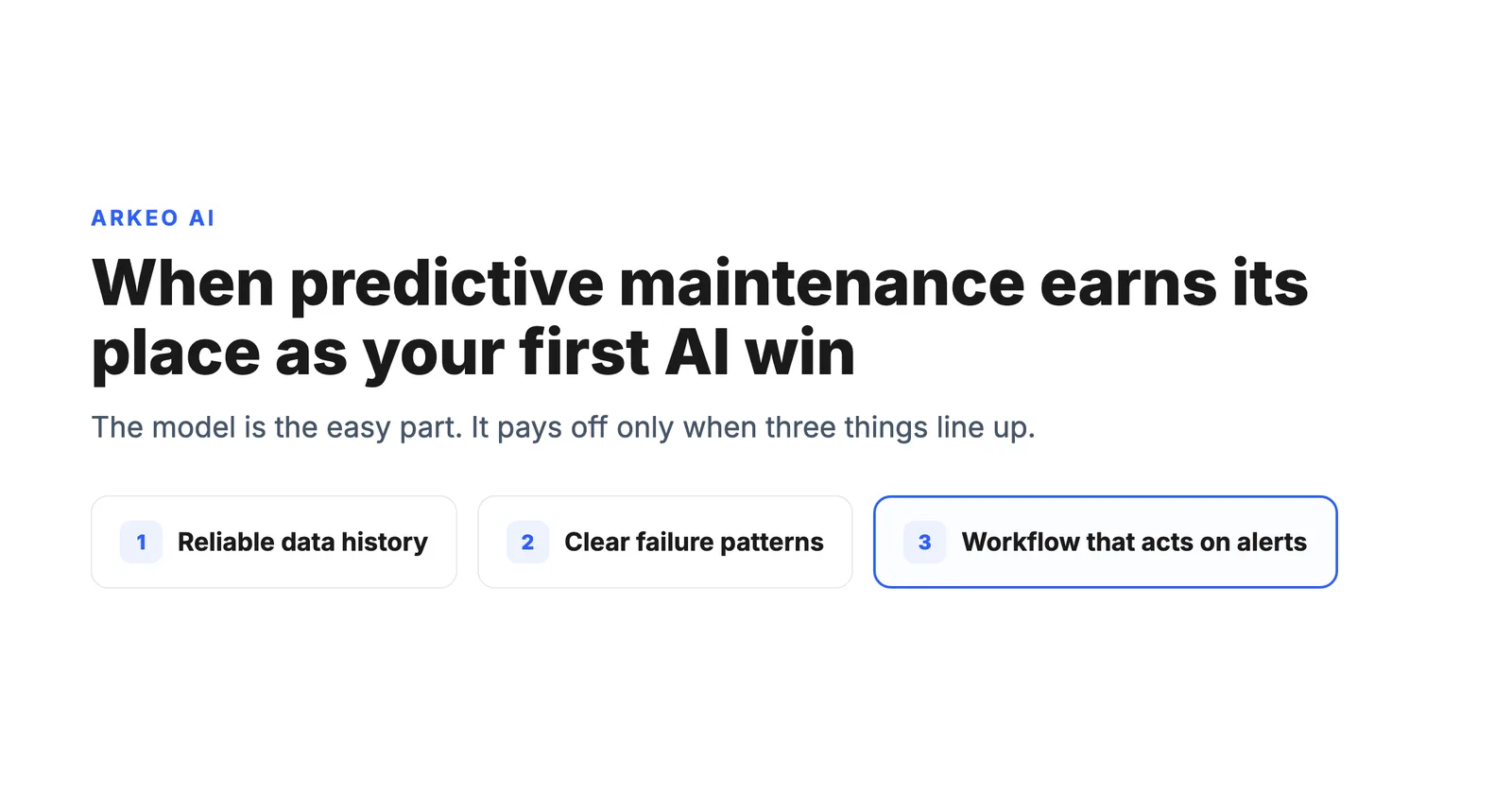 AIAI Predictive Maintenance in ManufacturingPredictive maintenance is the classic manufacturing AI use case, but it only pays off when your data history, failure patterns, and work-order workflow are ready. Here is how to decide when it works and when another use case should come first.
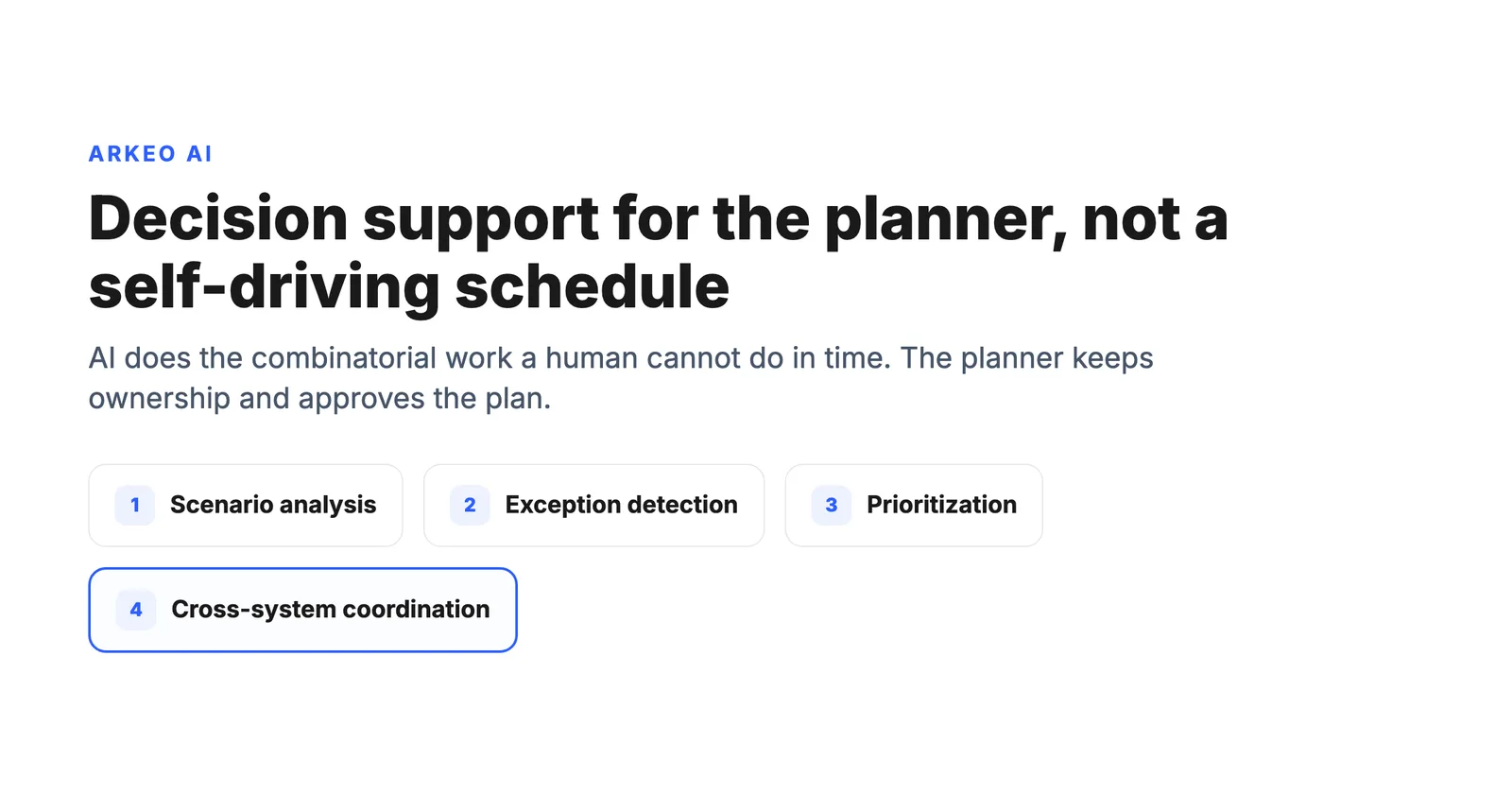 AIAI in Production Planning: A Practical GuideAI in production planning is decision support, not autonomous scheduling. Here is where it materially helps planners, where data and process discipline are the real problem, and how to decide if planning is your right first AI use case.
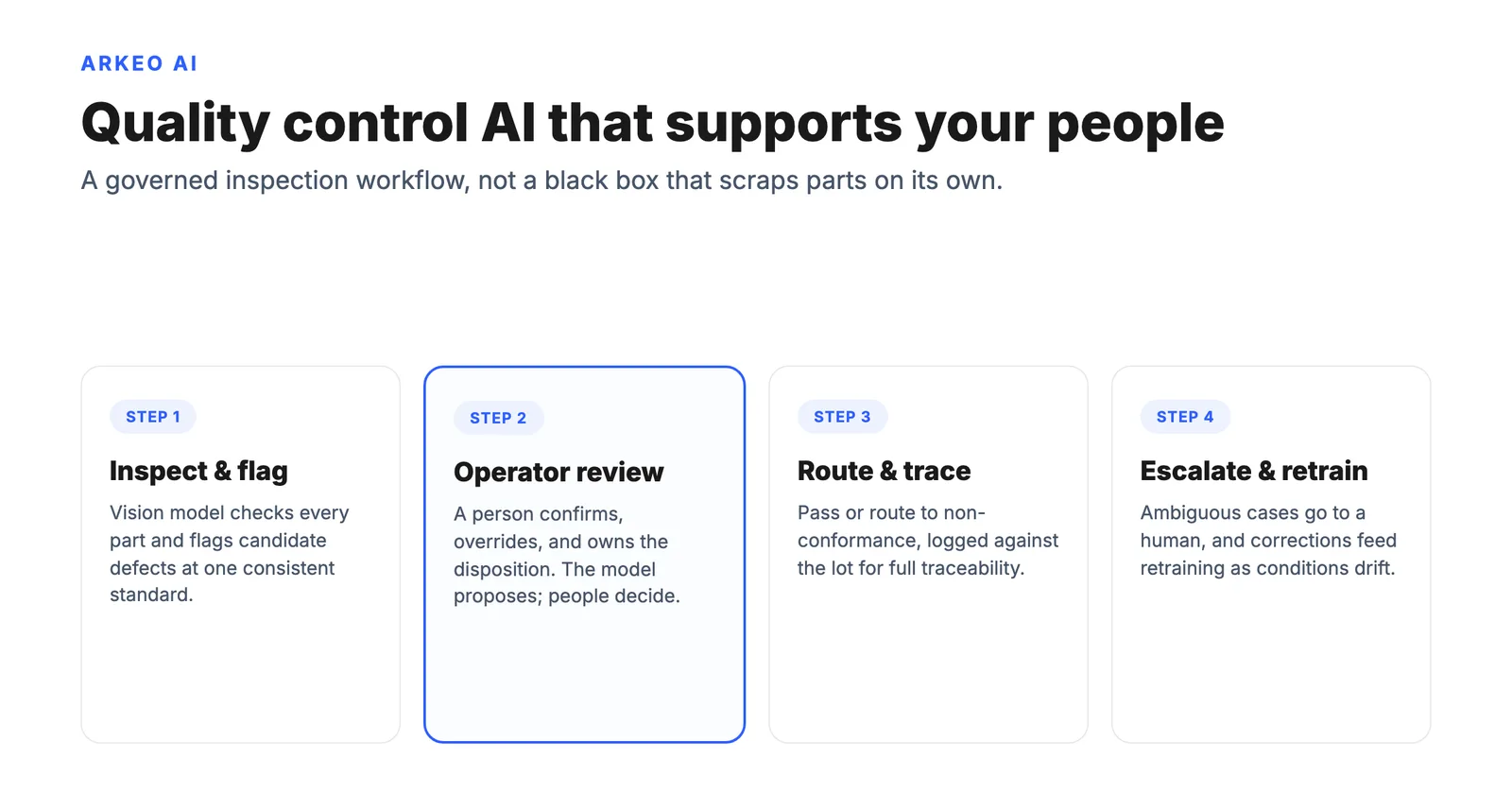 AIAI for Manufacturing Quality Control, Done RightWhere AI actually improves manufacturing quality control, what has to be true first, and how to pilot it safely as a governed inspection workflow, not an unchecked black box.
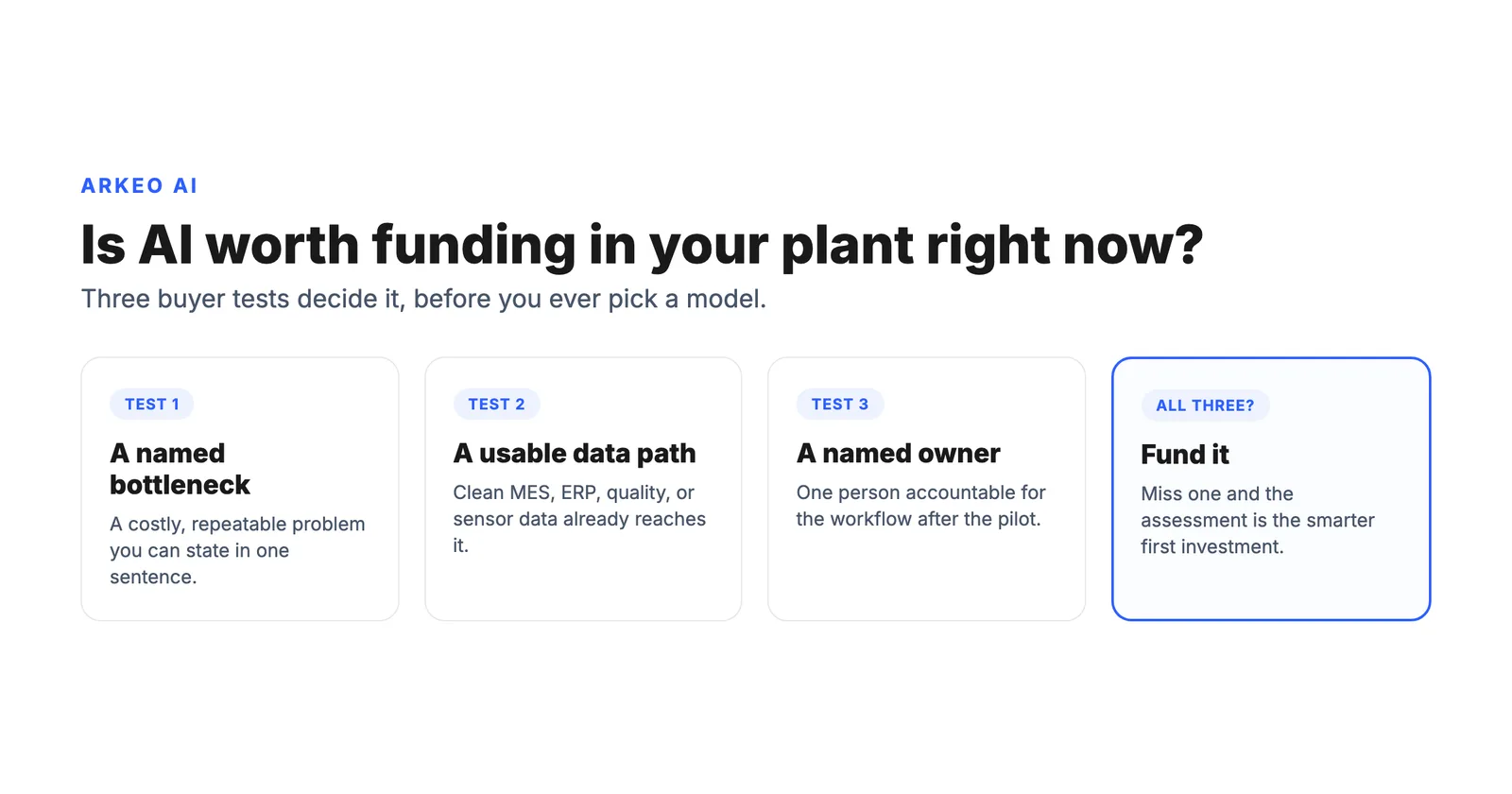 AIAI for Manufacturing Companies: A Buyer's GuideA buyer's decision guide for manufacturing leaders weighing AI: the readiness signals that say go, the good-fit and poor-fit profiles, and how to shape a low-regret rollout instead of an expensive false start.
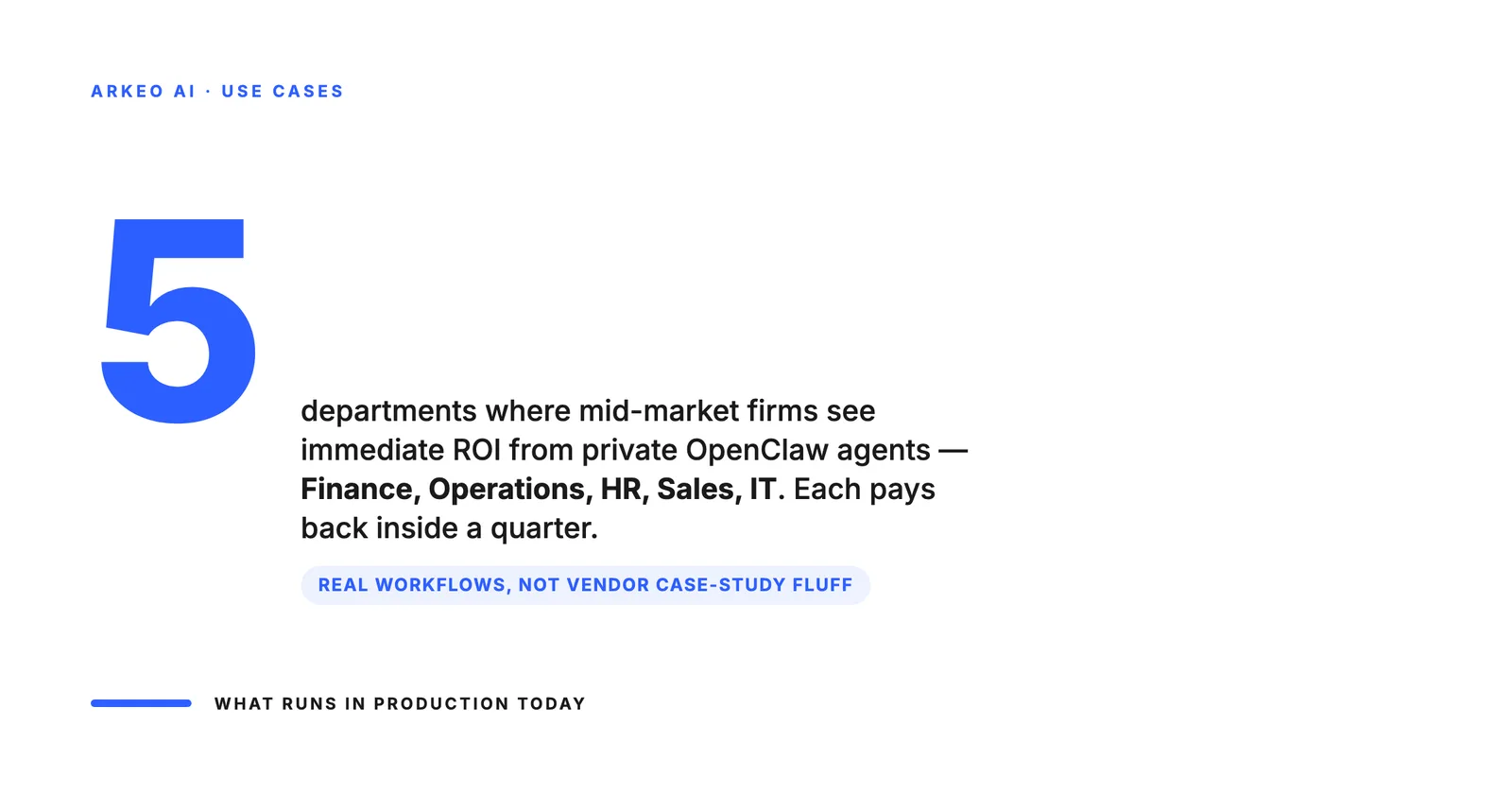 Business5 OpenClaw Use Cases for Mid-Market OperationsMove beyond chatbots and shadow AI. Here are five practical ways mid-market operators use OpenClaw to build a secure, private AI workforce that handles real business operations.
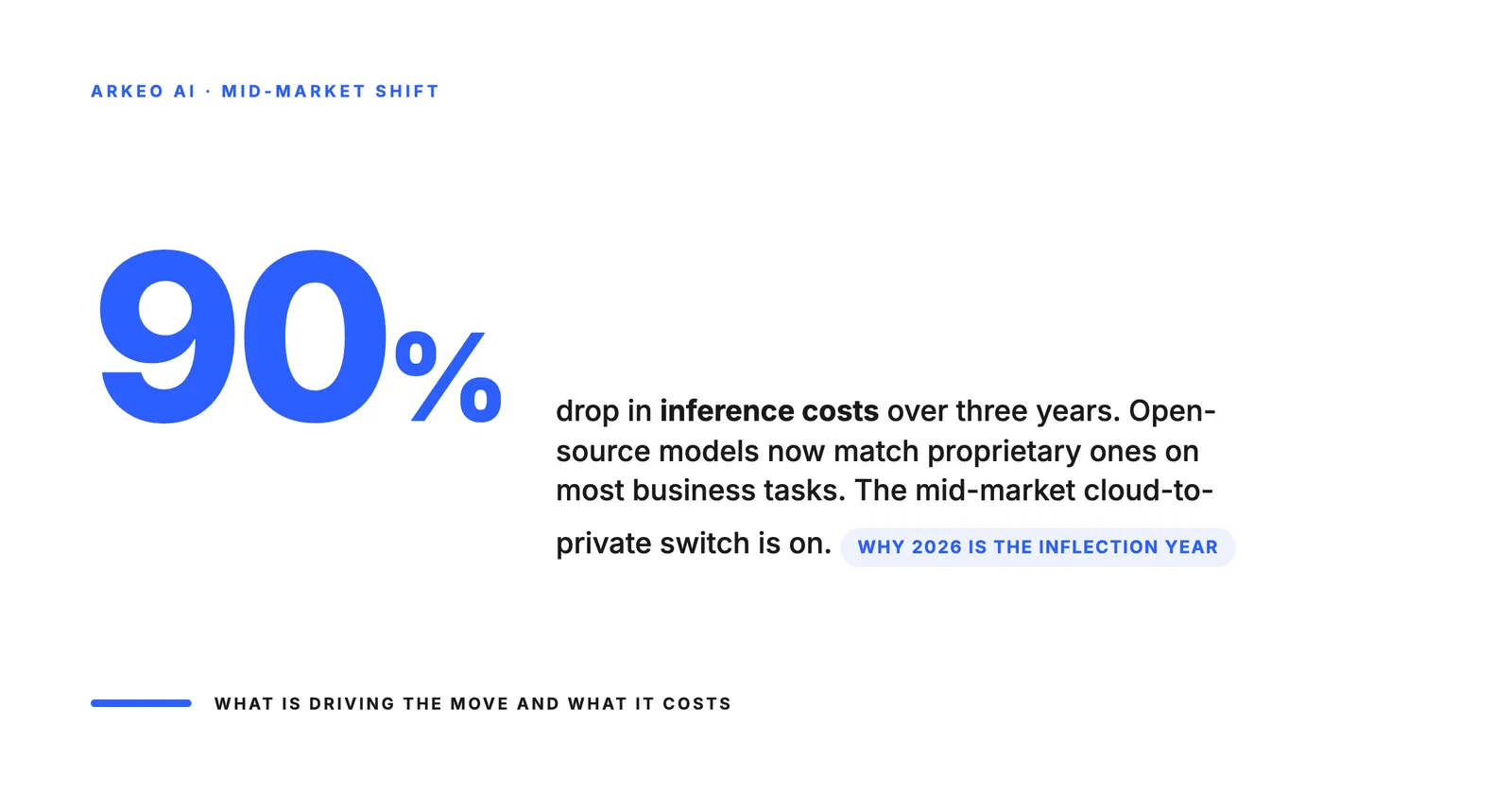 Private AIWhy Mid-Market Companies Are Moving to Private AISixty-four percent of mid-market companies have now deployed at least one AI workload. The shift from cloud to private AI is accelerating because the economics changed, the risks became real, and the tools got simpler.
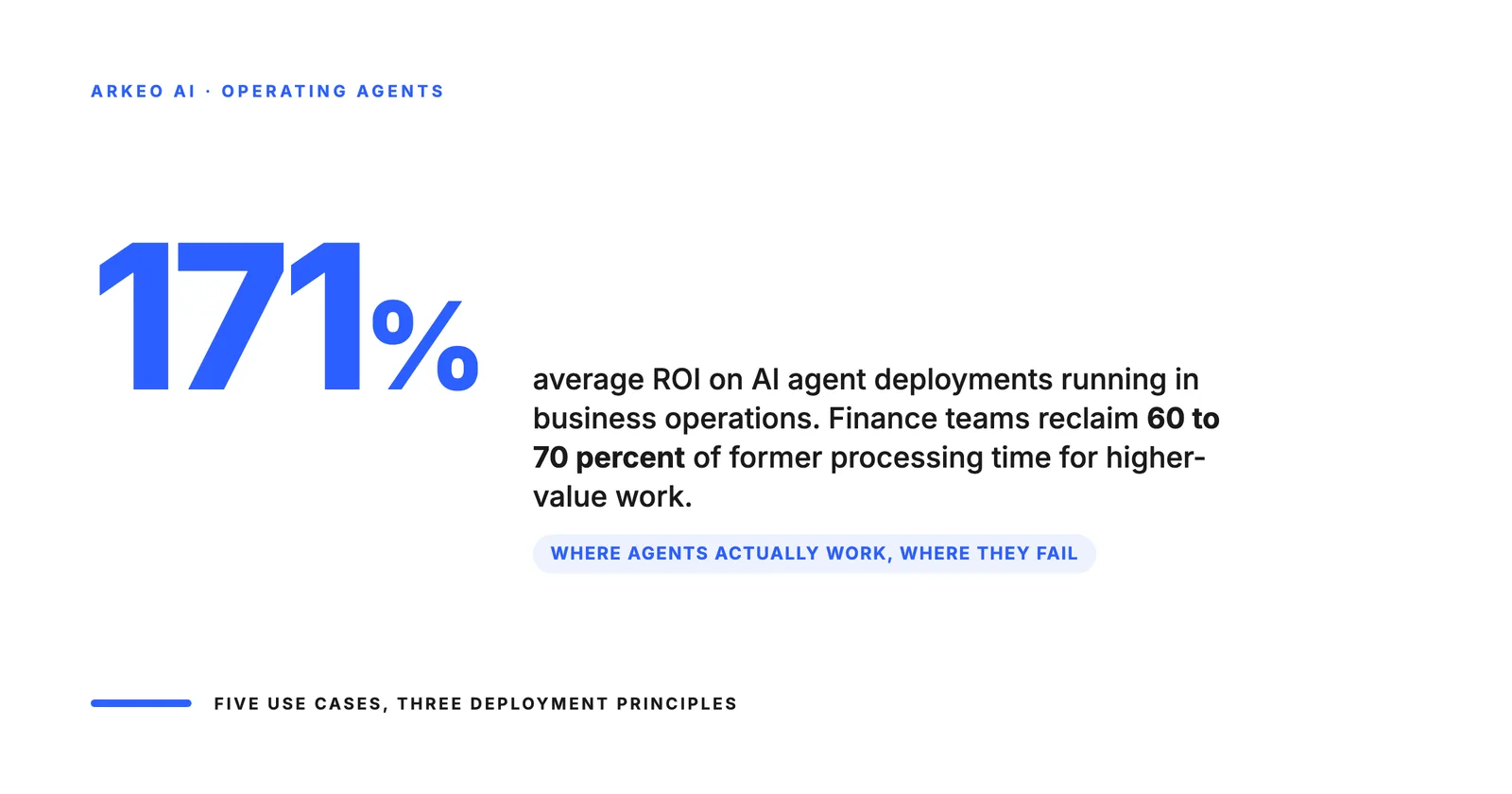 AIWhat AI Agents Can Actually Do for Business OperationsGartner predicts 40% of enterprise apps will include AI agents by end of 2026. Here is what agents actually do in business operations, which use cases deliver ROI, and why 40% of projects will fail.
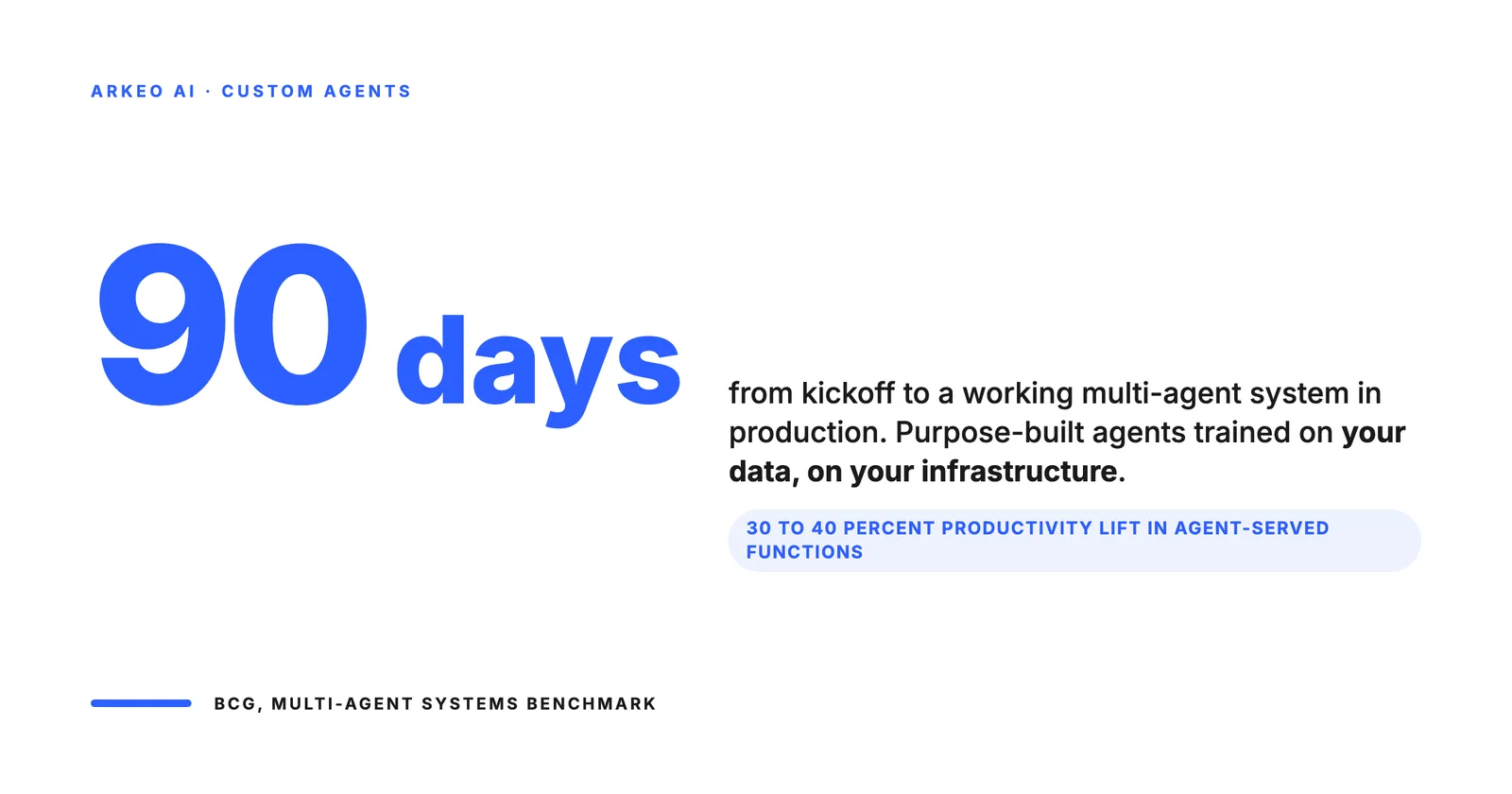 AIHow Our Arkeo Dev Team Built a Custom AI Coding Agent (and What SaaS Founders Can Learn)AI agents that do real operational work inside your business. How specialized agent teams are replacing generic AI tools across every department.
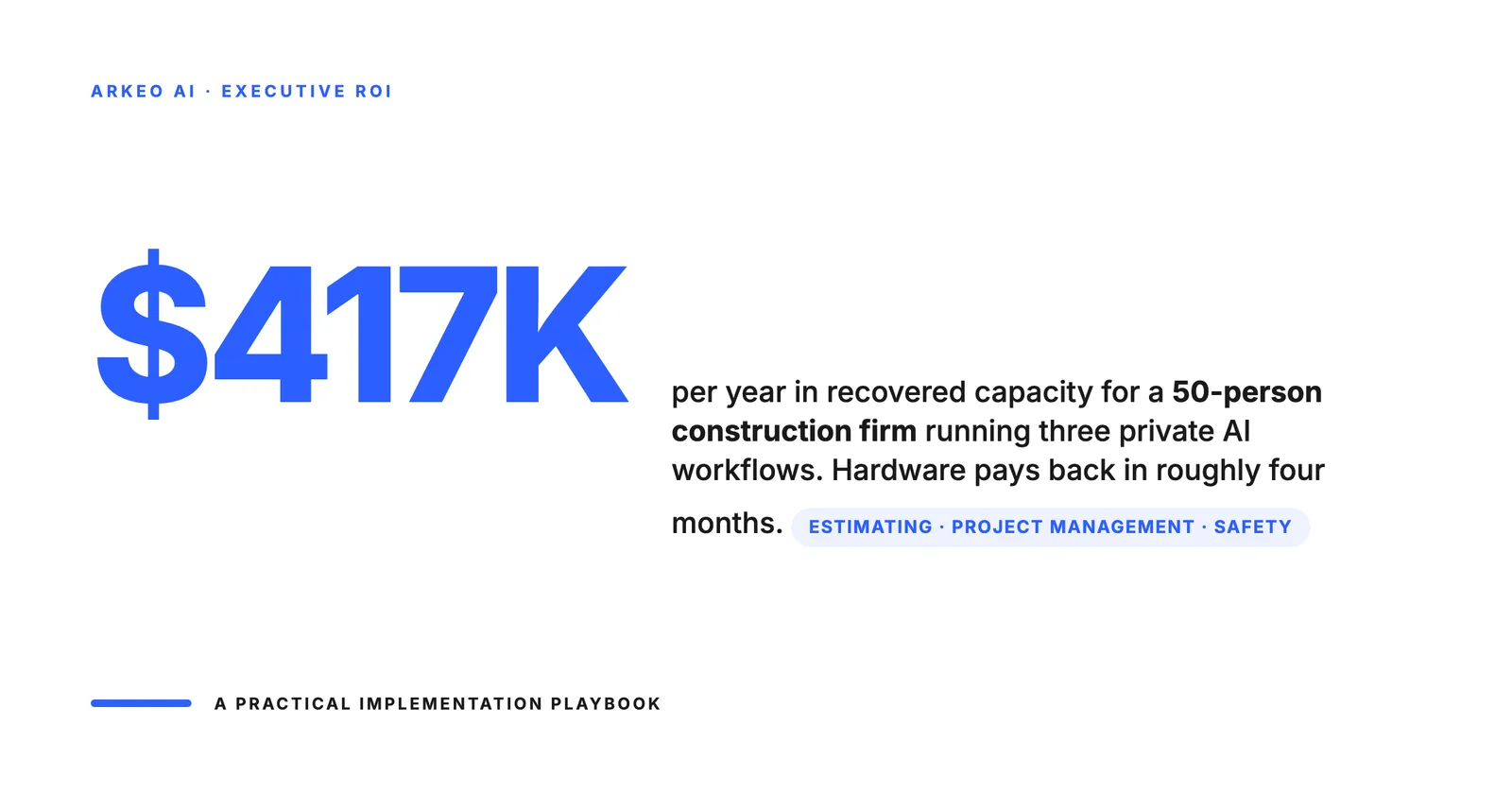 ConstructionAI for Construction Companies: Implementation PlaybookA practical AI implementation playbook for construction executives. Start with the audit, pick one high-friction workflow, prove the ROI, then scale.
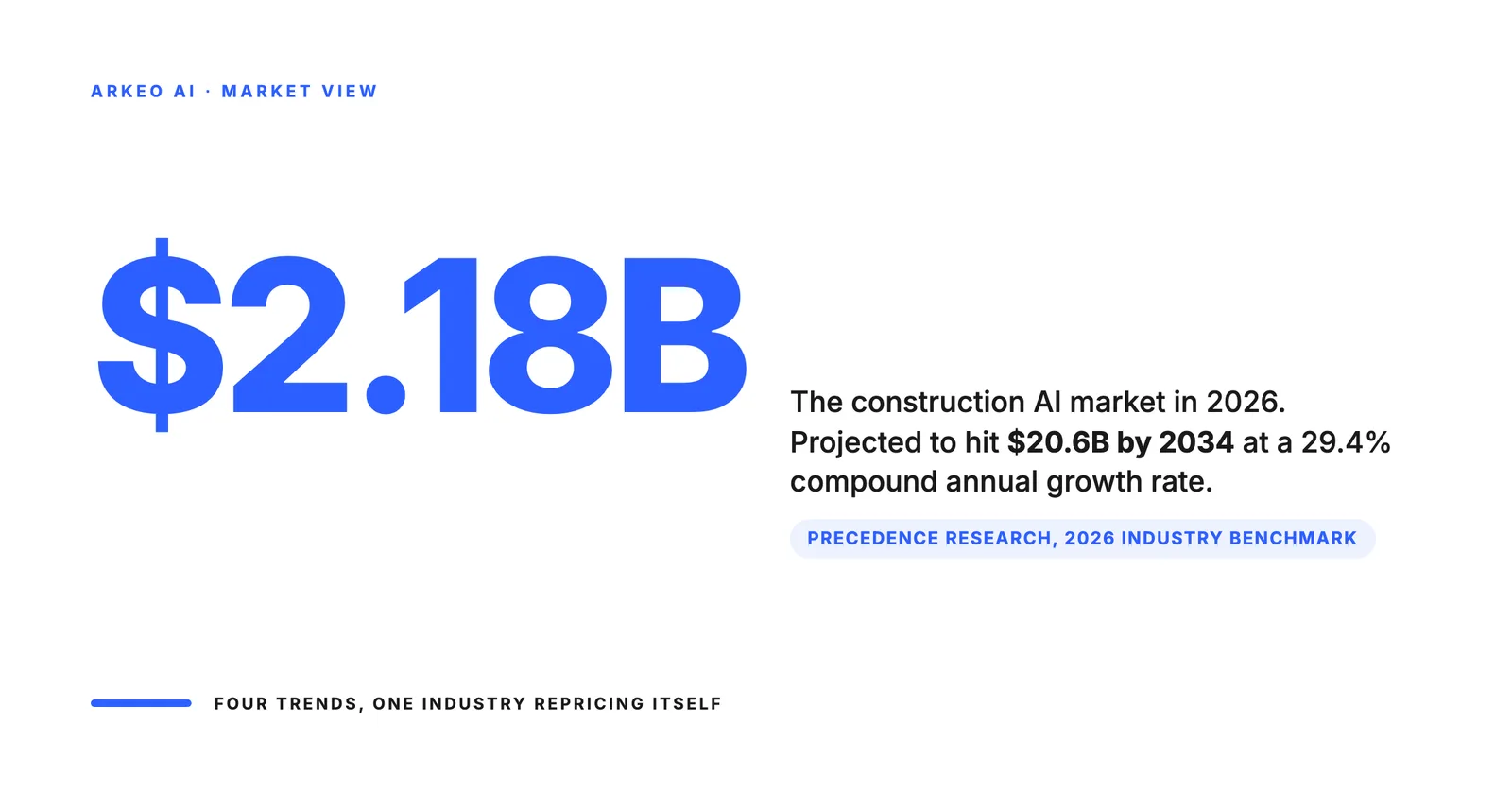 ConstructionAI in Construction: 4 Market Trends That Matter in 2026The AI in construction market reached $2.18 billion in 2026. Here are the four trends that matter most for contractors making deployment decisions today.