Blog › Business
AI in Business: Business
Insights on private AI, on-premise deployment, and building AI systems you actually own.
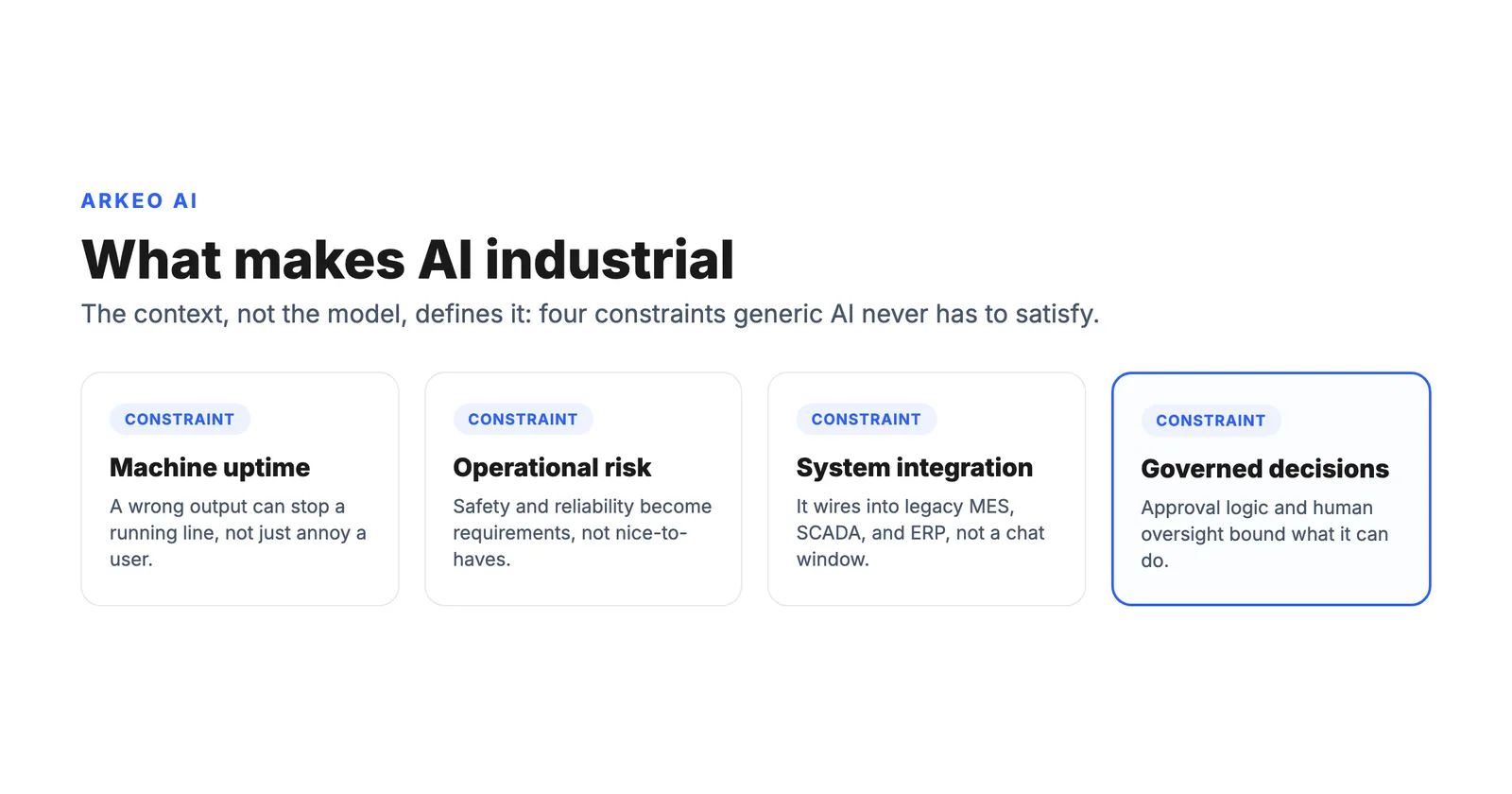 AIIndustrial Artificial Intelligence, DefinedA systems-level definition of industrial artificial intelligence: what makes AI industrial, why uptime, operational risk, and legacy MES, SCADA, and ERP integration govern the design, and when sensitive data, latency, and governance force private or hybrid deployment.
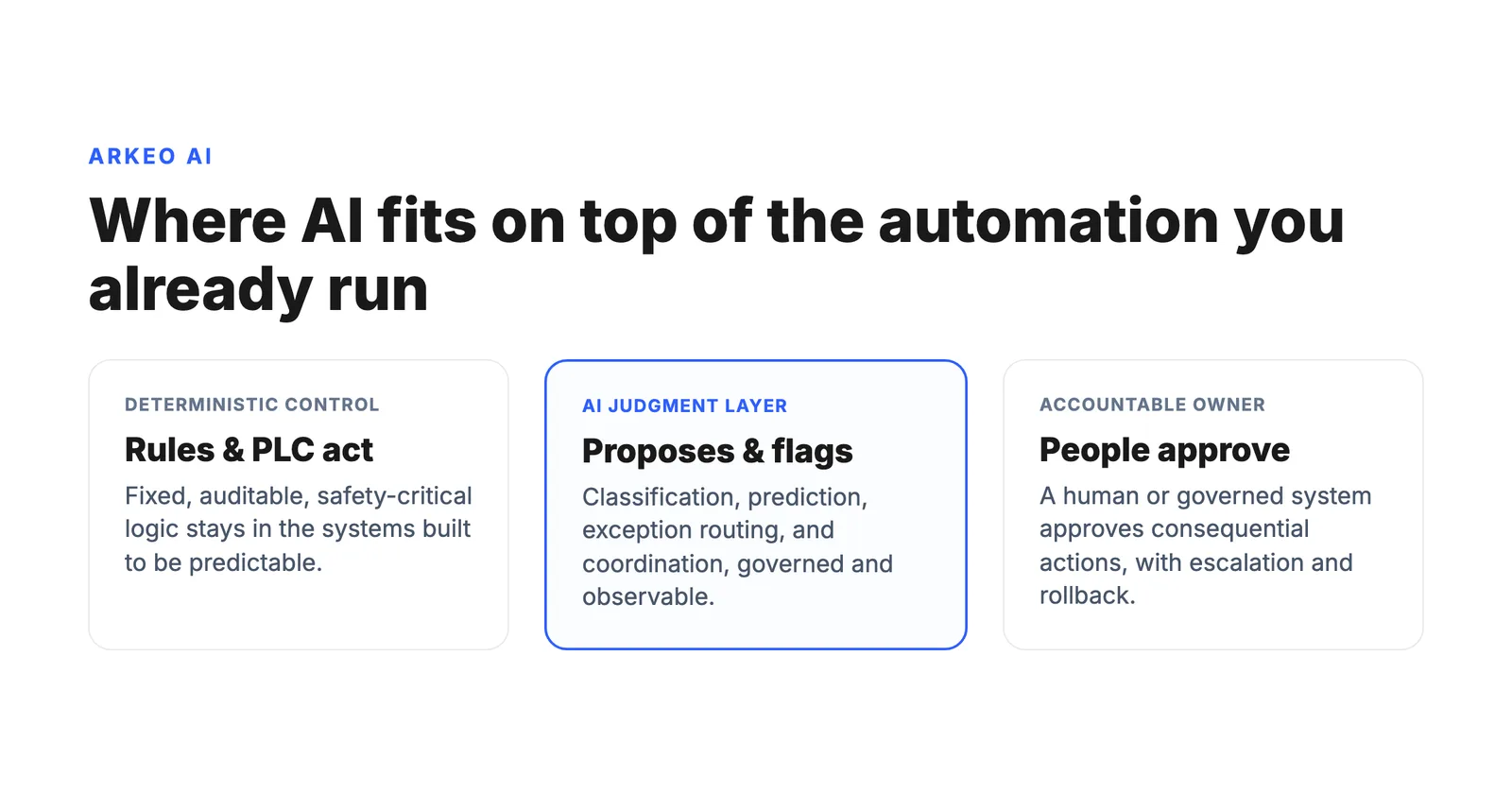 AIAI Industrial Automation: The Judgment LayerAI industrial automation adds a judgment layer on top of deterministic control. Learn where it pays, where rules-based systems still win, and how to deploy it with approvals, escalation, observability, and rollback.
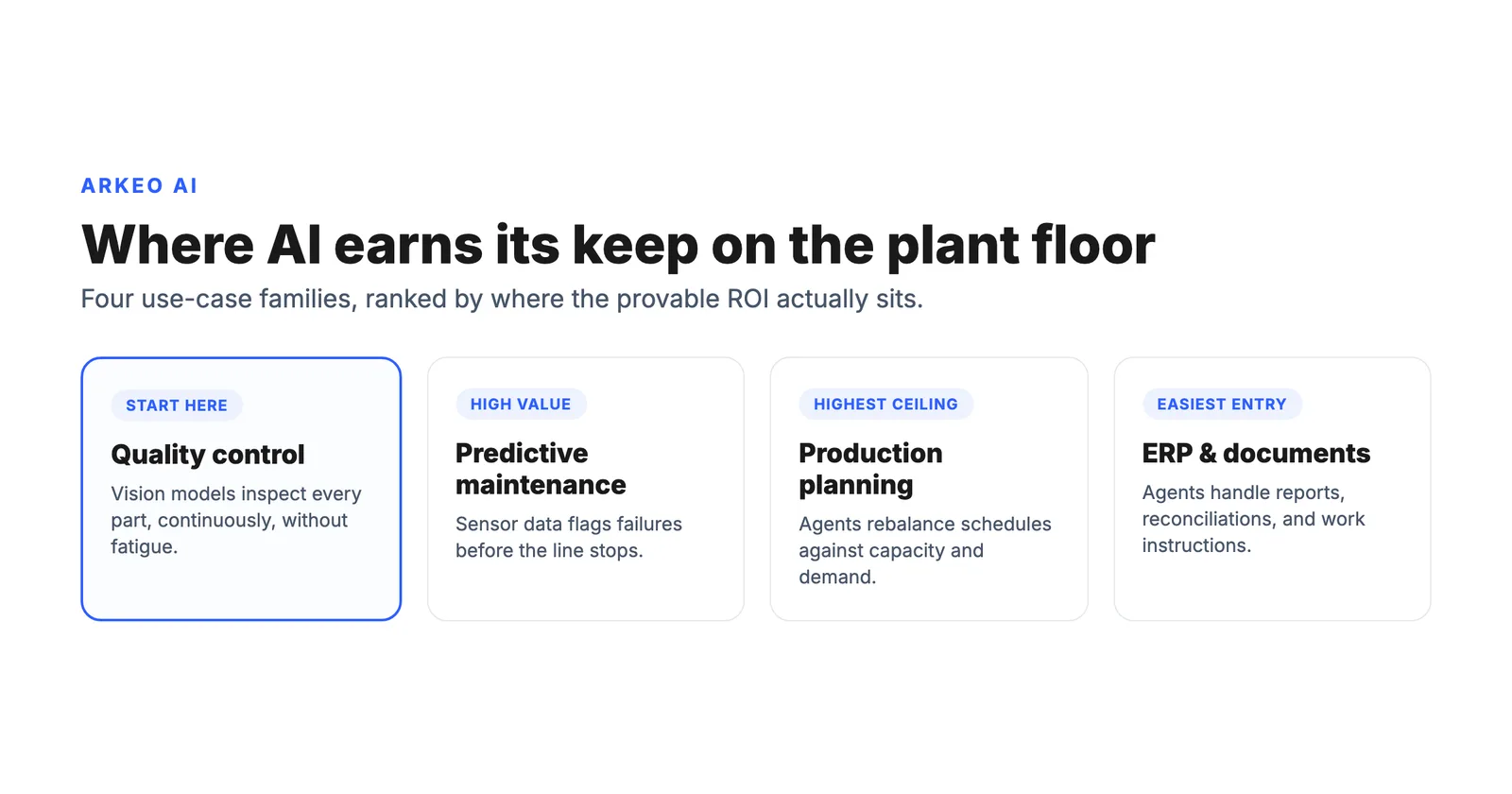 AIAI in Manufacturing: An Operator's GuideA grounded operator's guide to where AI actually pays off in manufacturing, where it stalls, and how to sequence your first use case from a 30-day win to a 12-month architecture.
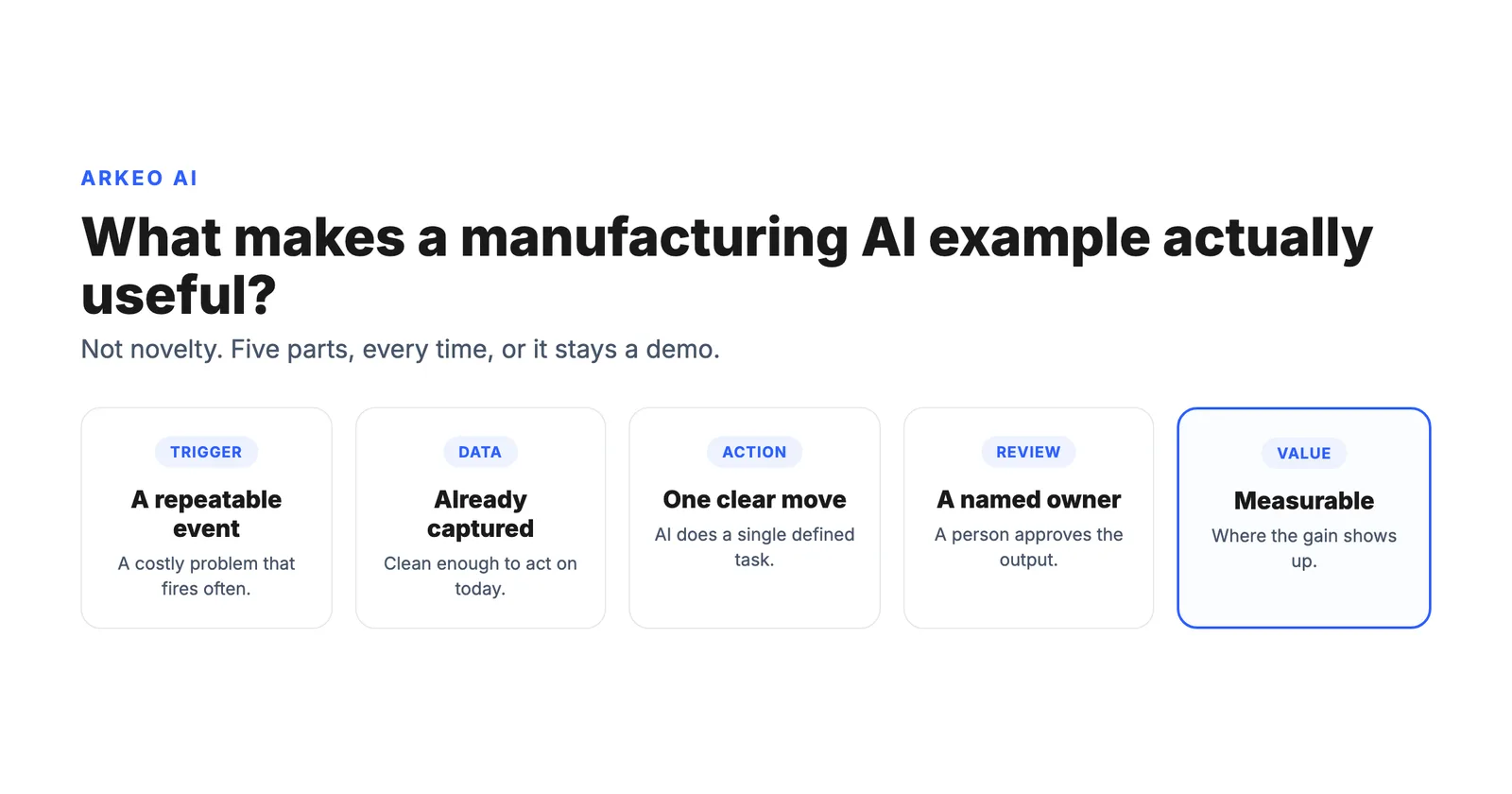 AIAI in Manufacturing Examples That Actually WorkA pattern library of AI in manufacturing examples organized by workflow, each with its trigger, data, the action AI takes, who reviews it, and where value shows up.
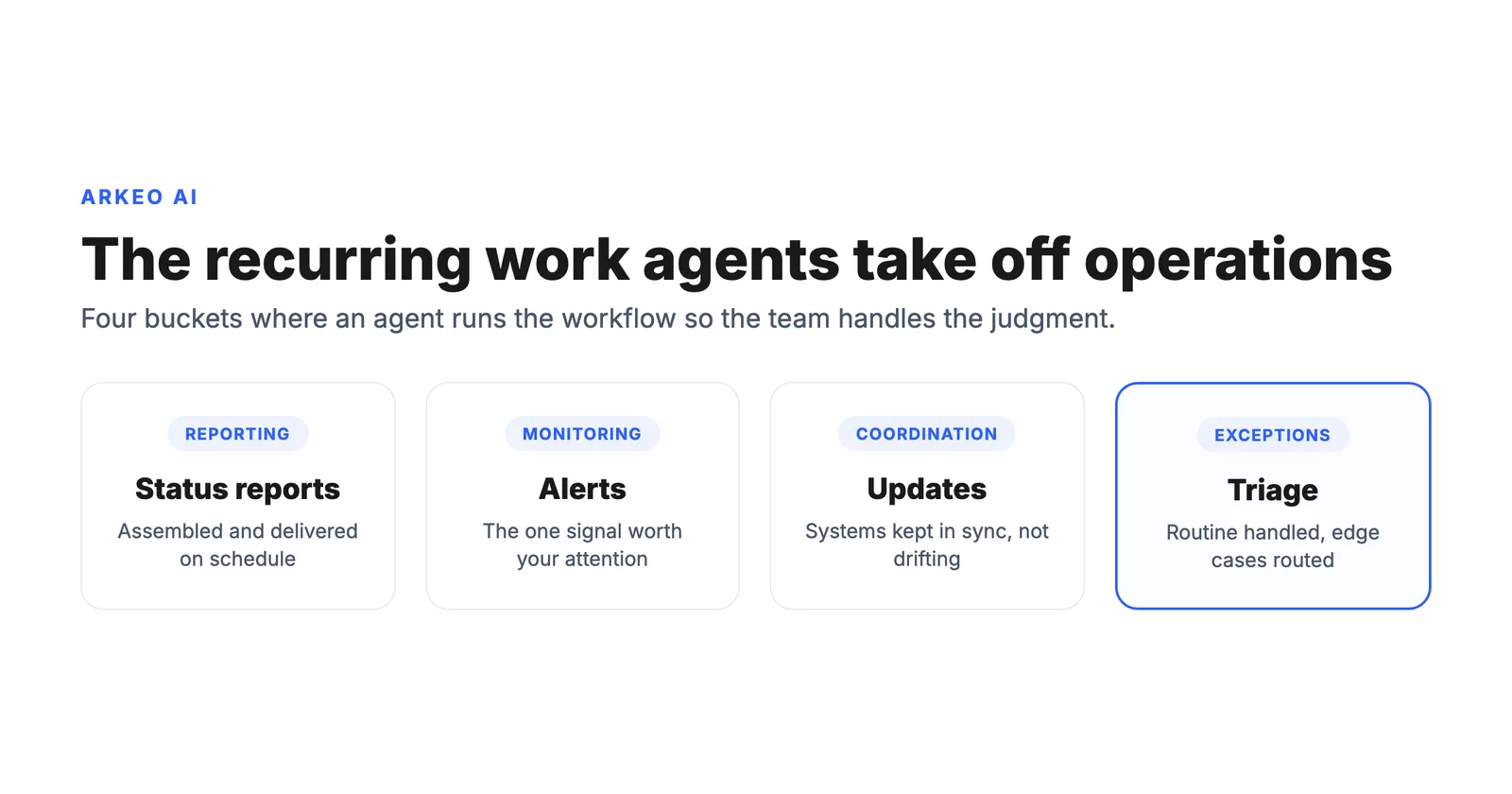 AIAI Agents for Operations TeamsA grounded look at AI agents for operations: the recurring reporting, monitoring, coordination, and exception-handling work they actually take off your team, and how to pick the first one.
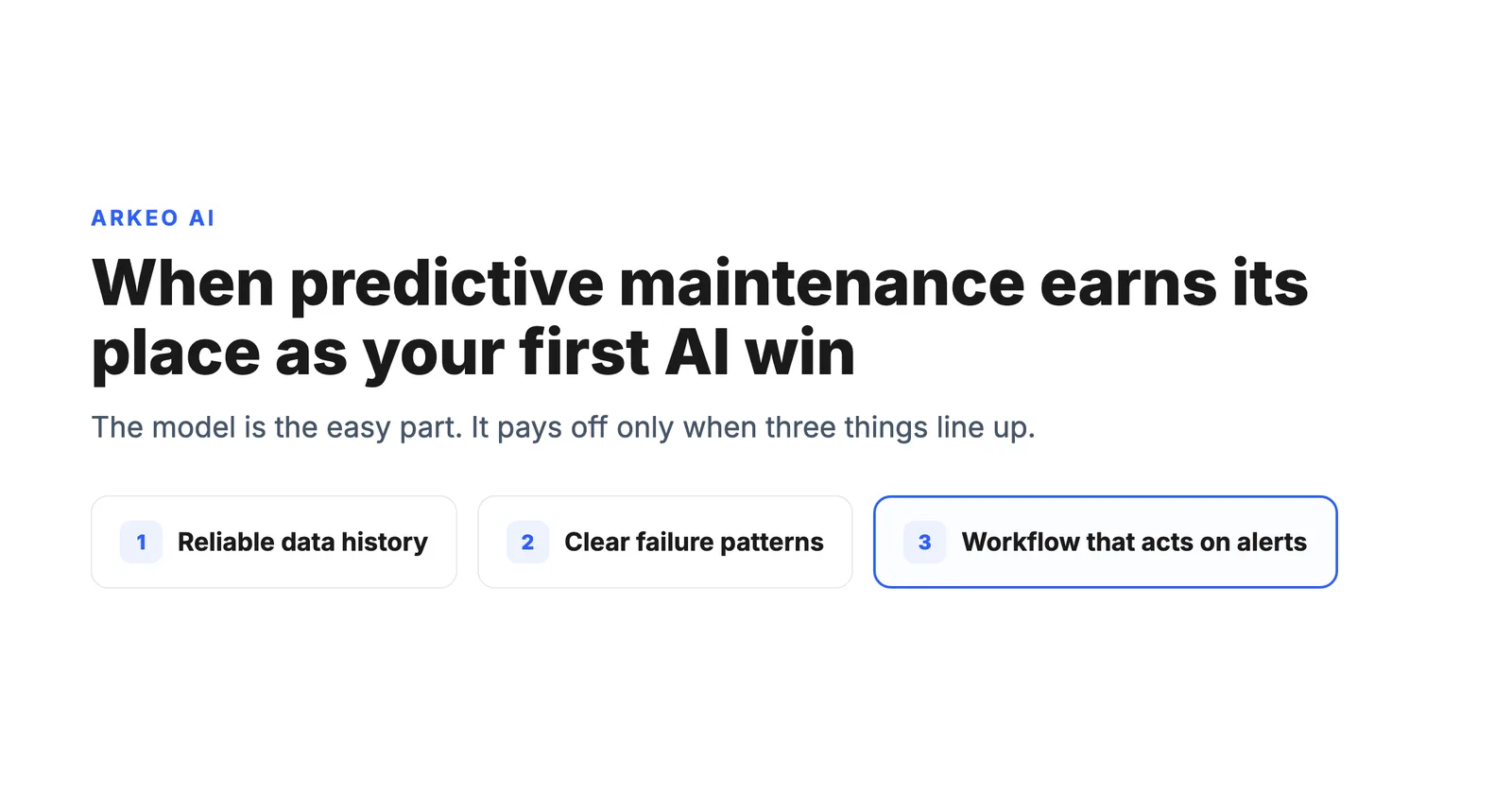 AIAI Predictive Maintenance in ManufacturingPredictive maintenance is the classic manufacturing AI use case, but it only pays off when your data history, failure patterns, and work-order workflow are ready. Here is how to decide when it works and when another use case should come first.
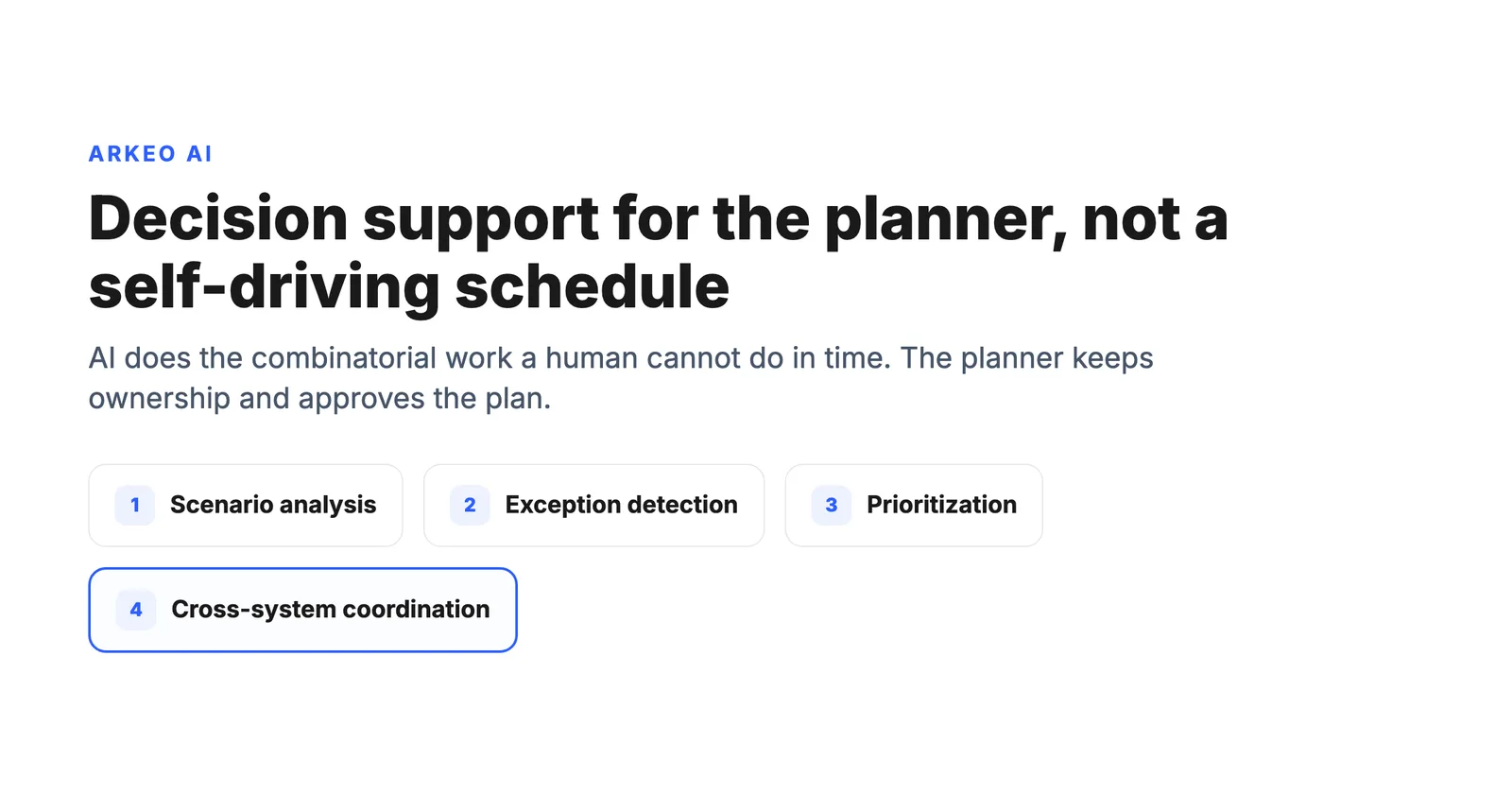 AIAI in Production Planning: A Practical GuideAI in production planning is decision support, not autonomous scheduling. Here is where it materially helps planners, where data and process discipline are the real problem, and how to decide if planning is your right first AI use case.
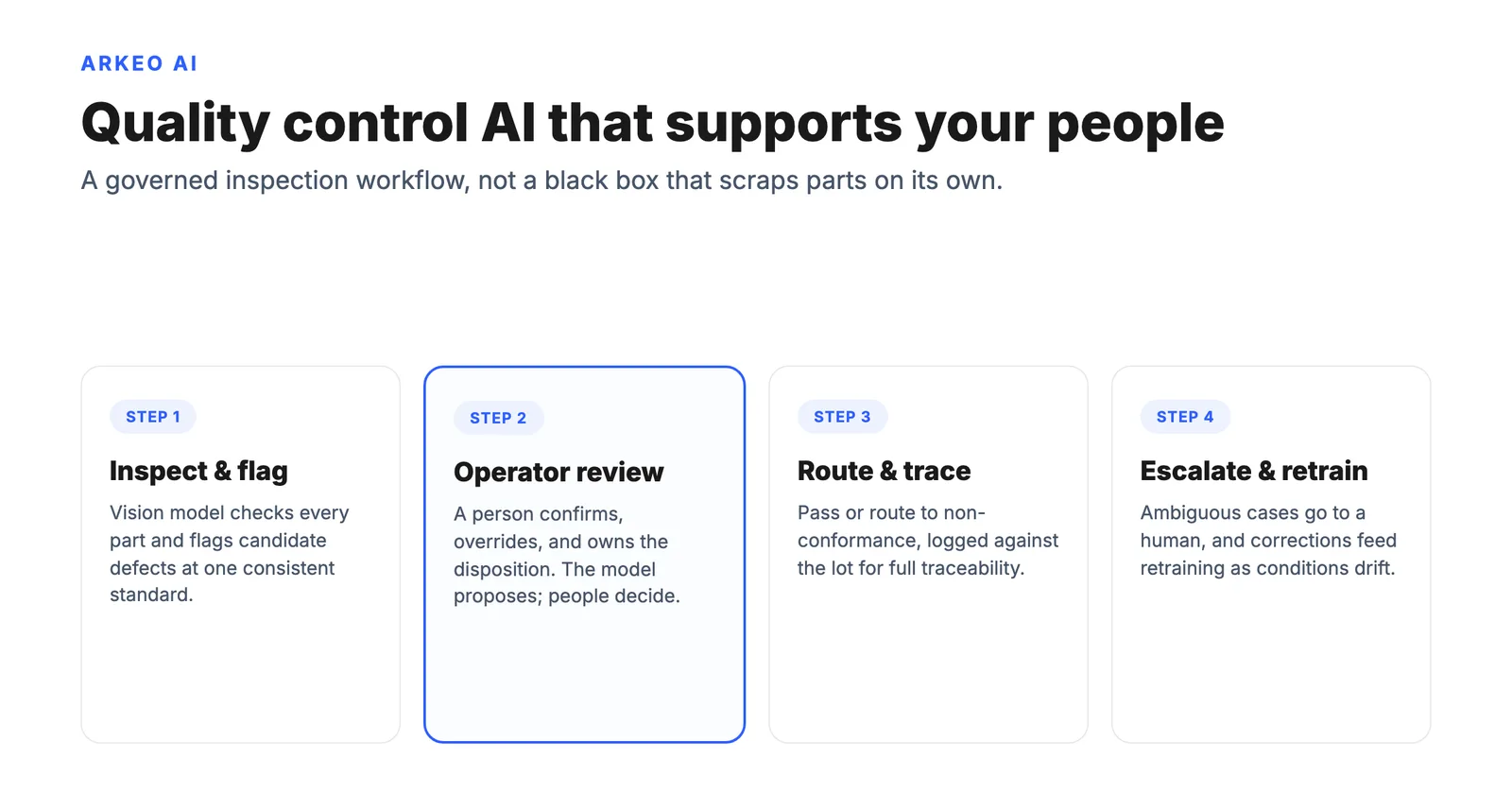 AIAI for Manufacturing Quality Control, Done RightWhere AI actually improves manufacturing quality control, what has to be true first, and how to pilot it safely as a governed inspection workflow, not an unchecked black box.
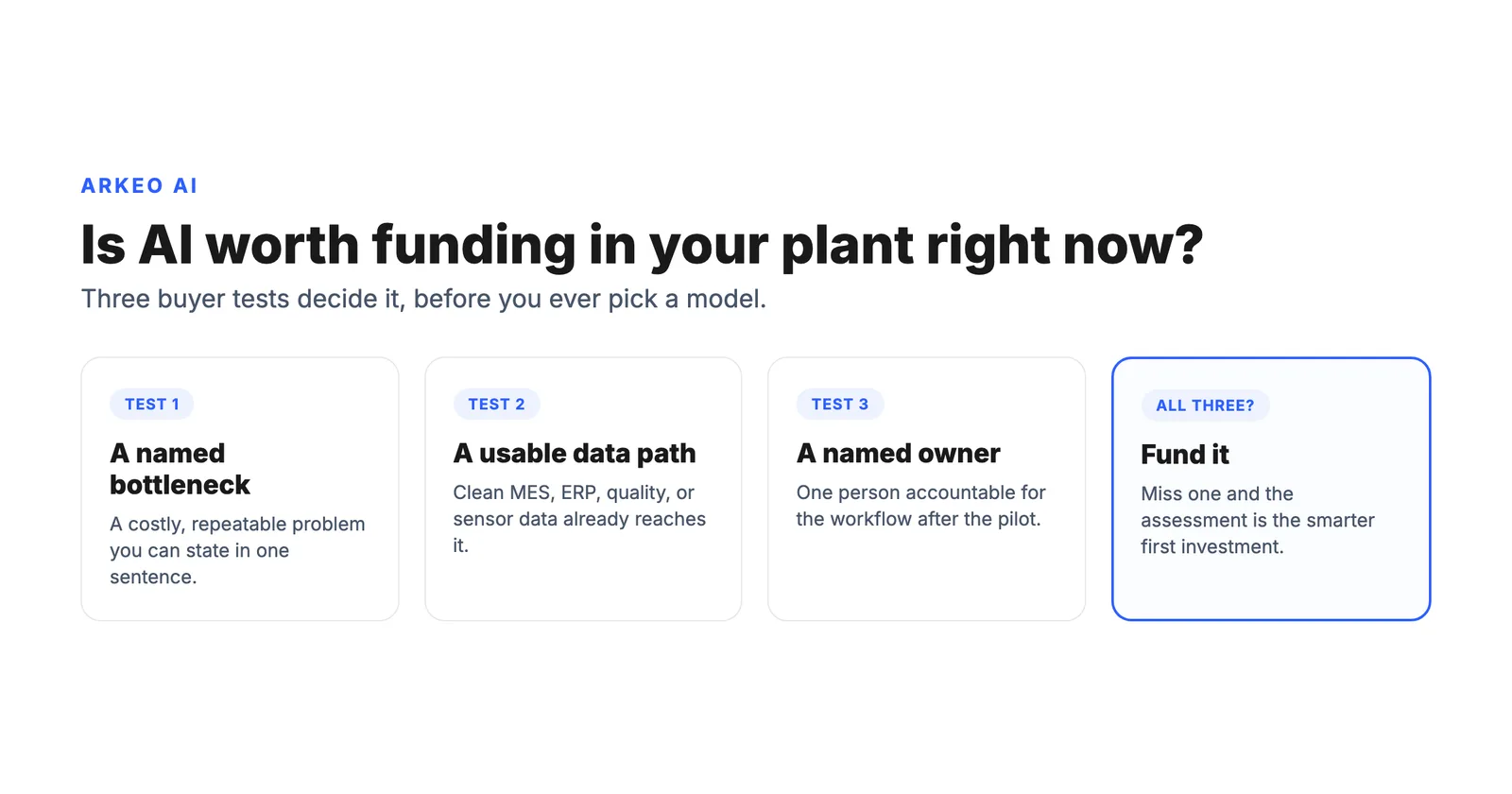 AIAI for Manufacturing Companies: A Buyer's GuideA buyer's decision guide for manufacturing leaders weighing AI: the readiness signals that say go, the good-fit and poor-fit profiles, and how to shape a low-regret rollout instead of an expensive false start.
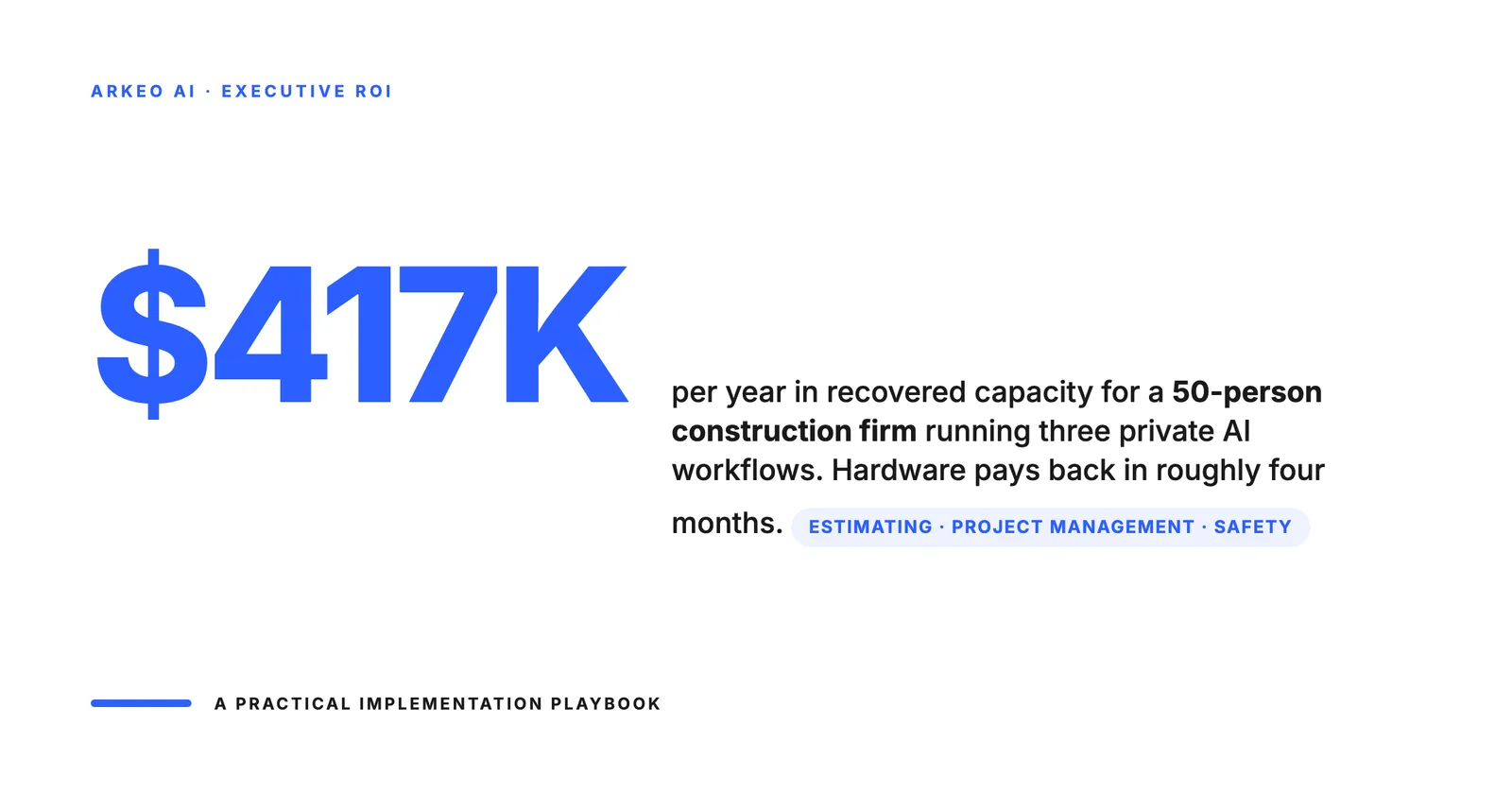 ConstructionAI for Construction Companies: Implementation PlaybookA practical AI implementation playbook for construction executives. Start with the audit, pick one high-friction workflow, prove the ROI, then scale.
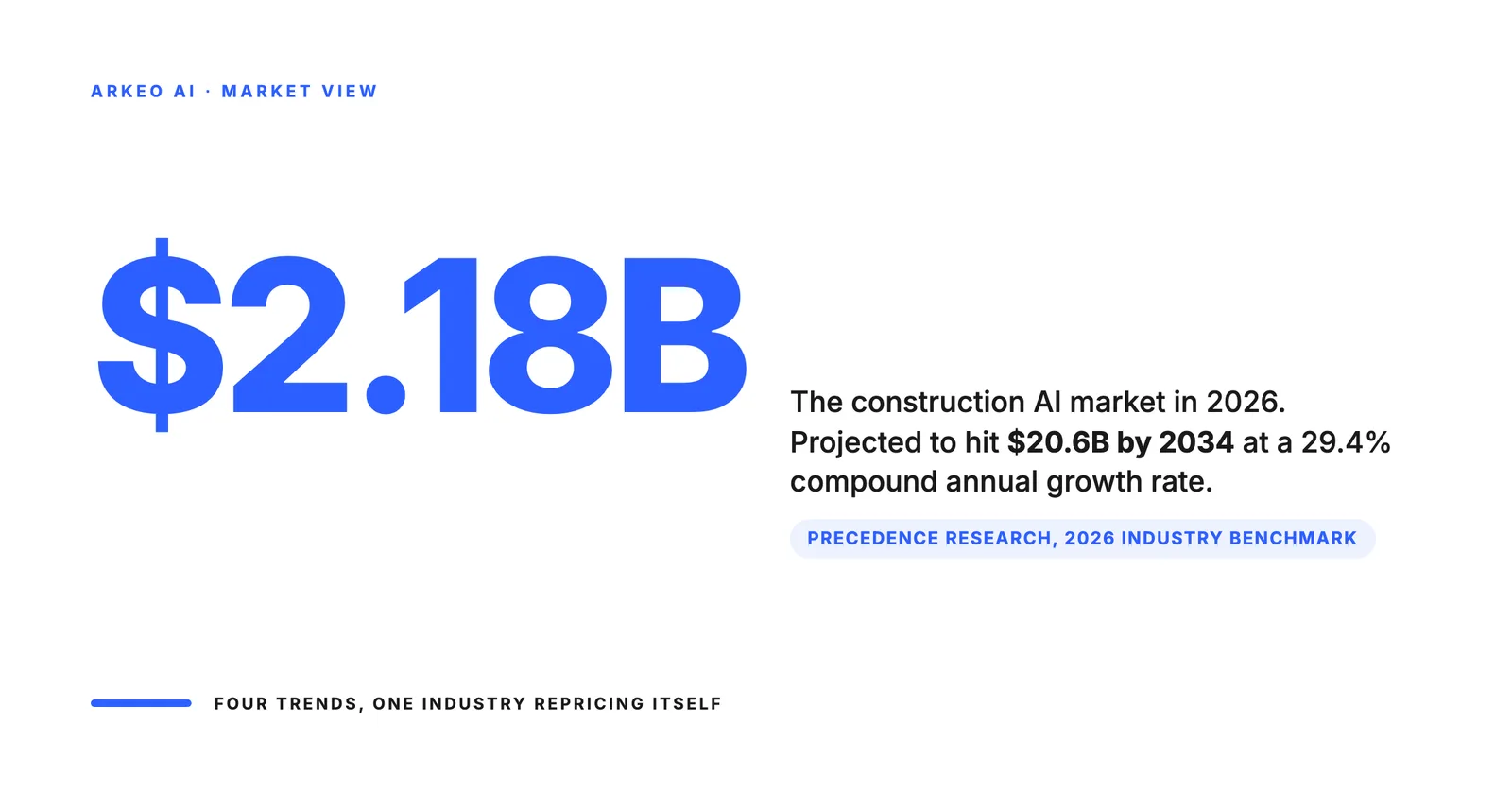 ConstructionAI in Construction: 4 Market Trends That Matter in 2026The AI in construction market reached $2.18 billion in 2026. Here are the four trends that matter most for contractors making deployment decisions today.