Blog › AI Strategy
AI in Business: AI Strategy
Insights on private AI, on-premise deployment, and building AI systems you actually own.
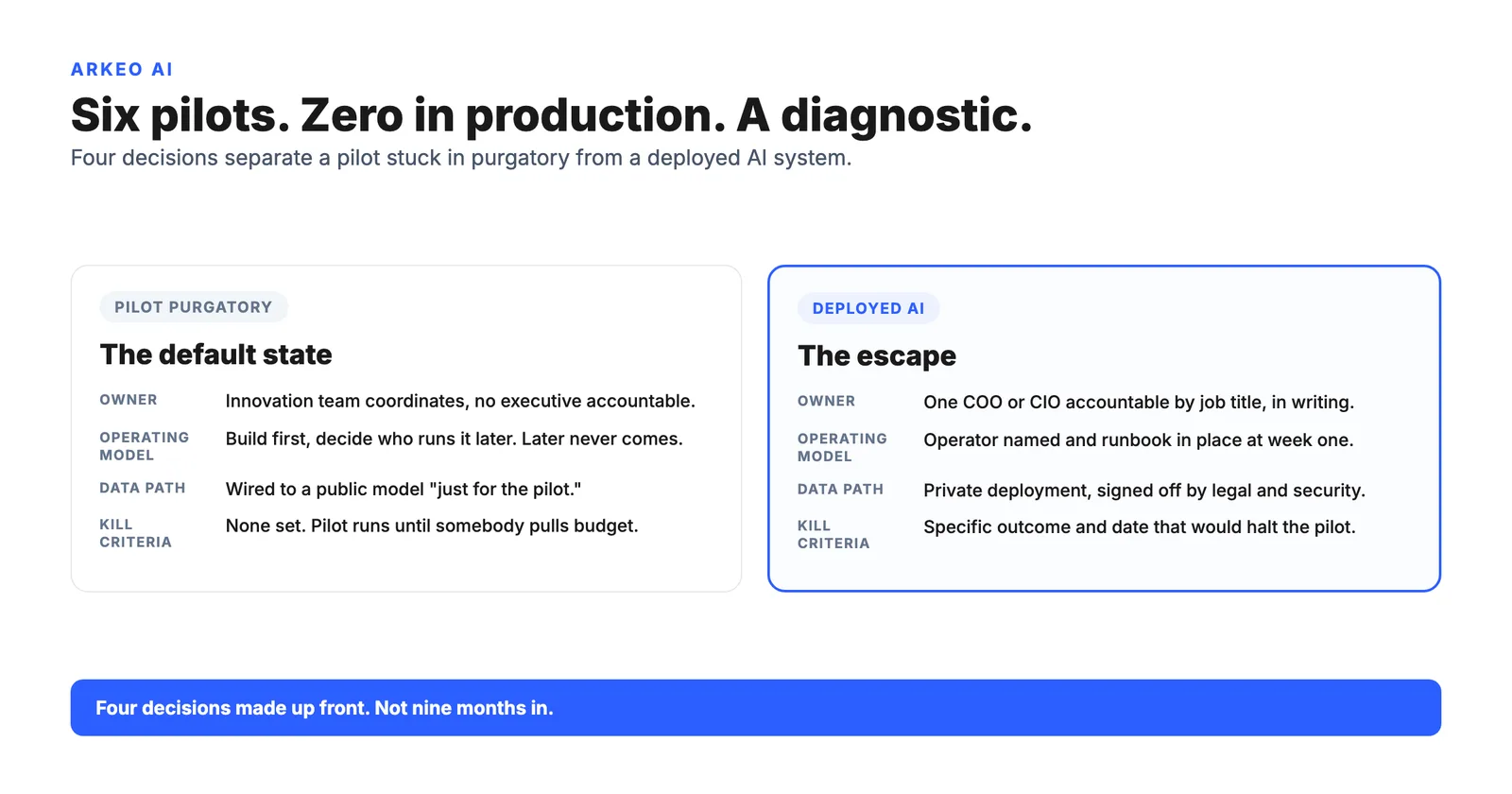 AI StrategyCorporate AI Strategy: The Four Decisions That Move Pilots to ProductionSix pilots running, zero in production. Corporate AI strategy fails for four organizational reasons — no named owner, no operating model, no data path answer, no kill criteria. Here is how to fix each one before the next pilot launches.
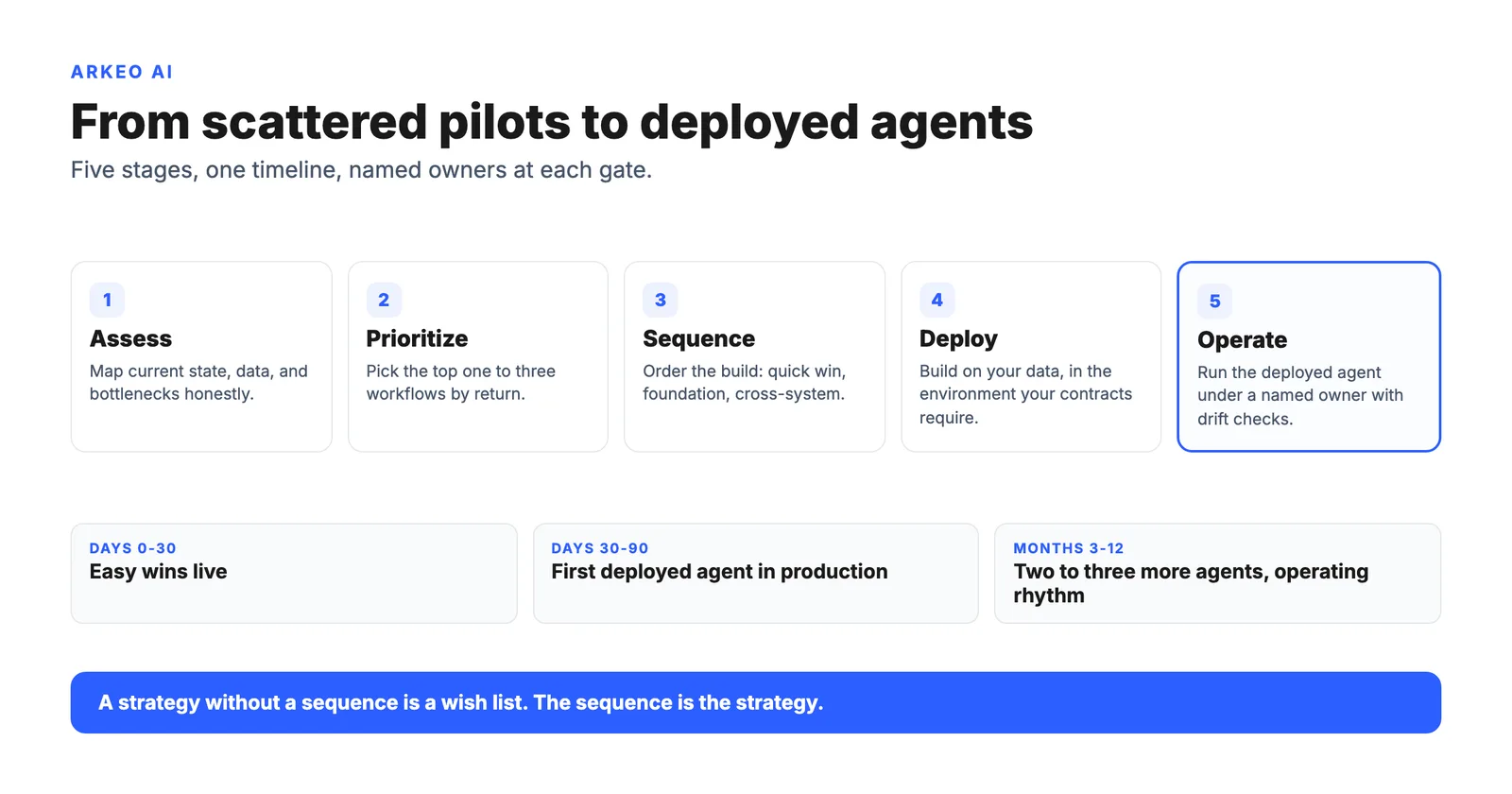 AI StrategyEnterprise AI Strategy: The Complete Guide to Building, Owning, and Executing Your PlanAn enterprise AI strategy is a sequenced, owned plan that names what ships first, who runs it, and where the data lives — before any build begins. This is the complete guide covering every component: readiness, framework, roadmap, 90-day plan, sequencing, governance, and how to decide between a consultant and an internal owner.
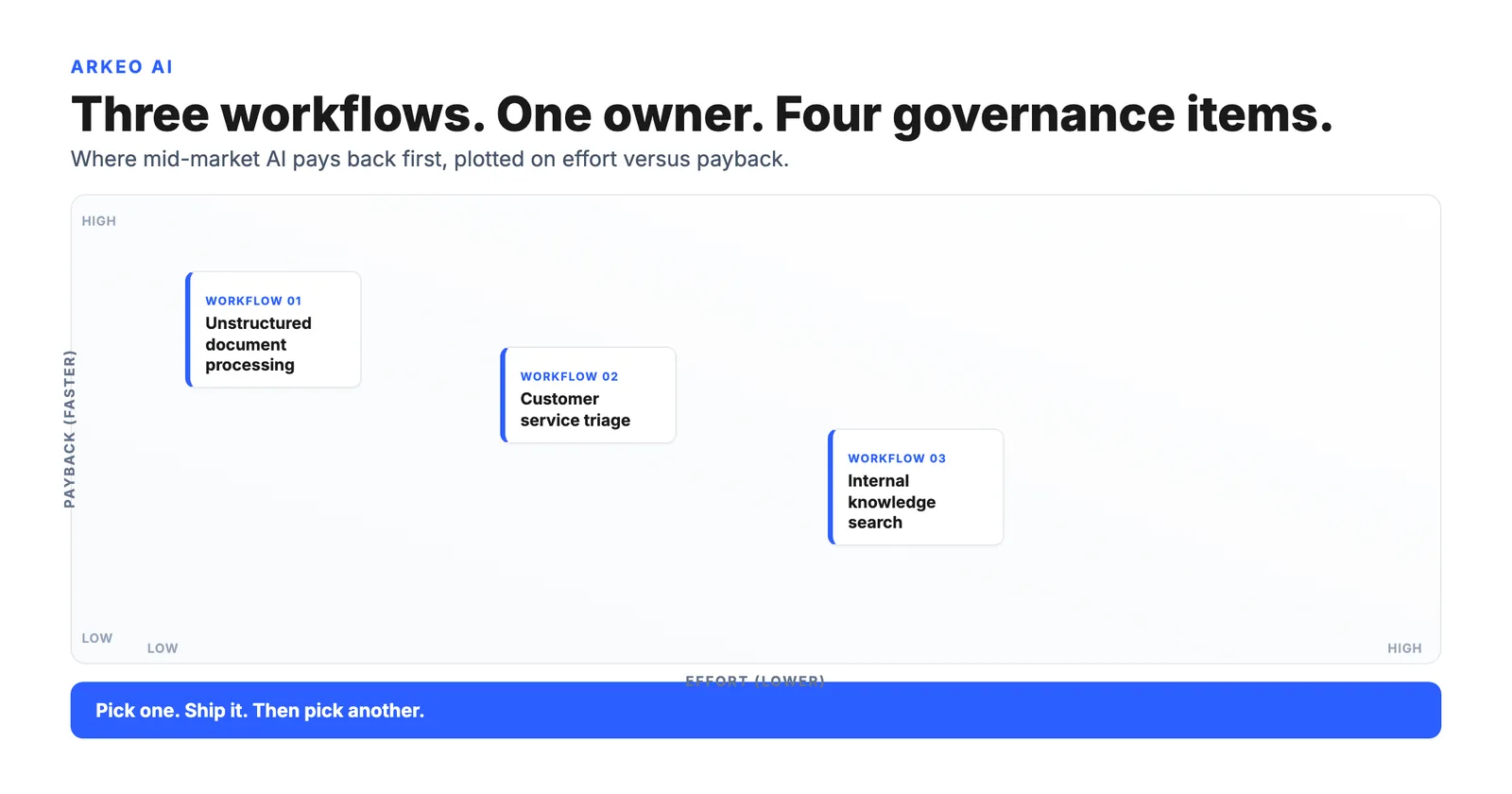 AI StrategyPractical AI Strategy for Business: Four Decisions Before the Build StartsA practical AI strategy is not a document. It is four decisions in writing before the build starts: a named workflow, a data-path approval, a named owner, and a ship date. If any of the four is missing, the strategy is not practical yet.
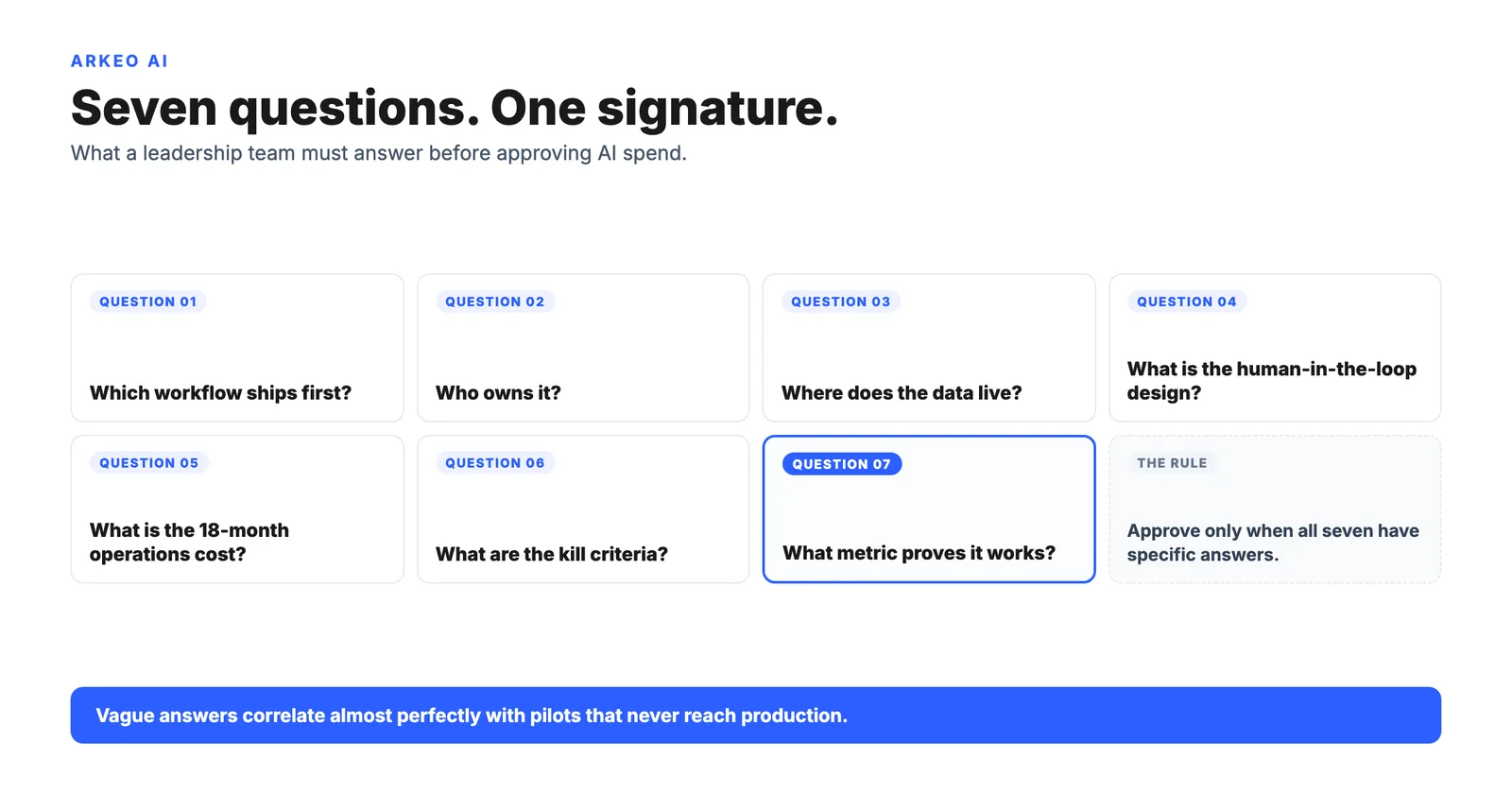 AI StrategyAI Strategy for Business Leaders: 7 Questions That Separate Pilots from ProductionThe wrong question business leaders ask about AI is: are we behind? The right question is which workflow ships in the next 90 days, and who owns it when it does? These seven questions answer that.
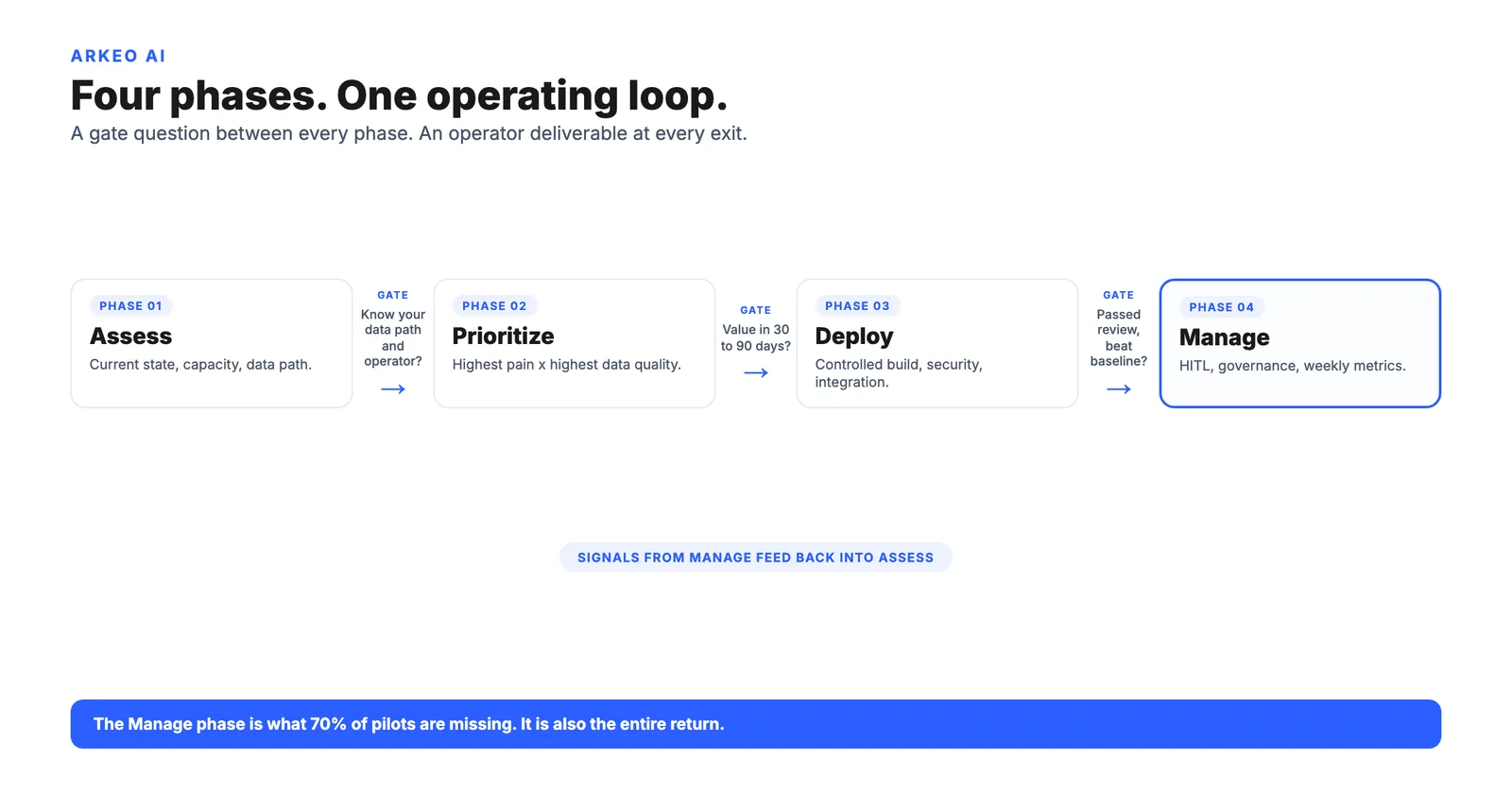 AI StrategyAI Strategy Framework: Five Components That Produce Deployed WorkflowsThe wrong AI strategy framework ends with a slide deck. The right one ends with a deployed workflow, a named operator, and a board metric that moved. Here are the five components that produce that outcome.
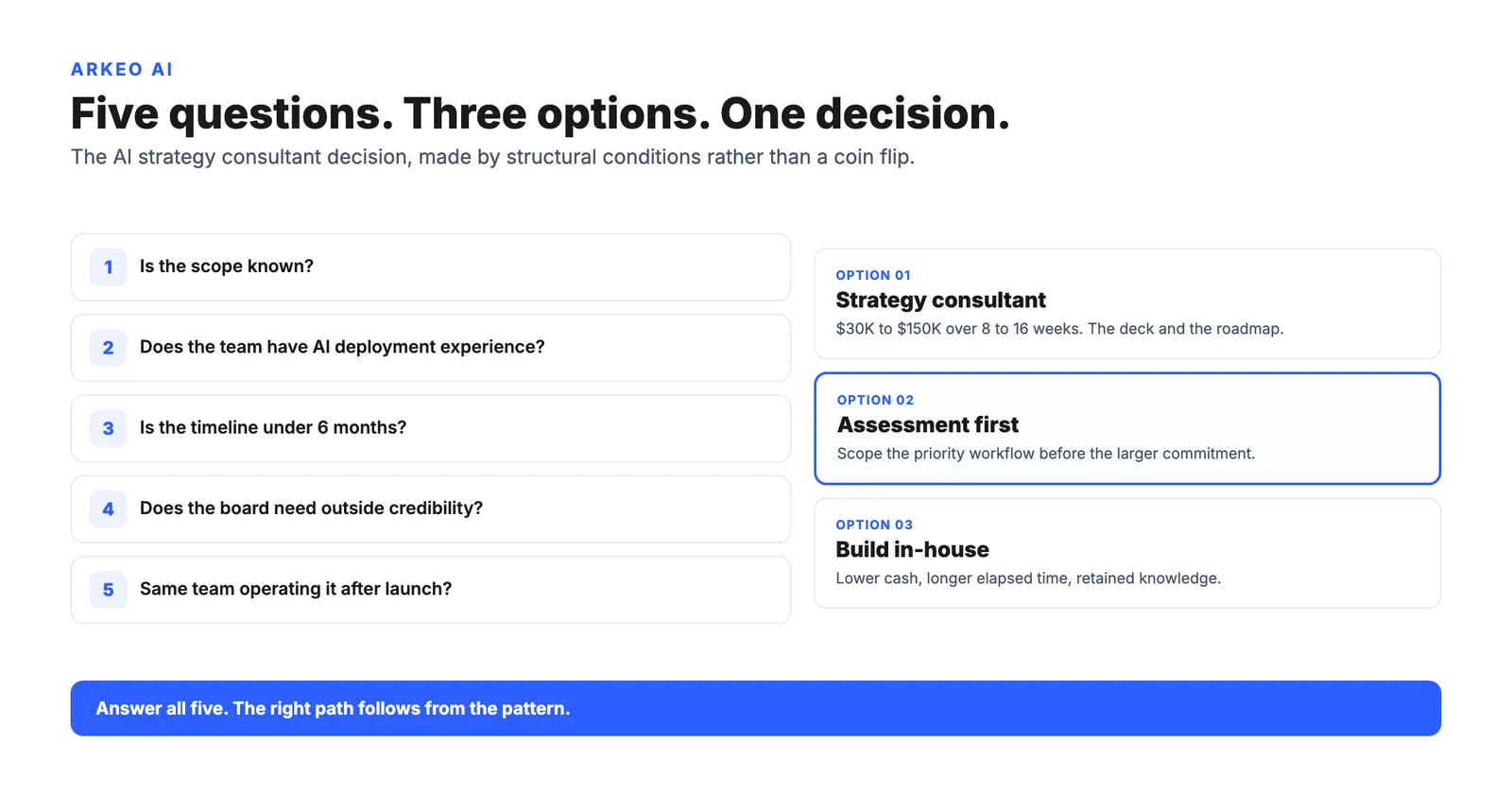 AI StrategyAI Strategy Consultant vs. Internal: A Decision Guide for OperatorsThe wrong question is consultant or internal hire. The right question is what specific decision are we stuck on, and does the person who unblocks it need to be on payroll? The answer depends on where you are in the deployment cycle.
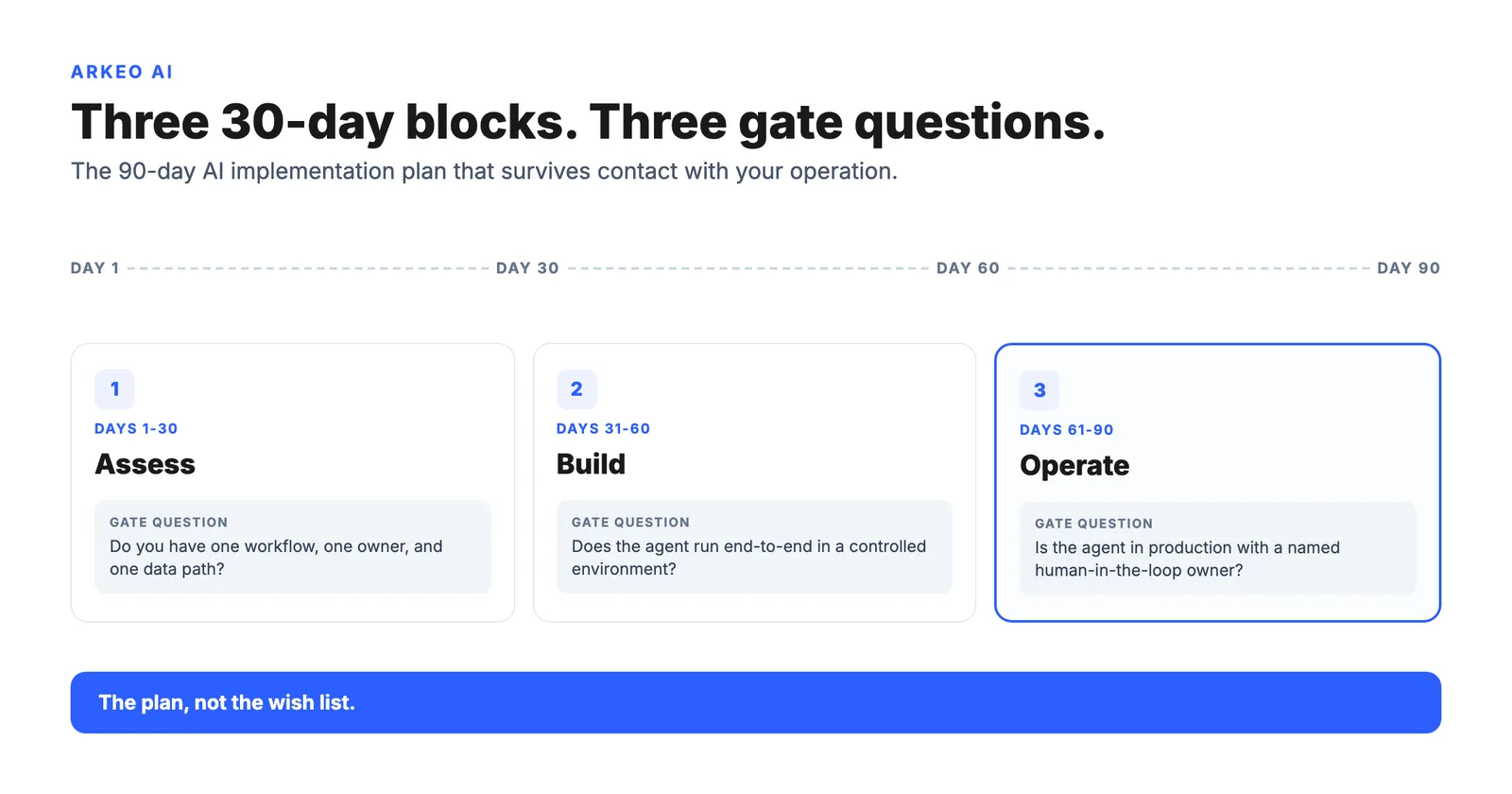 AI StrategyAI Implementation 90-Day Plan: One Workflow in Production by Day 90The wrong question at day zero is how many use cases to explore. The right question is which one workflow can be in production by day 90, with a named operator who runs it on a Monday morning.
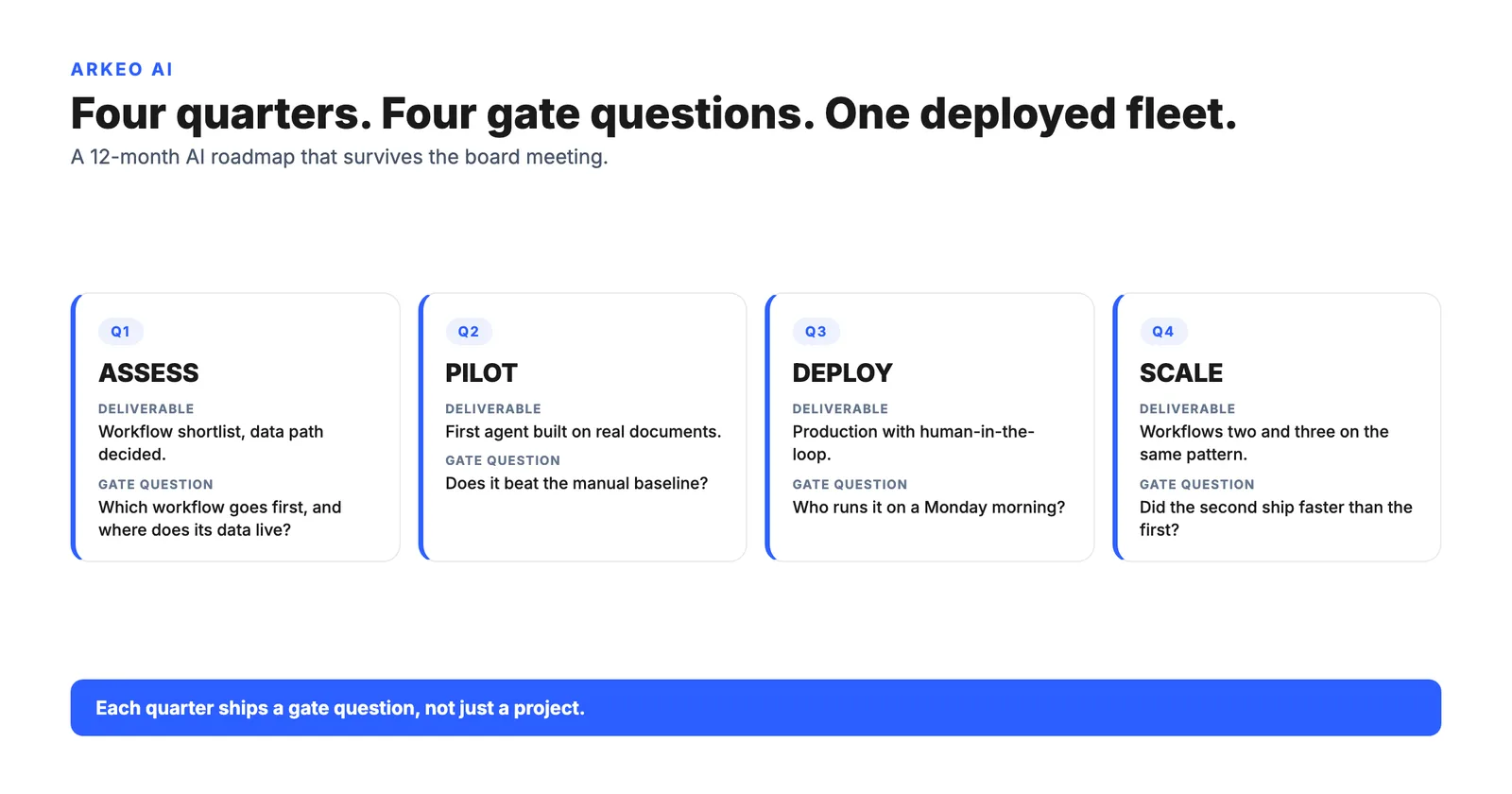 AI Strategy12-Month AI Roadmap: Four Quarters, Four Gate QuestionsA 12-month AI roadmap is four quarters, one gate question each, and one board metric per quarter that proves the quarter shipped. Here is the sequence operators actually execute.
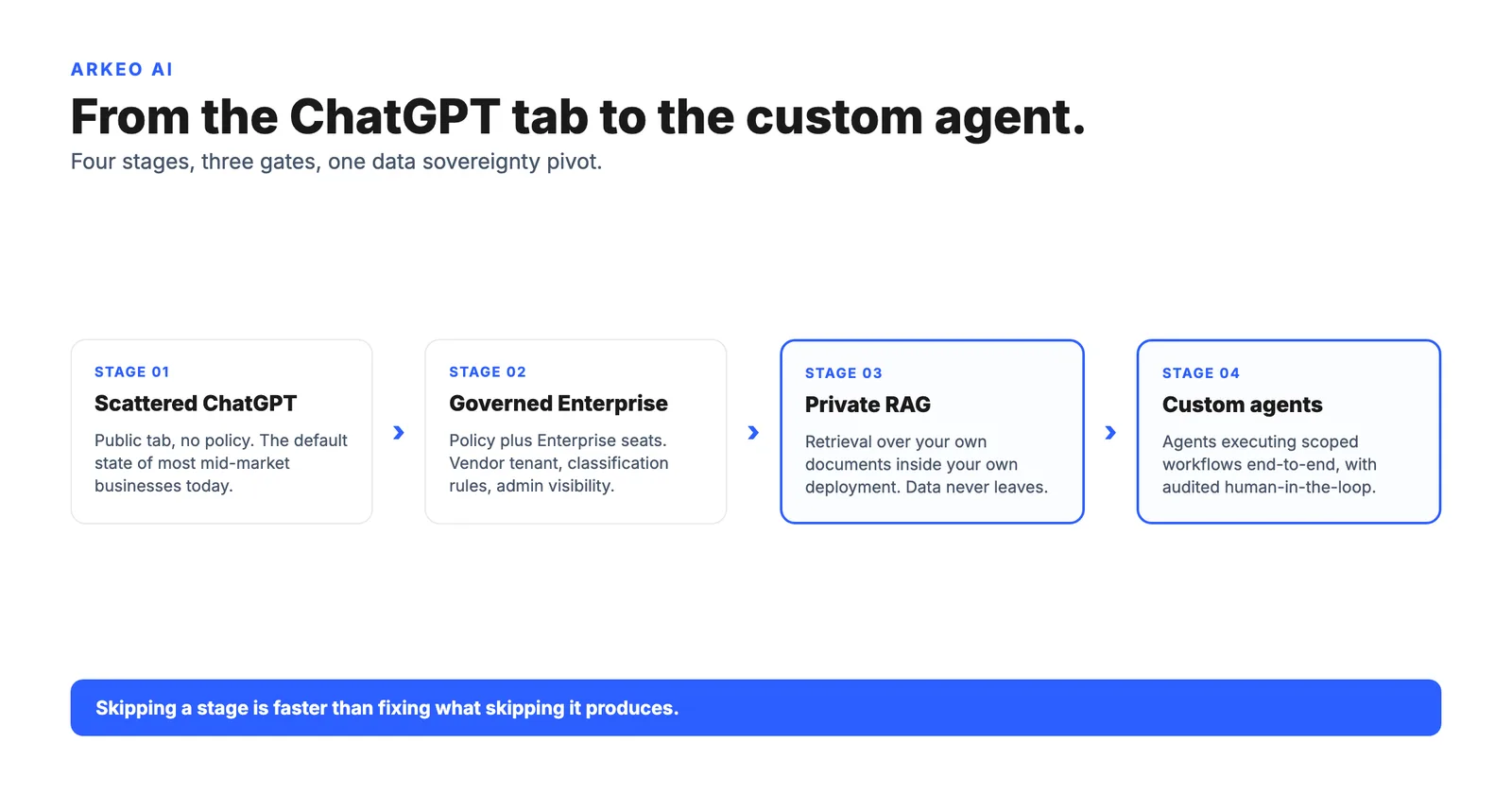 AI StrategyGenerative AI Strategy: From ChatGPT to Custom AgentsIf half your staff is pasting customer data into ChatGPT and the board now wants a generative AI strategy: the four-stage path to custom agents and where the sovereignty pivot lands.
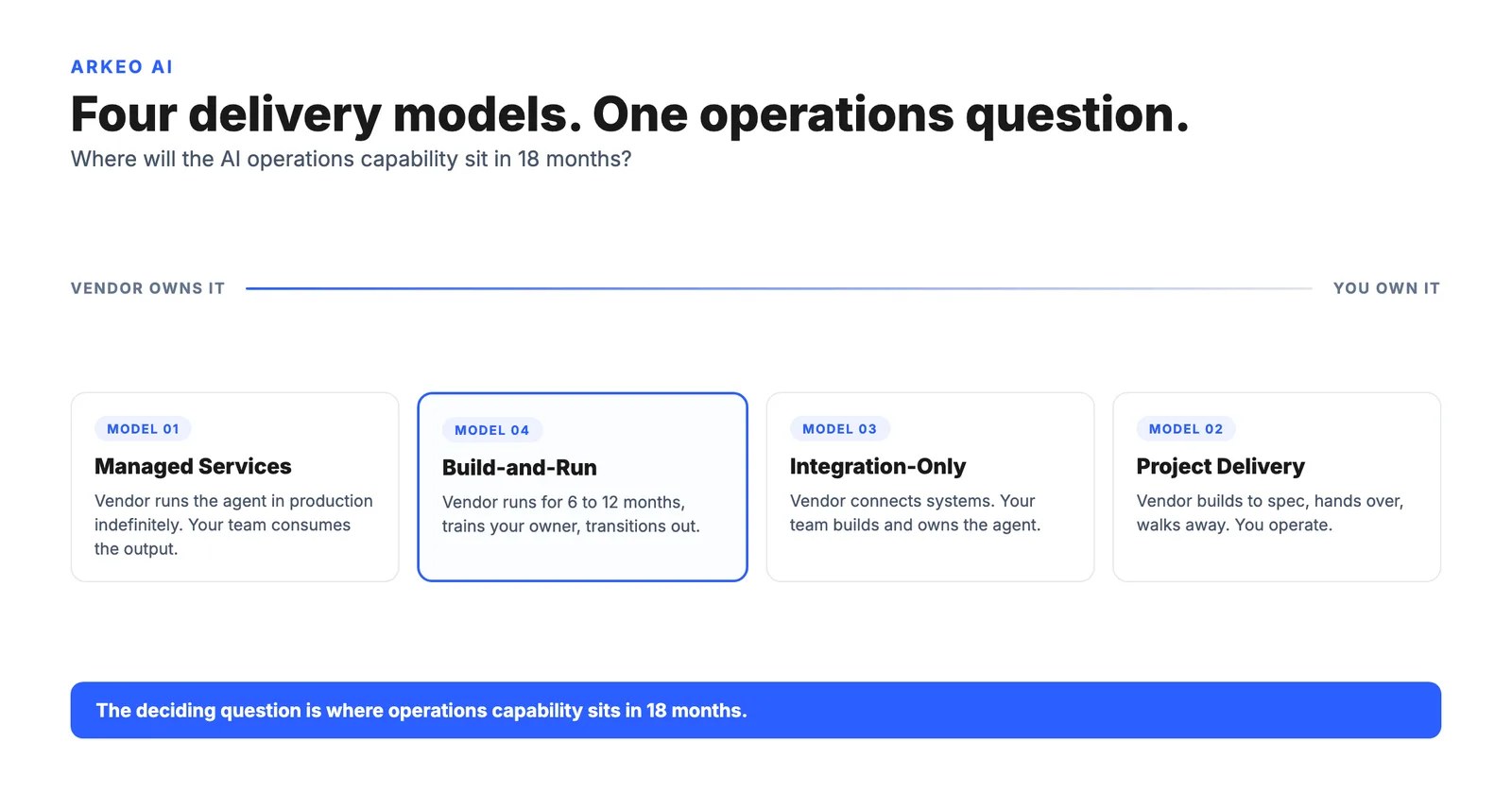 AI StrategyAI Implementation Services: The Four Delivery ModelsIf you have three vendor proposals back and none of them compare on the same terms: the four delivery models for AI implementation services side by side, and the one question that decides yours.
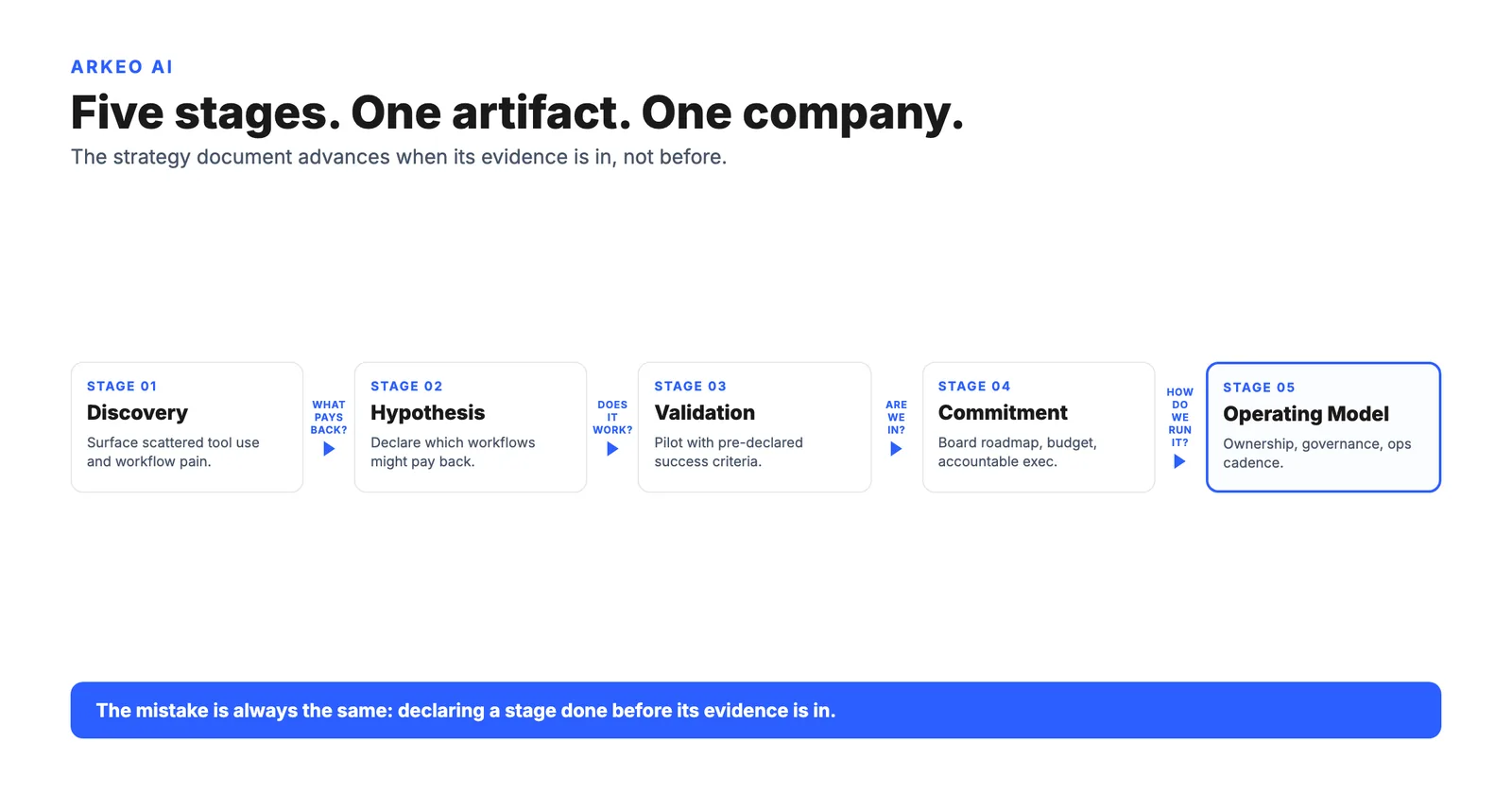 AI StrategyThe 5 Stages of AI Strategy DevelopmentIf your AI strategy document is six months old and still feels stuck on page one: the five stages it has to clear, the mistake that quietly kills each, and the gap that funds the wrong workflows.
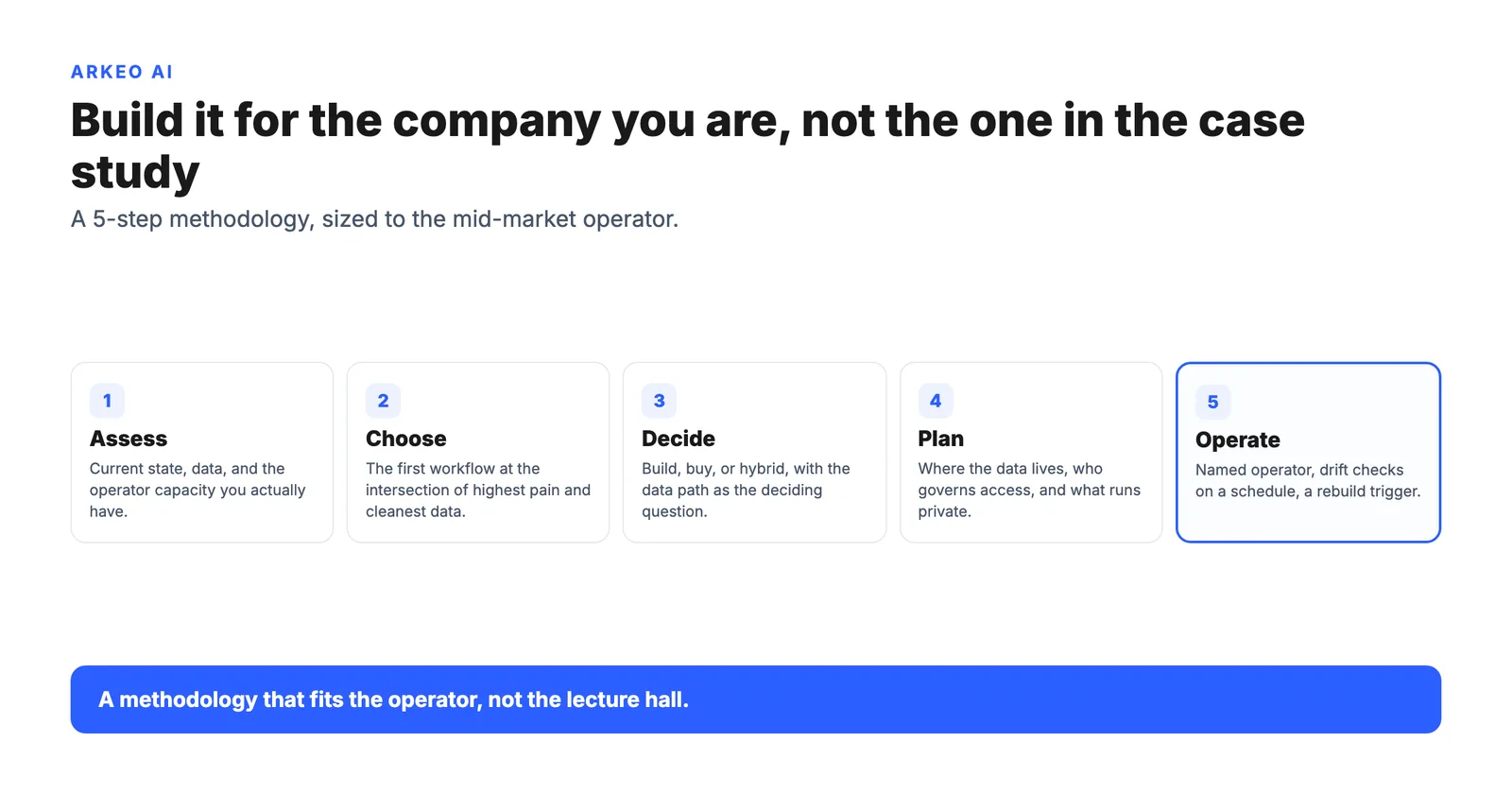 AI StrategyAI Strategy: The Three Decisions That Determine Whether It ShipsThe wrong question about AI strategy is: what should we be doing? The right question is: which one workflow ships in 30 days and who owns it after launch? Here is the five-component strategy that survives contact with the operation.
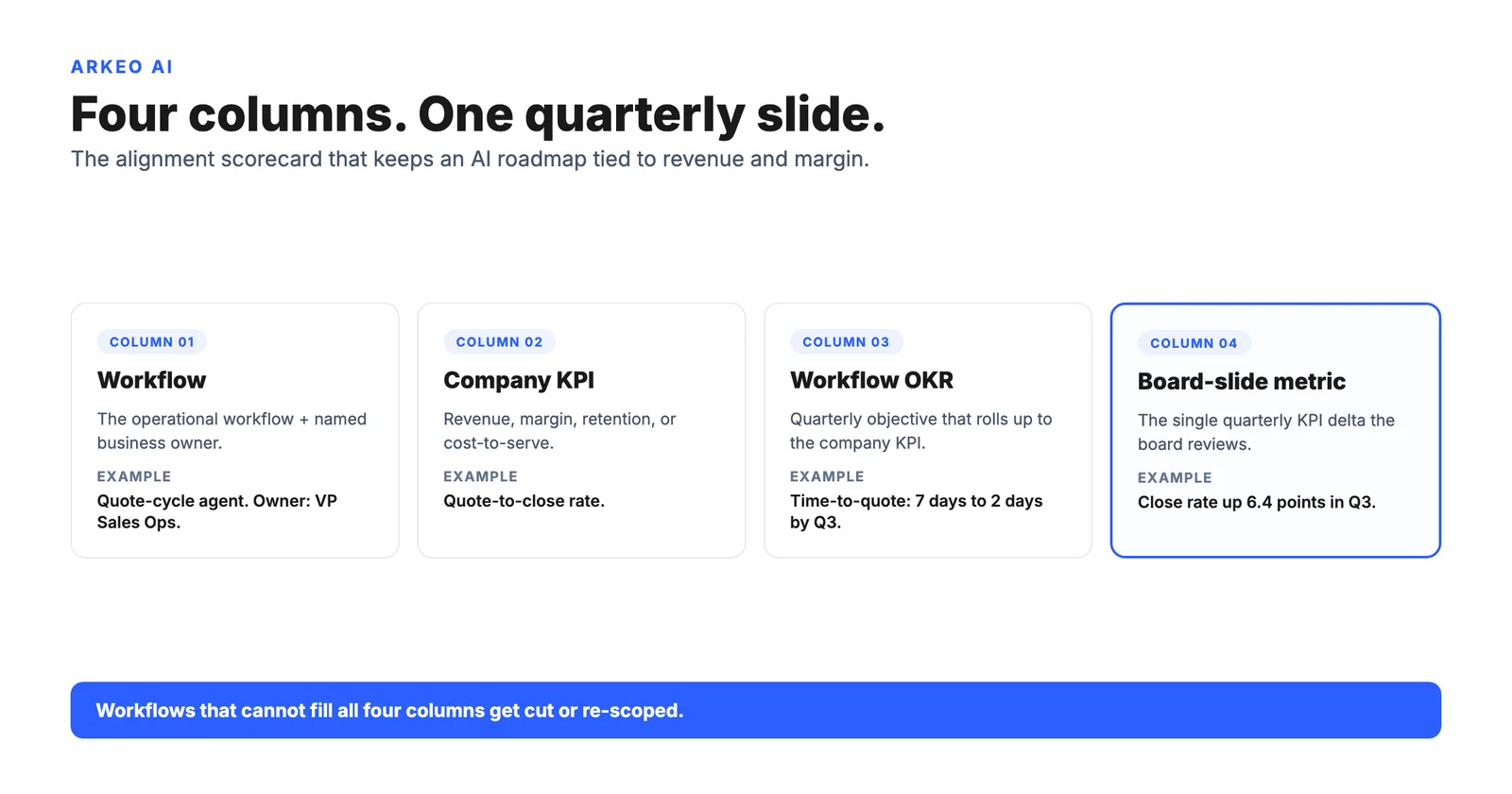 AI StrategyAI Strategy Roadmap Alignment: Four Columns, One SlideIf half your AI roadmap is technically interesting and quietly disconnected from the CFO's metrics: the four-column alignment scorecard, the OKR linkage, and the quarterly board slide that fixes it.
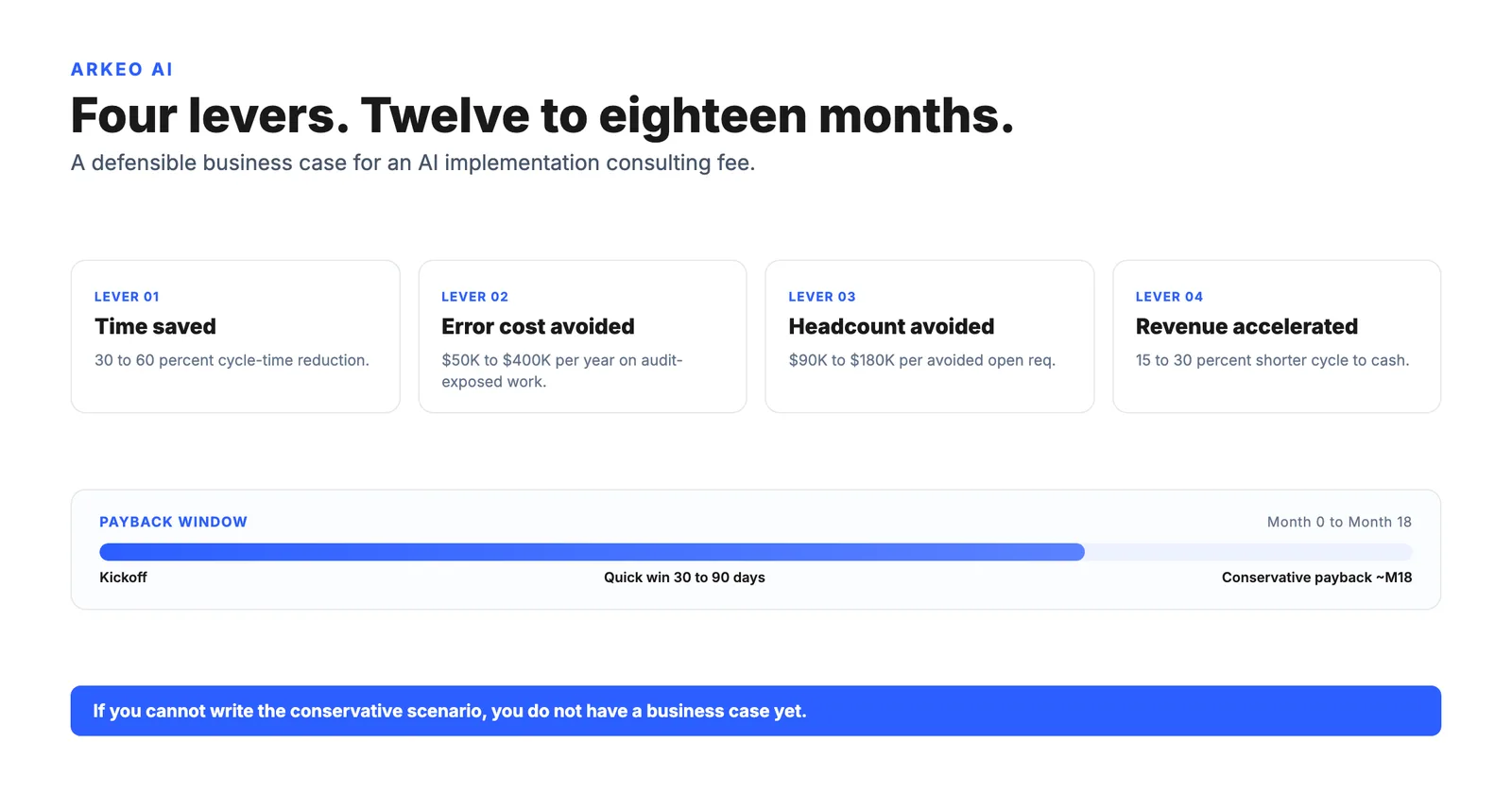 AI StrategyThe ROI of AI Implementation ConsultingIf you are selling a $50K-$200K AI consulting fee to a CFO already burned by an optimistic payback claim: the four ROI levers, the three scenarios, the 12-18 month window, and the kill criteria.
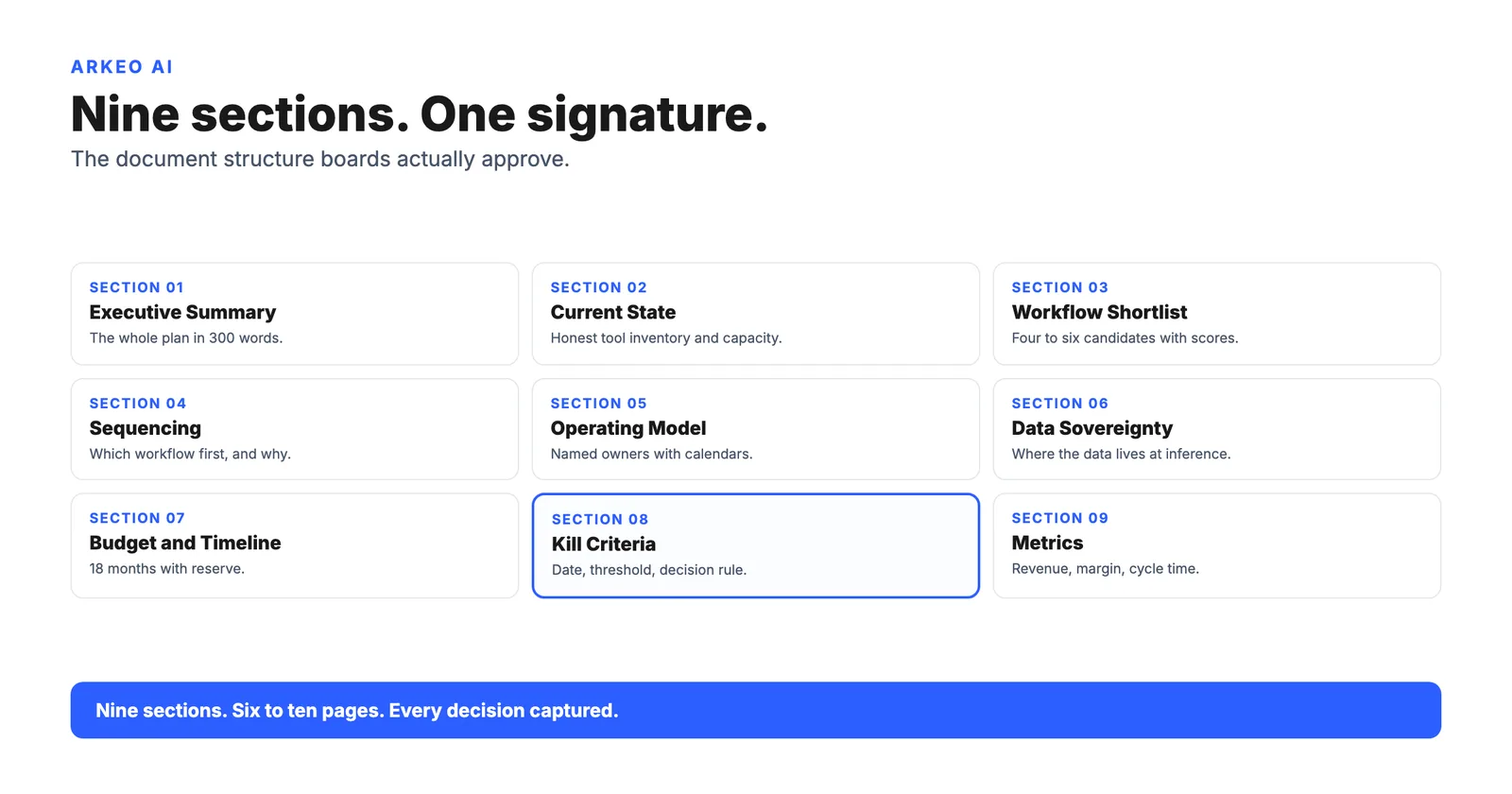 AI StrategyAI Strategy Plan Template: The Nine SectionsIf you have an AI strategy in your head and the board still has not approved it: the 9-section document spine, what each section must capture, and the four sections that quietly lose the vote.
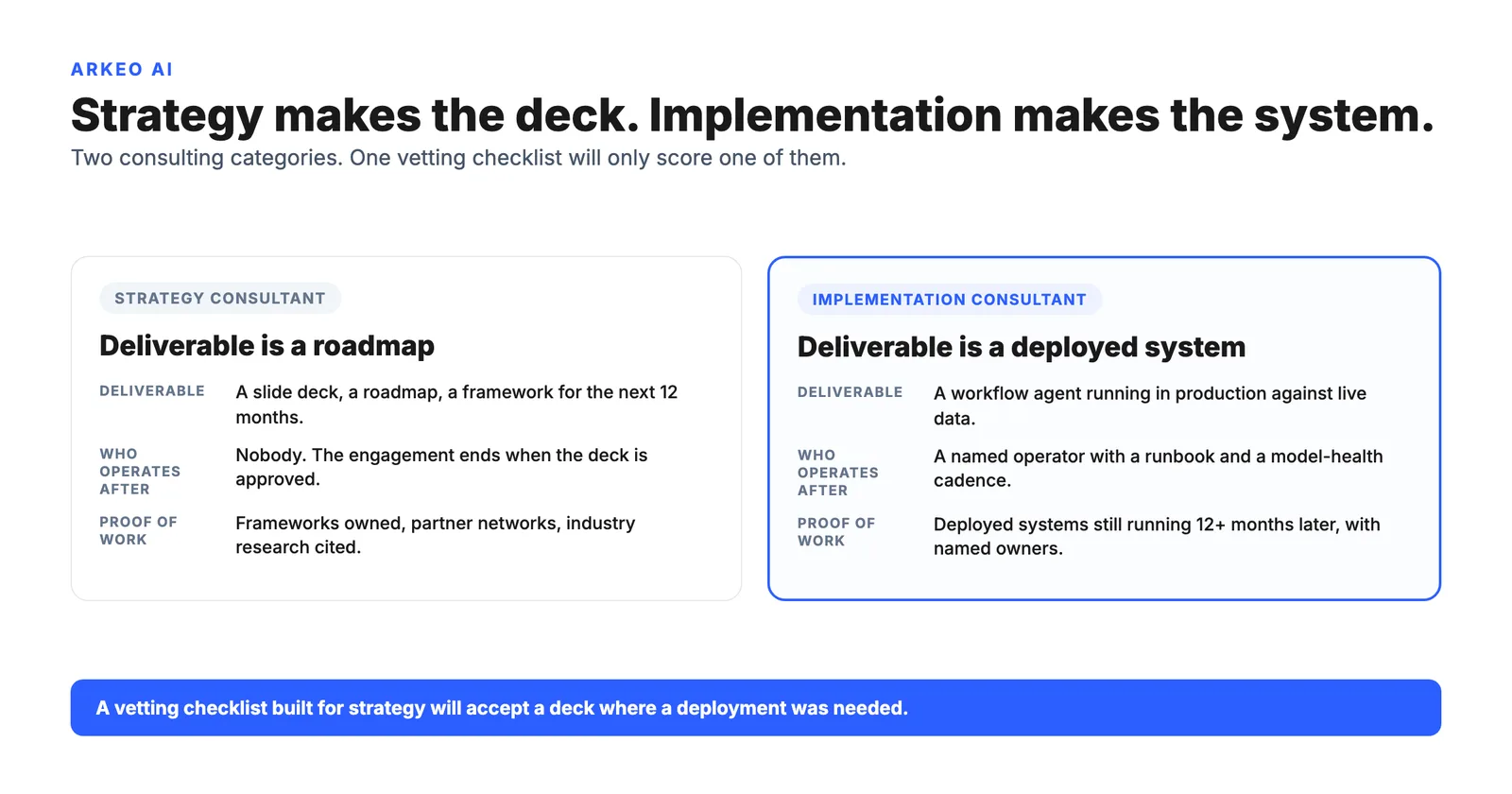 AI StrategyAI Implementation Consultant: The Vetting ChecklistIf you have three AI implementation pitches and no clean way to tell builders from resellers: the 7-item vetting checklist, the three killer questions, and the proof of work to demand.
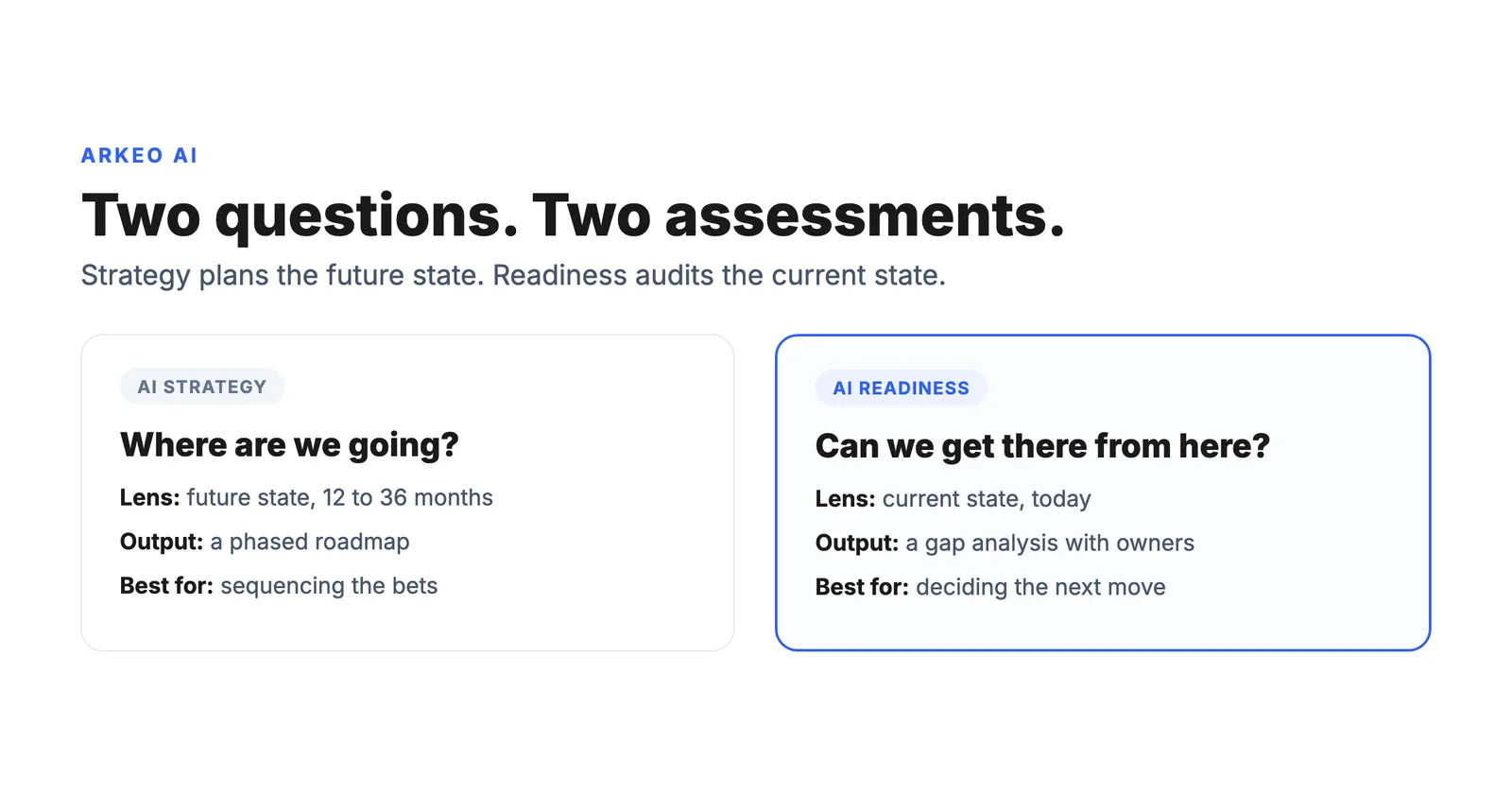 AI ReadinessAI Strategy vs AI Readiness: The DifferenceAI strategy and AI readiness are not the same thing, and treating them as one is the most common reason mid-market AI programs stall before they ship. Strategy owns the future state. Readiness owns the current state. Here is how to use both in the right order.
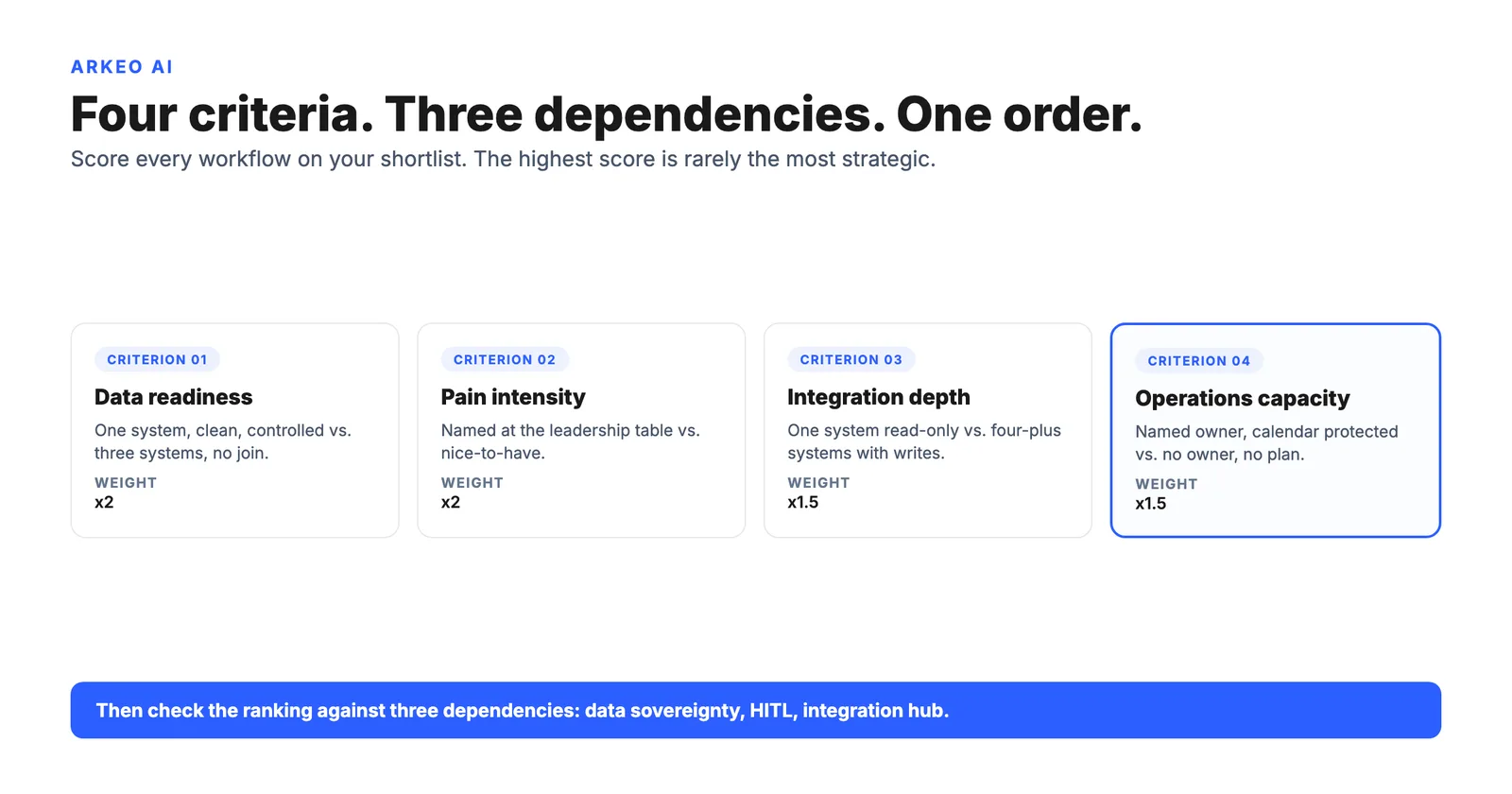 AI StrategySequencing Your AI Implementation RoadmapIf you have four to six AI workflows on a whiteboard and an argument that will not end about which one first: the 4-criterion ranking rubric and the three dependencies that force re-ordering.
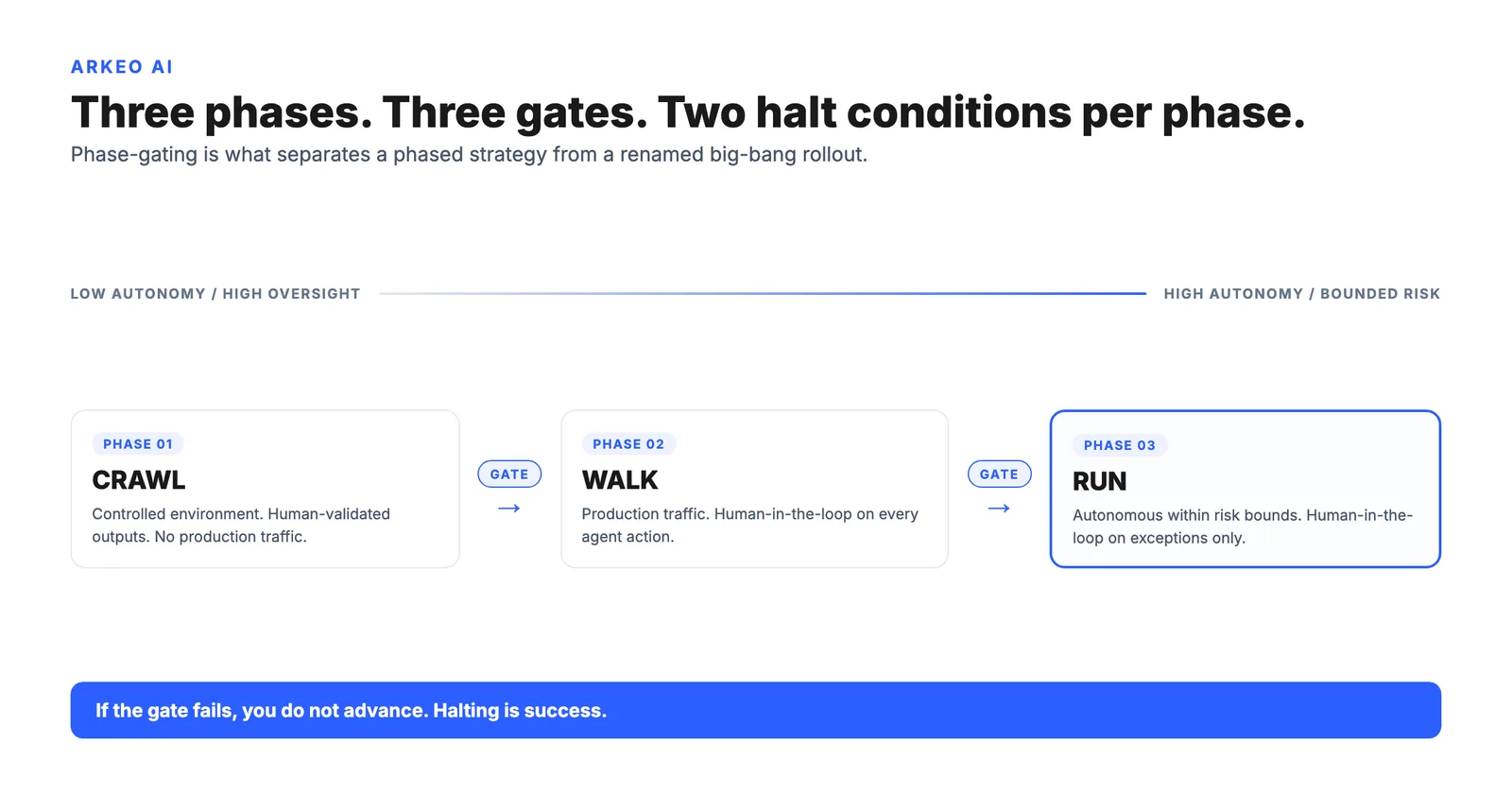 AI StrategyPhased AI Implementation Strategy: Crawl, Walk, RunIf you have watched a big-bang AI rollout fail and want phased discipline: the Crawl-Walk-Run gates, the four halt conditions, and the drift signal that retires more agents than launches do.
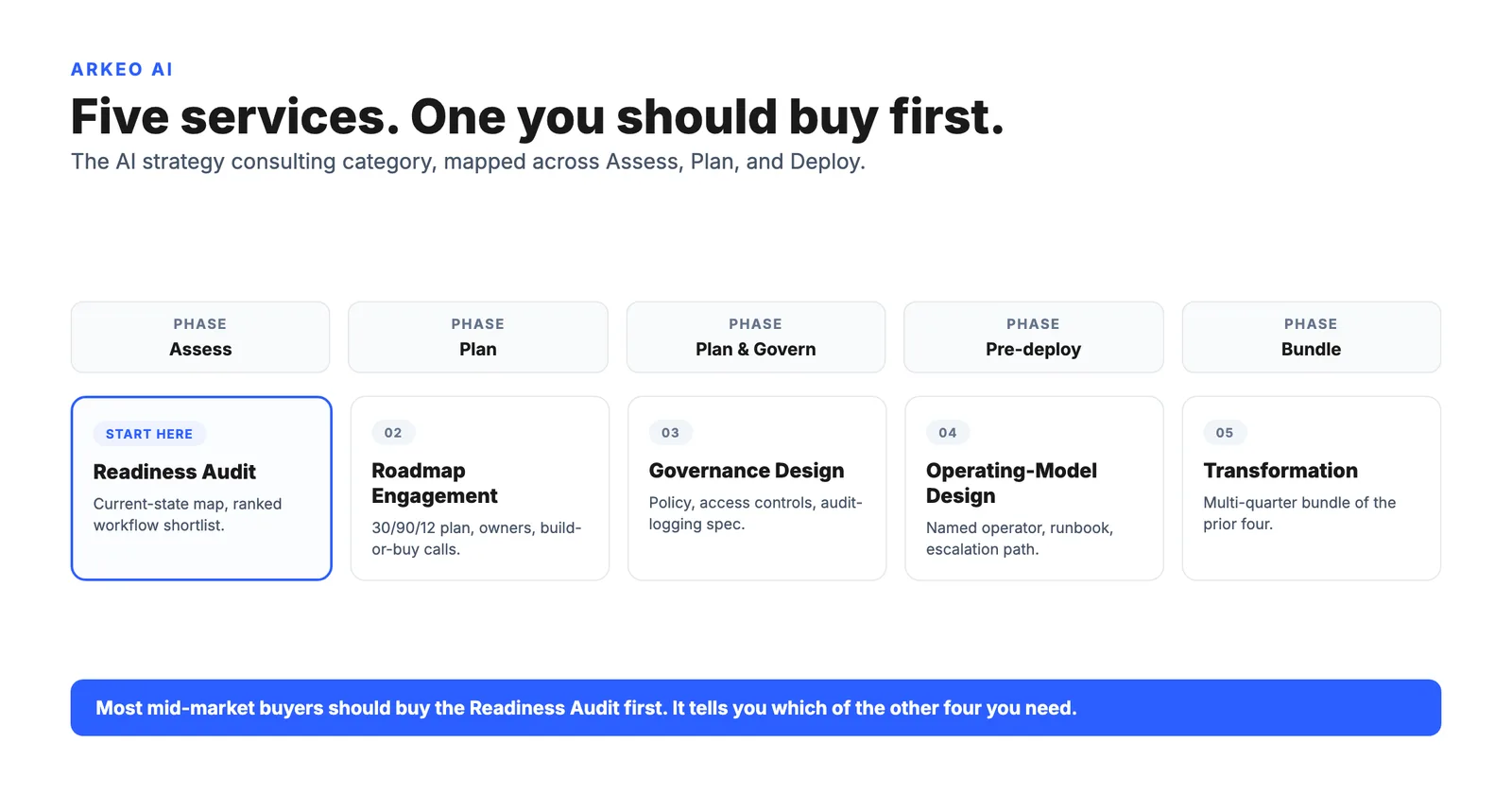 AI StrategyEvaluating AI Strategy Consulting ServicesIf every vendor's AI strategy consulting deck describes a different thing under the same name: the five service categories, the defensible fee range for each, and the order to buy them in.
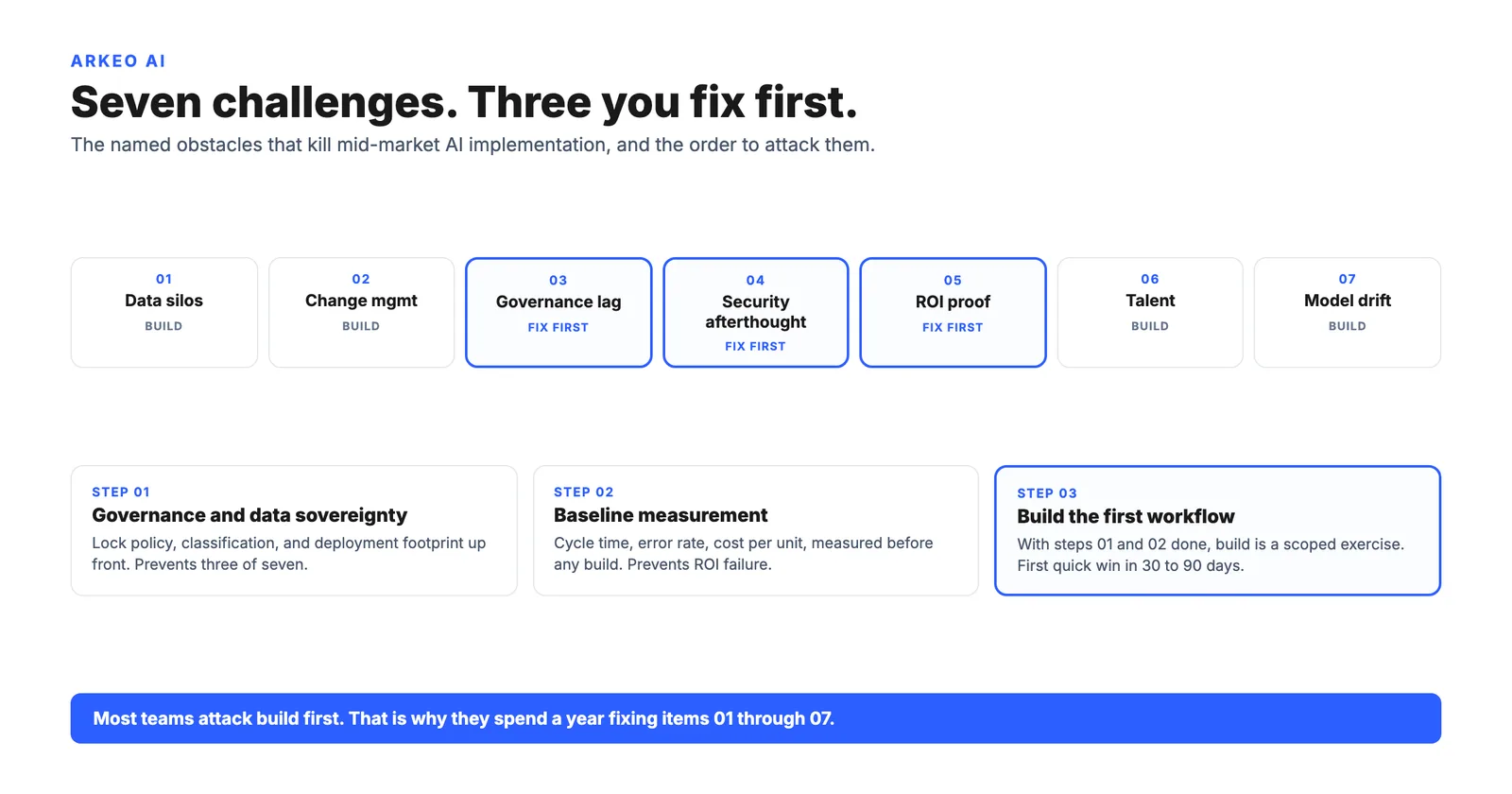 AI StrategyAI Implementation Challenges and How to Beat ThemIf you have heard the 70 percent failure stat and want the actual named list: seven obstacles, their symptoms, and the attack order that prevents four of them from ever firing.