Blog › AI
AI in Business: AI
Insights on private AI, on-premise deployment, and building AI systems you actually own.
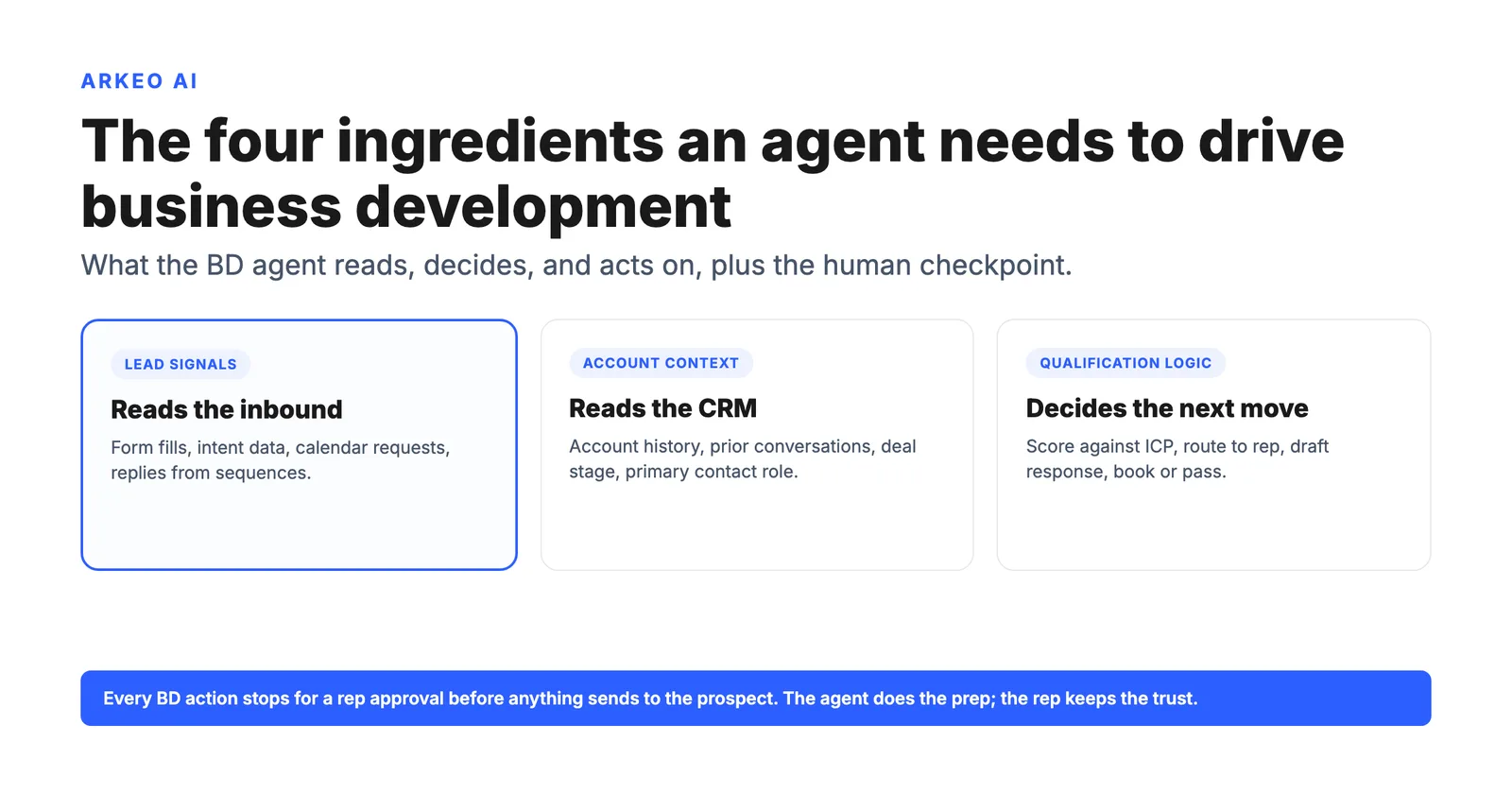 AIDeveloping AI Agents for Business DevelopmentDeveloping AI agents for business development means handing over inbound triage, account enrichment, scheduling, and pipeline hygiene to an agent that reads, decides, and stops for rep approval. This guide covers the four BD tasks worth giving an agent first, the four-step build path, the build-versus-buy math, and where mid-market BD agent projects fail.
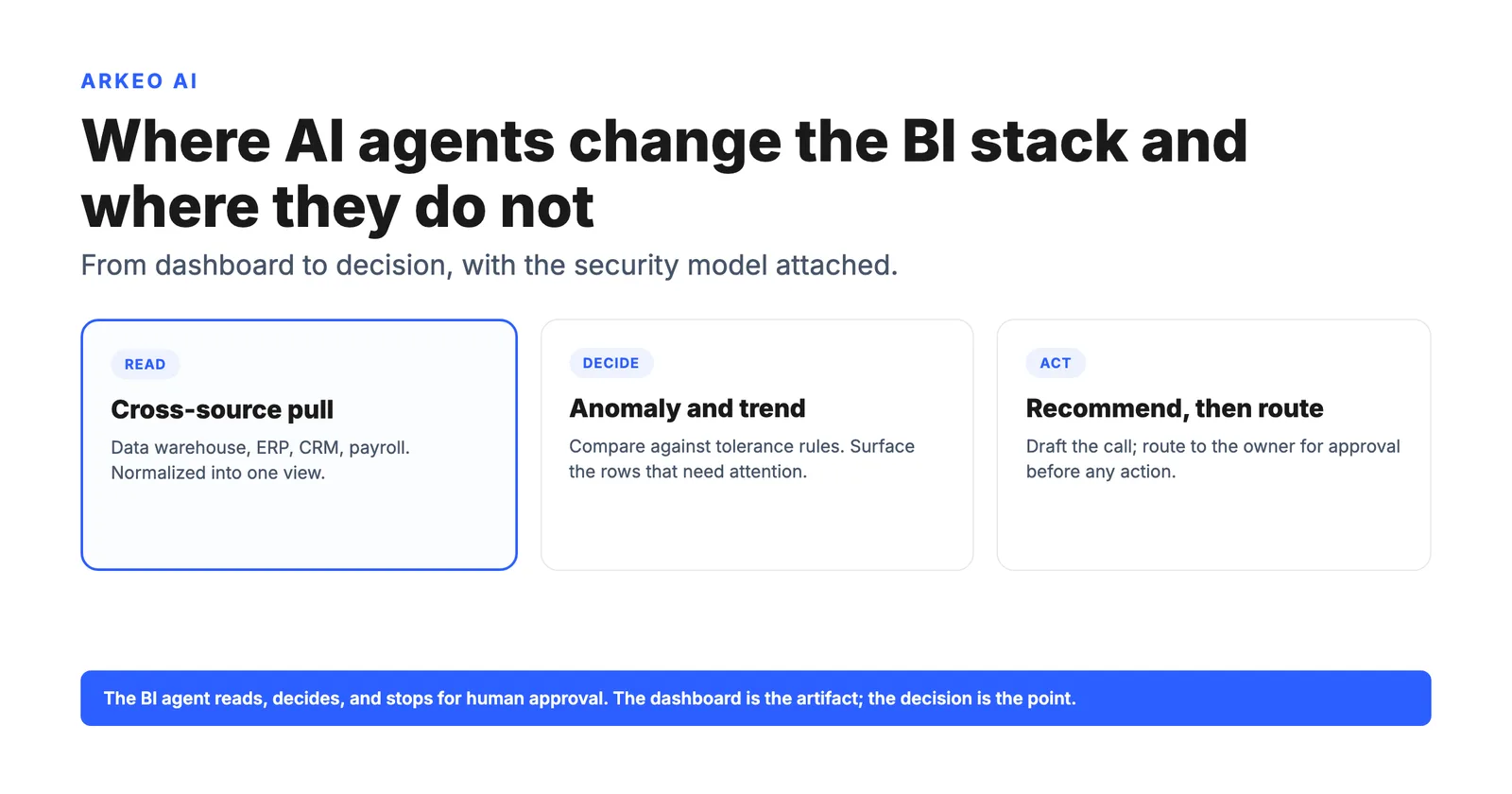 AILeveraging AI Agents for Business IntelligenceAI agents for business intelligence read across the company's data sources, apply the analysis rules, surface anomalies, and stop for human approval. This guide covers what the agent absorbs, what it does not, the security model that keeps data safe, and the rollout pattern that turns dashboards into decisions.
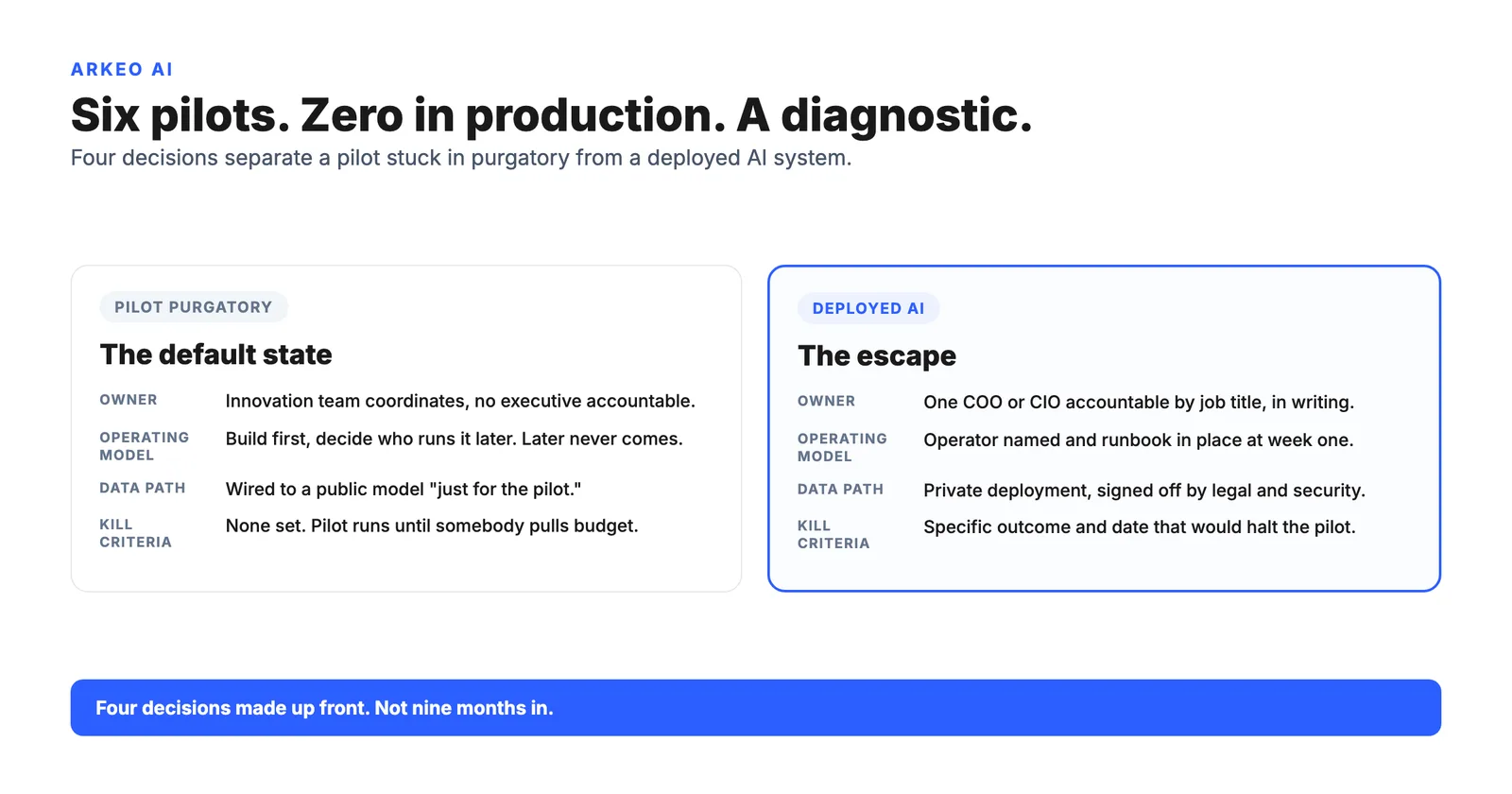 AI StrategyCorporate AI Strategy: The Four Decisions That Move Pilots to ProductionSix pilots running, zero in production. Corporate AI strategy fails for four organizational reasons — no named owner, no operating model, no data path answer, no kill criteria. Here is how to fix each one before the next pilot launches.
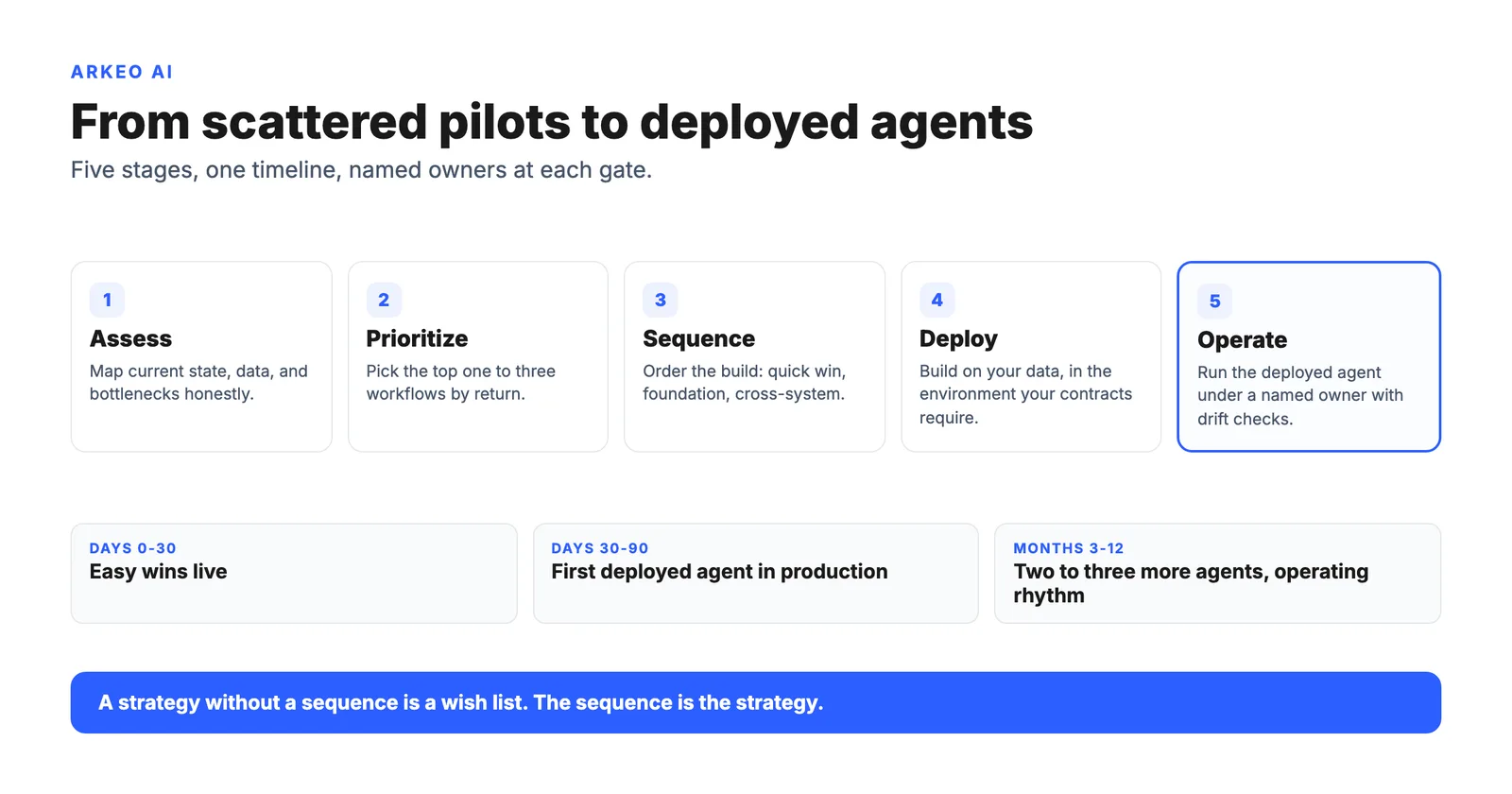 AI StrategyEnterprise AI Strategy: The Complete Guide to Building, Owning, and Executing Your PlanAn enterprise AI strategy is a sequenced, owned plan that names what ships first, who runs it, and where the data lives — before any build begins. This is the complete guide covering every component: readiness, framework, roadmap, 90-day plan, sequencing, governance, and how to decide between a consultant and an internal owner.
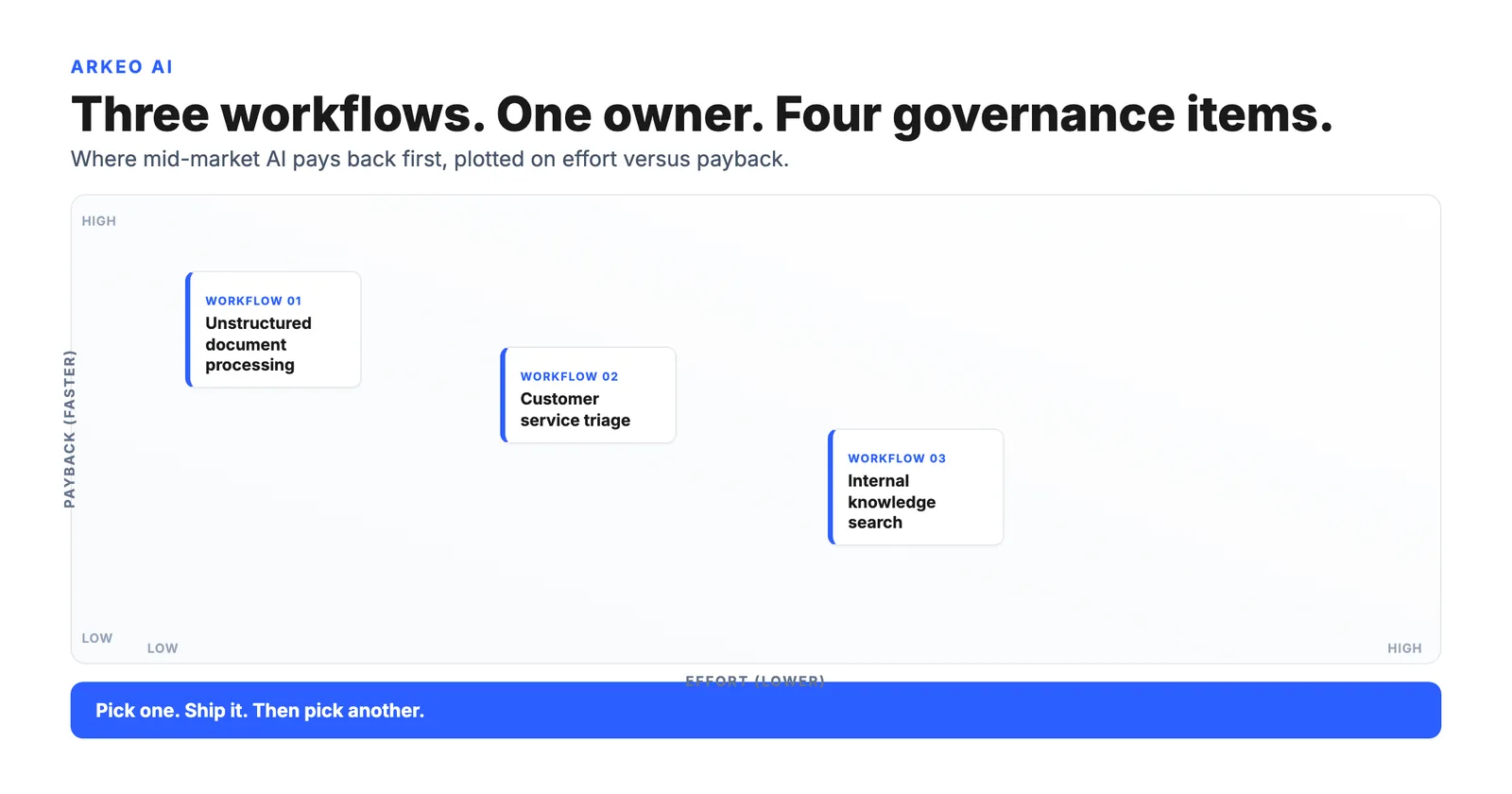 AI StrategyPractical AI Strategy for Business: Four Decisions Before the Build StartsA practical AI strategy is not a document. It is four decisions in writing before the build starts: a named workflow, a data-path approval, a named owner, and a ship date. If any of the four is missing, the strategy is not practical yet.
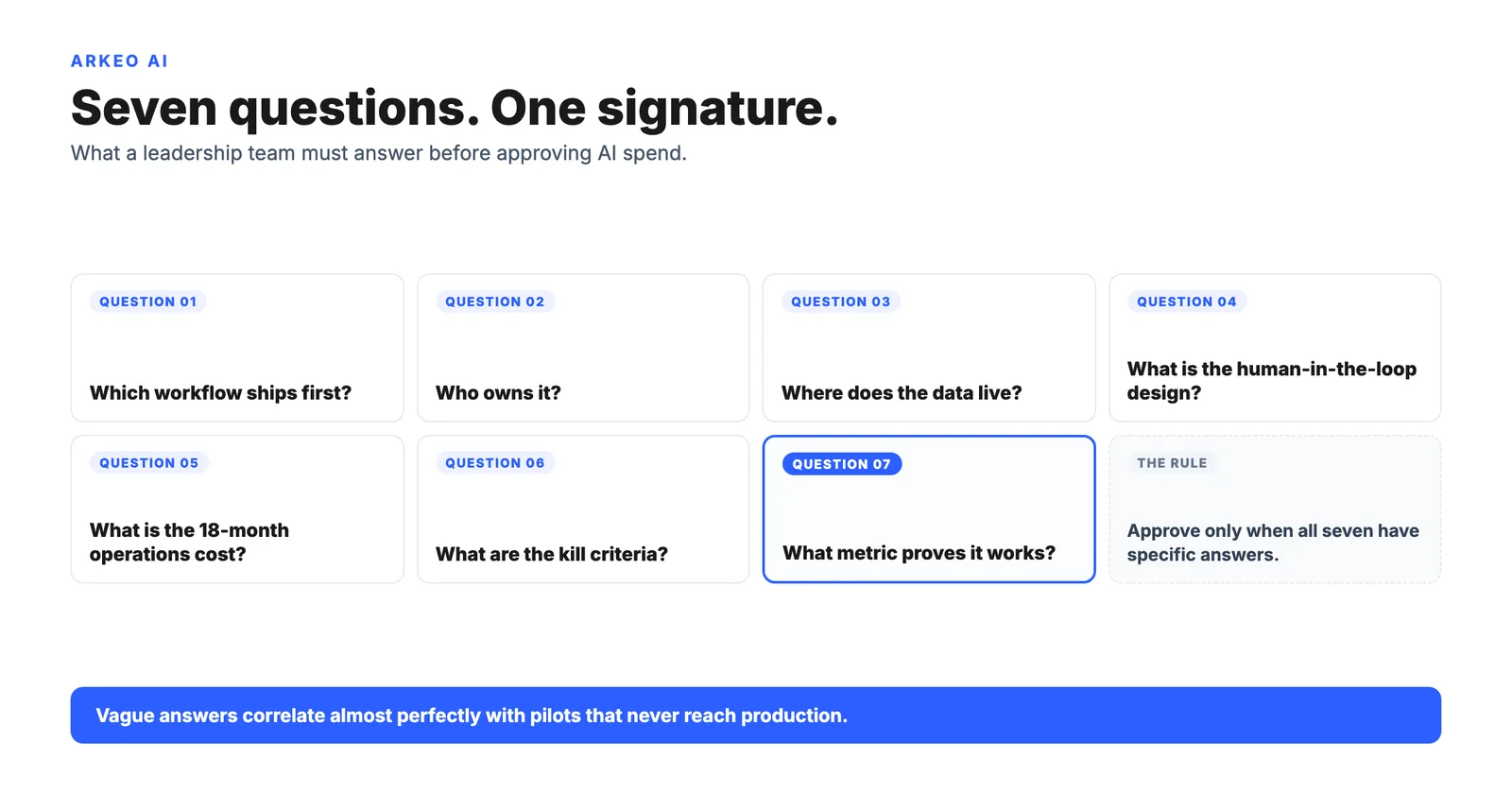 AI StrategyAI Strategy for Business Leaders: 7 Questions That Separate Pilots from ProductionThe wrong question business leaders ask about AI is: are we behind? The right question is which workflow ships in the next 90 days, and who owns it when it does? These seven questions answer that.
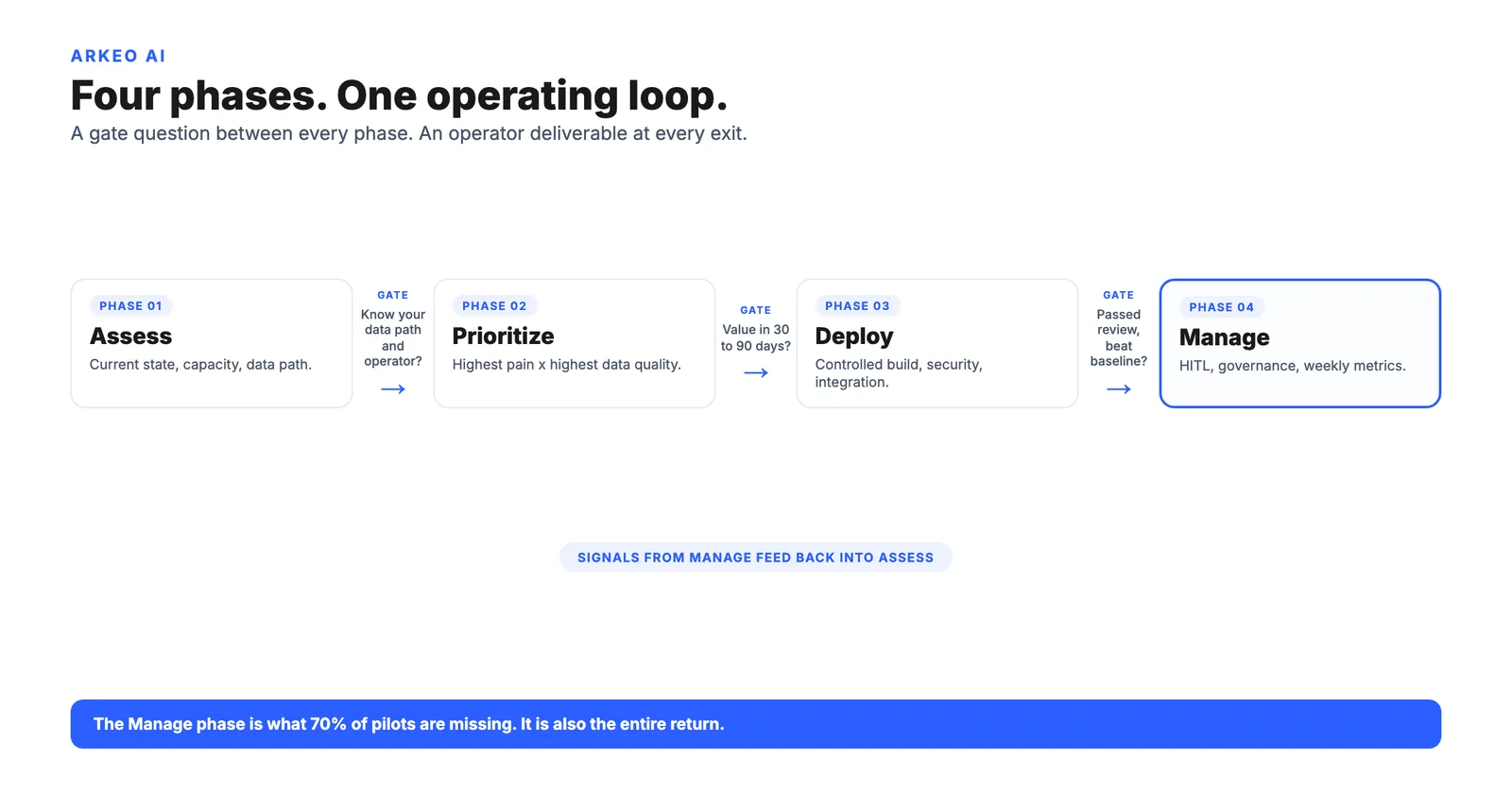 AI StrategyAI Strategy Framework: Five Components That Produce Deployed WorkflowsThe wrong AI strategy framework ends with a slide deck. The right one ends with a deployed workflow, a named operator, and a board metric that moved. Here are the five components that produce that outcome.
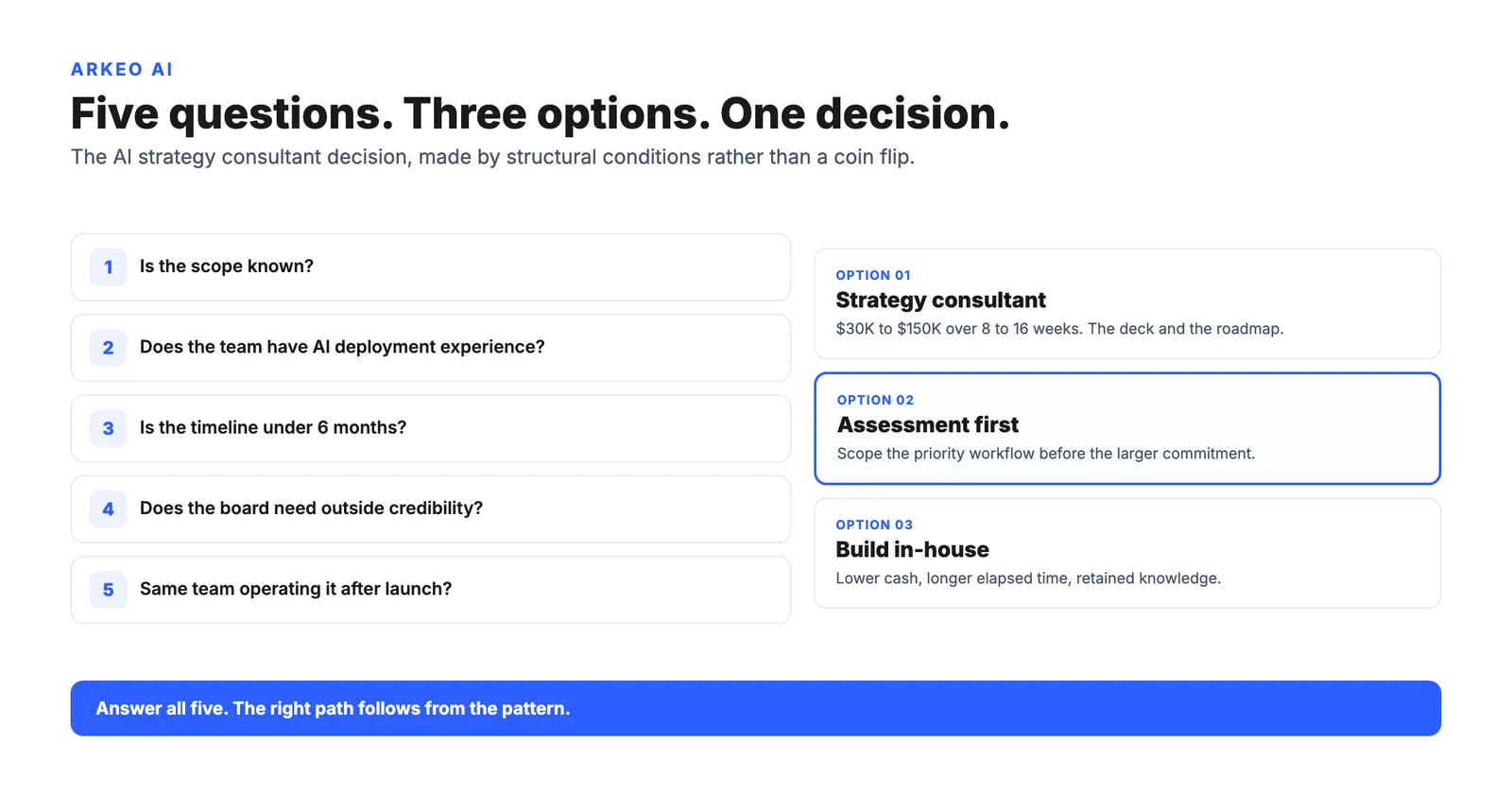 AI StrategyAI Strategy Consultant vs. Internal: A Decision Guide for OperatorsThe wrong question is consultant or internal hire. The right question is what specific decision are we stuck on, and does the person who unblocks it need to be on payroll? The answer depends on where you are in the deployment cycle.
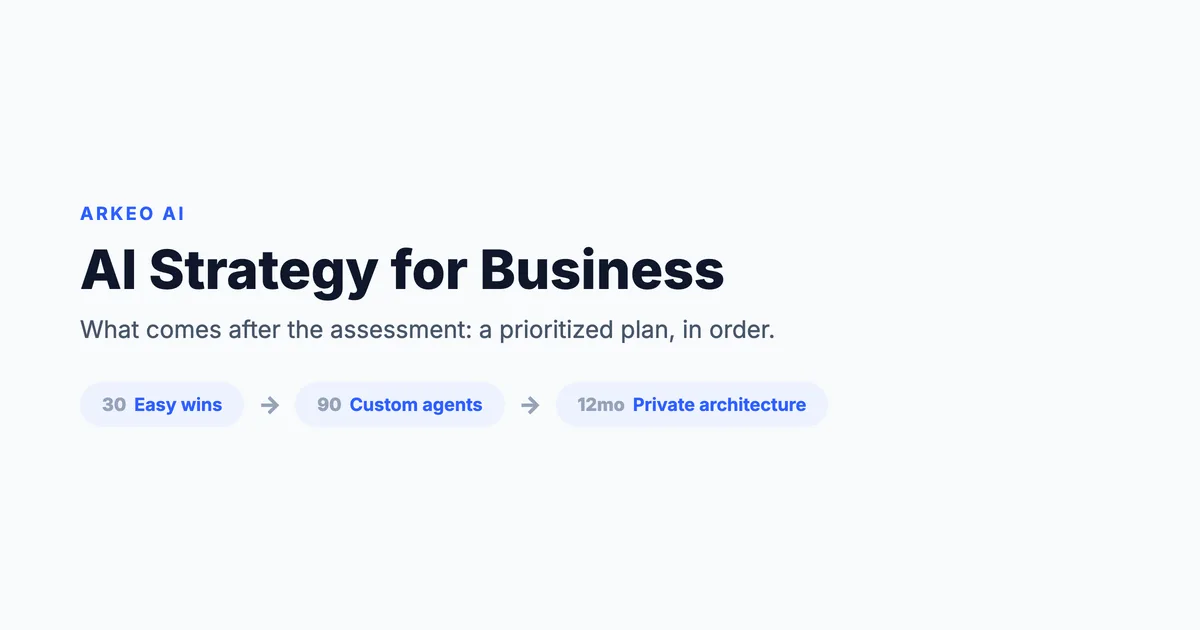 AIAI Strategy for Business: The Three-Part Plan After the AssessmentThe wrong starting point for an AI strategy is the vendor shortlist. The right starting point is the current-state map. Here is the three-part plan that takes a business from scattered AI interest to a deployed workflow in production.
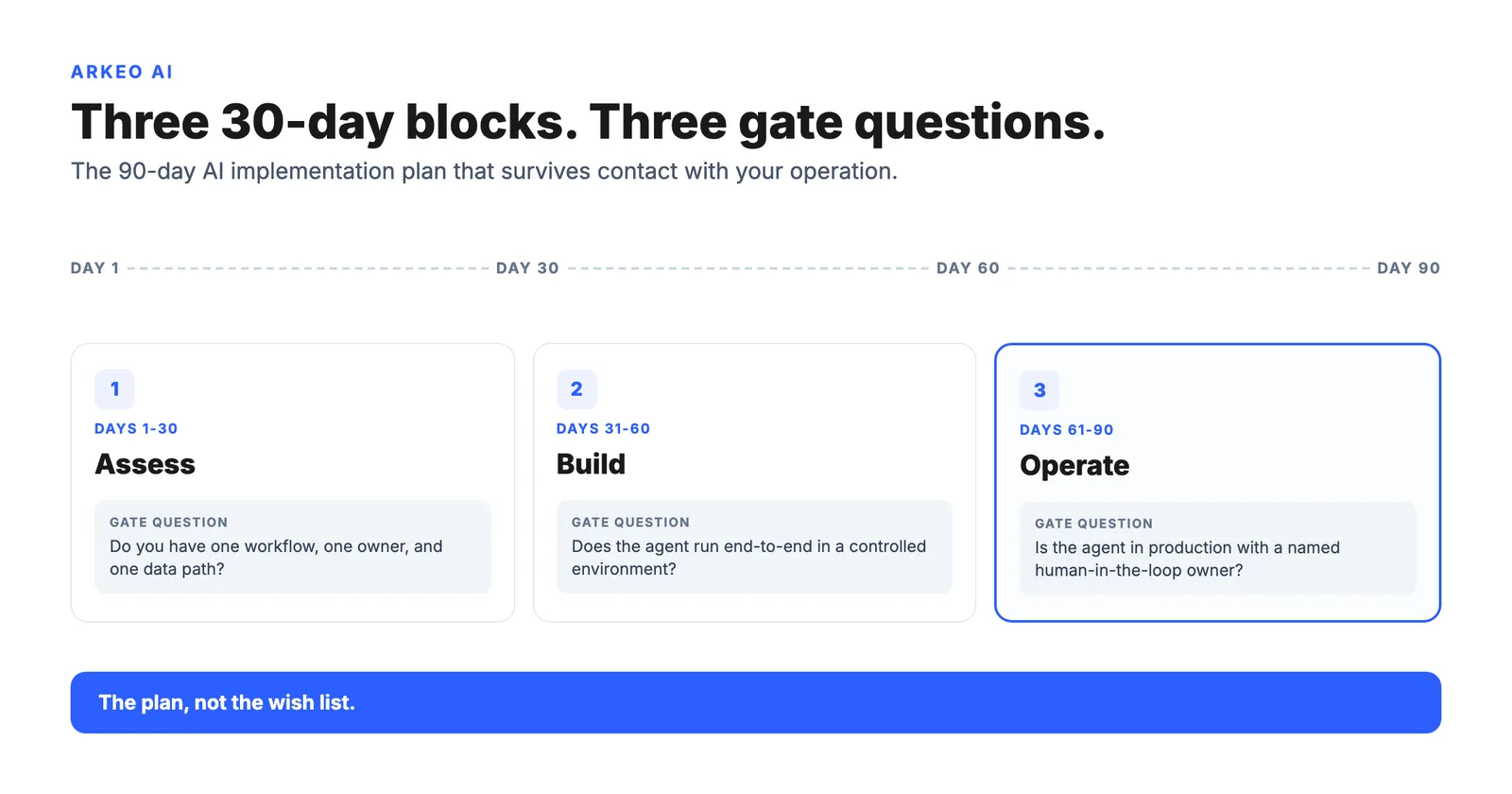 AI StrategyAI Implementation 90-Day Plan: One Workflow in Production by Day 90The wrong question at day zero is how many use cases to explore. The right question is which one workflow can be in production by day 90, with a named operator who runs it on a Monday morning.
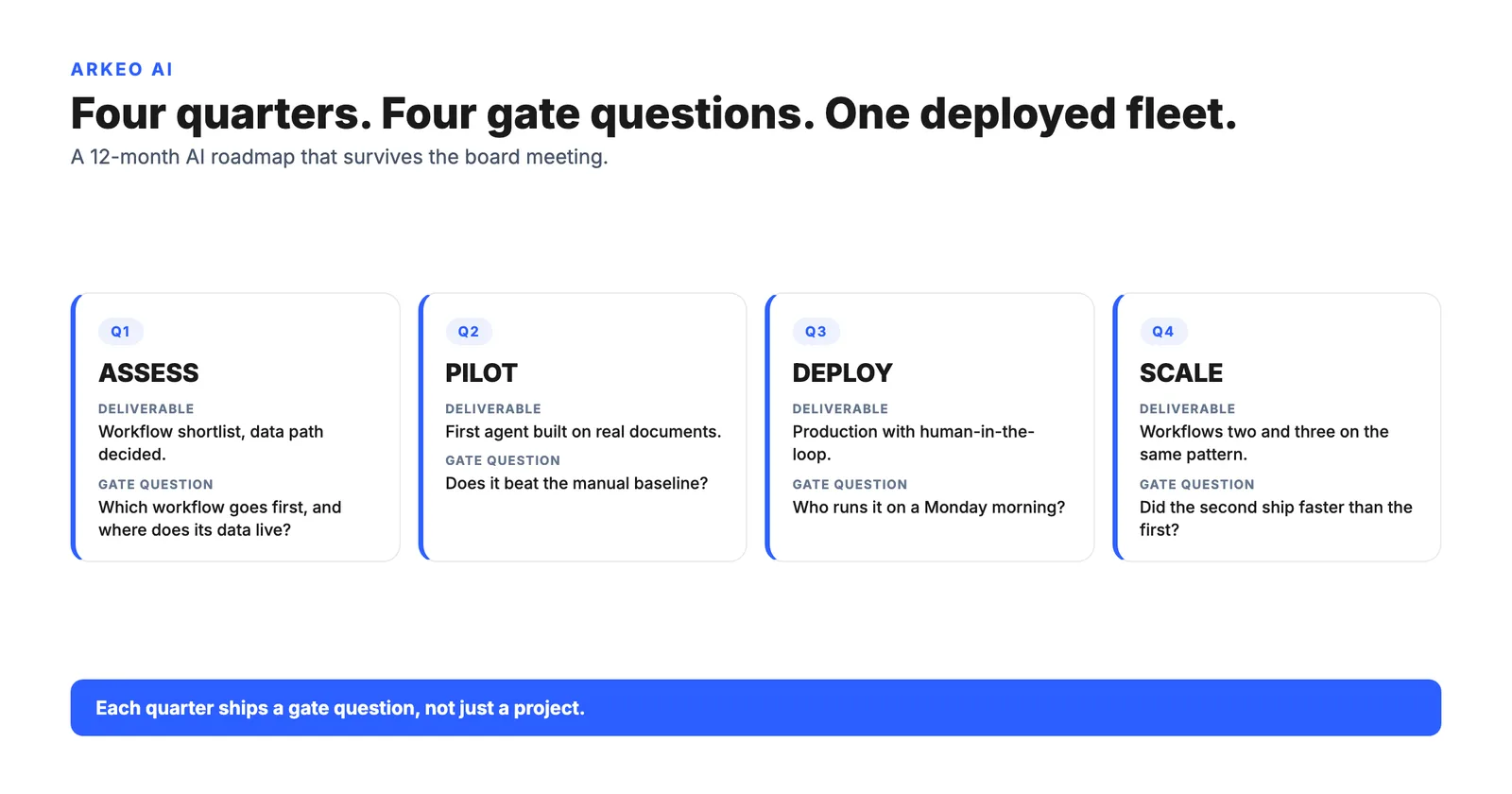 AI Strategy12-Month AI Roadmap: Four Quarters, Four Gate QuestionsA 12-month AI roadmap is four quarters, one gate question each, and one board metric per quarter that proves the quarter shipped. Here is the sequence operators actually execute.
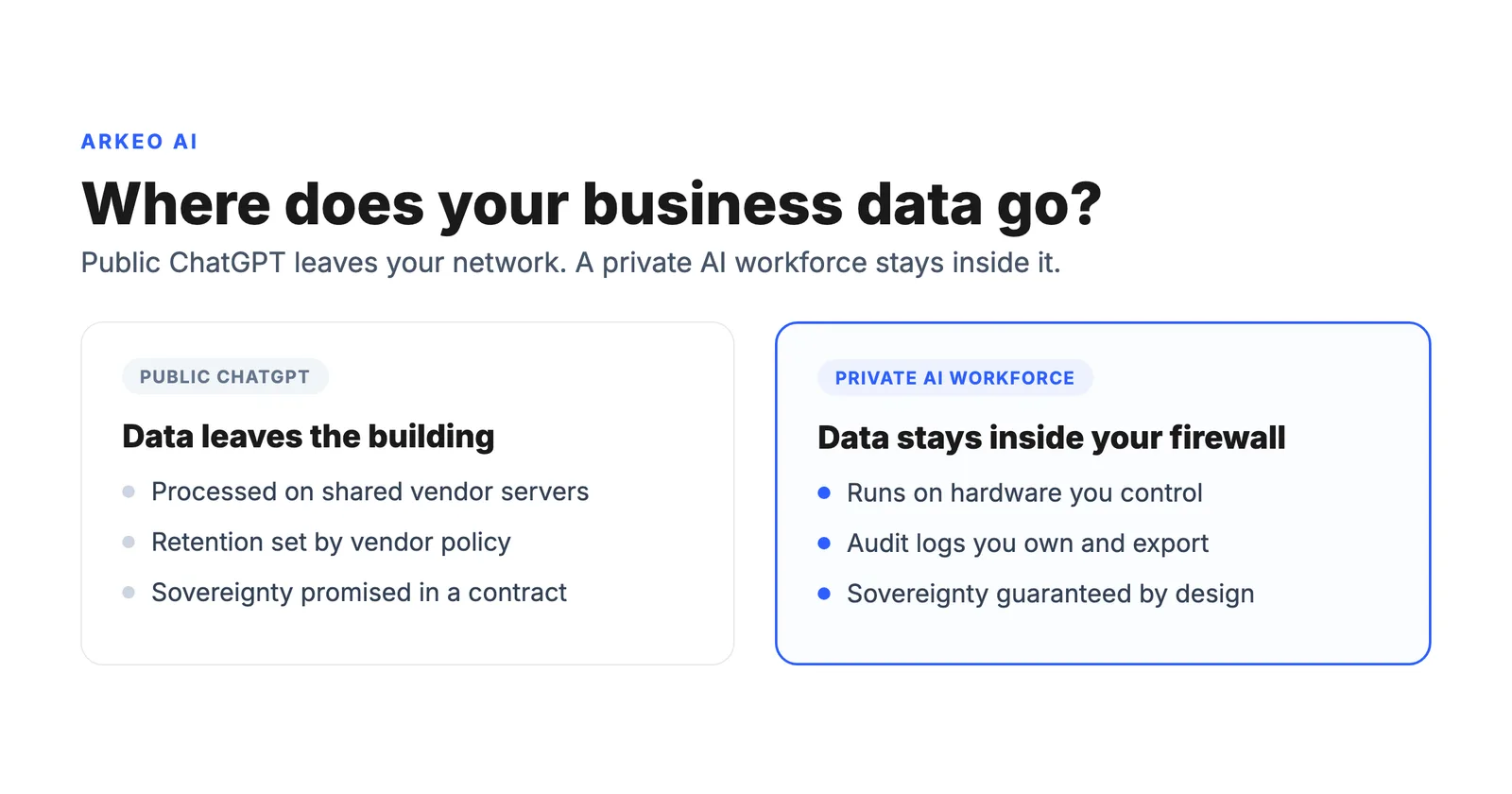 AIAI Agents vs ChatGPT: Which Is Safer?A security-first comparison of ChatGPT agents versus a private AI workforce, focused on where business data goes, who can audit it, and how cost behaves at scale.
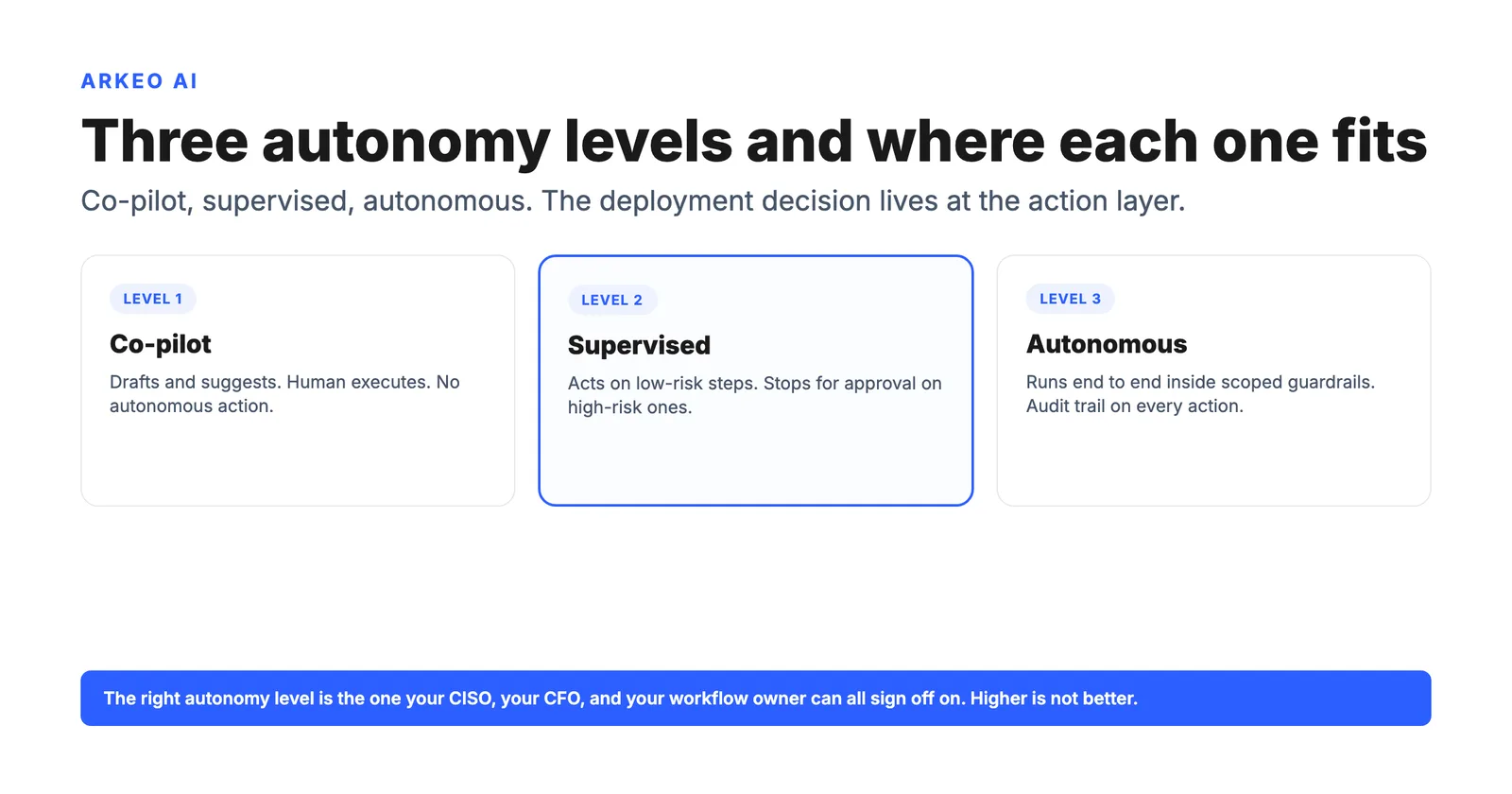 AIDeploying Autonomous AI Agents for BusinessDeploying autonomous AI agents for business means picking the right autonomy level (co-pilot, supervised, or full autonomy) for the workflow, then building the guardrails behind it. This guide covers the three levels, the four safeguards, the security model, and the rollout pattern that does not collapse trust on the first incident.
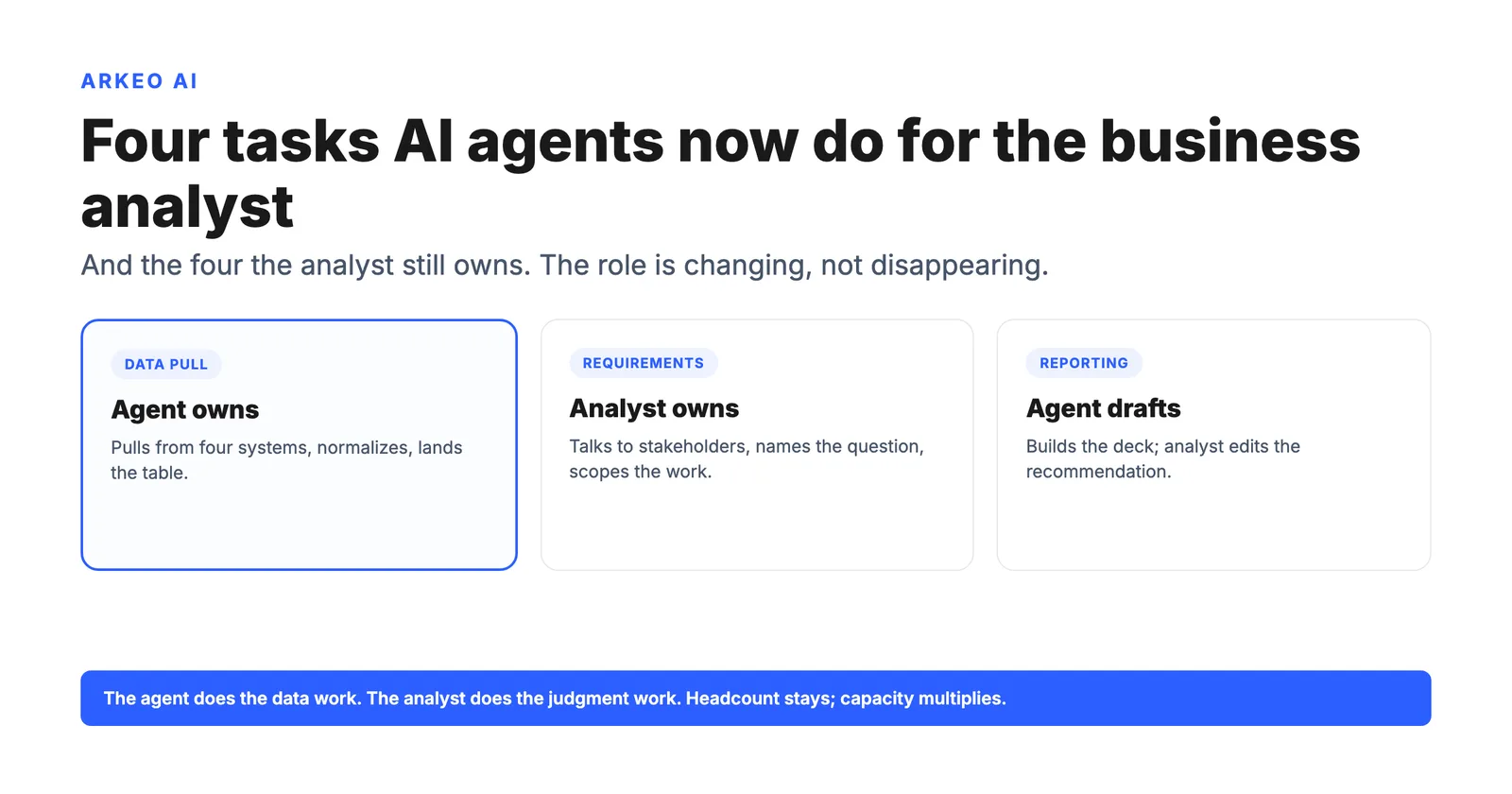 AIHow AI Agents for Business Analysts Are Changing the RoleAI agents for business analysts absorb the data-pull, normalization, anomaly-flagging, and first-draft reporting work, so the analyst spends time on requirements, judgment, and recommendation. This guide covers the four hand-overs, the four tasks the analyst still owns, and how to roll out agents inside an analyst team without breaking stakeholder trust.
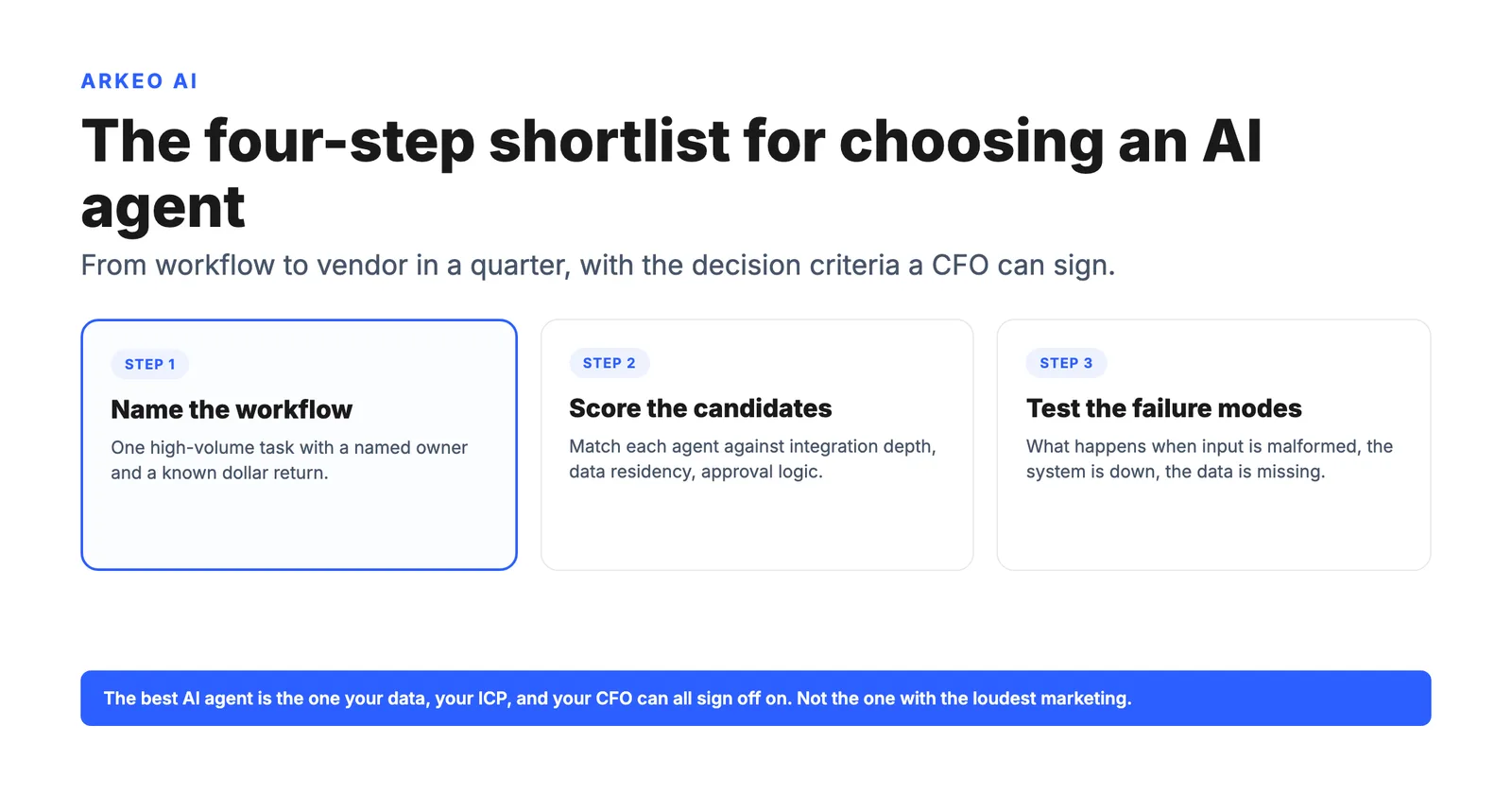 AIHow to Choose the Best AI Agents for BusinessHow to choose the best AI agents for business without buying the loudest model on the market. This guide covers the four-step shortlist process, the seven evaluation criteria that separate operator-grade agents from demoware, and the build-versus-buy math in dollars and weeks.
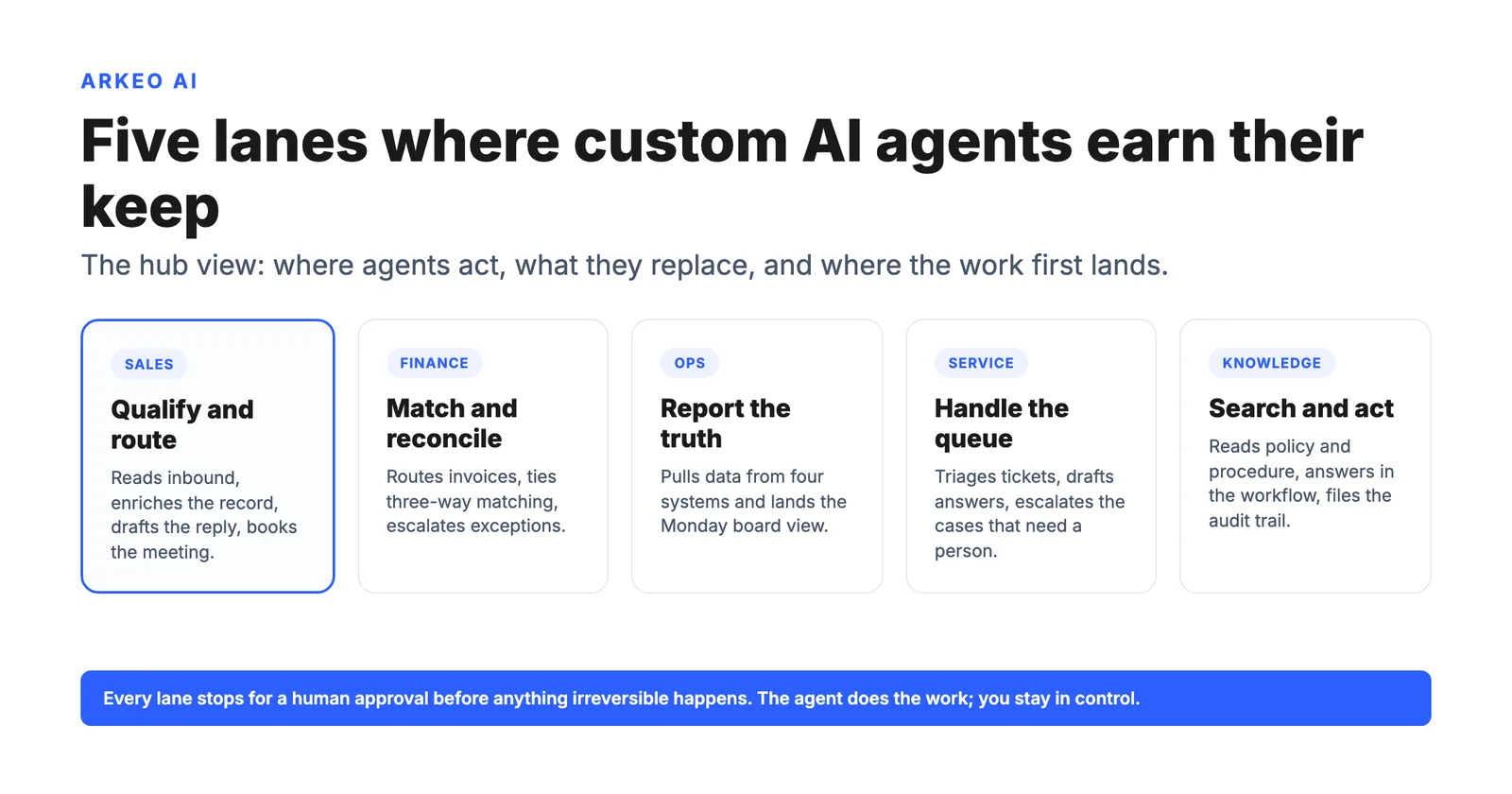 AICustom AI Agents for Business: The Definitive GuideCustom AI agents for business read your data, decide, act across systems, and stop for human approval. This guide covers the five lanes, the four reasons pilots stall, the build-versus-buy math in dollars and weeks, and the Assess-Deploy-Manage path operators use to ship the first agent inside a quarter.
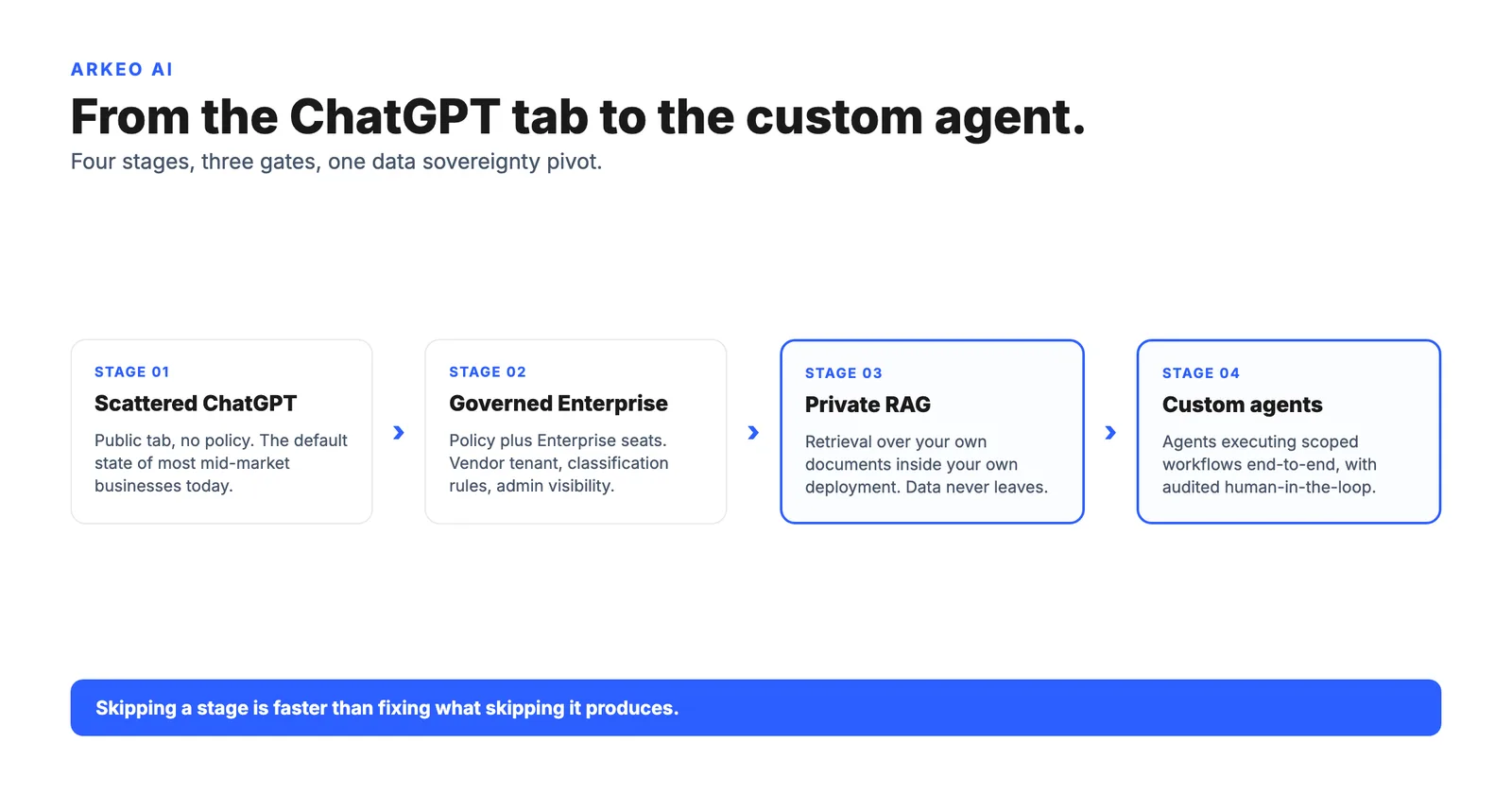 AI StrategyGenerative AI Strategy: From ChatGPT to Custom AgentsIf half your staff is pasting customer data into ChatGPT and the board now wants a generative AI strategy: the four-stage path to custom agents and where the sovereignty pivot lands.
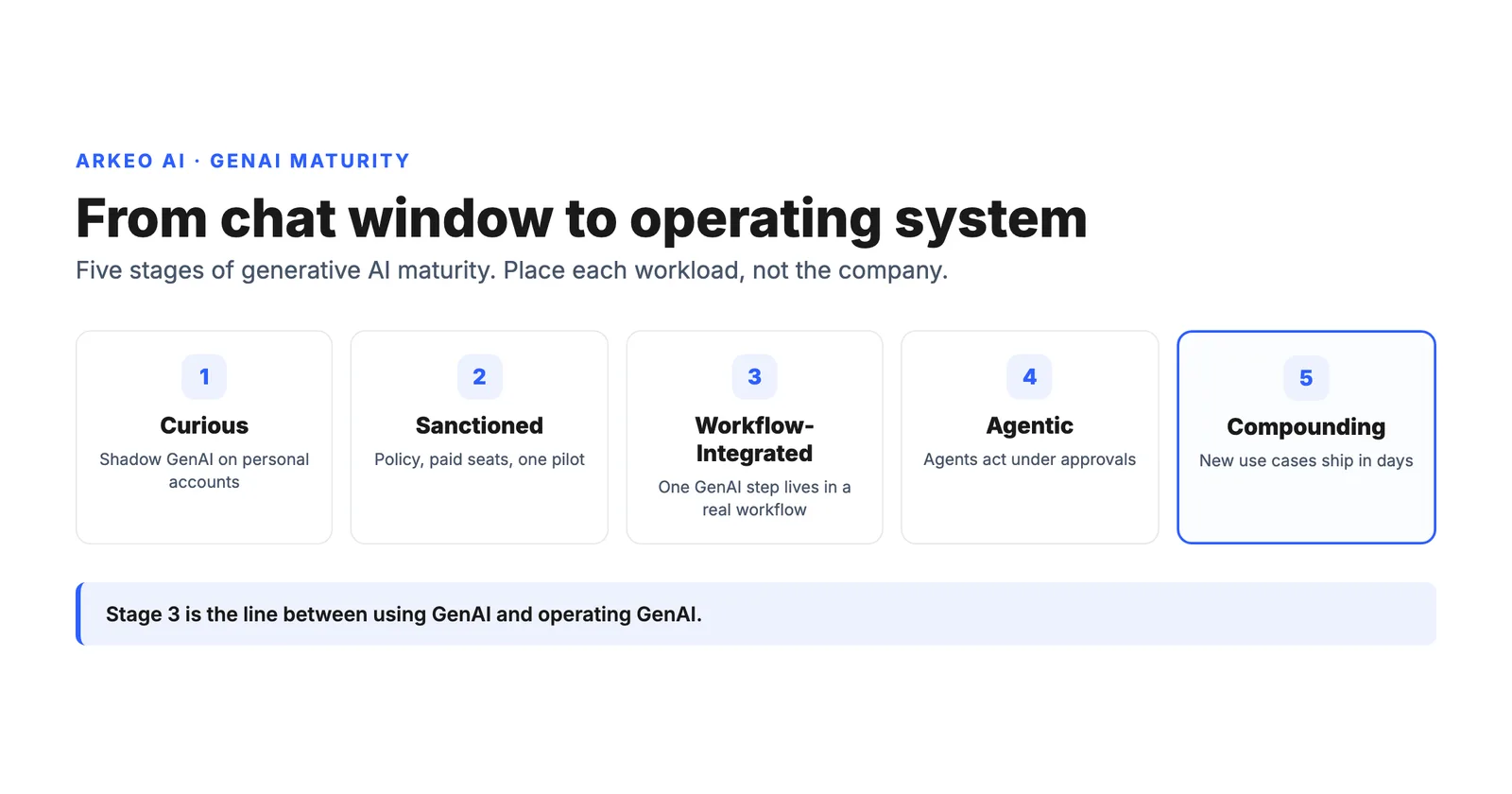 AI ReadinessGenerative AI Maturity Model: Where Do You Stand?If your team is using ChatGPT but you cannot say what stage of generative AI maturity your business has reached, this is the five-stage self-assessment, the operator-grade scoring, and the decision rule for what to build next.
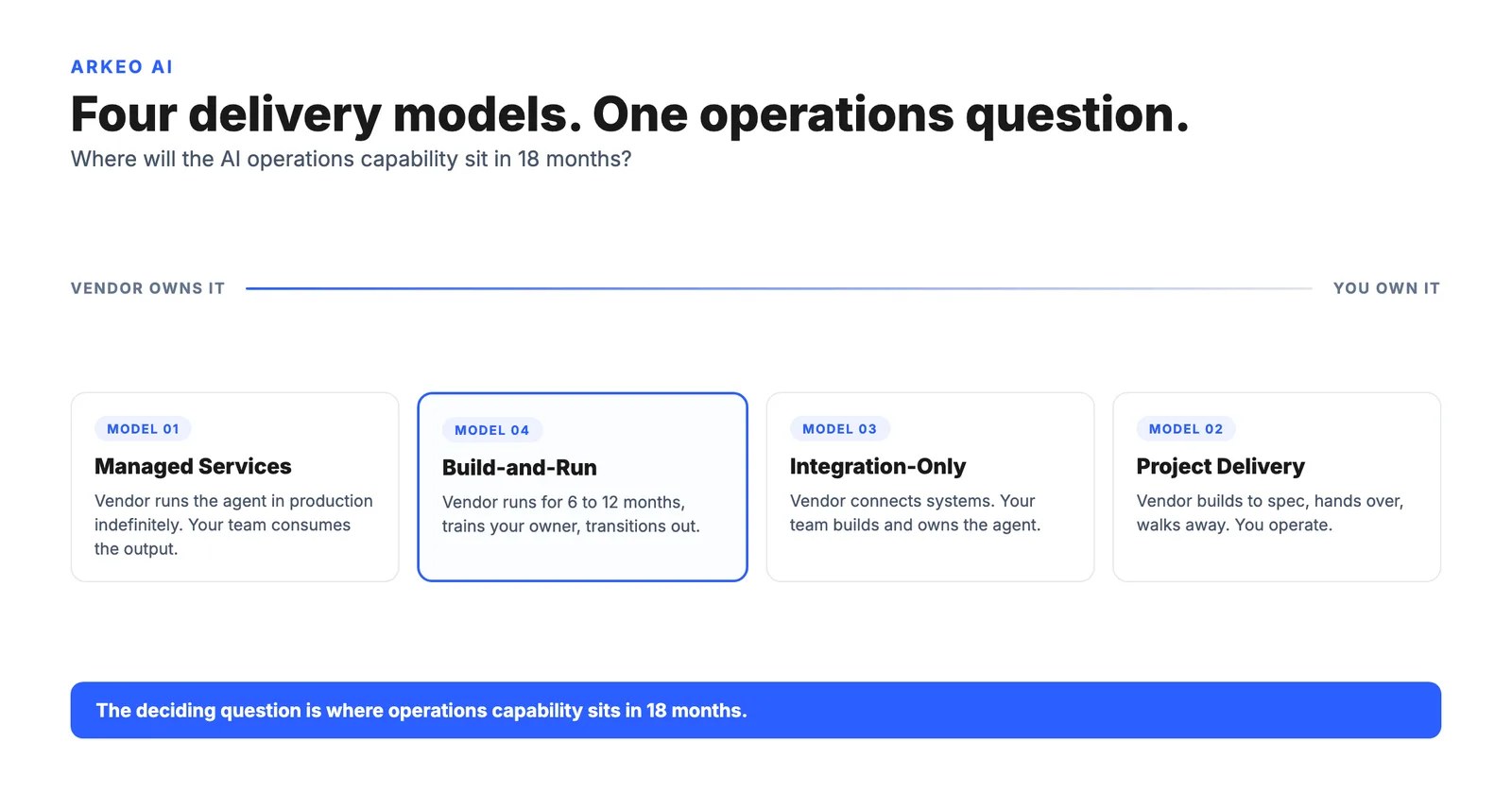 AI StrategyAI Implementation Services: The Four Delivery ModelsIf you have three vendor proposals back and none of them compare on the same terms: the four delivery models for AI implementation services side by side, and the one question that decides yours.
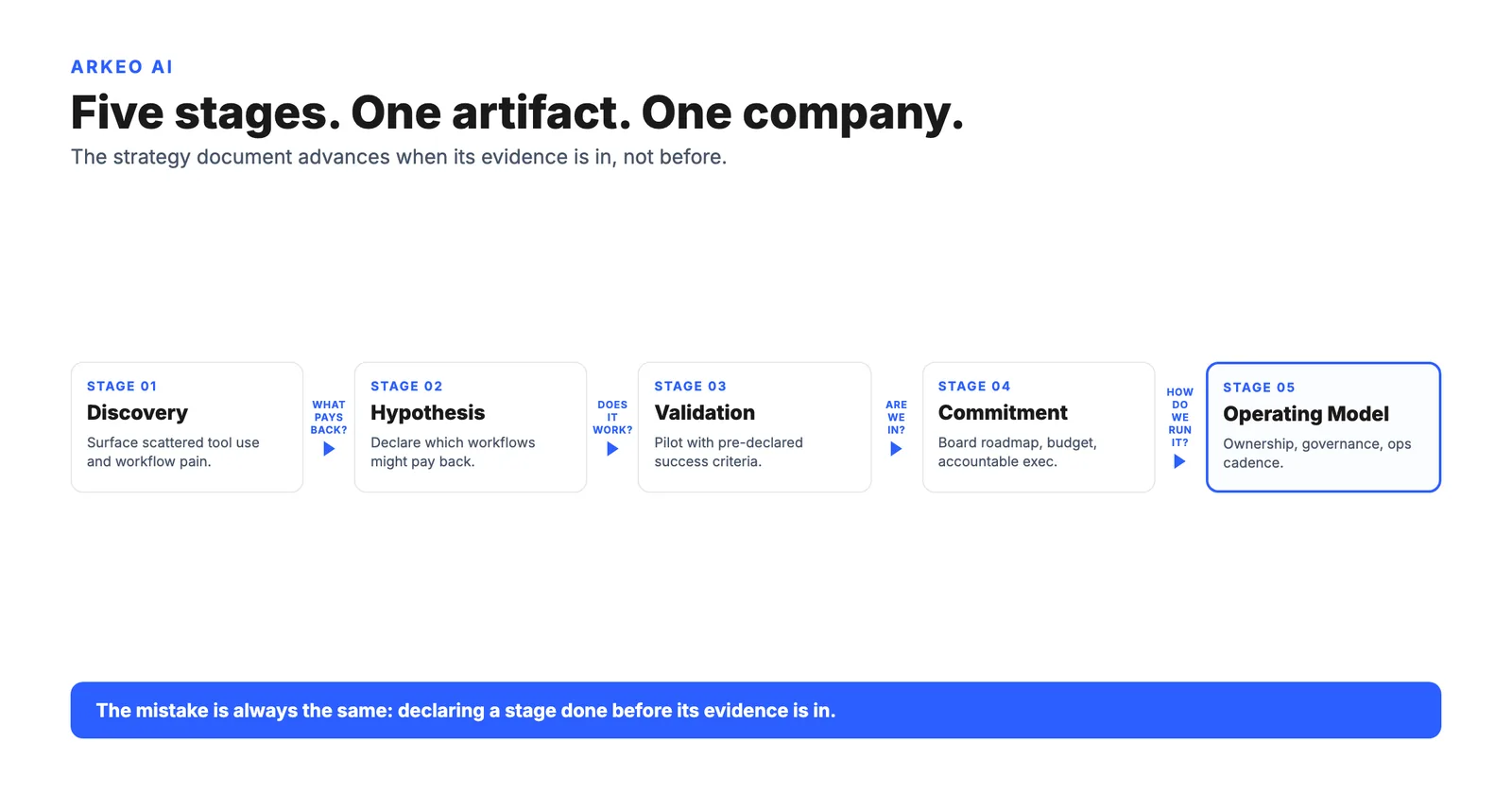 AI StrategyThe 5 Stages of AI Strategy DevelopmentIf your AI strategy document is six months old and still feels stuck on page one: the five stages it has to clear, the mistake that quietly kills each, and the gap that funds the wrong workflows.
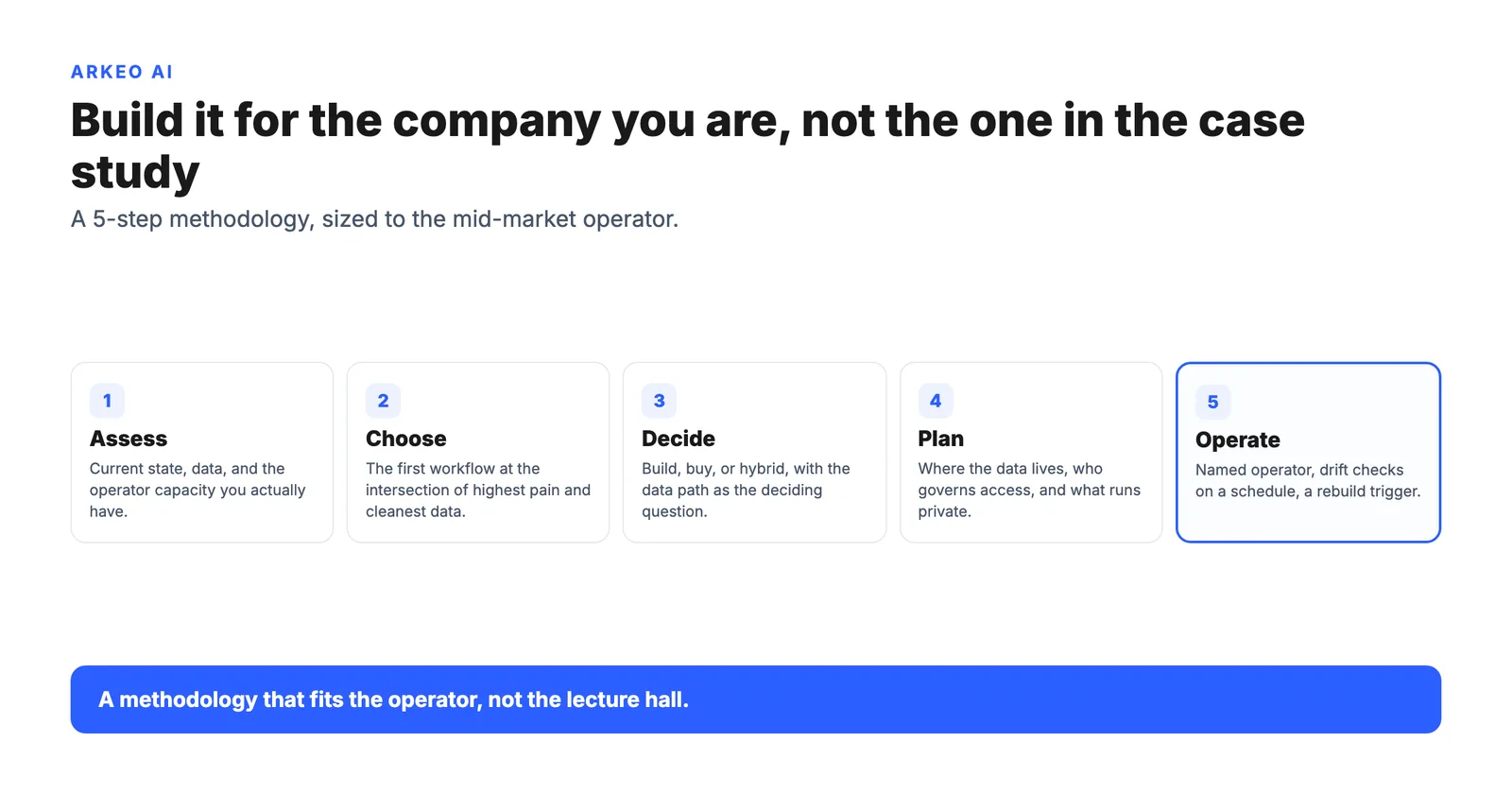 AI StrategyAI Strategy: The Three Decisions That Determine Whether It ShipsThe wrong question about AI strategy is: what should we be doing? The right question is: which one workflow ships in 30 days and who owns it after launch? Here is the five-component strategy that survives contact with the operation.
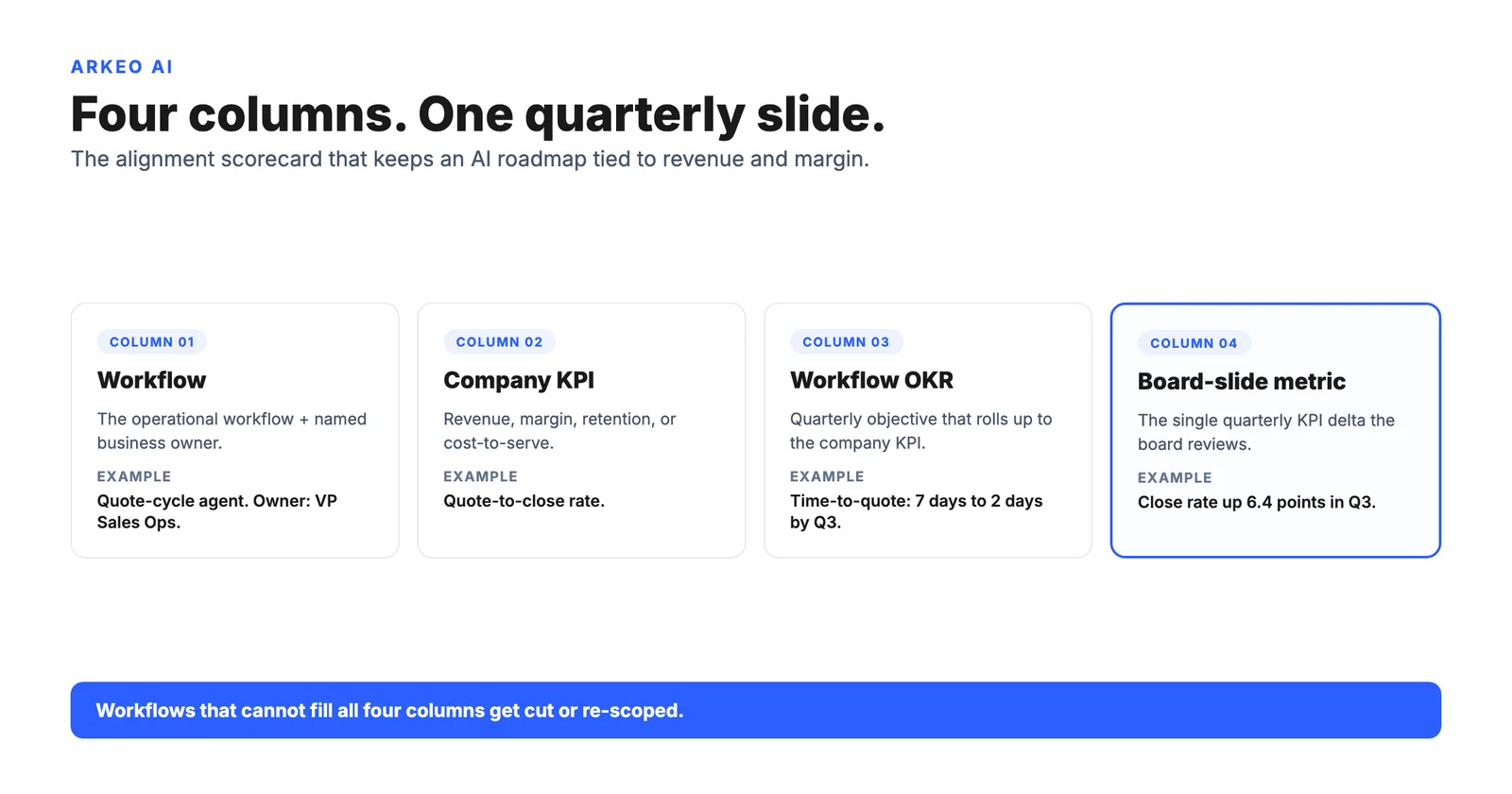 AI StrategyAI Strategy Roadmap Alignment: Four Columns, One SlideIf half your AI roadmap is technically interesting and quietly disconnected from the CFO's metrics: the four-column alignment scorecard, the OKR linkage, and the quarterly board slide that fixes it.
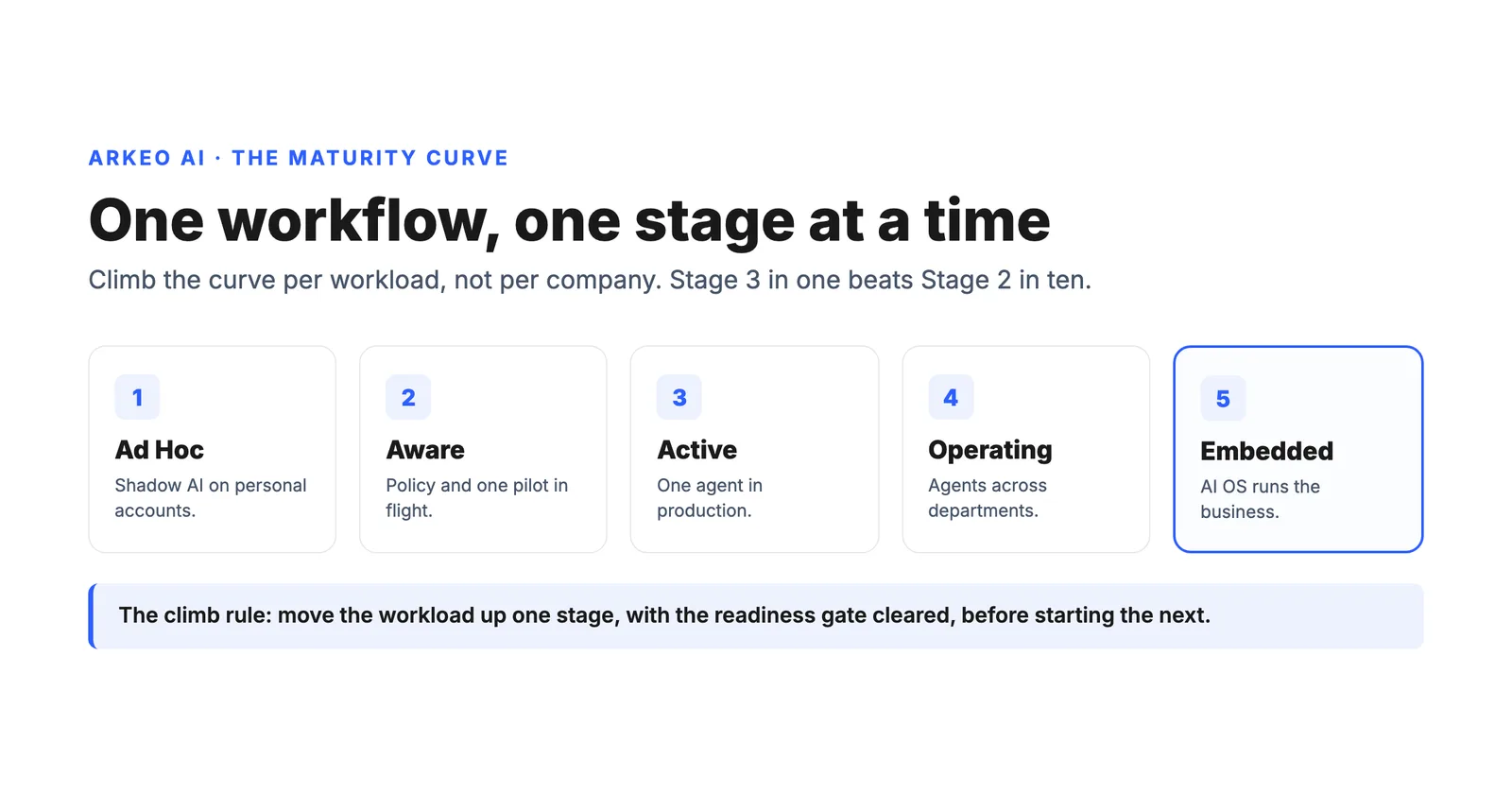 AI ReadinessMoving Up the AI Maturity CurveIf you know where you sit on the AI maturity curve and need to know the next move, this is the stage-by-stage guide to climbing it without burning a quarter on the wrong project.
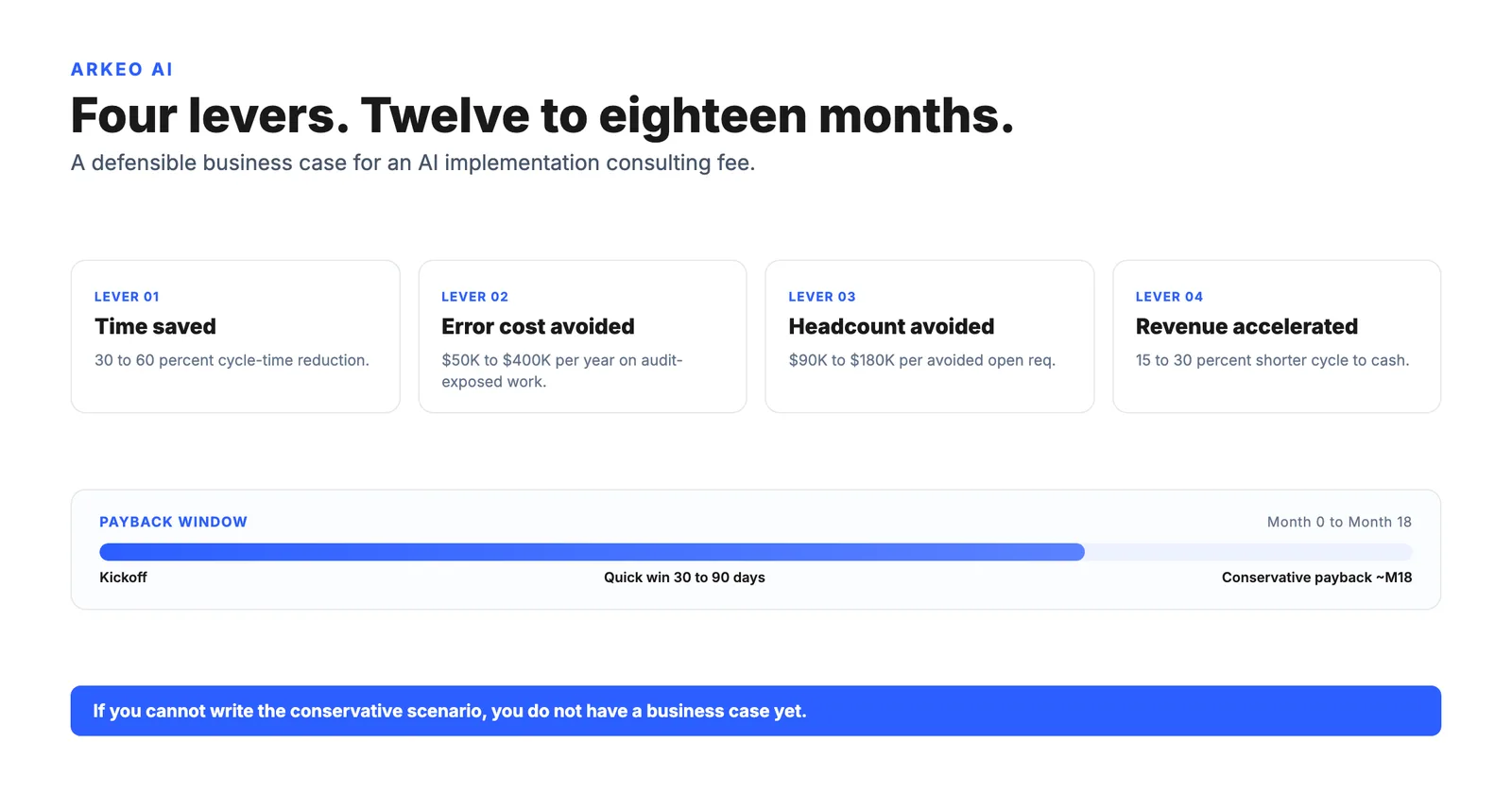 AI StrategyThe ROI of AI Implementation ConsultingIf you are selling a $50K-$200K AI consulting fee to a CFO already burned by an optimistic payback claim: the four ROI levers, the three scenarios, the 12-18 month window, and the kill criteria.