Category
AI in Construction Project Management
Last updated: May 2026
Every project executive has watched a small issue turn into a slipped milestone because nobody owned it between weekly meetings. The question is no longer whether AI can talk about construction, it is whether AI can reduce the delivery risk that costs you money. Arkeo AI was founded in 2023 on top of 25 years of operating businesses, and the team has spent the last three years deploying production agents, including the ones that run Arkeo's own back office. That matters here for one reason: we use what we sell, and most of what we recommend for project teams runs as private, on-premise AI that keeps your project data inside your firewall.
Quick Answer
• What it is: AI in construction project management is decision support that improves status visibility, coordination, schedule support, and risk surfacing, not autopilot for delivery.
• Best first workflows: reporting, document routing, meeting follow-up, and exception tracking, where the work is repetitive and the data already exists.
• Cost and timeline: a first workflow agent is typically live in 30 to 90 days, with a scoped custom build starting in the low five figures (workflow scoping is covered in the AI Assessment).
• Why it matters: a single surfaced risk that gets tracked to closure can save a milestone.
Where Does AI Actually Help Construction Project Management?
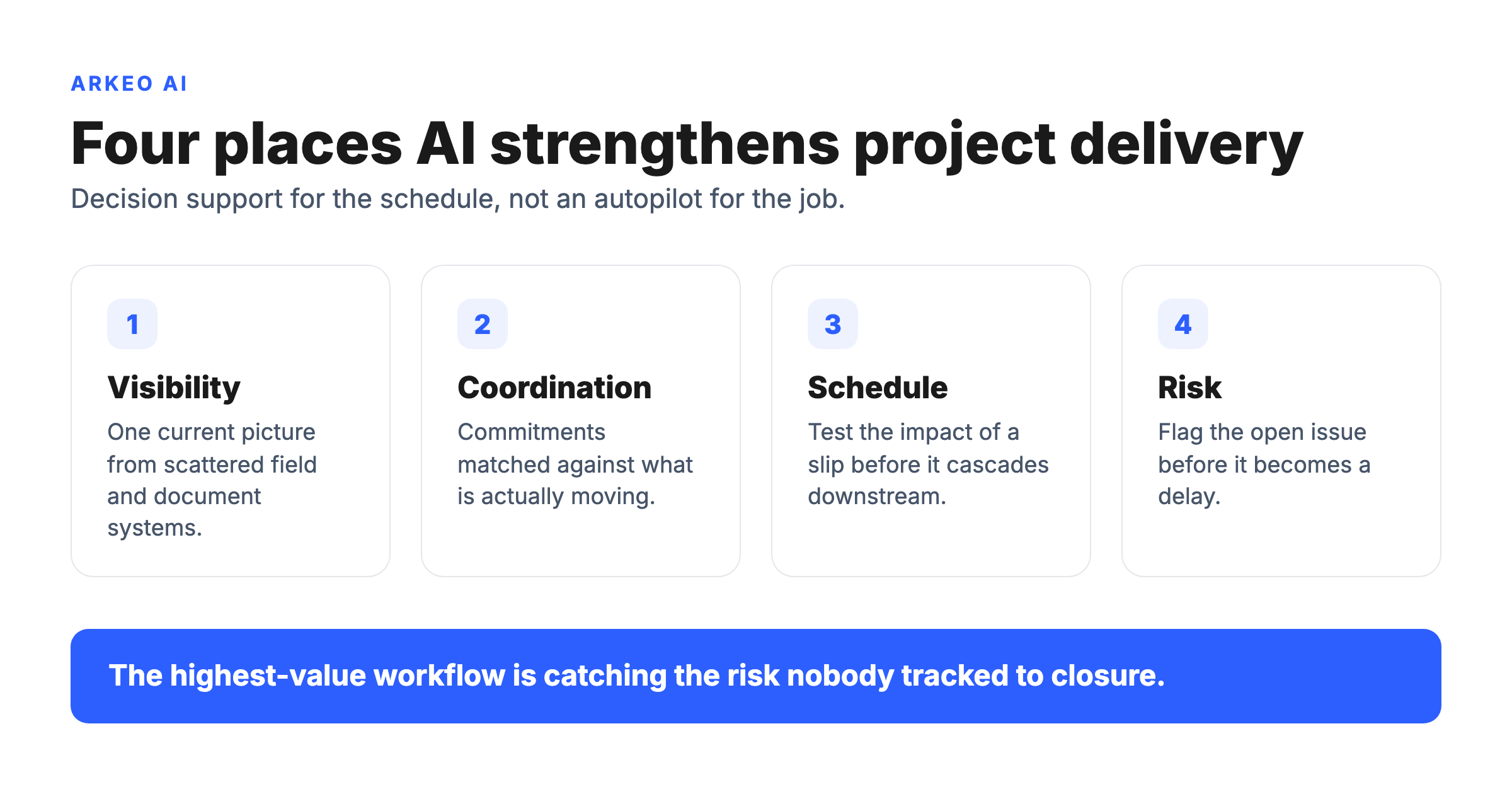
AI in construction project management is decision support for delivery: it improves status visibility, coordination, schedule support, and risk surfacing so issues get flagged before they become delays. It is not generic project-management theory, and it is not an autopilot that runs your job for you. The value shows up in four places.
Status visibility is the first. Field updates, RFIs, submittals, and daily logs usually live in different systems, so the true state of a project is scattered. A status-reporting agent on a typical job reads across the platforms a team already runs, such as Procore, Autodesk Construction Cloud (ACC), and PlanGrid, then assembles a current picture that turns a half-day of chasing into a morning briefing. Coordination is the second: AI can match commitments made in meetings against what is actually moving in the schedule and the field, then flag the gaps. Schedule support is the third, where AI helps test the impact of a slipped activity or a late delivery before it cascades. Risk surfacing is the fourth and most valuable, because catching the issue that nobody tracked is what protects the milestone.
Why does this matter for delivery in 2026? Labor pressure makes every delay more expensive. The Associated General Contractors of America found that workforce shortages caused project delays for 54% of firms in its 2024 survey, which means the cost of a missed coordination point is rarely just paperwork. It is an idled crew or a compressed schedule downstream. Construction project data is famously fragmented across tools and field systems, and industry productivity has lagged for decades, so the gains from simply making the current state legible are real before any predictive feature enters the picture.
Which Project-Management Tasks Are Best Suited for AI?
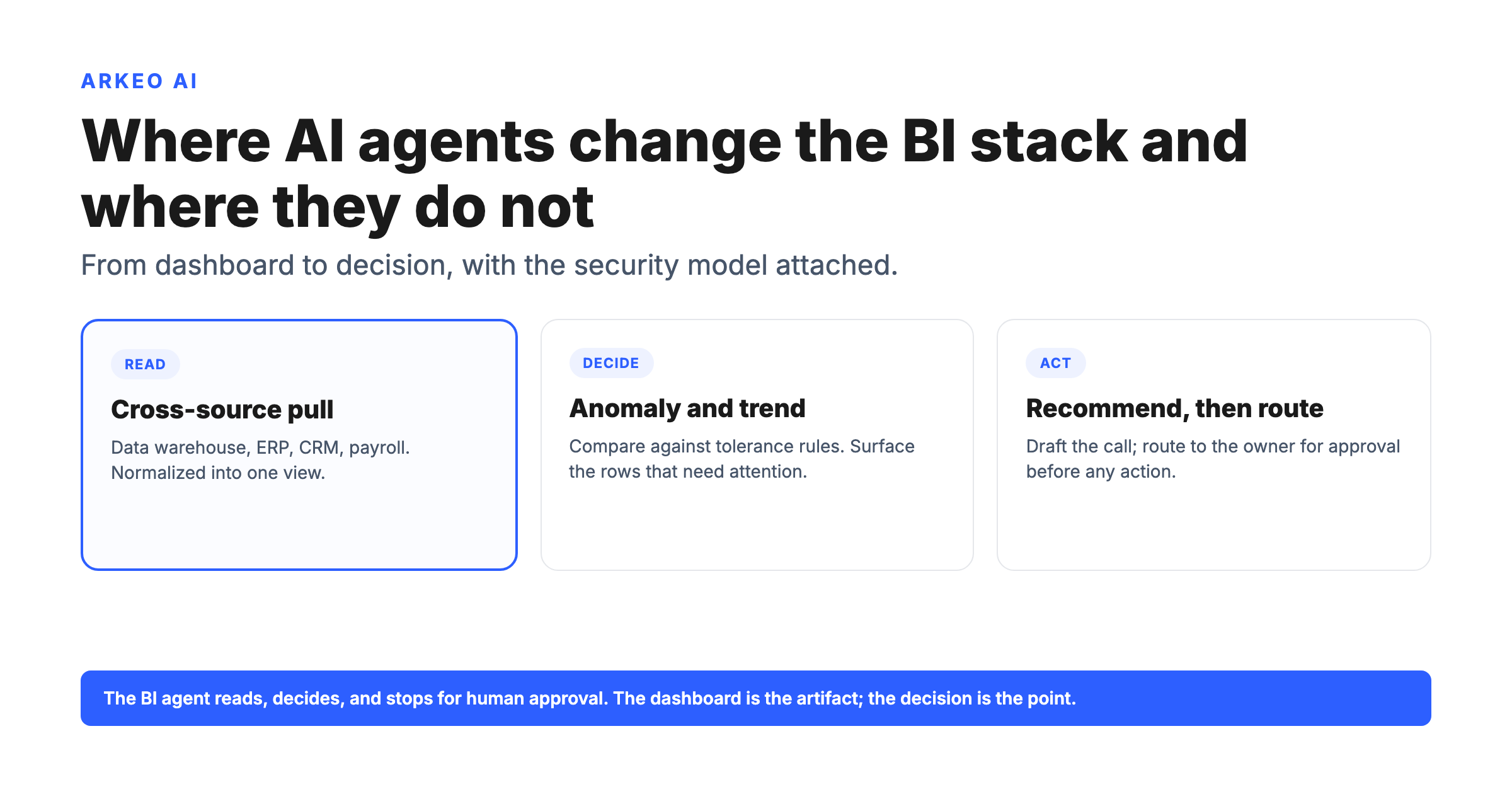
Pick tasks that are repetitive, evidence-rich, and already generating data. Four stand out for first deployment. Reporting is the obvious one: assembling status reports, owner updates, and progress summaries from existing logs is high-frequency and low-judgment. Document routing is next, where an agent classifies an incoming RFI, submittal, or change order and routes it to the right reviewer with the relevant context attached. Meeting follow-up turns a coordination call into tracked action items with owners and dates, so commitments do not evaporate. Exception tracking is the one most teams underrate: an agent watching for the action item that was logged but never closed, the approval that has sat too long, or the milestone trending late.
The pattern across all four is the same. These are tasks where a human currently spends time moving information rather than making decisions. That is exactly where an agent earns its keep, and it is why the broader case for AI across the construction business almost always starts in the back office of project delivery rather than on the slab.
Here is a way to think about which workflow to automate first, weighing the business value against the build complexity and who owns the result.
| Workflow | Business value | Complexity | Owner |
|---|---|---|---|
| Status reporting | High: frees PM hours every week | Low | Project manager |
| Document routing | High: speeds RFI and submittal turnaround | Medium | Project coordinator |
| Meeting follow-up | Medium: protects commitments between meetings | Low | Project manager |
| Exception tracking | Very high: catches the risk before it slips | Medium | Project executive |
| Schedule scenario support | High: tests impact before it cascades | High | Scheduler or controls |
Notice that the highest-value row, exception tracking, is not the most complex. That is the point most tool pitches miss. Take a hypothetical example: a PM on a multi-trade fit-out where a structural conflict over a ceiling penetration gets flagged in the Tuesday coordination meeting, logged as item 14 in the minutes alongside forty others. Everyone agrees it needs the engineer's sign-off. The note lands in someone's pad, the meeting moves on, and three weeks later the mechanical crew shows up to a condition that was never resolved. The risk was visible. It was simply never tracked to closure. An exception-tracking agent watching that open item against the schedule is the difference between a flagged risk and an idled crew, and it is precisely the kind of low-glamour, high-payoff work that AI does well.
See which workflow protects your next milestone
The free AI Assessment maps your project-delivery workflows and ranks them by value, complexity, and rollout fit, so the first agent you build is the one that pays back fastest.
Book Your Free AI Assessment →
What Should Project Teams Evaluate Before Rollout?
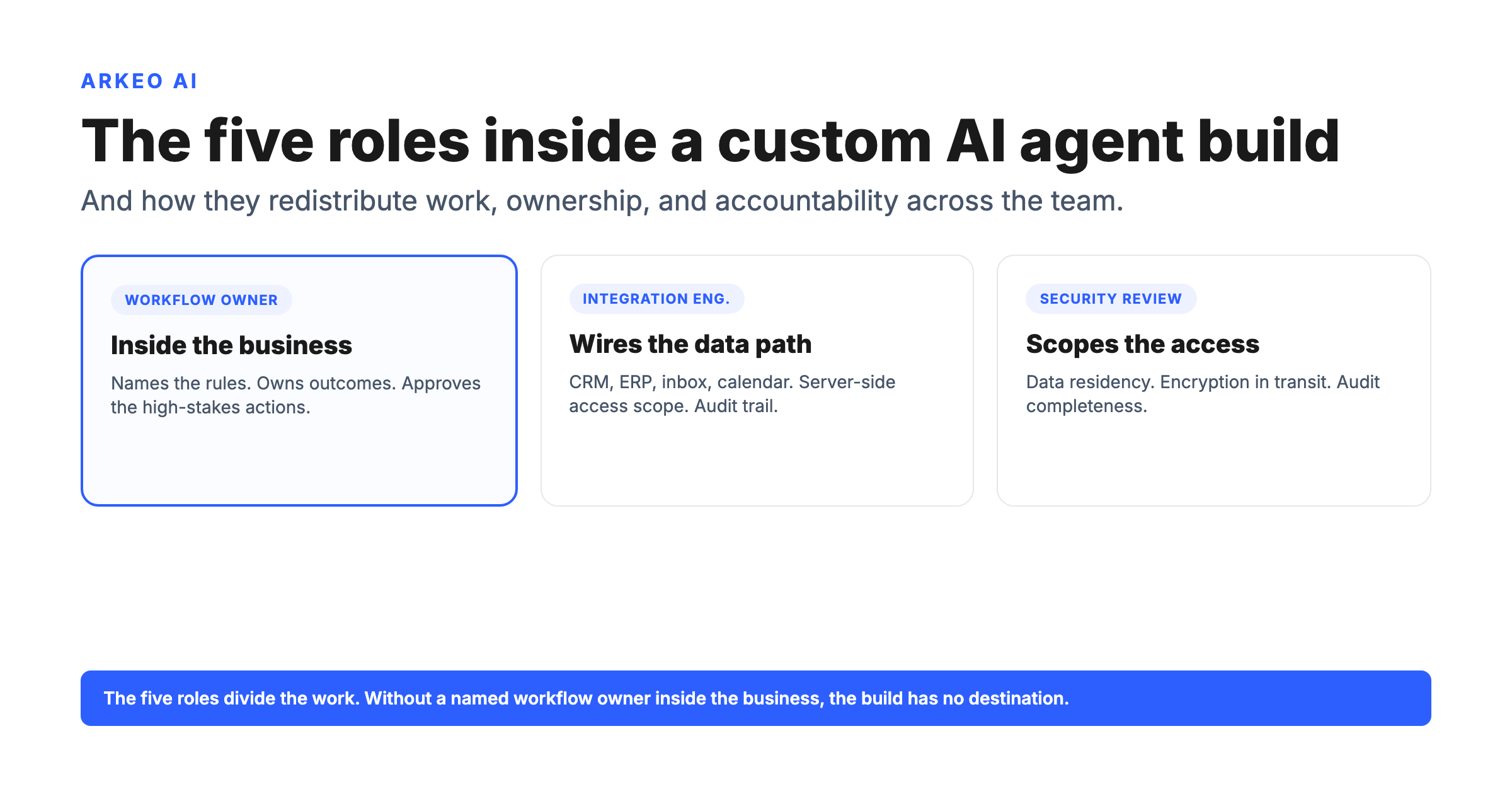
Most teams think the hard part is the AI. They are wrong. The hard part is the three things underneath it: data access, workflow ownership, and tool-sprawl risk.
Data access comes first because an agent is only as useful as what it can read. If status lives in one system, documents in another, and the schedule in a third, the agent needs permission to see across them. In practice this is the single most common reason a 30-day target slips: not model capability, but the weeks it takes to get the right read permissions provisioned across each platform. It is also why access controls cannot be an afterthought. IBM's 2025 Cost of a Data Breach report found that 97% of organizations that suffered AI-related breaches lacked proper AI access controls. This is where data governance becomes a real decision rather than a checkbox, and where keeping the deployment private and on-premise stops being a preference and starts being a requirement for owners with sensitive contracts. Workflow ownership comes second: every agent needs a human who owns its output and acts on it. An exception-tracking agent that flags risks to nobody is just a quieter way to lose them. Tool-sprawl risk comes third, and it is the one project teams feel most. The fear that AI is just another login, another dashboard, another thing to check, is legitimate. The fix is to make the agent live inside the workflow the team already runs, not beside it.
The appetite is clearly there. Stanford's Human-Centered AI institute reported that 78% of organizations used AI in 2024, up from 55% the year before, and the broader engineering-and-construction picture in the Deloitte 2025 industry outlook points to rising technology adoption against persistent delivery pressure. Adoption is not the constraint. Disciplined scoping is.
How Do You Pilot AI Without Adding Chaos?
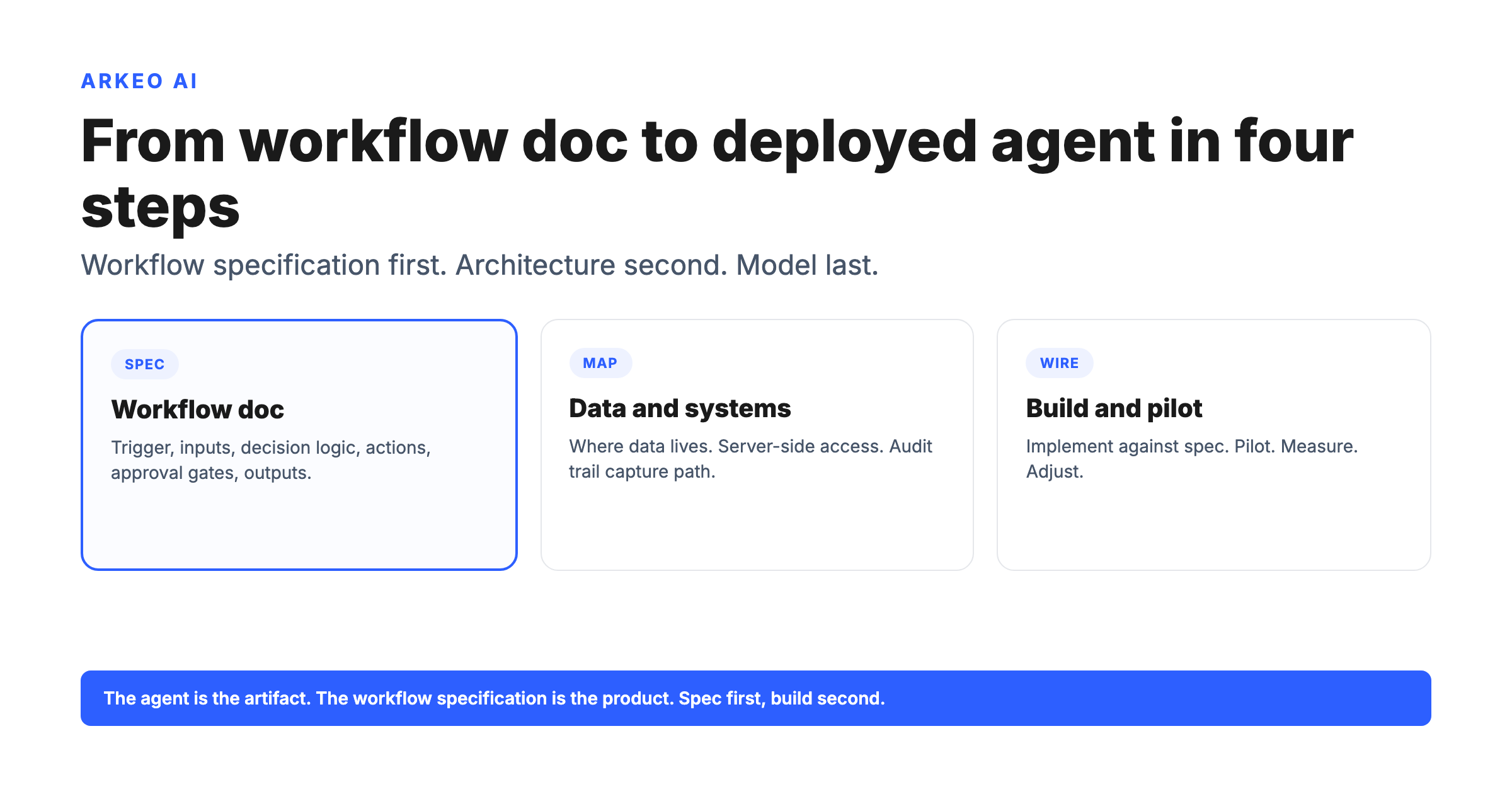
The blunt truth a vendor will not put on a slide: AI agents break, and they break most often when teams launch five workflows at once and own none of them. The way to avoid that is a single-workflow pilot with clear success criteria and a team adoption plan, run in that order. Pick one workflow from the table, ideally a high-value, lower-complexity one like status reporting or meeting follow-up. Define what success looks like in numbers before you start: hours saved per week, turnaround time on a document type, or the percentage of open risks that get tracked to closure. Then assign one owner and a small group of users who will actually run it daily, and give them a fallback for the days the agent gets something wrong.
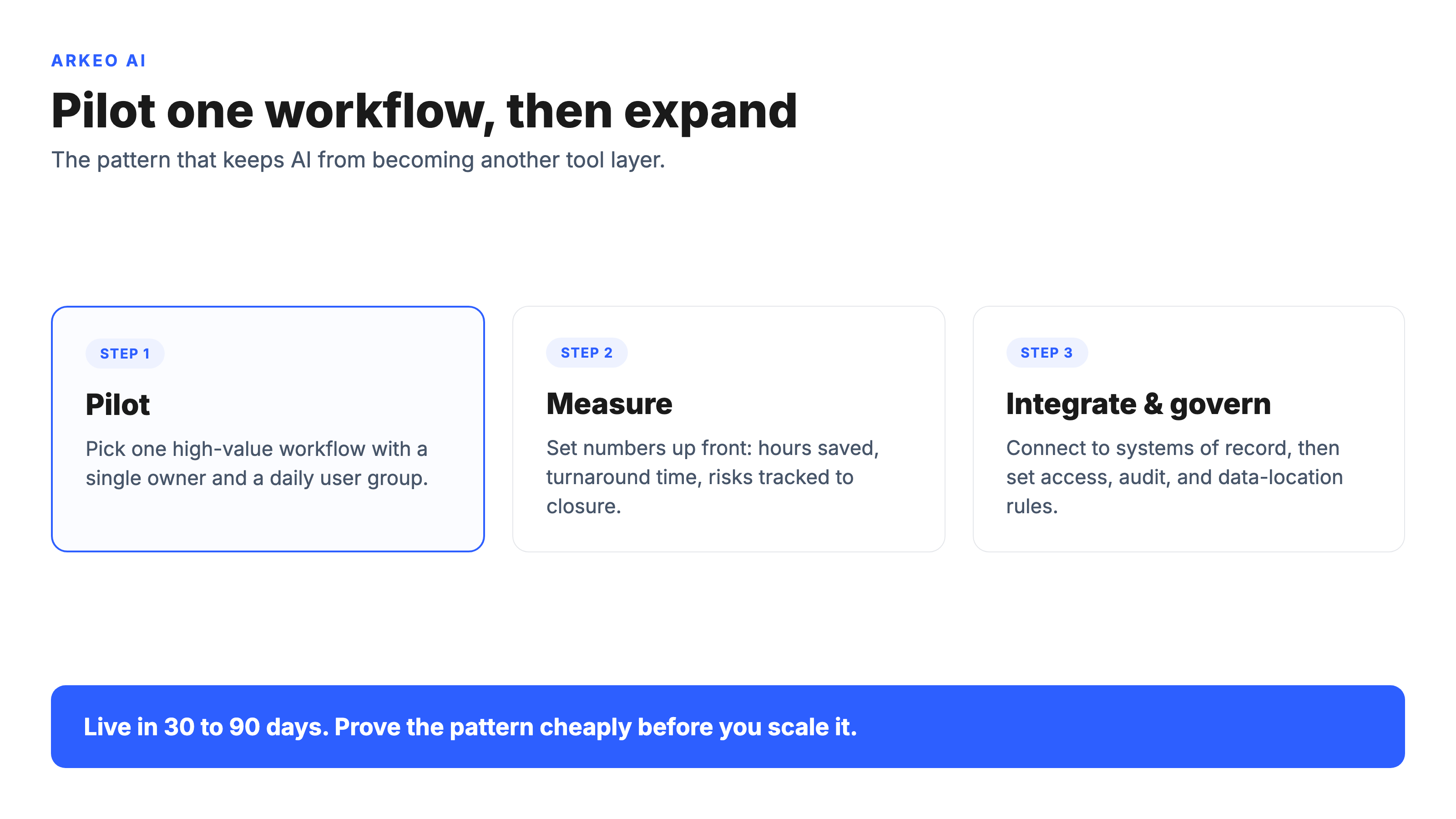
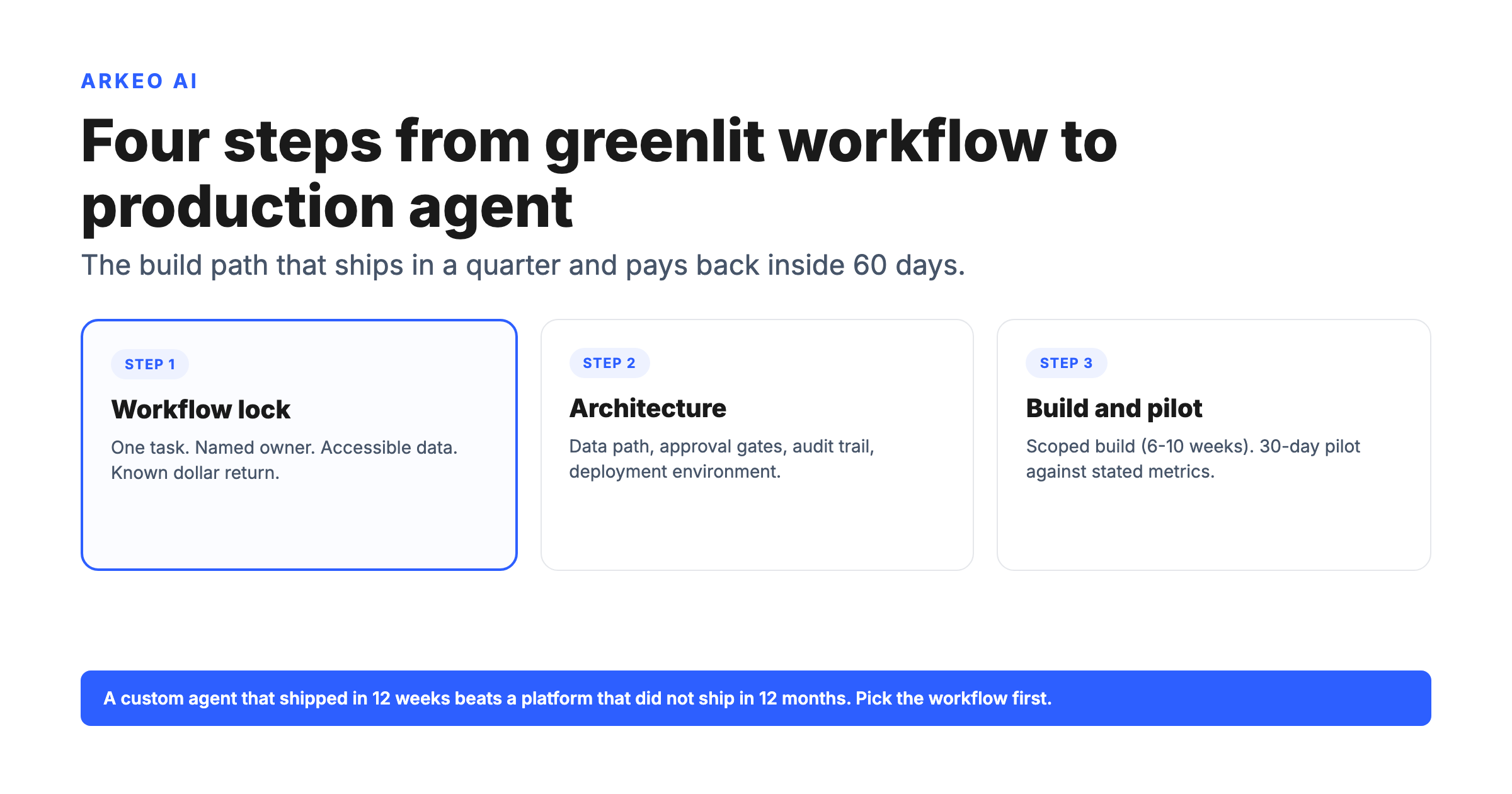
This is the Arkeo methodology applied to delivery: map the current state, win early with one workflow, then expand to the top agent opportunities once the team trusts the result. On cost and timeline, set expectations honestly. A first PM workflow agent is typically live in 30 to 90 days, and a scoped custom build starts in the low five figures. The floor on that range is set by integration work rather than the model itself: wiring an agent into Procore, ACC, or a scheduling tool, and earning each system's read access, is what consumes the budget, while the ceiling rises with the number of systems and the depth of the workflow. Weigh that against the cost of a single slipped milestone or a crew idled by a late approval, and the math usually answers itself. The pilot is not where you bet the project. It is where you prove the pattern cheaply before you scale it.
What Comes After the Pilot?
Once a single workflow is working and trusted, two decisions move to the front: integration and governance. Integration is about connecting the agent more deeply into the systems of record so its output flows where work already happens, rather than living in a separate report. Governance is about deciding who can change the agent, how its access is audited, and where the data is allowed to sit, which is exactly why the on-premise, private-AI posture matters more as you scale, not less.
This is also the point where project management connects to the wider program. The disciplines covered in AI for construction management and the scheduling-specific work in AI for construction scheduling become natural next workflows once the first agent has earned the team's trust. The sequencing is the strategy: one workflow, proven, then the next, never a big-bang rollout that nobody owns. That is how the Arkeo Operating System gets built one delivery problem at a time, and it is how AI stops being another tool layer and starts protecting the schedule.
Prioritize the workflow with the strongest ROI
In a free AI Assessment, the team ranks your project-management workflows by value and rollout fit and shows you the shortest path to your first live agent.
Book Your Free AI Assessment →