Category
What is OpenClaw? A Guide for Business Operators
Last updated: May 2026
Business operators hear constant noise about AI agents, but most of what is marketed to them are just public chat interfaces posing as enterprise solutions. The reality of true business automation requires moving past simple chat prompts and building a system that can take autonomous action. At Arkeo AI, we help mid-market companies transition from scattered, unsecure AI usage to a managed, private AI workforce using OpenClaw.
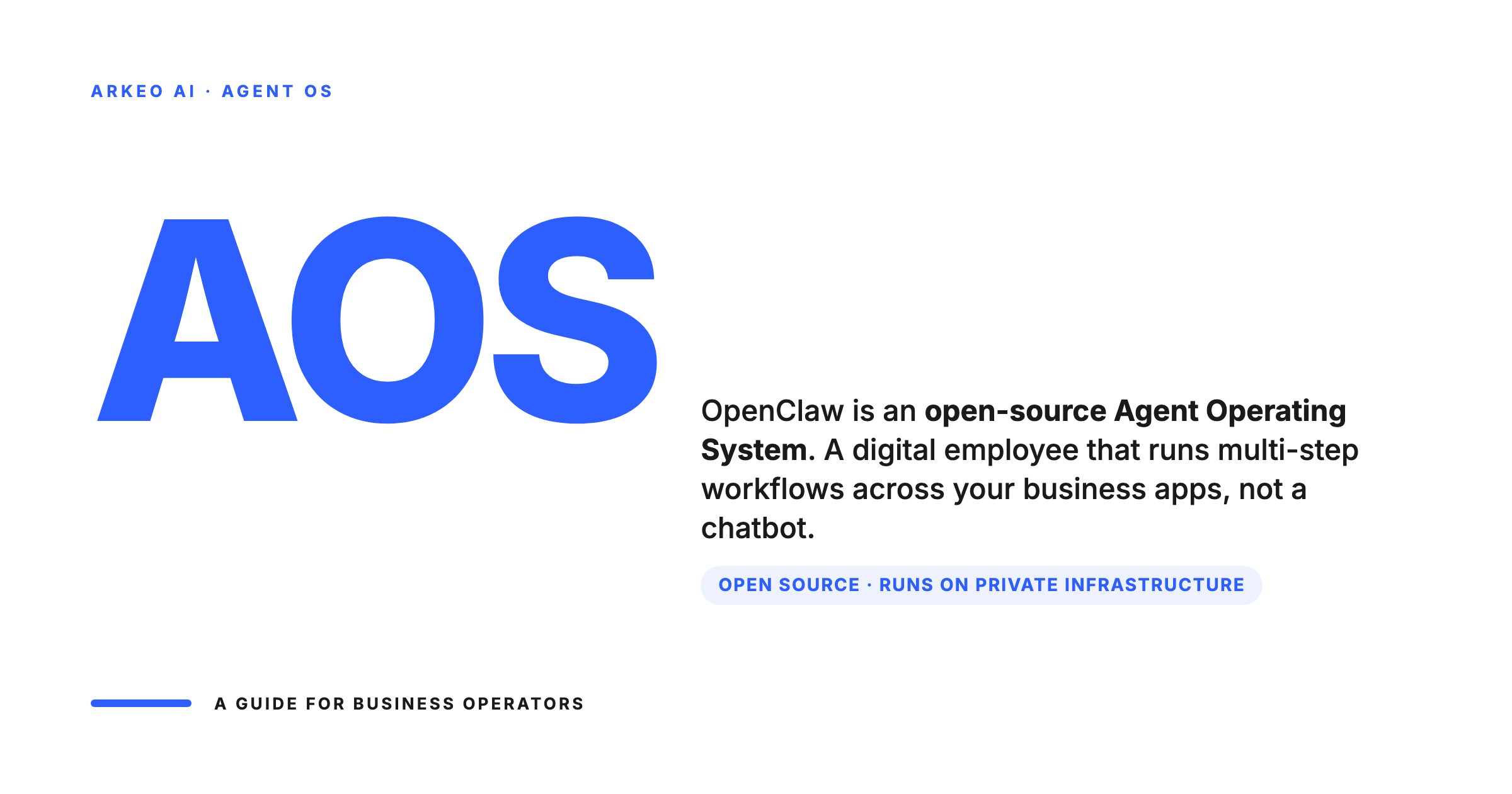
- The Definition: OpenClaw is an open-source agent operating system built to run a private AI workforce.
- The Core Value: It acts as a digital employee that performs multi-step workflows across your business applications, rather than just generating text.
- The Security Advantage: It runs entirely on your private infrastructure, eliminating the risk of data leaks to public models.
Beyond Chatbots: What is OpenClaw?
When most people think of AI in the workplace, they picture an employee copying and pasting data into a public browser window. OpenClaw is fundamentally different. It is an agent operating system. You can think of it as the secure engine that powers a private digital workforce.
Instead of relying on cloud providers that might train on your proprietary data, OpenClaw runs locally on your own servers or within a Virtual Private Cloud. It retains deep, continuous context about your business rules, your preferences, and your internal workflows. When you focus on deploying an OpenClaw setup, you are building an infrastructure that allows AI agents to connect securely to your internal systems and do actual work autonomously.
How OpenClaw Connects to Your Business
To understand the power of OpenClaw, you need to understand its three core architectural components. These pieces work together to form a system that acts more like a human operator than a simple software script.
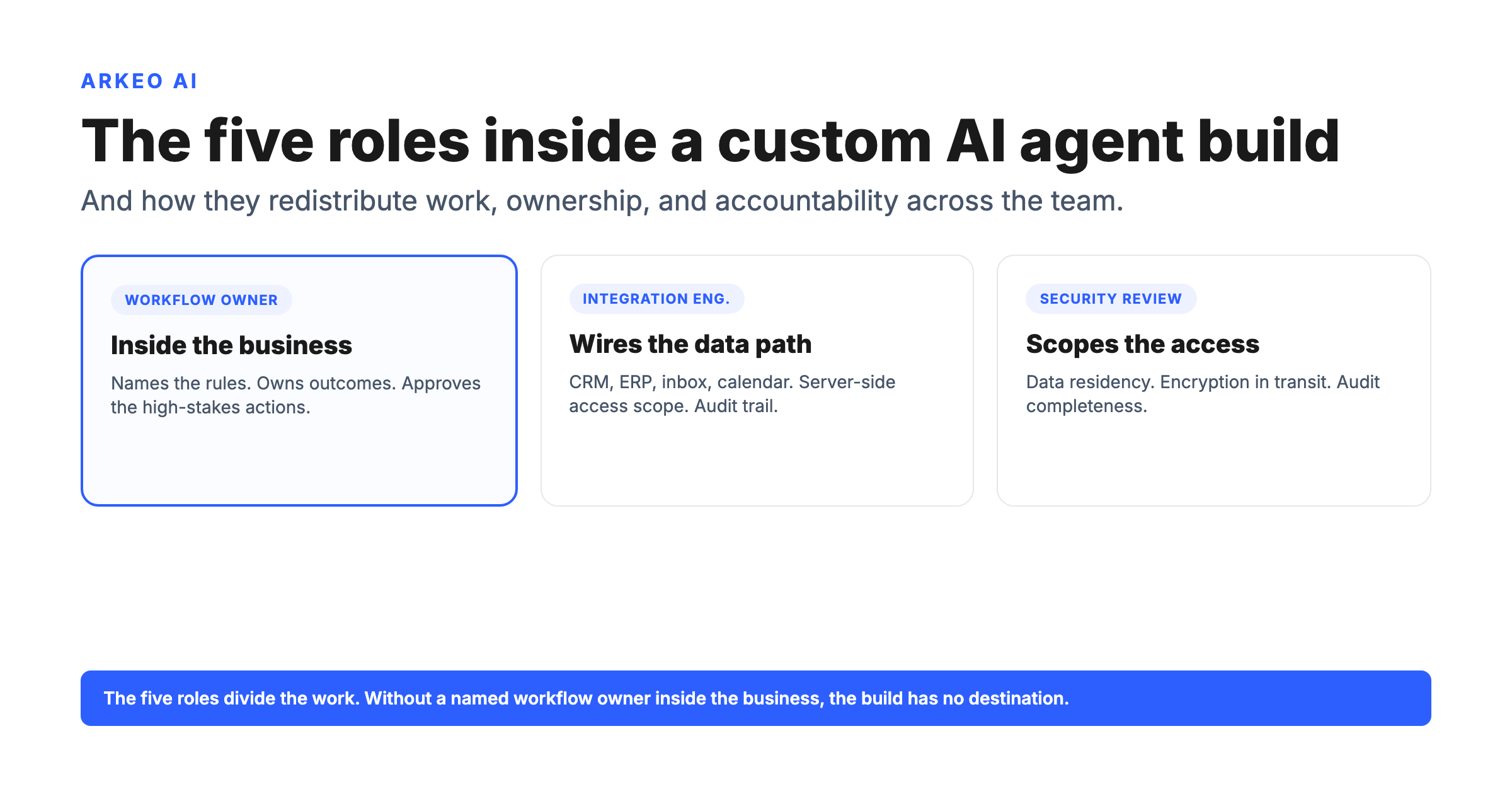
The system is built on Nodes, which act as the central brain. A Node runs behind your corporate firewall, processing logic and directing traffic without sending your data to the public web. Because it lives on your infrastructure, it can safely query your local databases and active directories.
The second component involves isolated Workspaces. You do not want a marketing agent having access to the same files as your finance team. Workspaces create strict departmental boundaries, ensuring that each digital worker only operates with the context and credentials required for its specific job.
Finally, OpenClaw utilizes Browser Control Relays. Most legacy business software lacks modern API connectivity. Browser relays act as the hands of the agent, allowing it to securely navigate a web interface, extract on-screen data, and submit forms exactly as a human employee would.
Bring Your AI In-House.
Your employees are already using AI; you just don't control the data. Book a Free AI Assessment to map your shadow AI exposure and get a step-by-step plan to deploy a secure, private AI workforce on your own infrastructure.
Why Operators Are Moving to Private Agent Systems
Mid-market CEOs and VPs of Operations are aggressively adopting private AI workforces for three distinct reasons: absolute data control, multi-step execution, and strict governance.
Absolute Data Sovereignty
You cannot risk putting client financials, proprietary bid documents, or employee records into public models. The moment an employee pastes sensitive data into a cloud AI tool, you have lost control of that intellectual property. OpenClaw keeps your data inside the building. It physically separates your operational truth from the public internet.
Multi-Step Task Execution
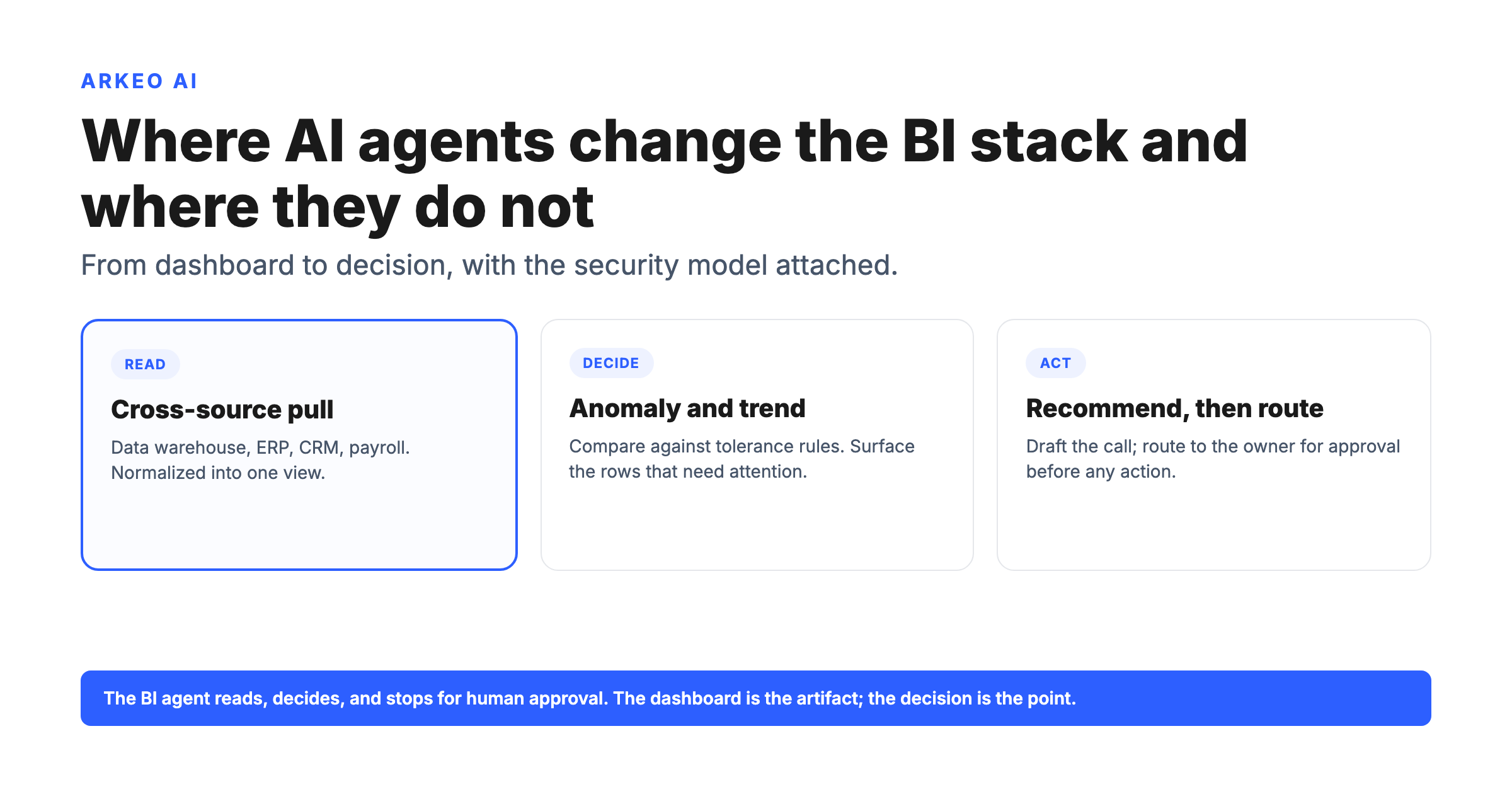
Public AI requires constant prompting. OpenClaw operates on background cron jobs and proactive tasks. A correctly configured agent can monitor an accounts payable inbox, read incoming vendor emails, extract PDF invoice data, cross-reference it against a purchase order in your ERP, and draft a payment approval request. It does the heavy lifting while your human team sleeps.
Human-in-the-Loop Governance
While OpenClaw agents are highly capable, they do not operate without supervision. The system is designed around explicit approval gates. An agent might prepare a complex operational report, but it will ping a manager via Slack or Discord to secure a single-click approval before sending it to the executive team. This governance model builds trust and maintains strict quality control.
Treating AI as a Digital Teammate
The most profound shift when adopting OpenClaw is the change in user behaviour. Your team stops treating AI like a search engine and starts treating it like a coworker. You can message your OpenClaw agent through the communication tools you already use, asking it to verify a schedule or pull a client briefing document.
The agent remembers previous conversations, understands its role within the company, and executes tasks proactively. That is exactly what we map during our free AI Assessment: which processes are costing you the most administrative time, and which workflows a digital teammate can handle tomorrow. The goal is scalable capacity without adding payroll overhead.
Bring Your AI In-House.
Your employees are already using AI; you just don't control the data. Book a Free AI Assessment to map your shadow AI exposure and get a step-by-step plan to deploy a secure, private AI workforce on your own infrastructure.