Arkeo AI
Insights on private AI, on-premise deployment, and building AI systems you actually own.
Construction
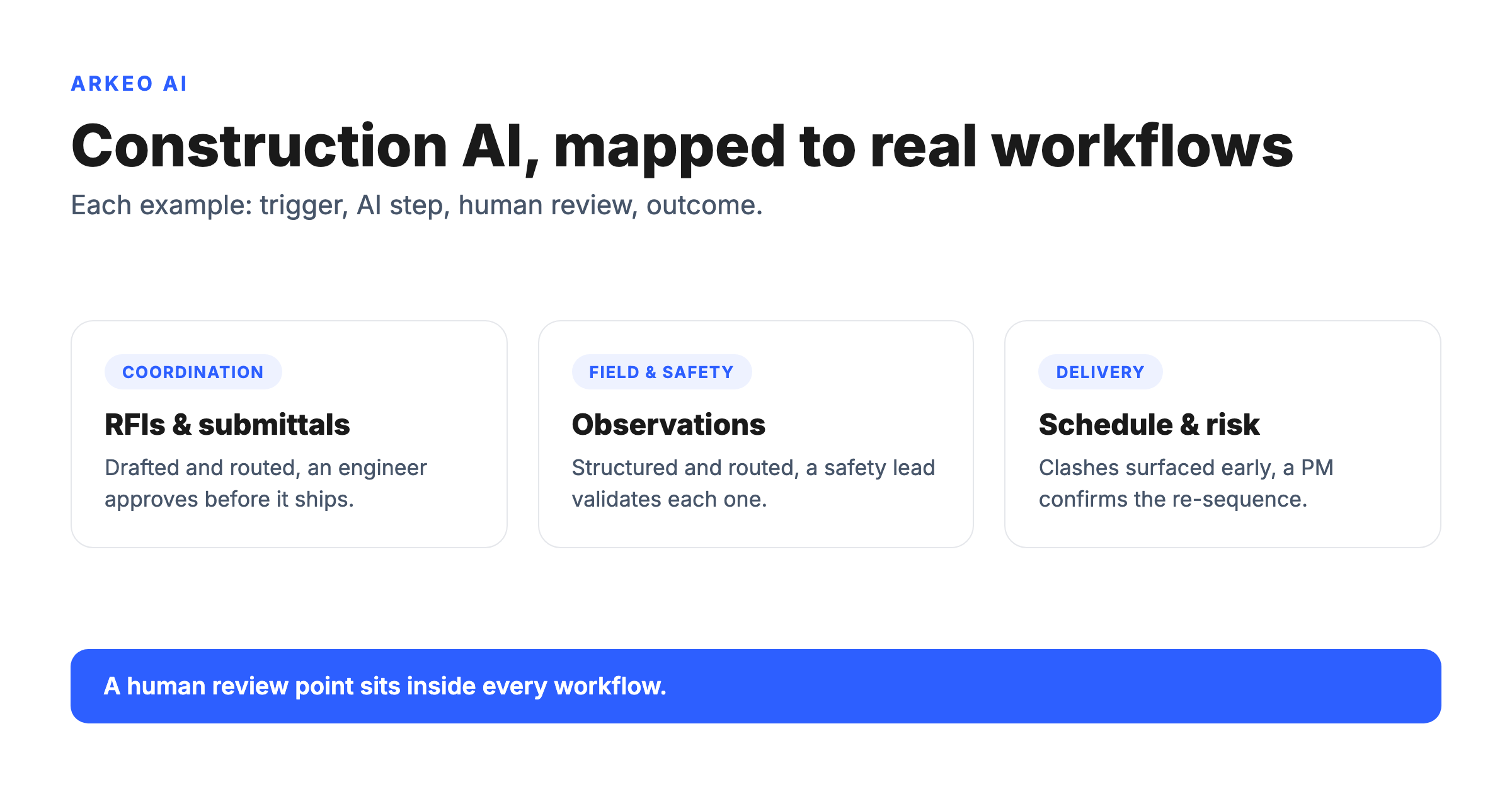
Concrete AI in construction examples mapped to real project workflows: RFIs, submittals, safety observations, schedule conflicts, and spec lookups, each with its trigger, AI step, human review point, and business outcome.
May 23, 2026
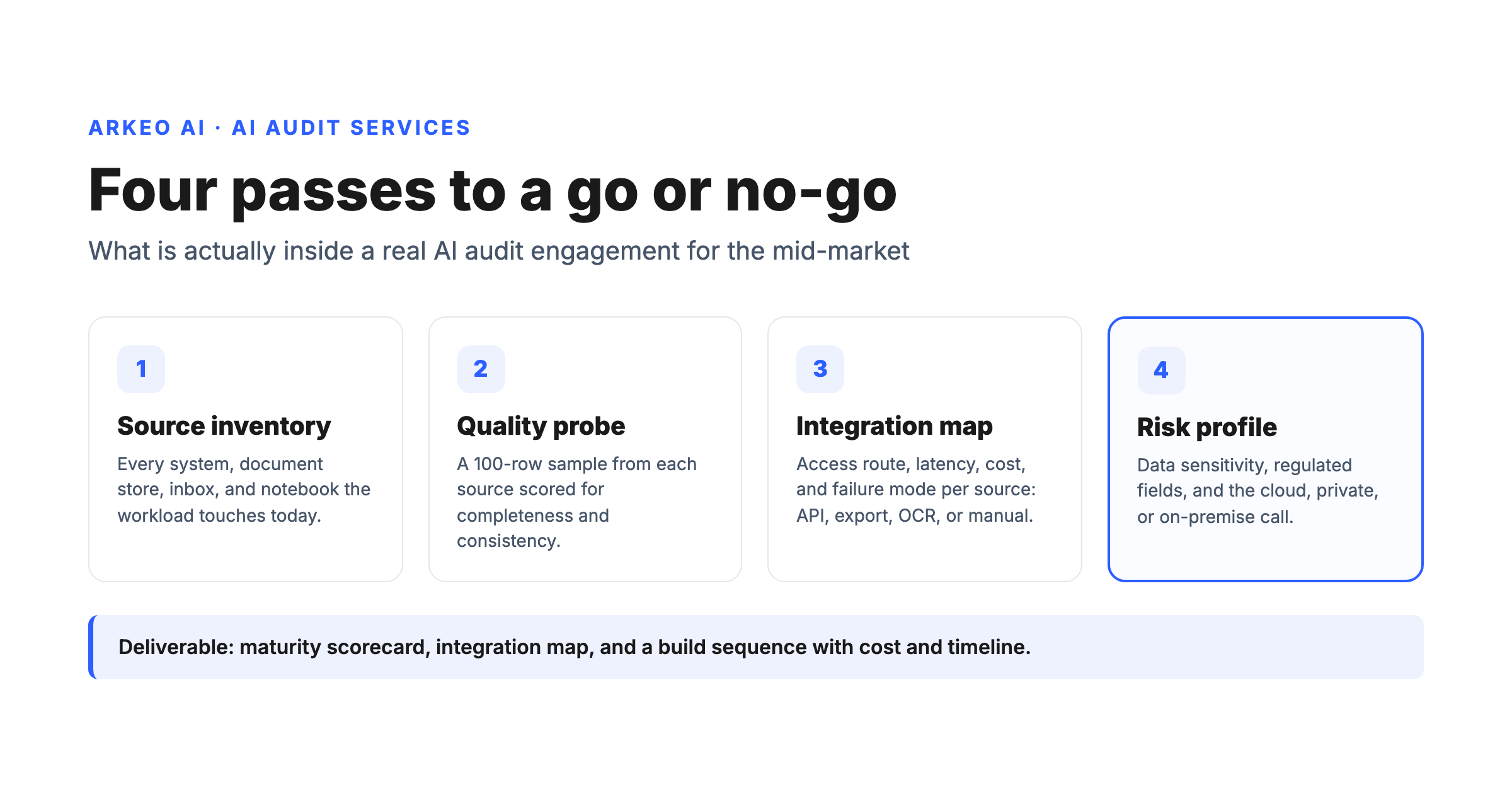
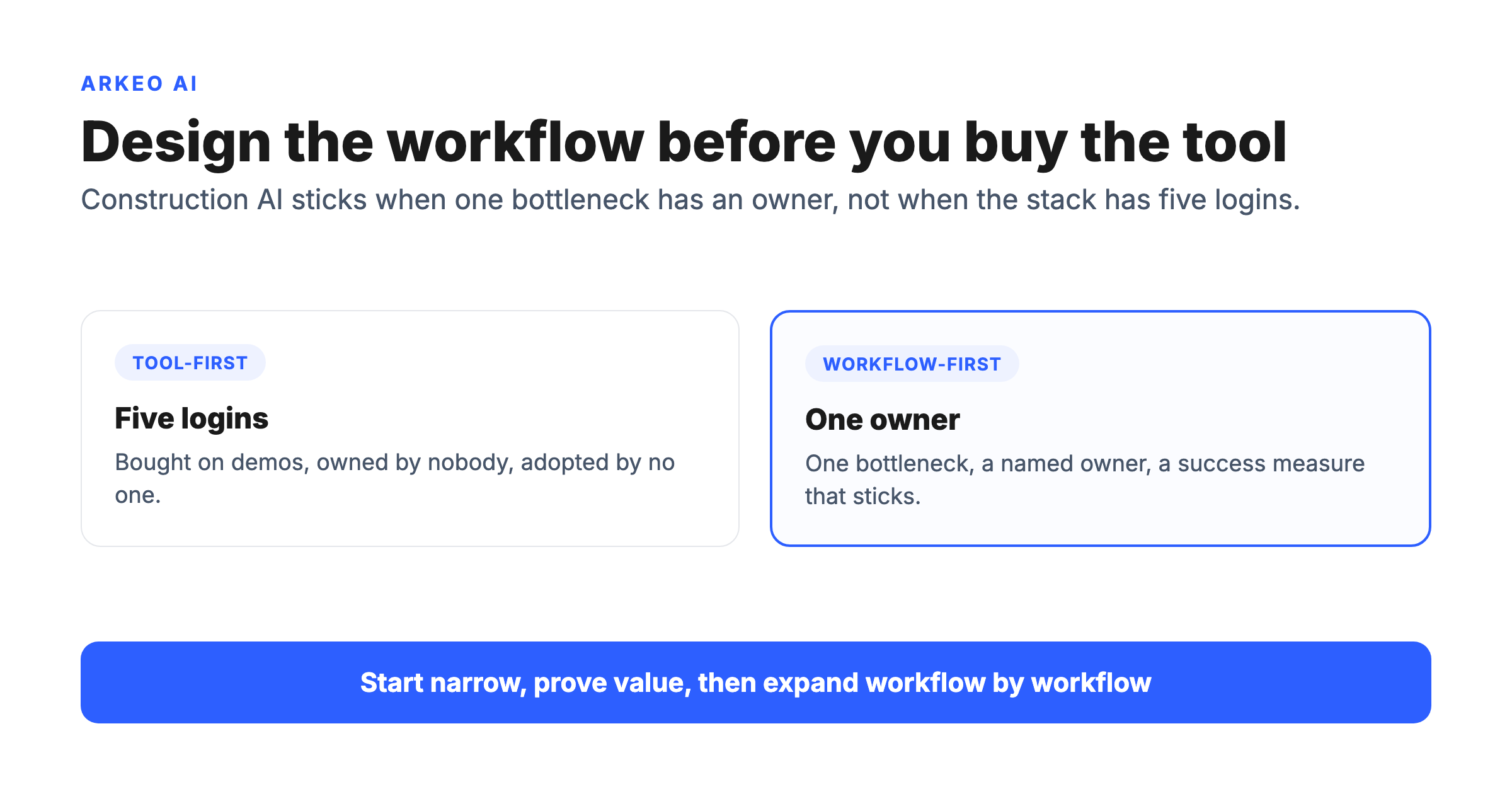
A step-by-step operator playbook for using AI in construction: pick one bottleneck, run a narrow pilot with a named owner, measure it, then expand. Skip the tool-first thinking that quietly kills most rollouts.
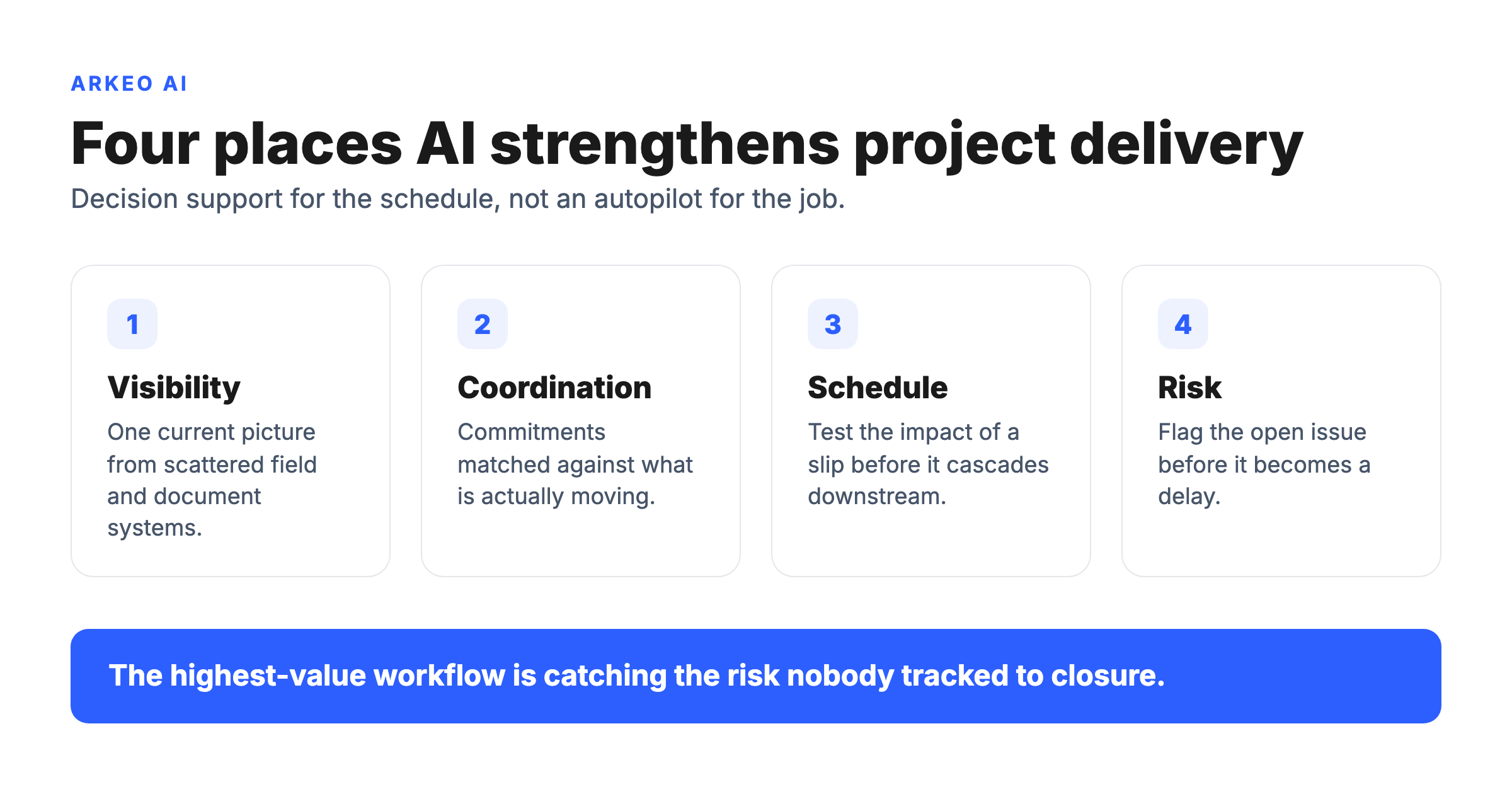
Artificial intelligence in construction scheduling works as decision support, not autopilot. Here is where it earns its place, what it cannot fix alone, and how to pilot it.
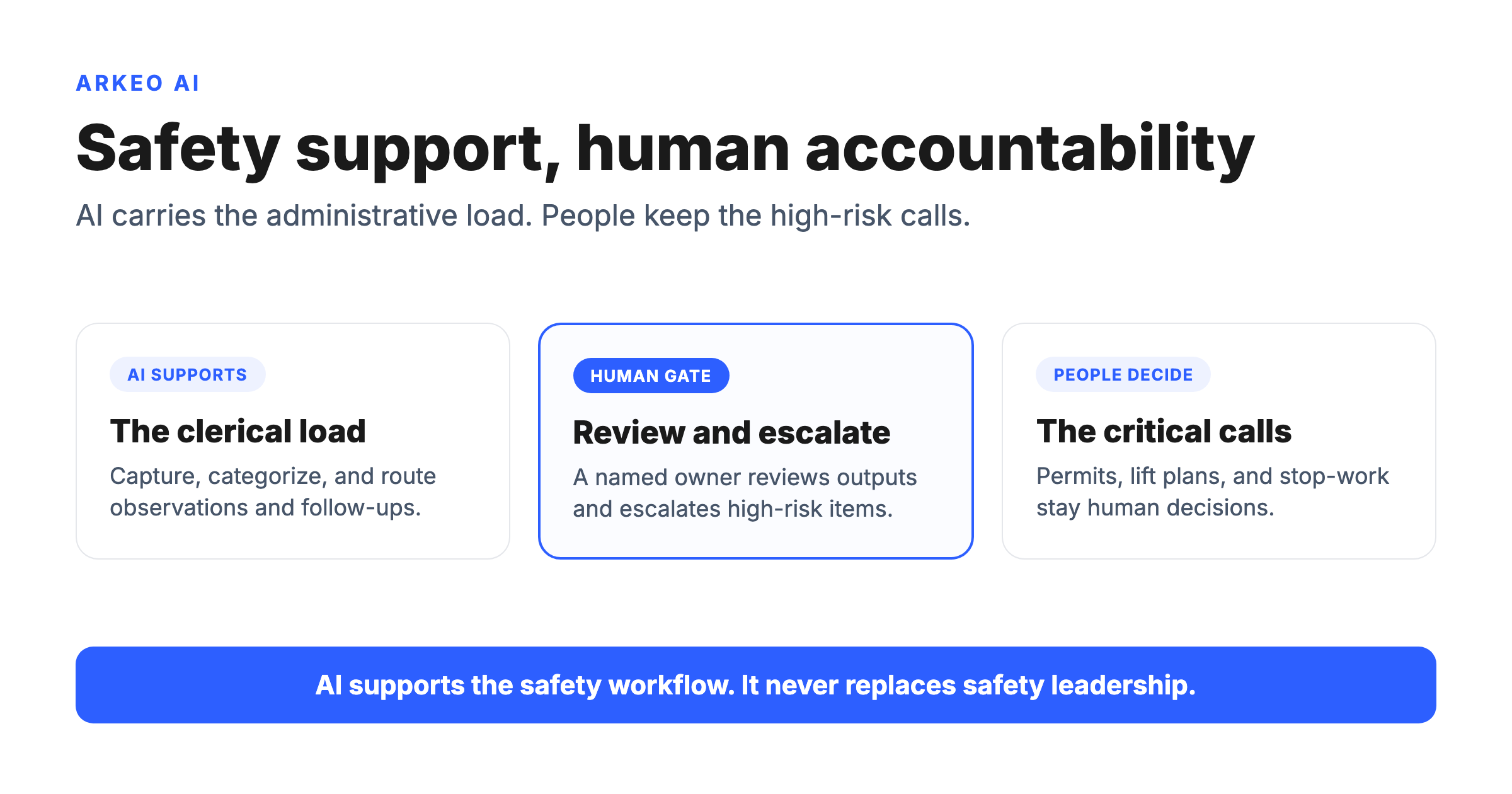
AI can support construction safety workflows, observations, hazard categorization, follow-up routing, and training, but it does not replace safety leadership. Here is where it helps, where it should not be trusted alone, and how to pilot it.
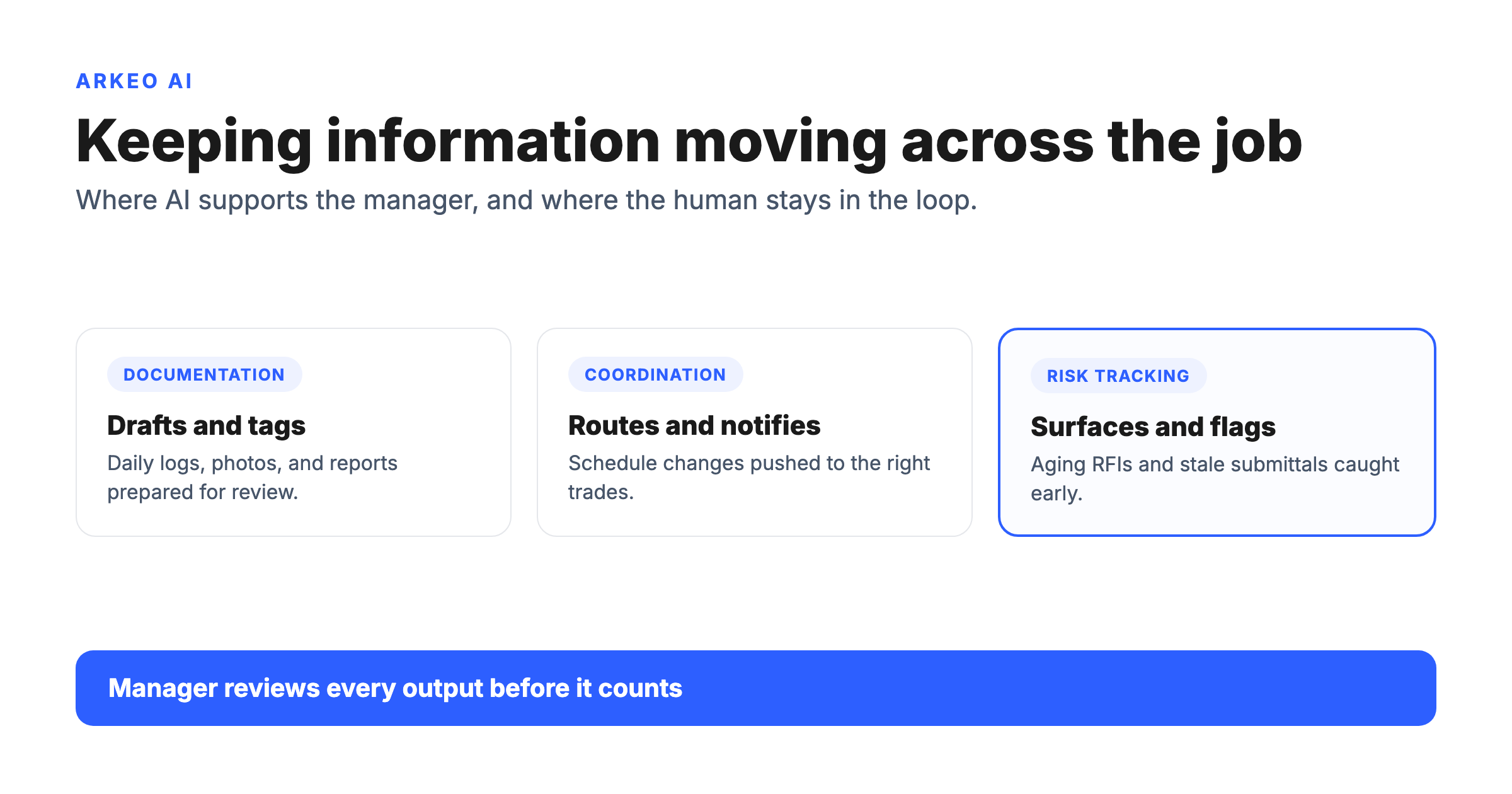
Where AI actually helps construction project managers, the workflows worth automating first, and how to pilot one without adding another tool layer.
AI in construction management works best as workflow support and exception handling. See where it helps managers, which workflows fit first, and how to pilot it without betting the project on it.
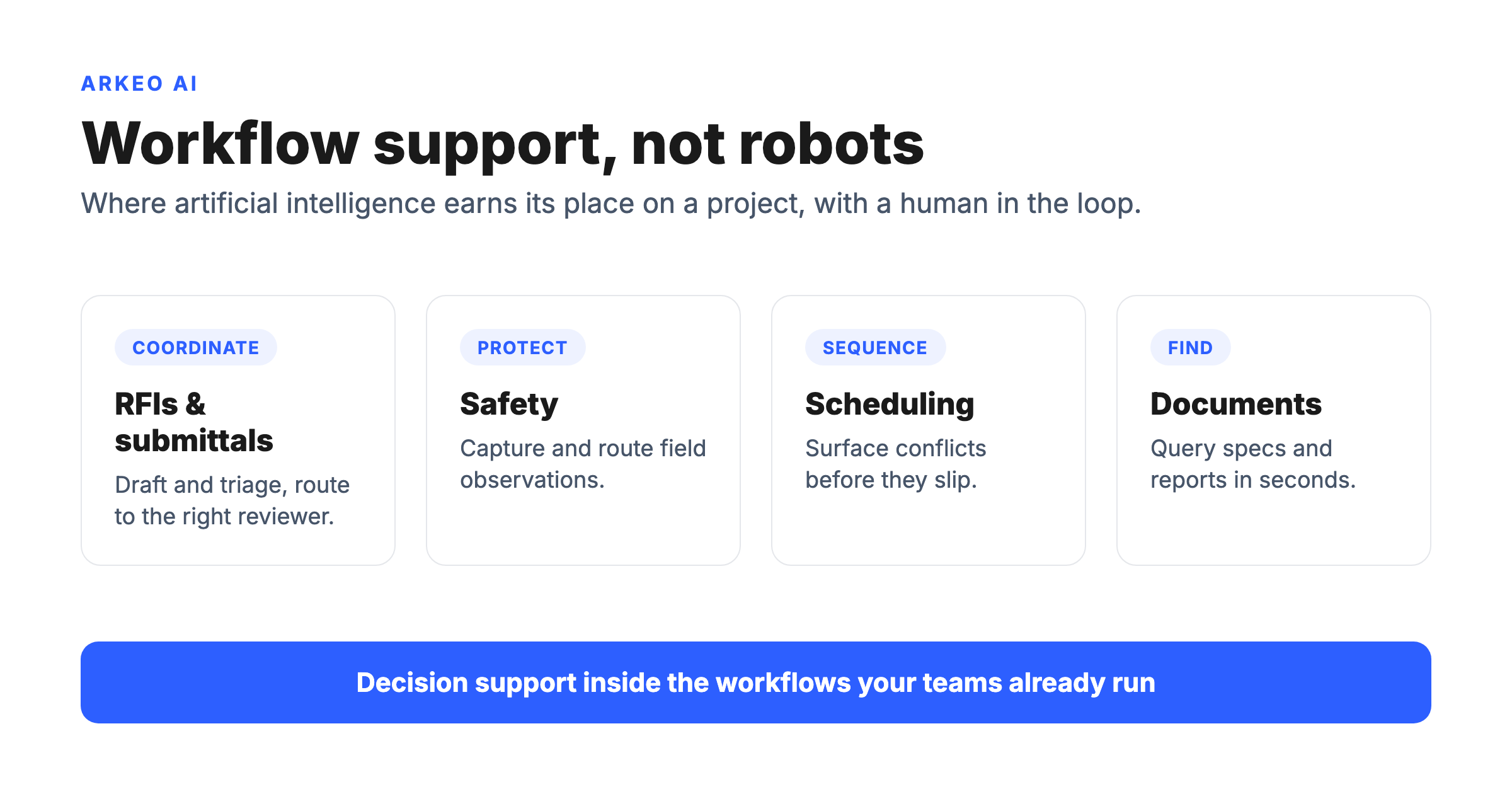
A practical, operations-focused guide to AI in construction: where it actually helps across coordination, safety, scheduling, and documents, what teams get wrong, and how to choose the first workflow to automate.
AI
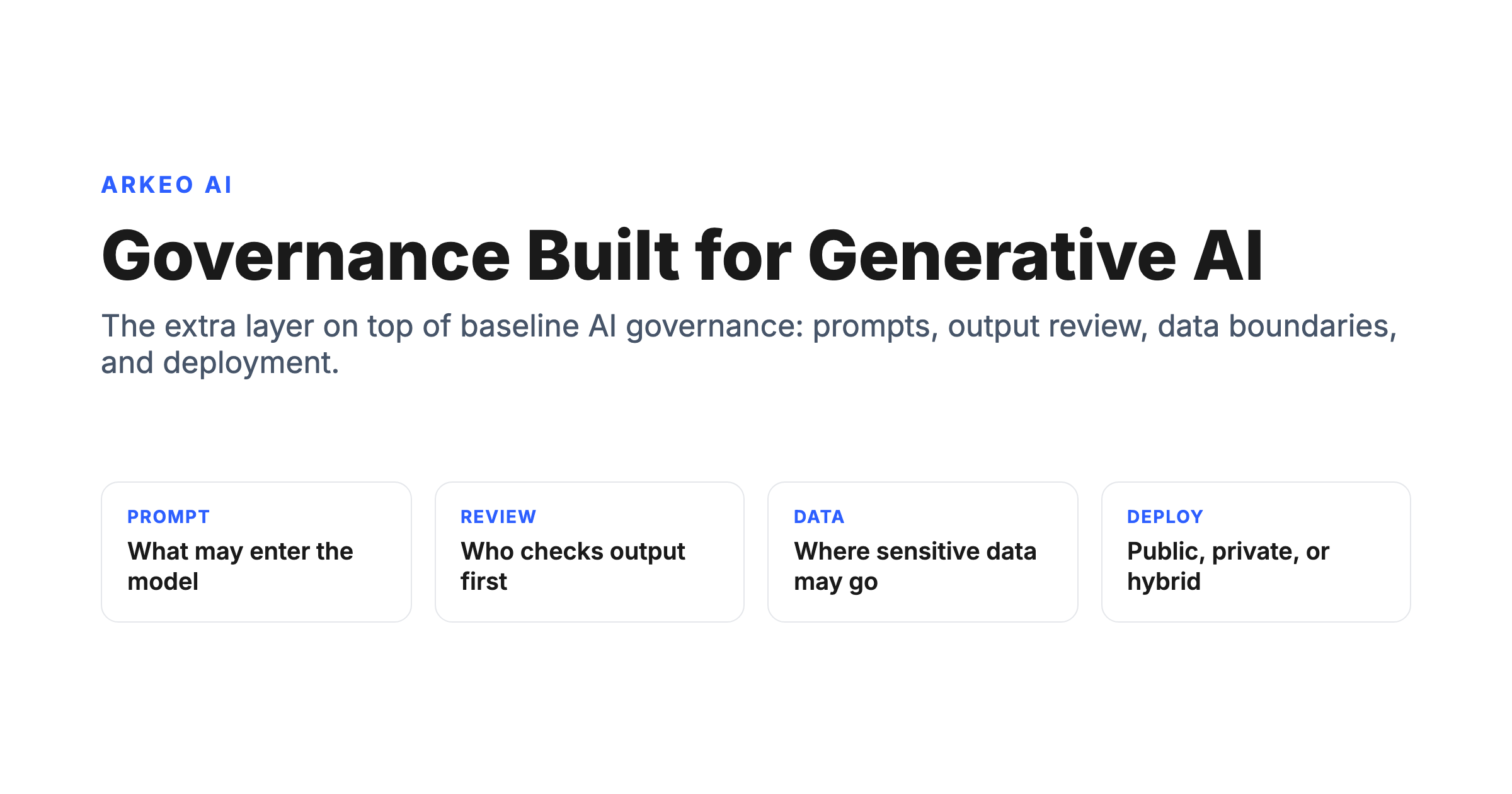
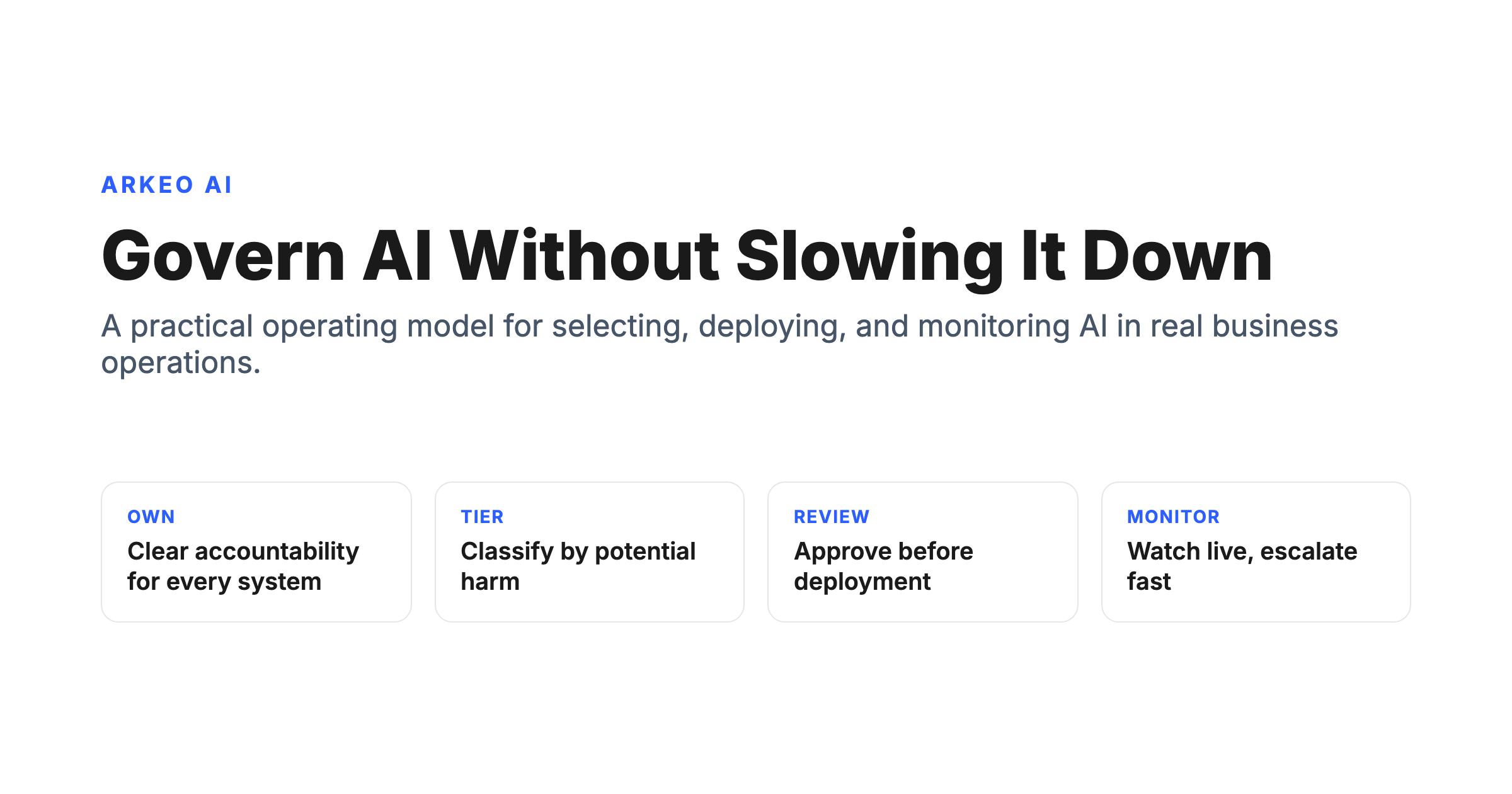
Generic AI governance does not cover generative AI. Here is the extra layer a generative AI governance framework needs: prompt controls, output review, data boundaries, and the deployment choice that changes the whole burden.
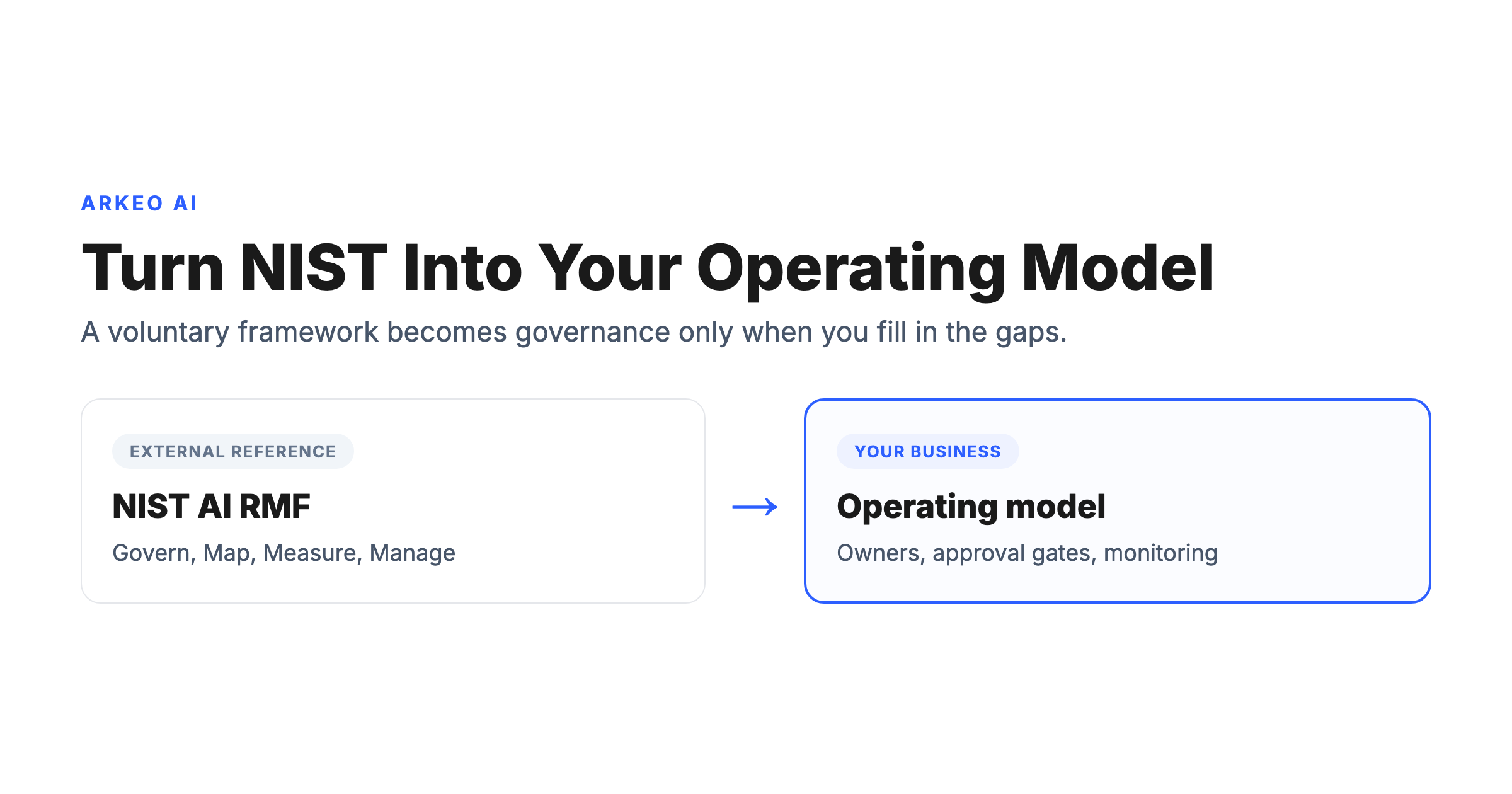
NIST gives you a shared language for AI risk, not a ready-made operating model. Here is what the framework covers, what it leaves for you to define, and how to apply it to real deployment decisions.
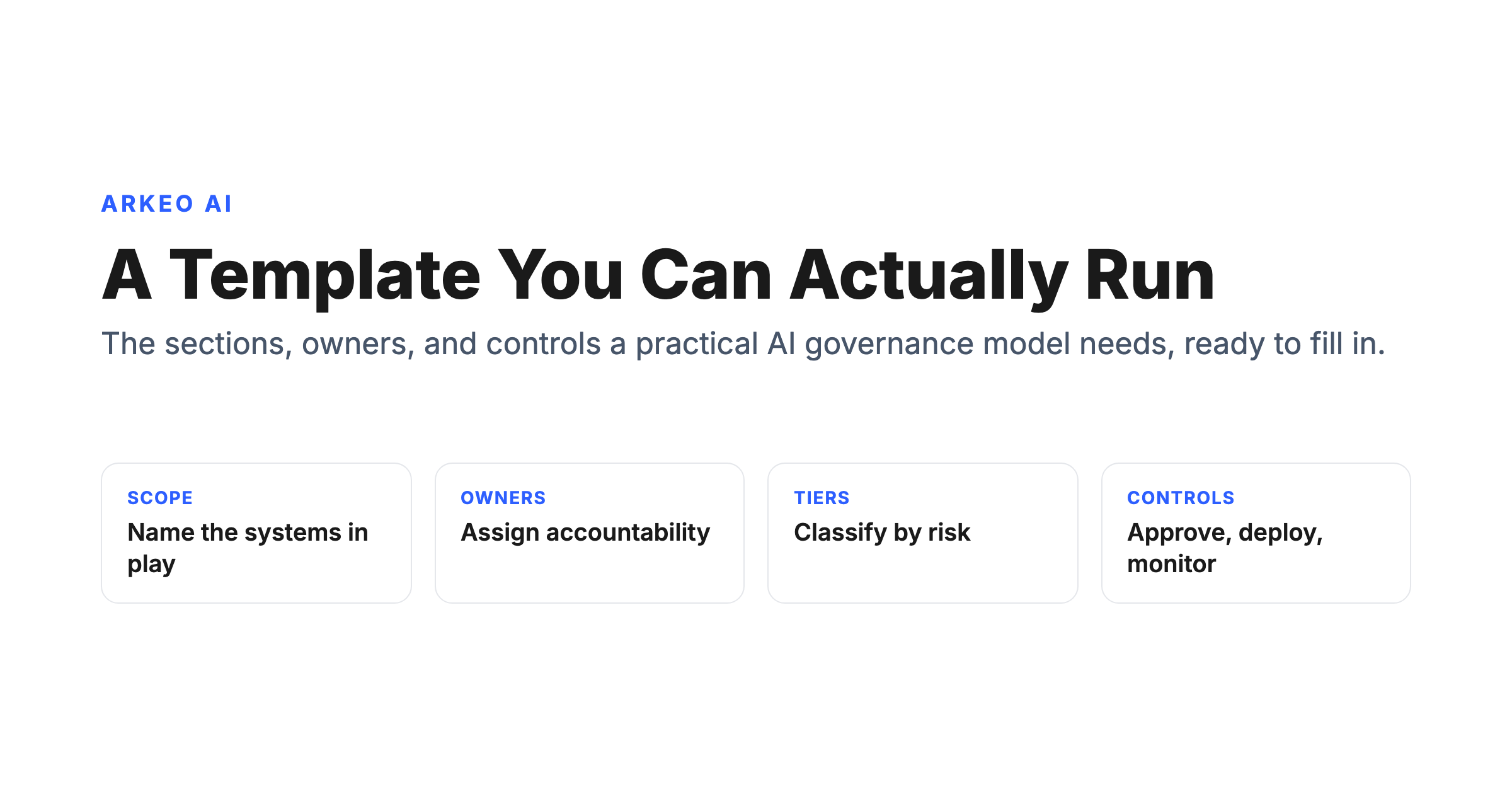
The sections every AI governance framework template should contain, how to run a lean version or a mature one, the mistakes that make templates useless, and how to operationalize it.
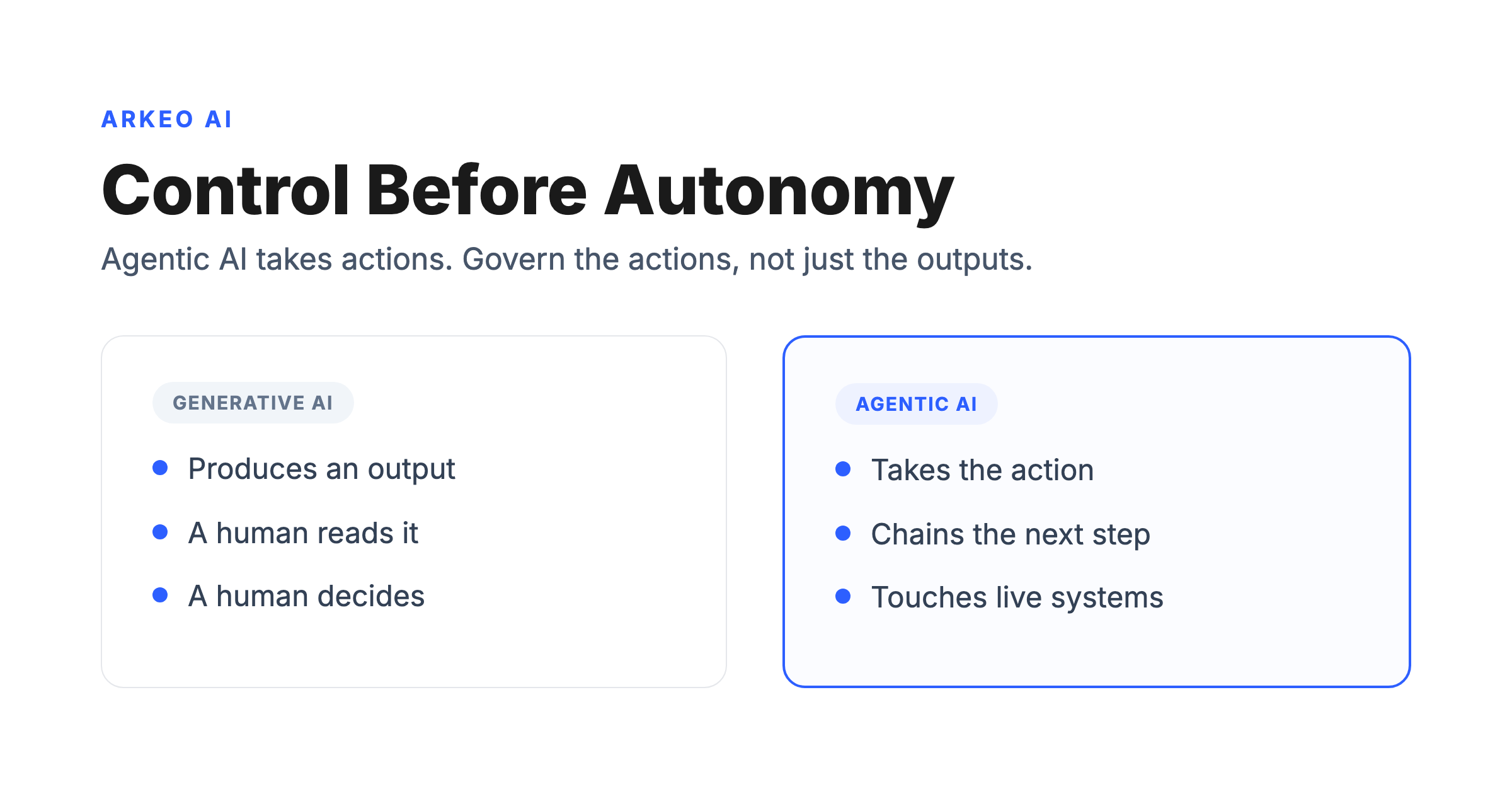
Agentic AI takes actions, not just outputs. Here is what an agentic AI governance framework must control: permissions, approvals, rollback, monitoring, and escalation.
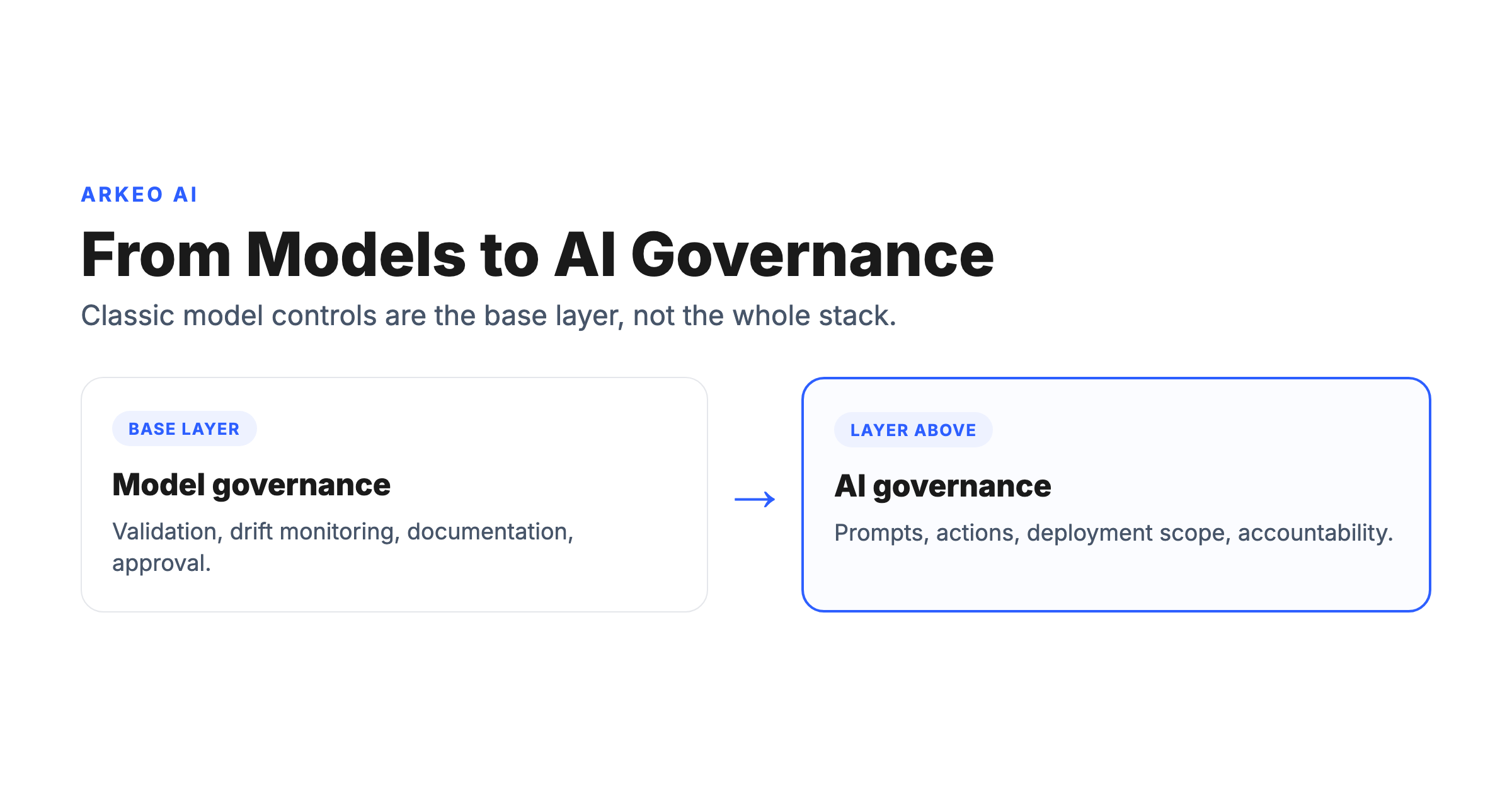
What machine learning model governance covers, why classic controls like validation and drift monitoring are necessary but no longer sufficient, and how to slot old and new governance layers into one operating model.
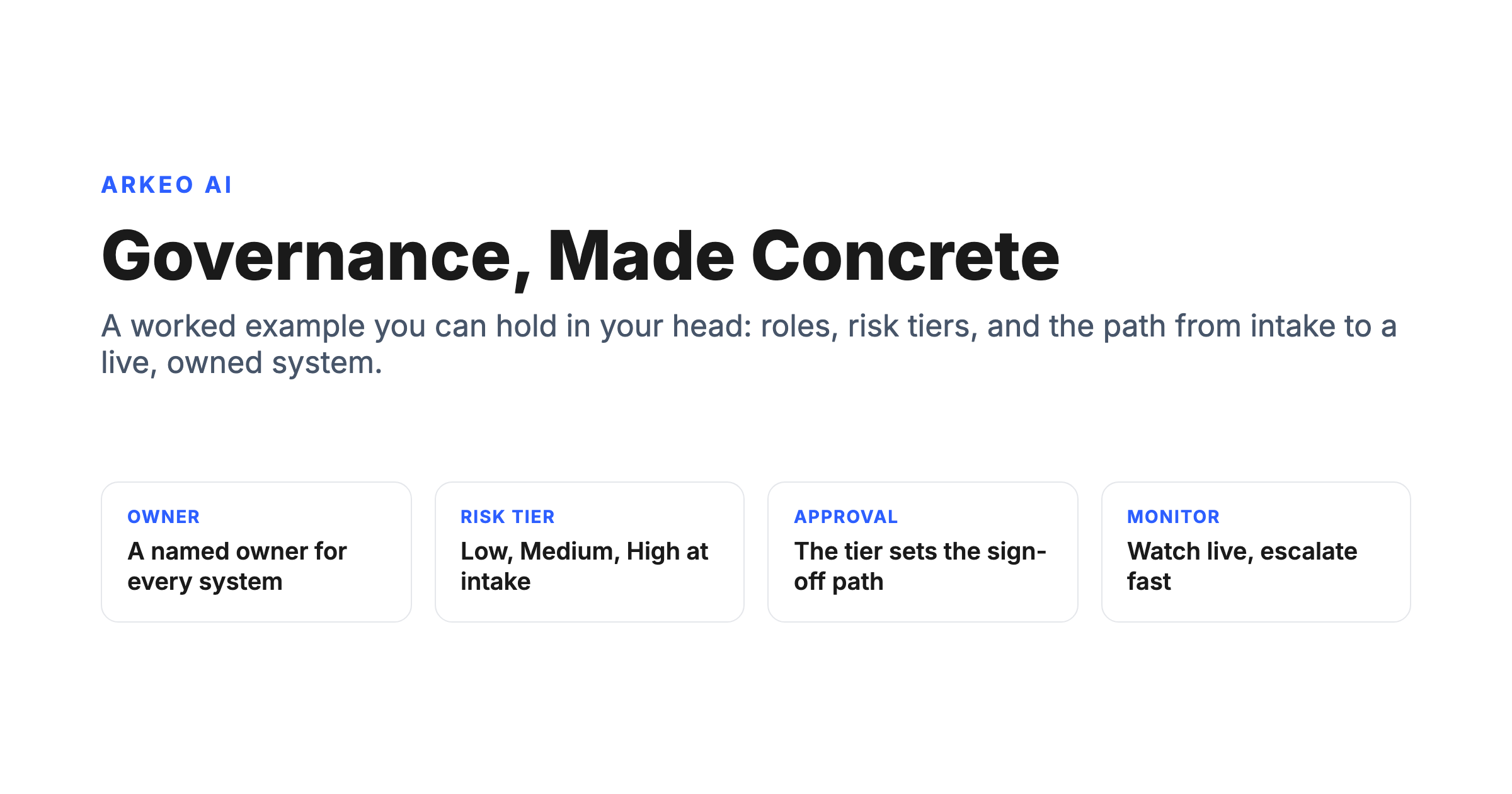
A concrete AI governance framework example for a mid-market company, walking through roles, risk tiers, ownership, and an escalation flow, with guidance on how to adapt it instead of copying it blindly.
What an AI governance framework is, the seven components it needs, how NIST and the EU AI Act fit in, and how to build one that speeds adoption instead of stalling it.
AI in production planning is decision support, not autonomous scheduling. Here is where it materially helps planners, where data and process discipline are the real problem, and how to decide if planning is your right first AI use case.
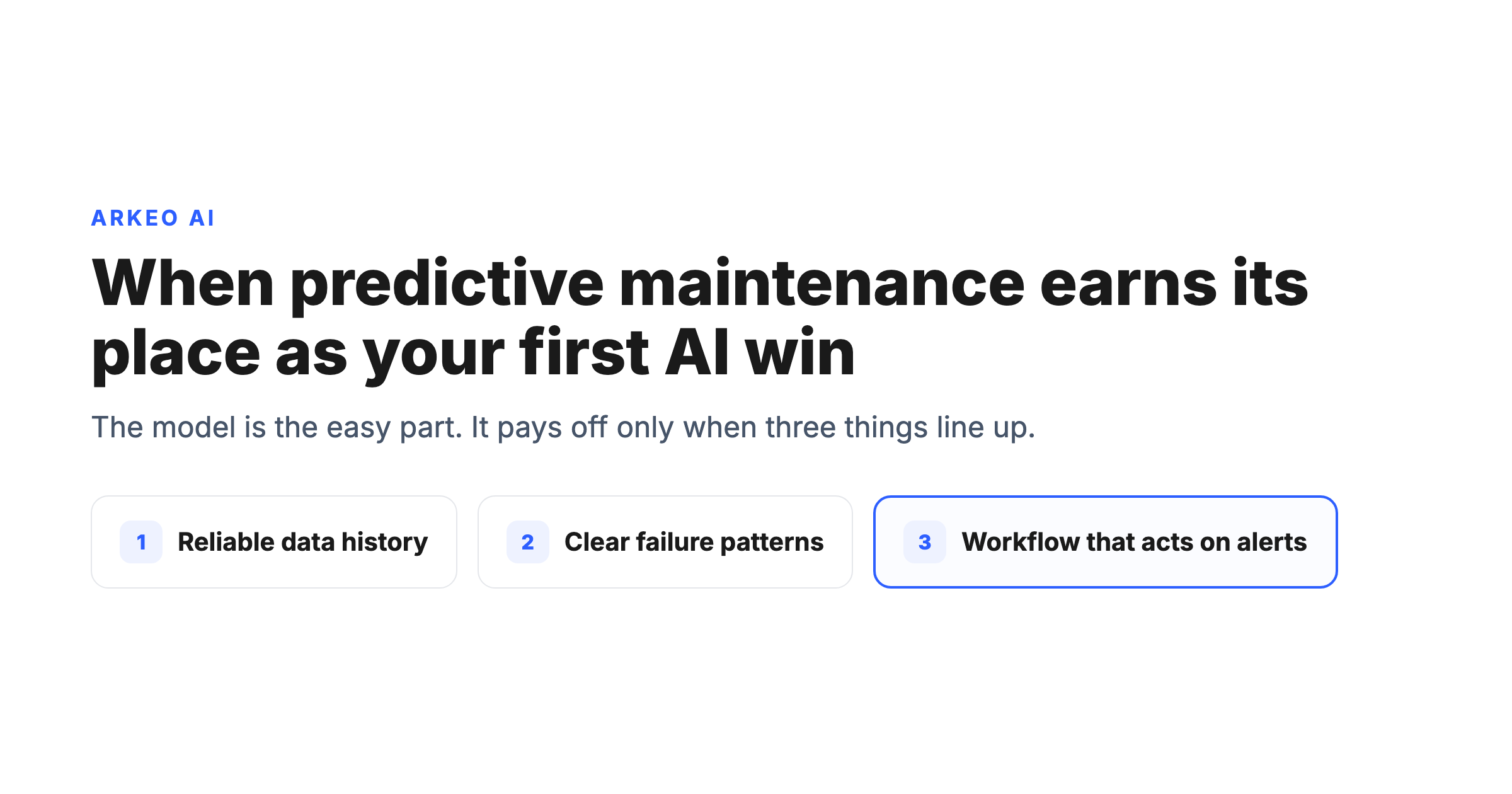
Predictive maintenance is the classic manufacturing AI use case, but it only pays off when your data history, failure patterns, and work-order workflow are ready. Here is how to decide when it works and when another use case should come first.
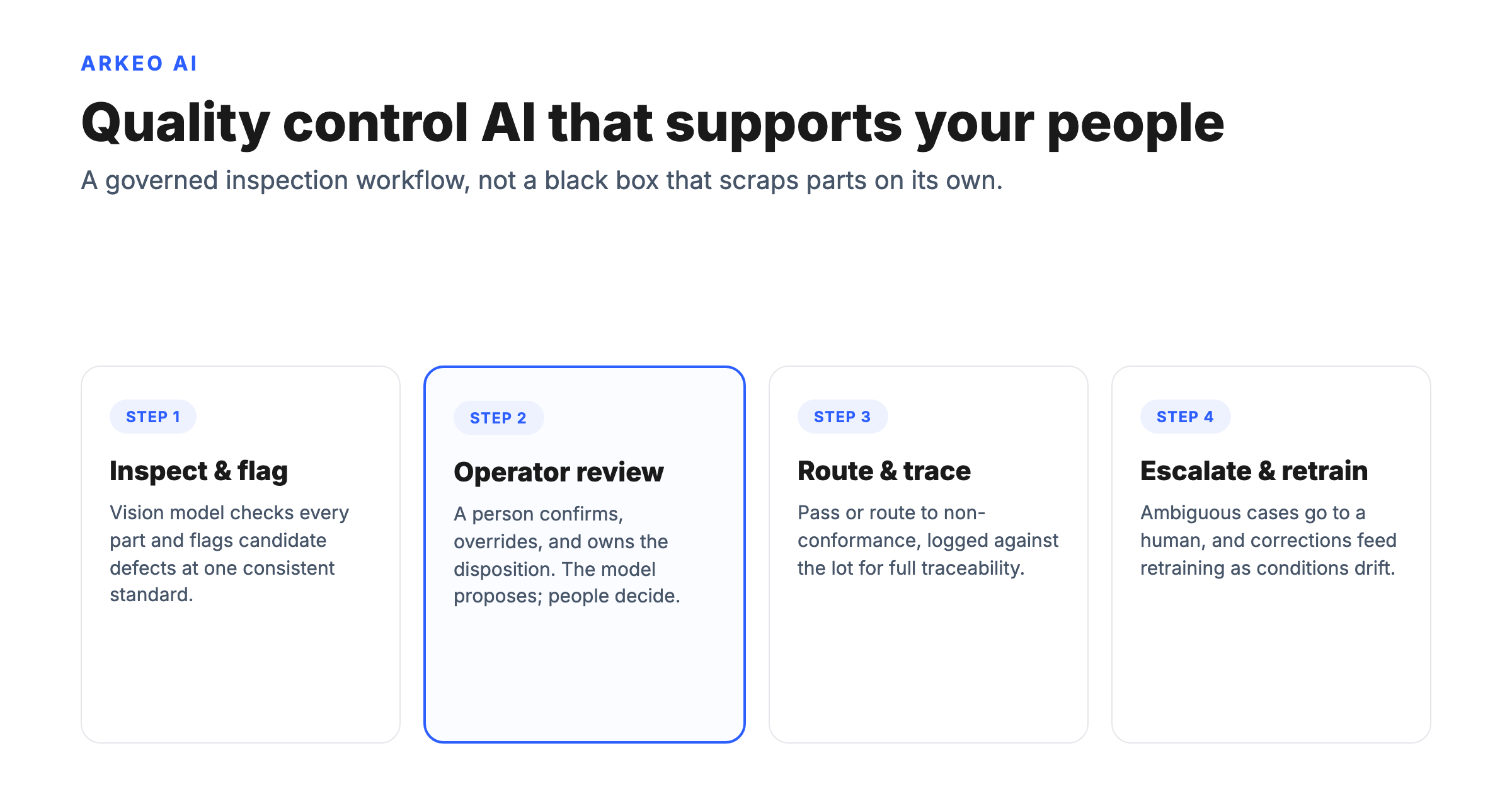
Where AI actually improves manufacturing quality control, what has to be true first, and how to pilot it safely as a governed inspection workflow, not an unchecked black box.
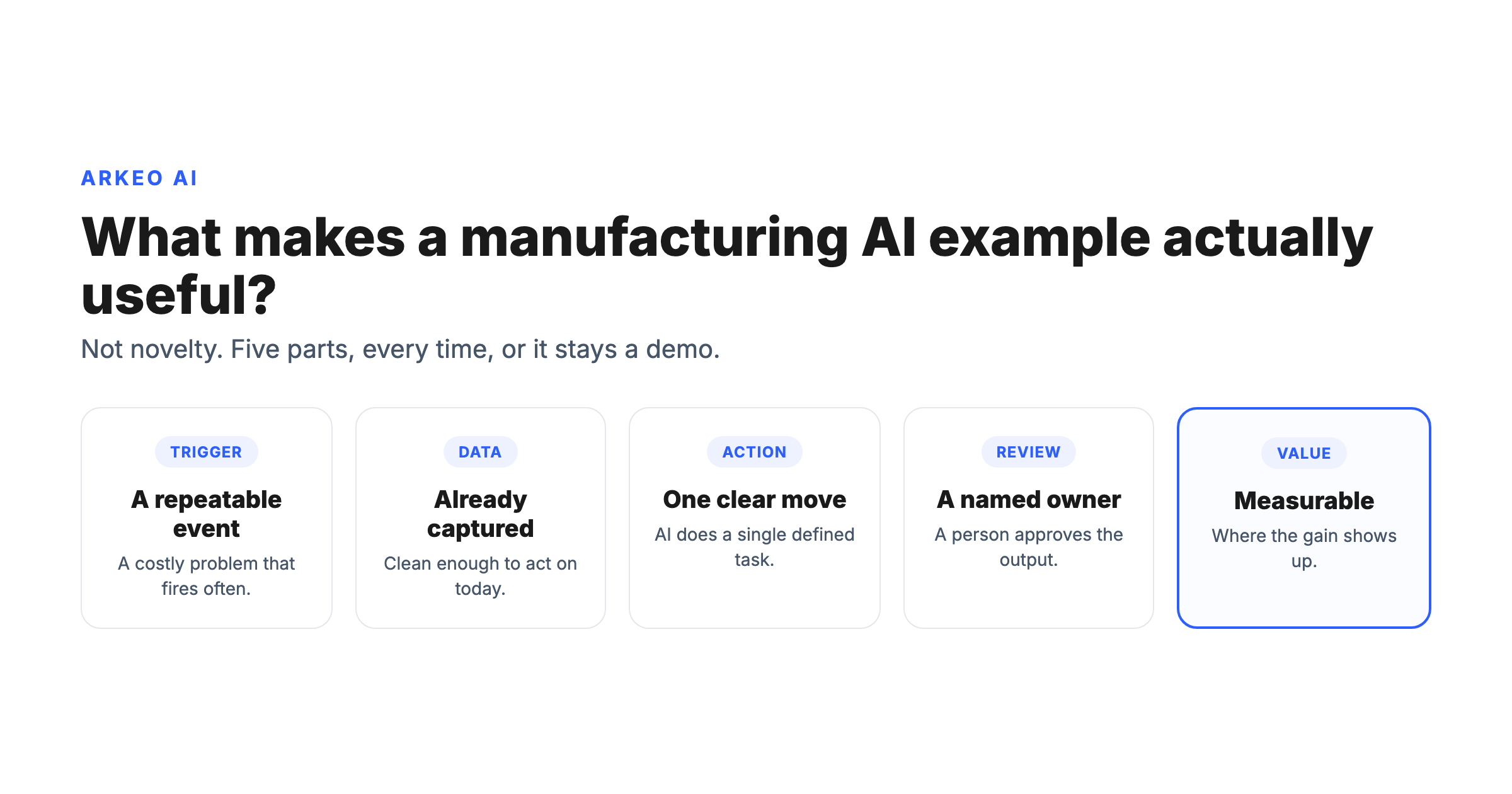
A pattern library of AI in manufacturing examples organized by workflow, each with its trigger, data, the action AI takes, who reviews it, and where value shows up.
Private AI
Private AI chat gives your team a ChatGPT-style assistant without sending prompts to a public model. Here is where it fits, where it falls short, and how to deploy it safely.
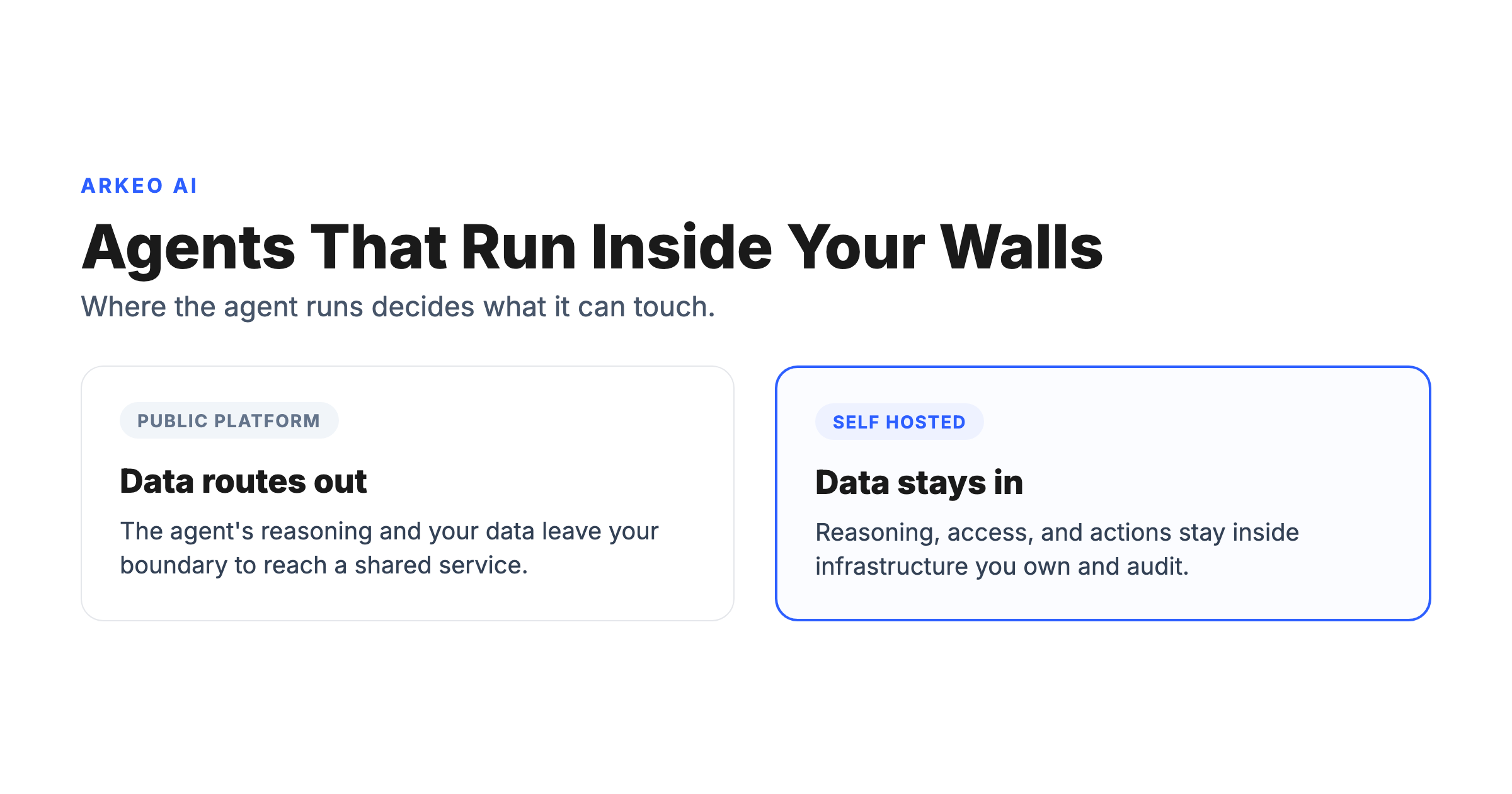
When self-hosted AI agents make sense, what they connect to, the governance they need, and how to decide if the complexity is worth it.
AI industrial automation adds a judgment layer on top of deterministic control. Learn where it pays, where rules-based systems still win, and how to deploy it with approvals, escalation, observability, and rollback.
On-Premise
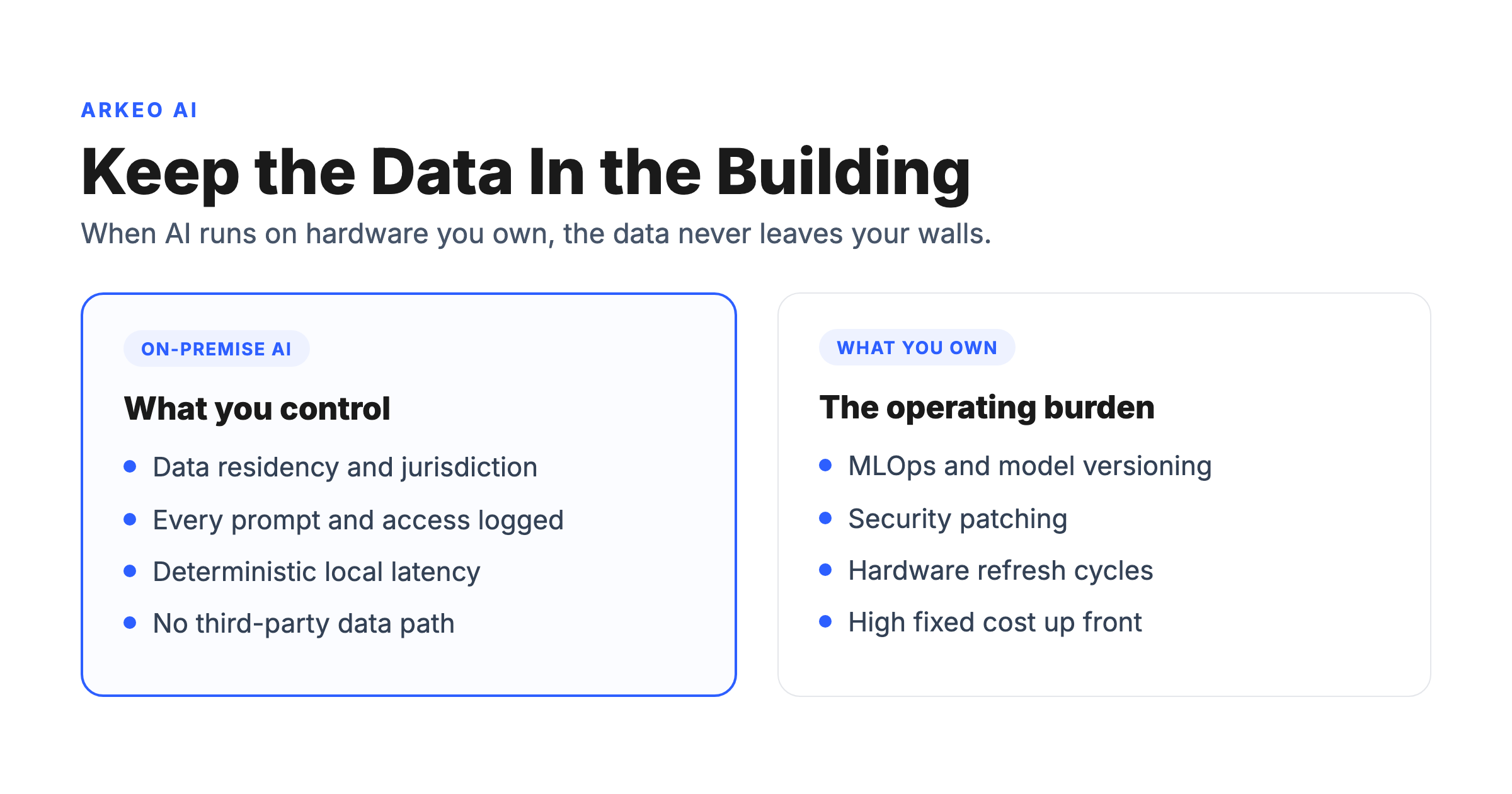
What on-premise AI actually solves, what it costs in money and operational overhead, and the signals that tell you when running AI inside your own walls is worth it.
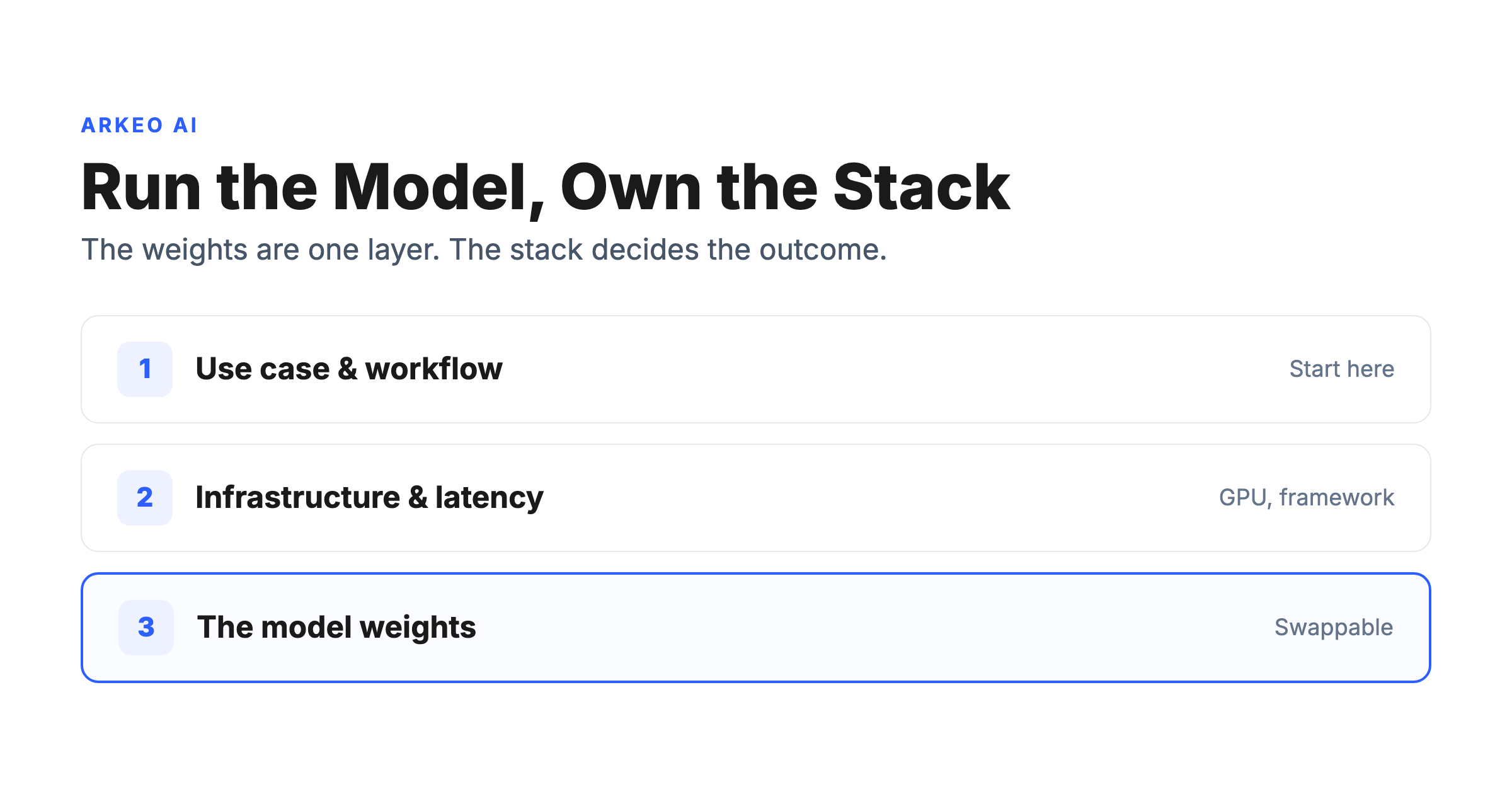
Model choice gets all the attention, but it is a small part of a self-hosted AI deployment. Here is what a business should evaluate before picking weights.
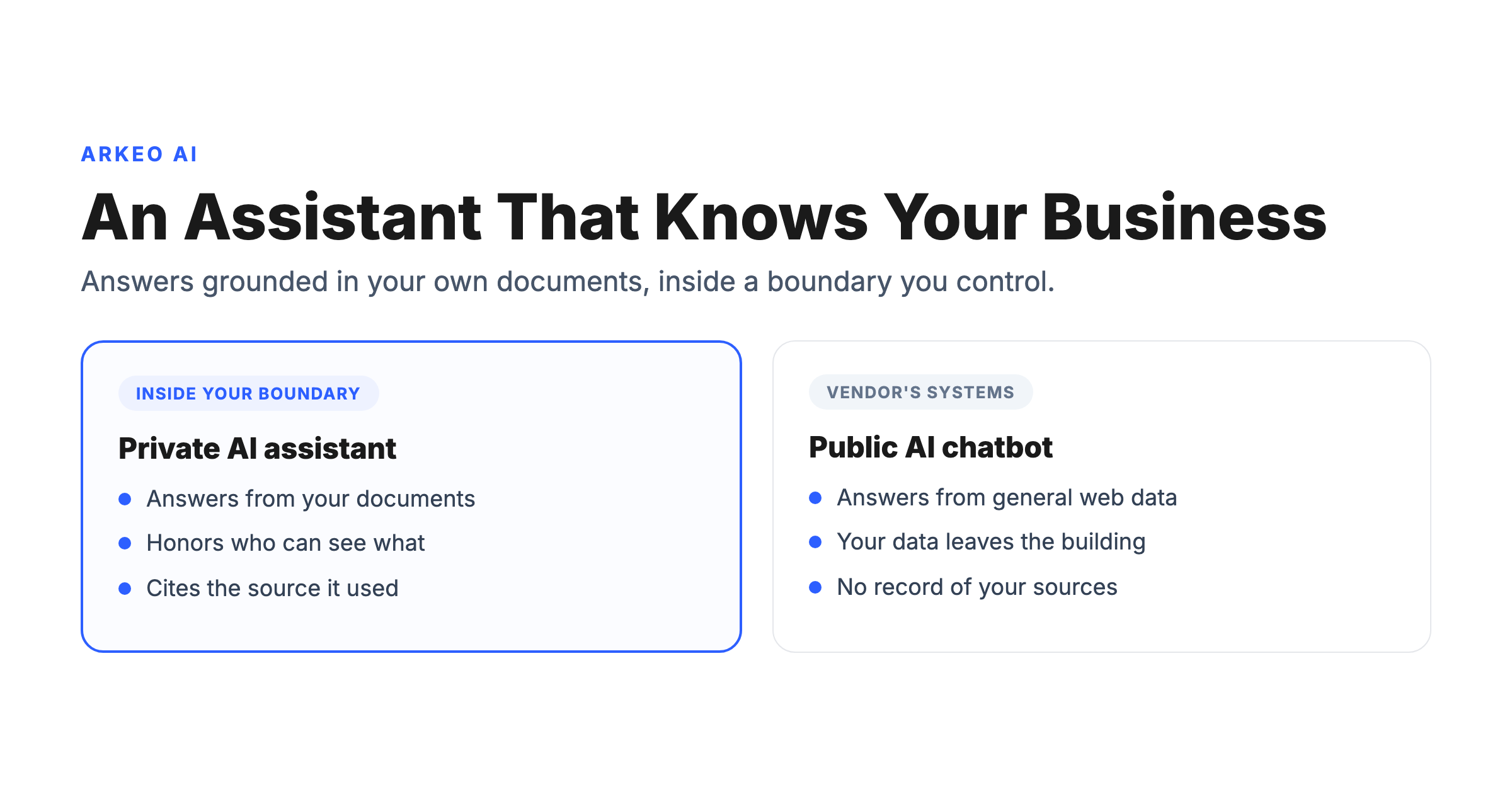
A use-case buyer guide to the private AI assistant: what it actually does, how it differs from a public chatbot, when it is worth deploying, and what to get right before rollout.
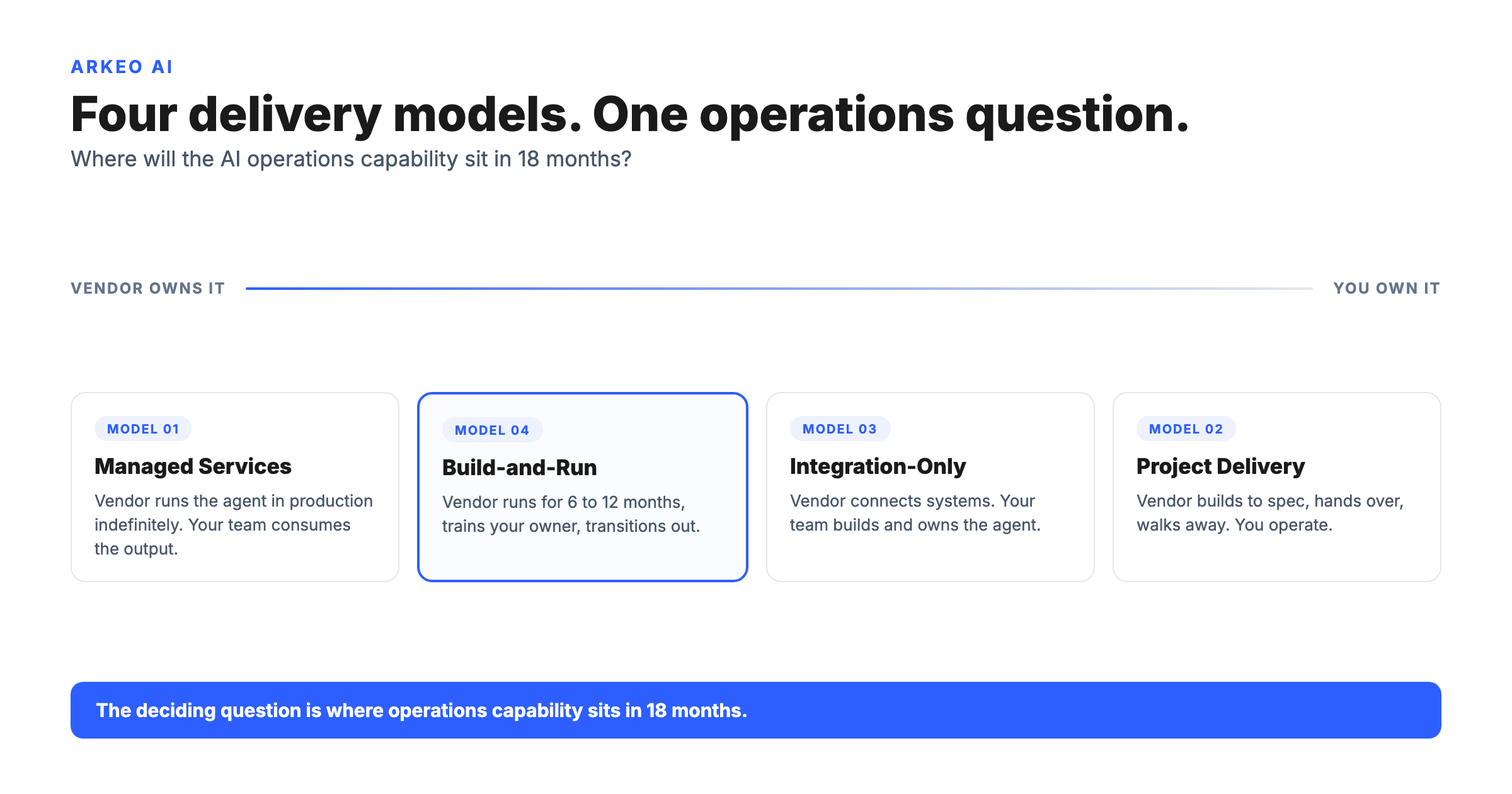
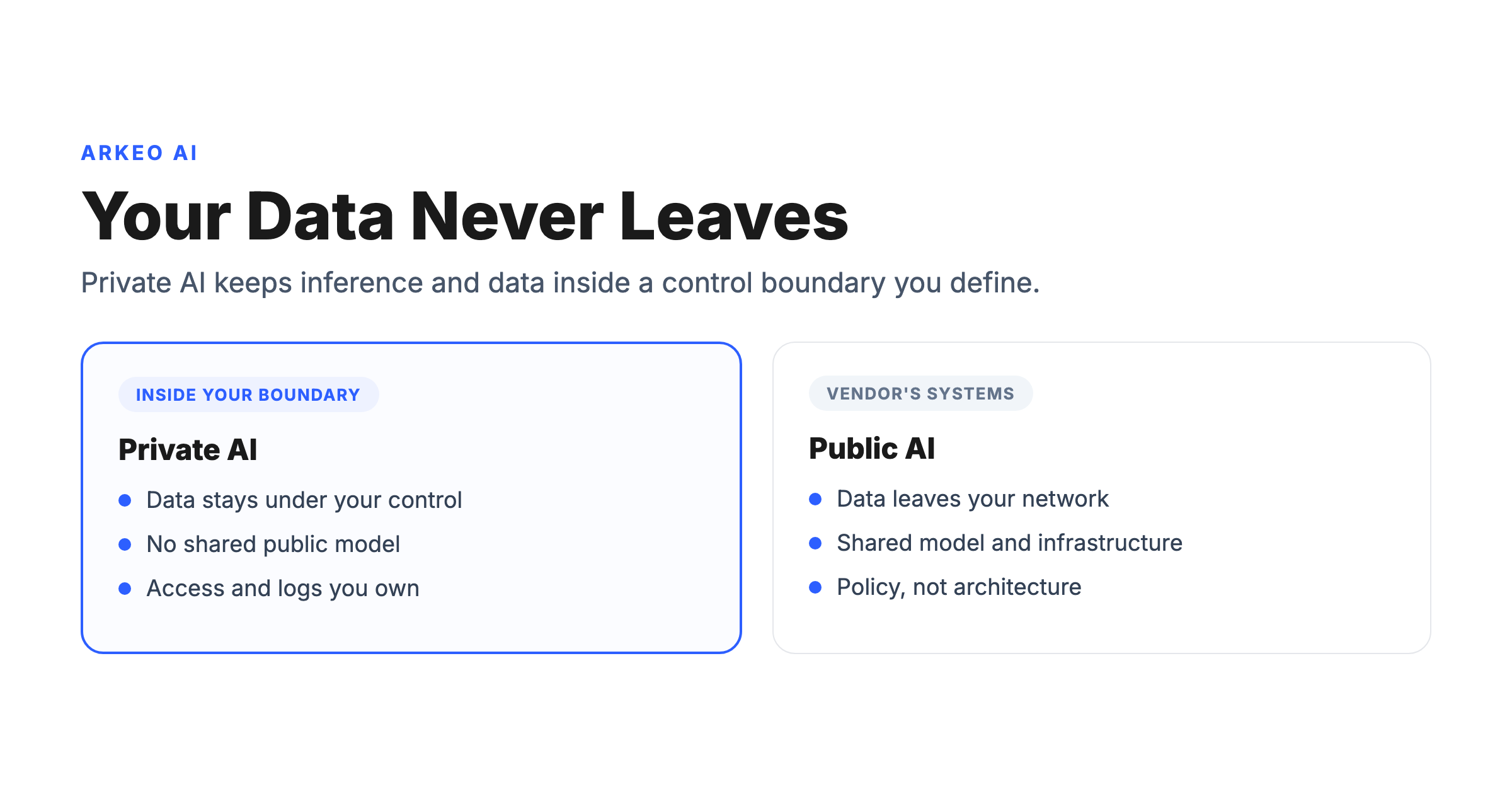
A buyer-focused guide to private AI: what the term actually means, how it differs from public AI, the spectrum of deployment models from vendor-managed to self-hosted, and how to choose the one that fits your data, team, and workflows.
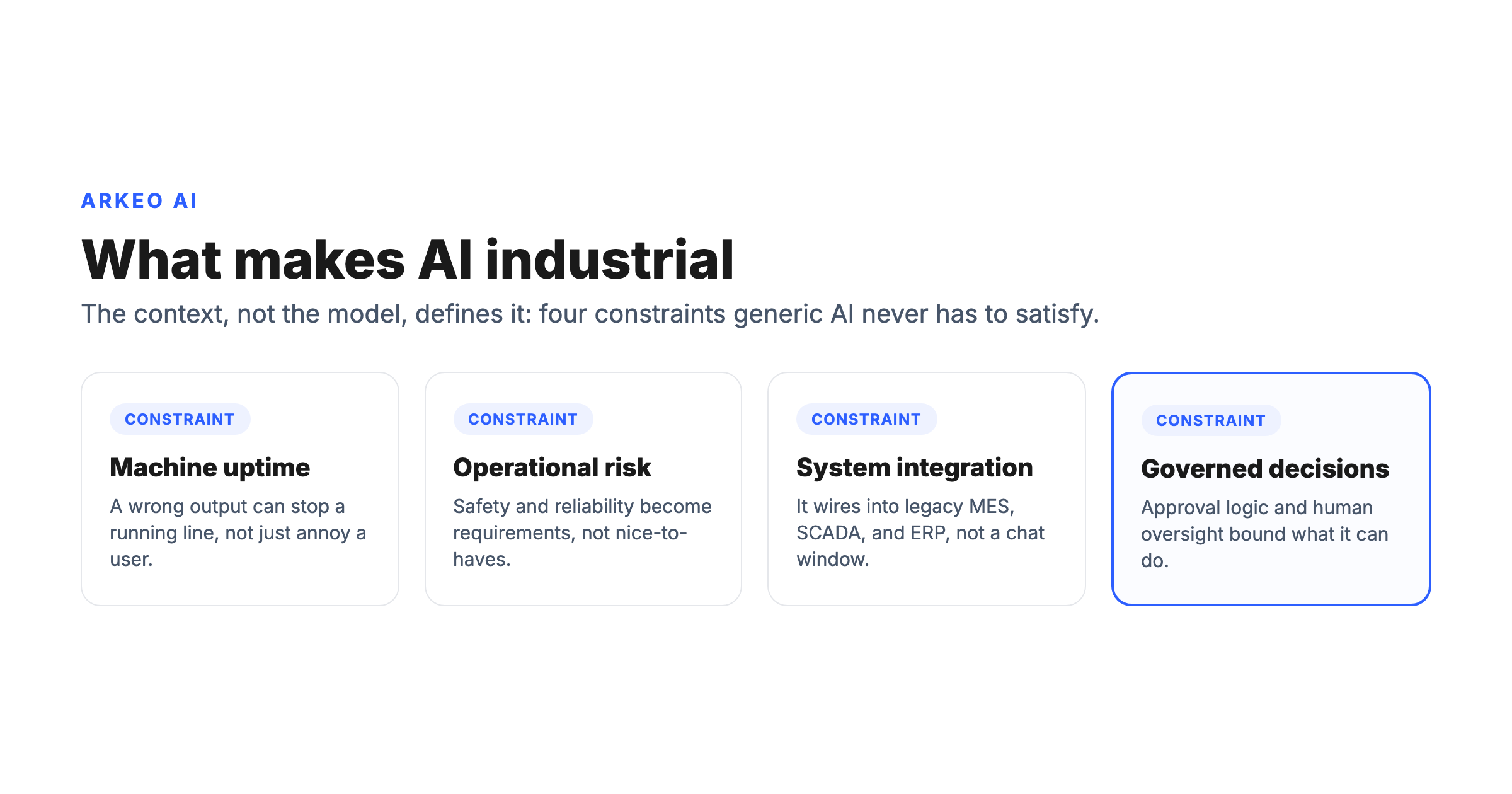
A systems-level definition of industrial artificial intelligence: what makes AI industrial, why uptime, operational risk, and legacy MES, SCADA, and ERP integration govern the design, and when sensitive data, latency, and governance force private or hybrid deployment.
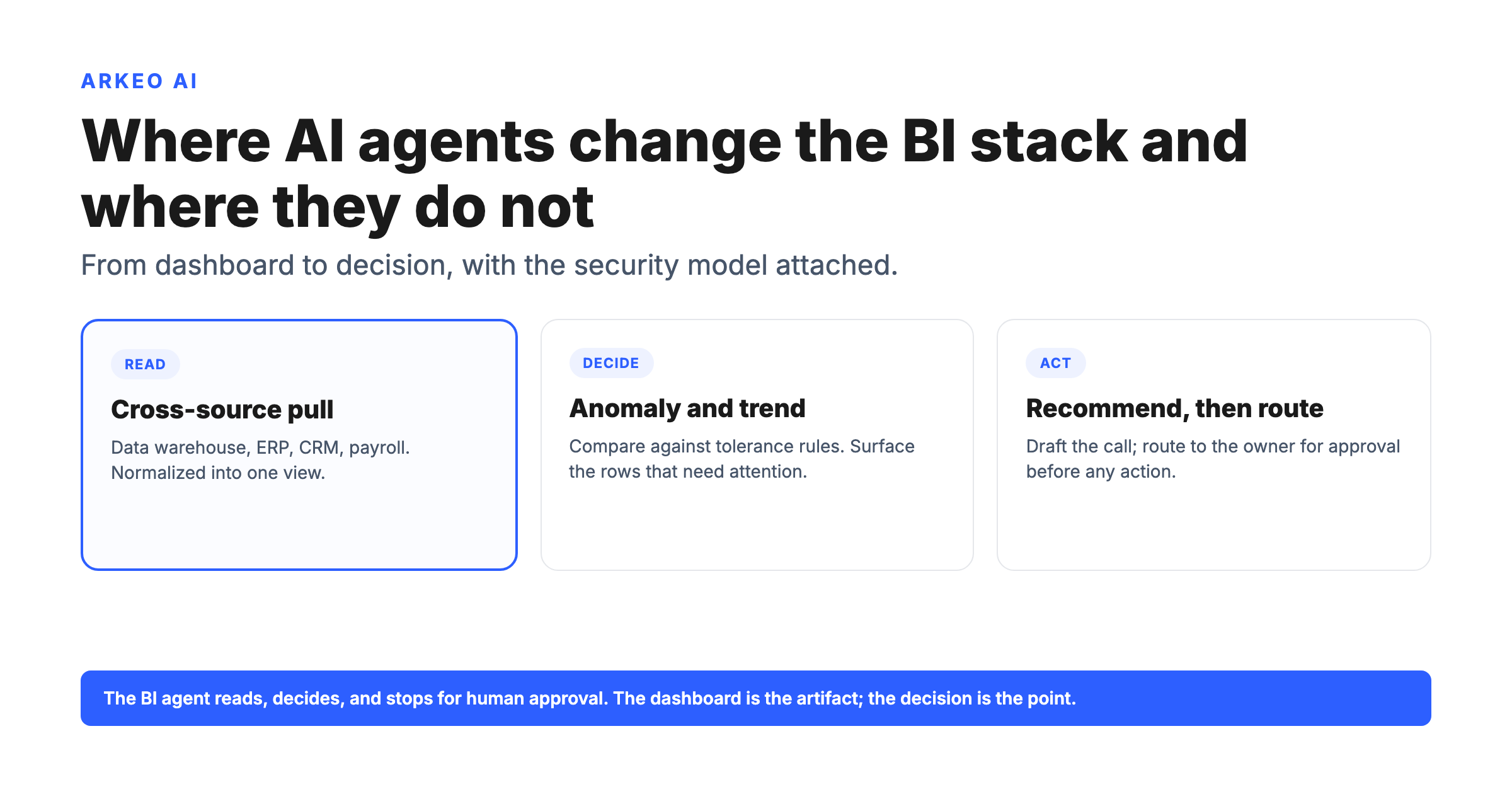
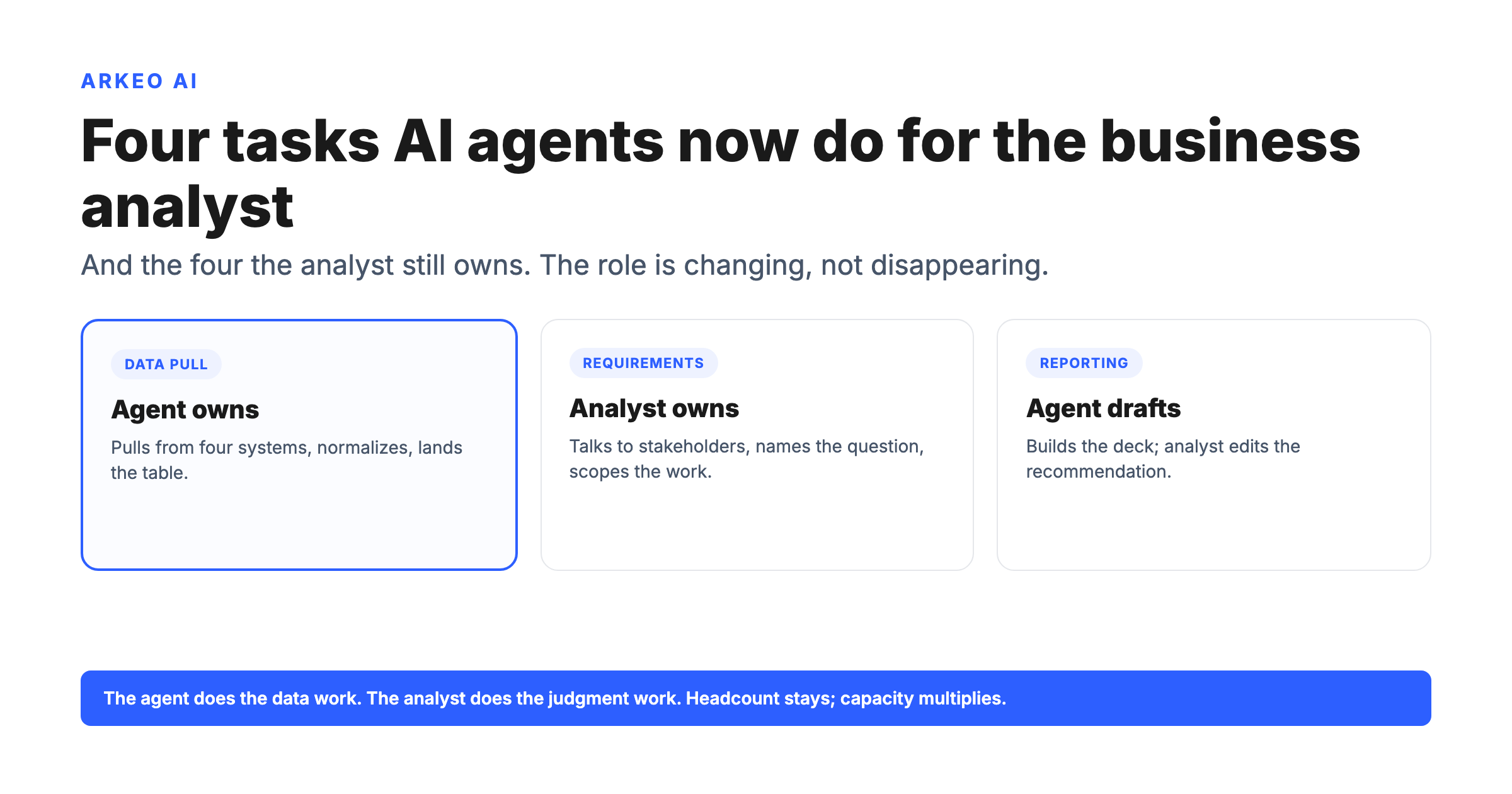
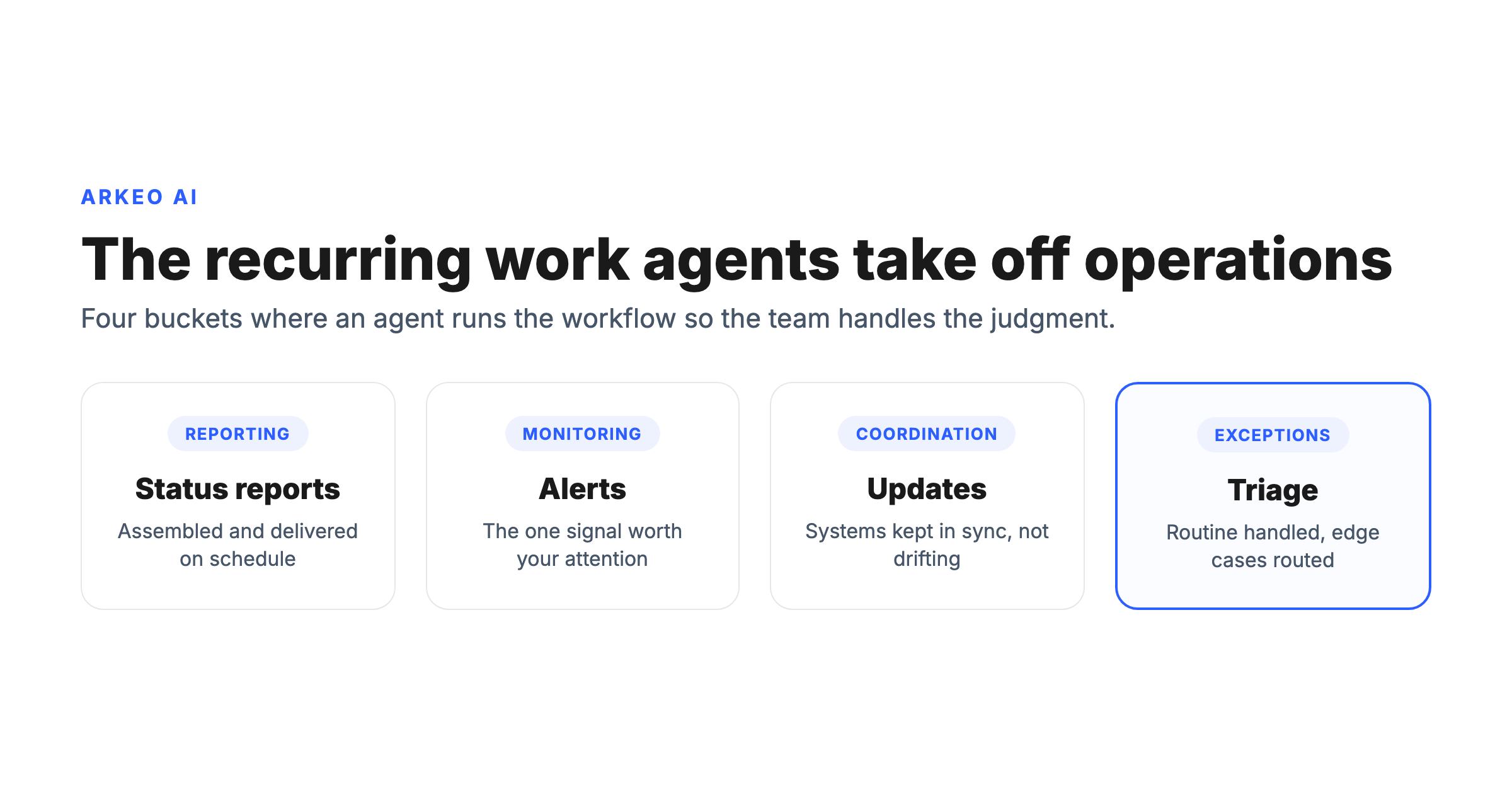
A grounded look at AI agents for operations: the recurring reporting, monitoring, coordination, and exception-handling work they actually take off your team, and how to pick the first one.
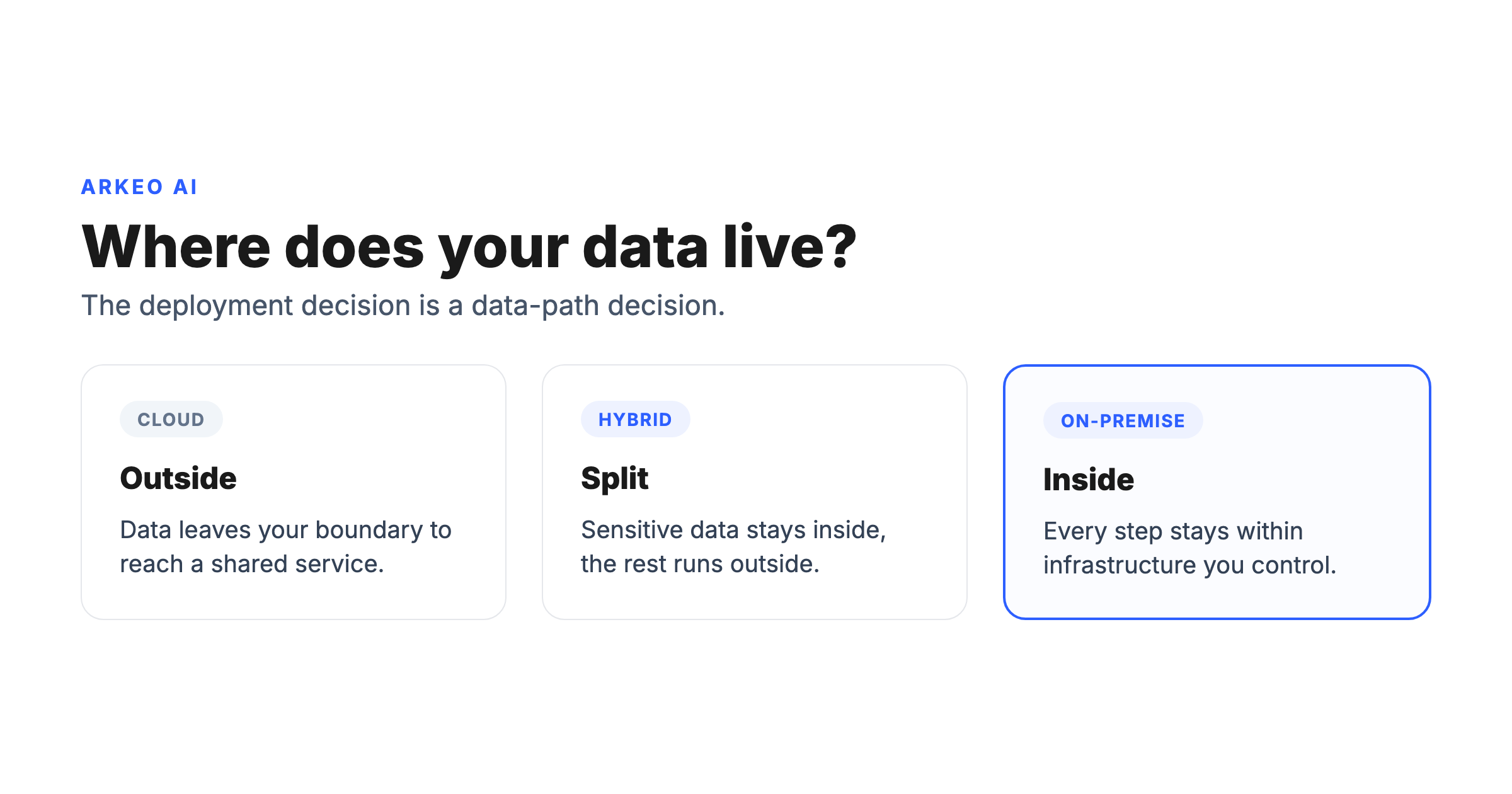
A deployment-model guide to private AI agents: when keeping data inside your boundary is worth the tradeoffs, and how to choose between cloud, hybrid, and on-premise.
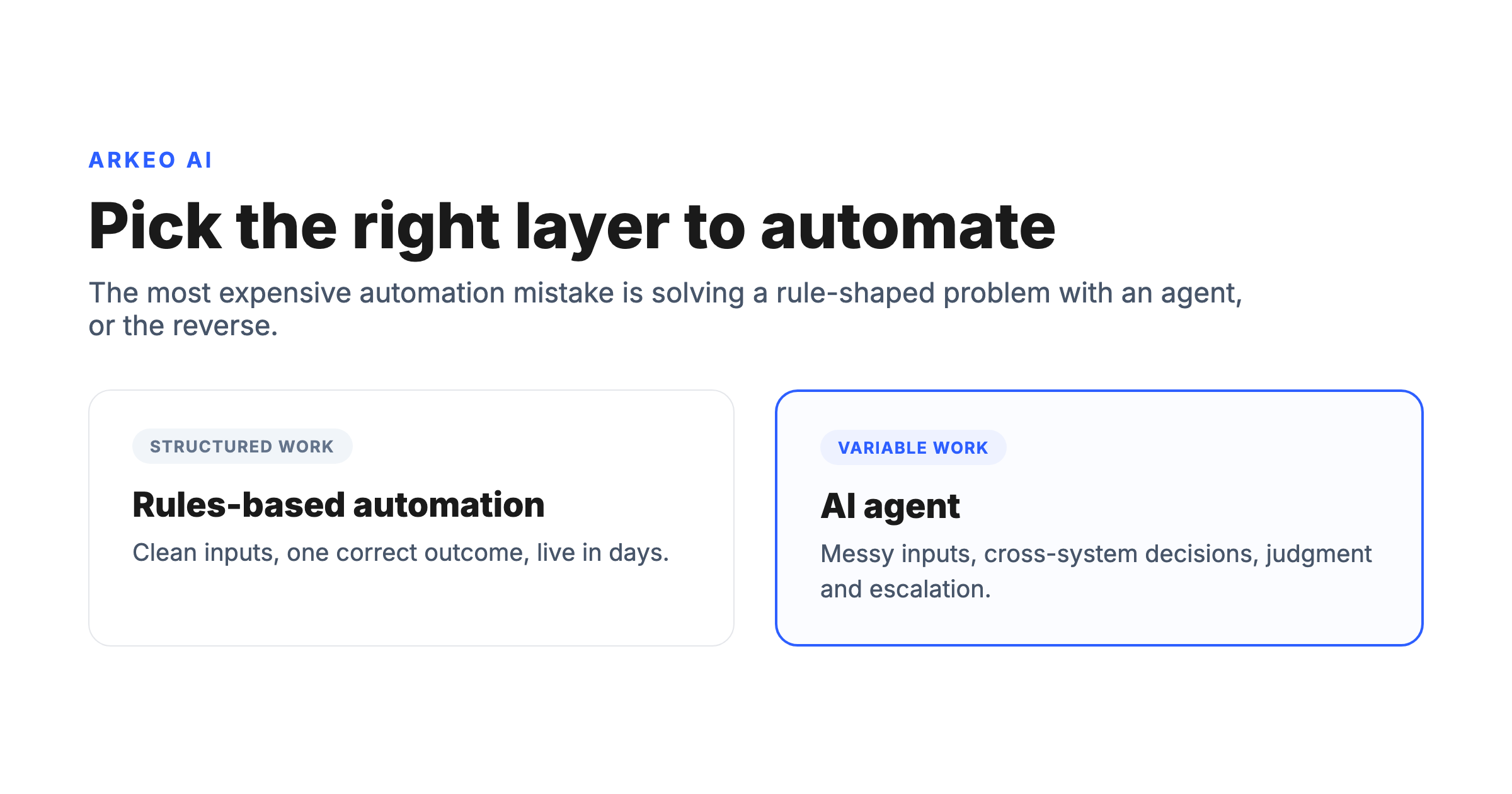
Not every automation problem needs an agent. A practical decision framework for when AI agents beat rules-based automation, and what to automate first.
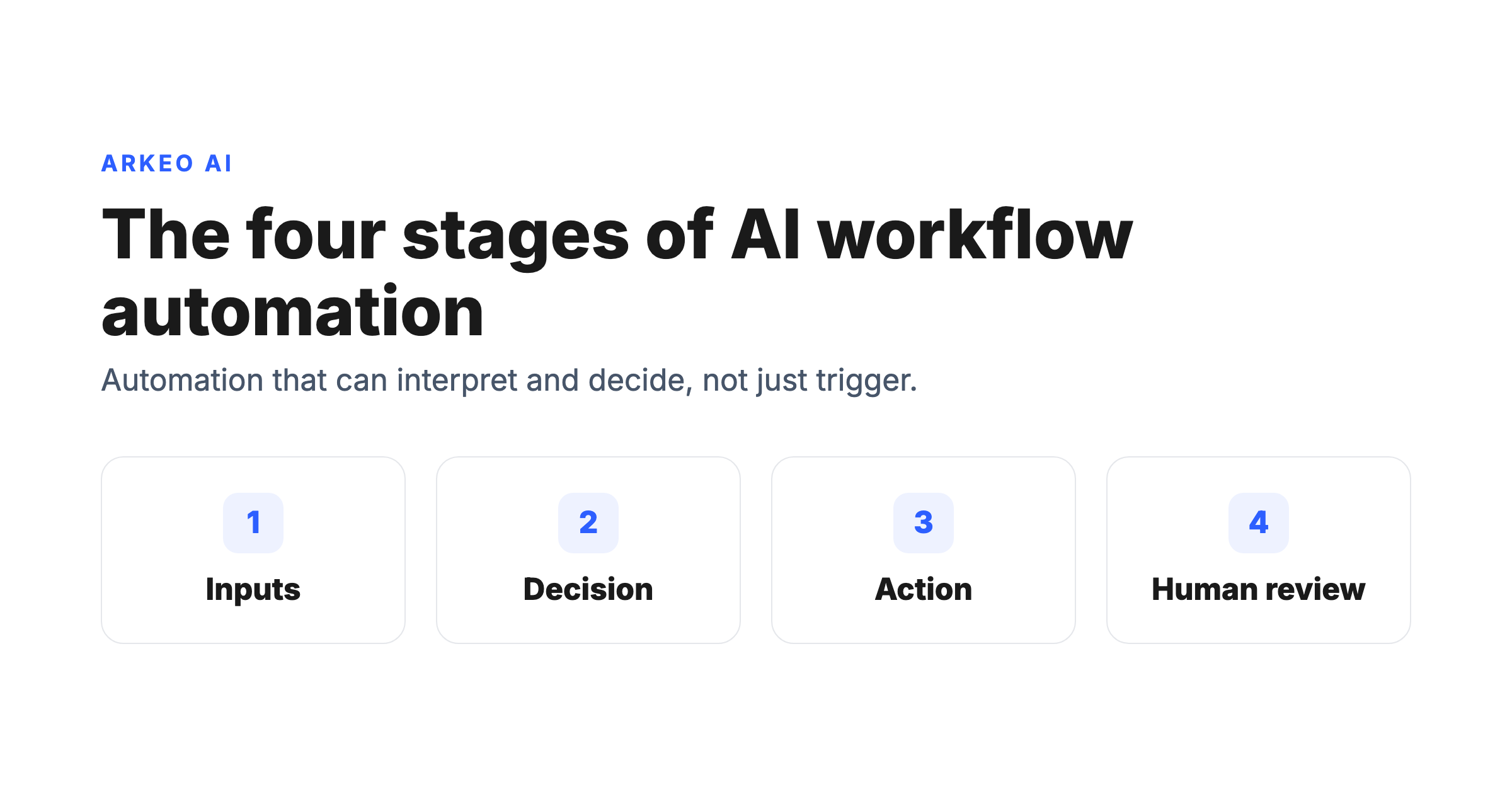
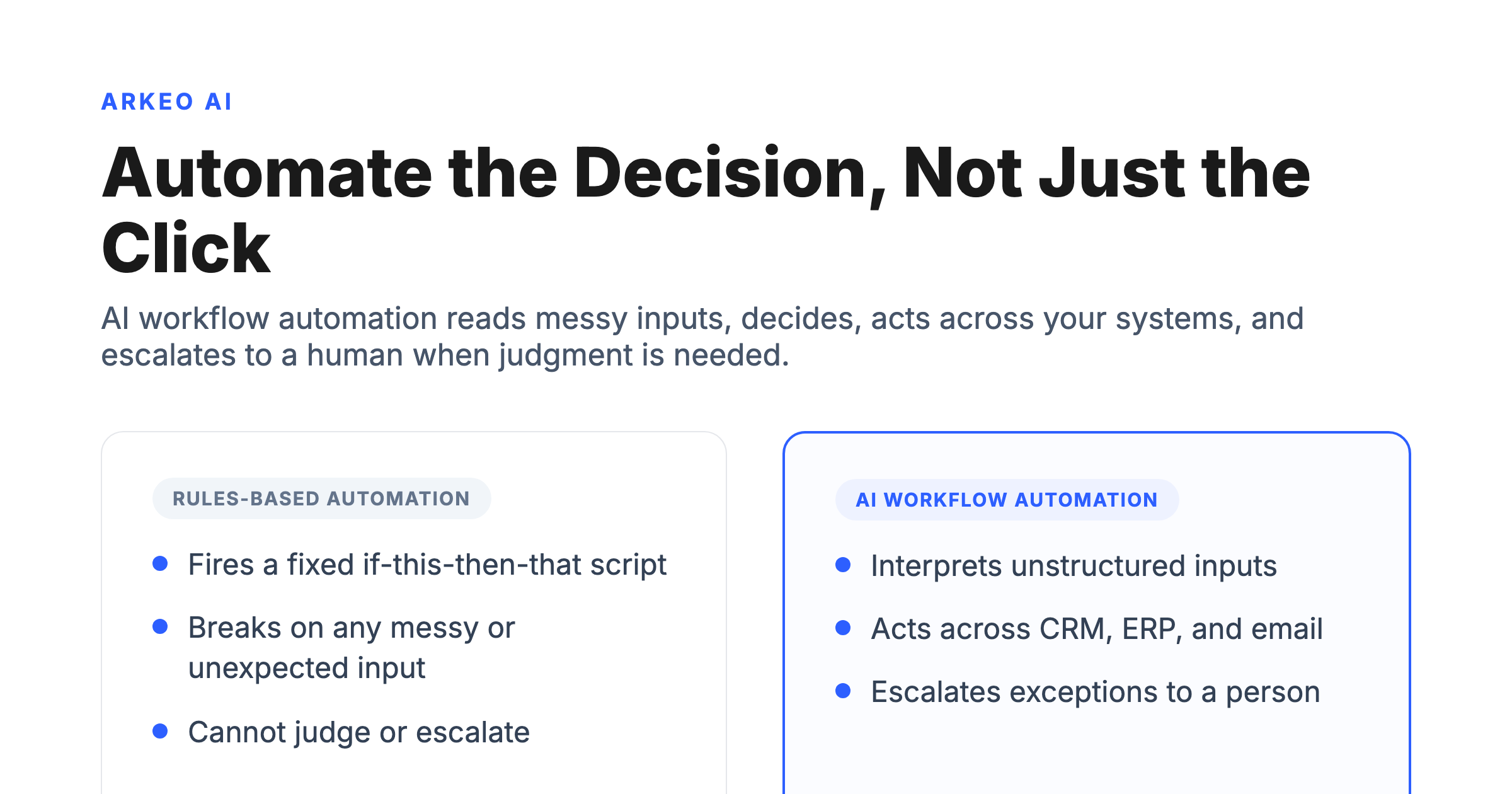
AI workflow automation runs a business process end to end, reading inputs, deciding, acting across systems, and routing to a human for review. Here is the clean definition and a simple mental model.
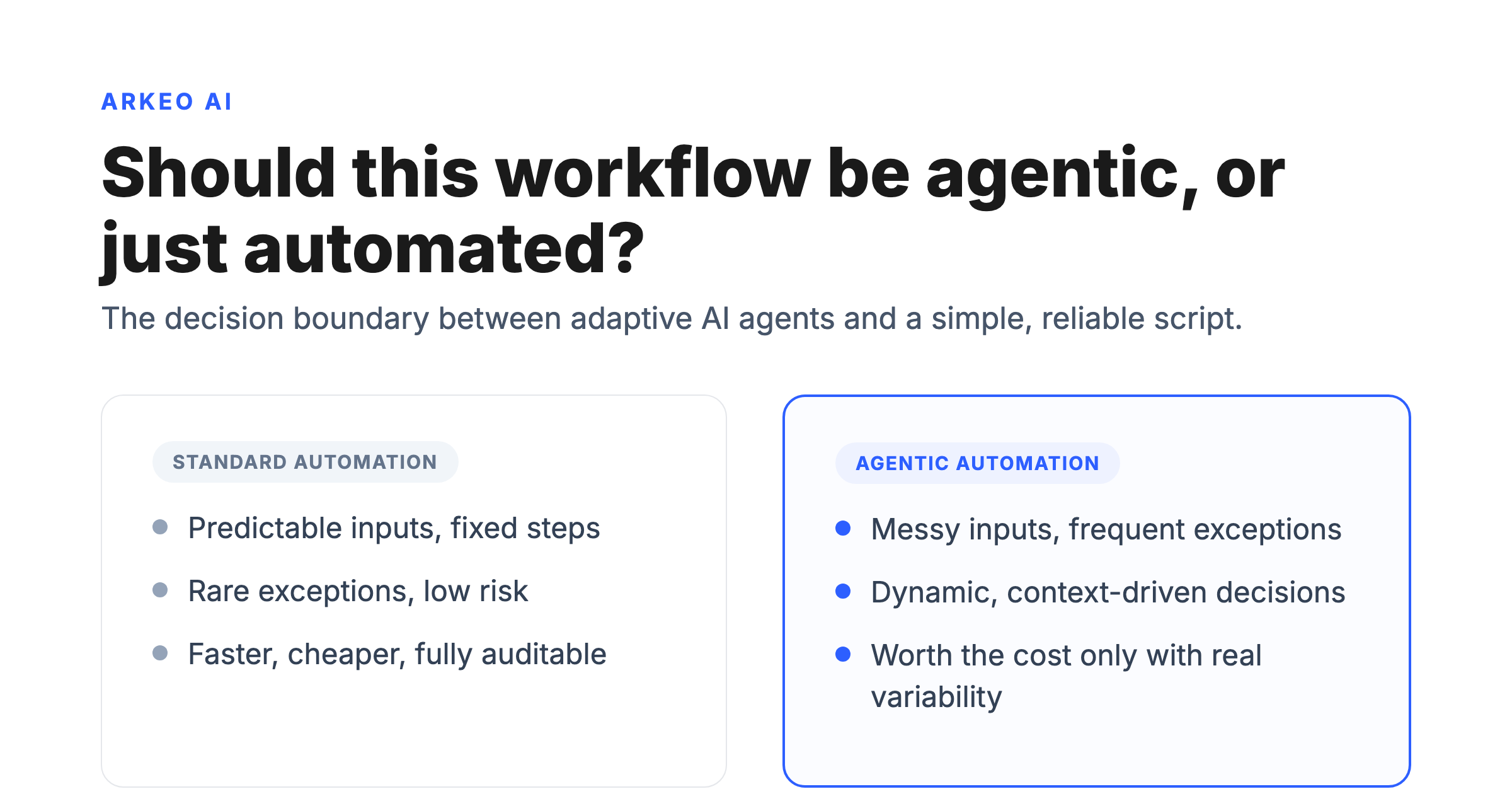
Agentic AI can decide its own next step, but most workflows do not need that. Here is the decision boundary: when adaptive behavior earns its cost and when standard automation is the smarter, cheaper, safer path.
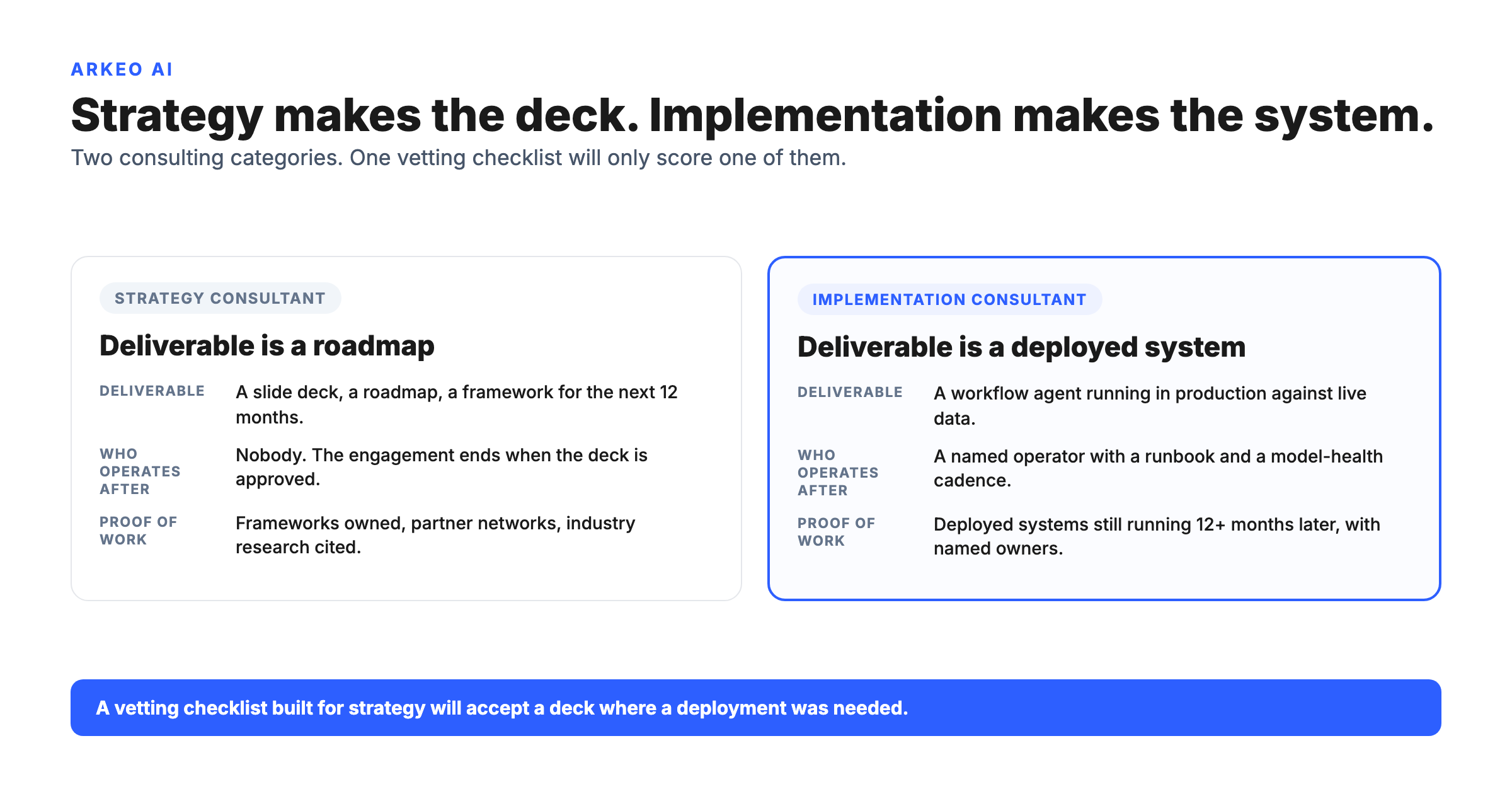
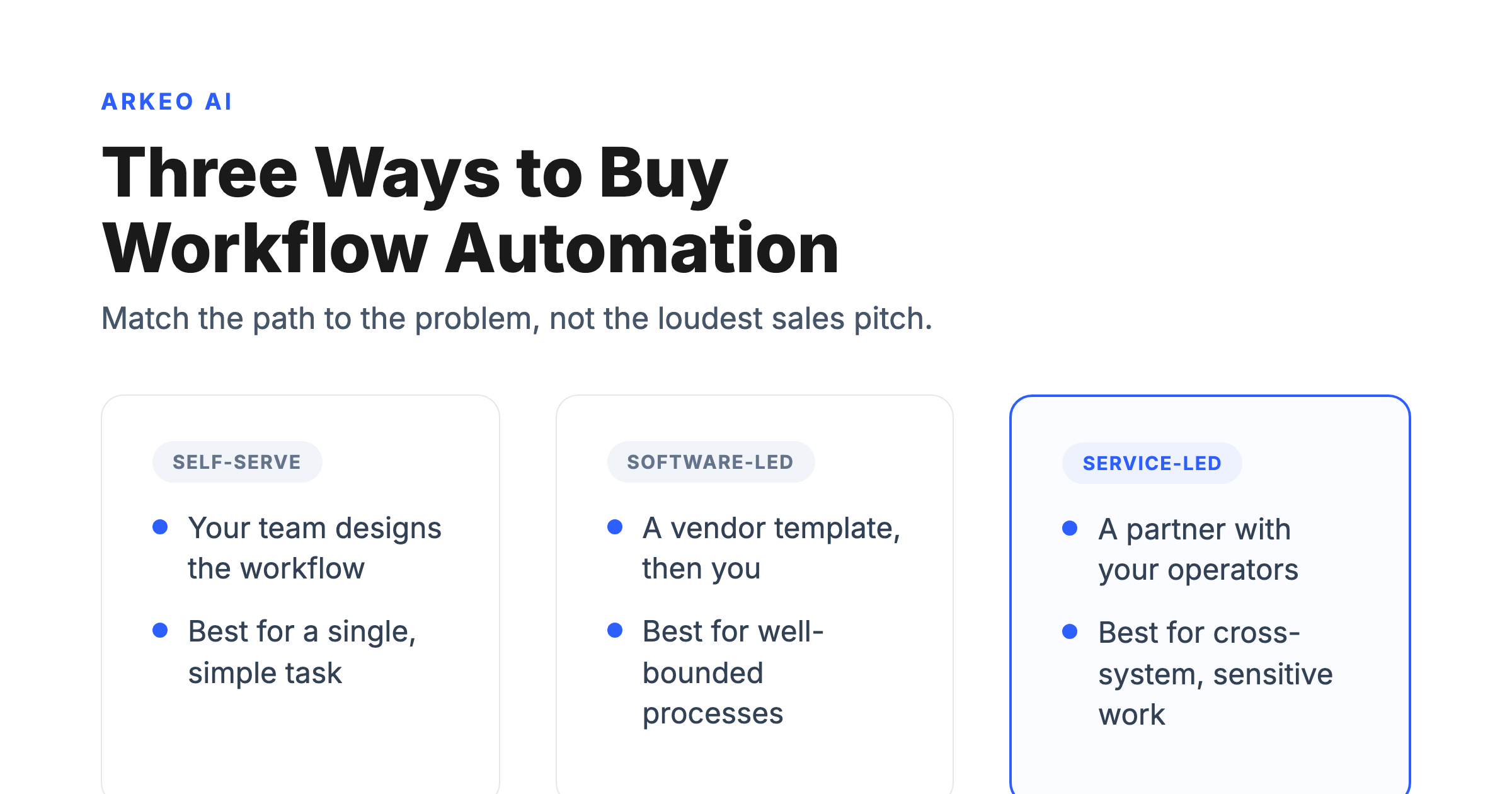
A buyer-centric guide to AI workflow automation services: what a real engagement delivers, when it is worth paying for, and how to spot a partner who leads with your workflows instead of a tool license.
A buyer's decision guide for manufacturing leaders weighing AI: the readiness signals that say go, the good-fit and poor-fit profiles, and how to shape a low-regret rollout instead of an expensive false start.
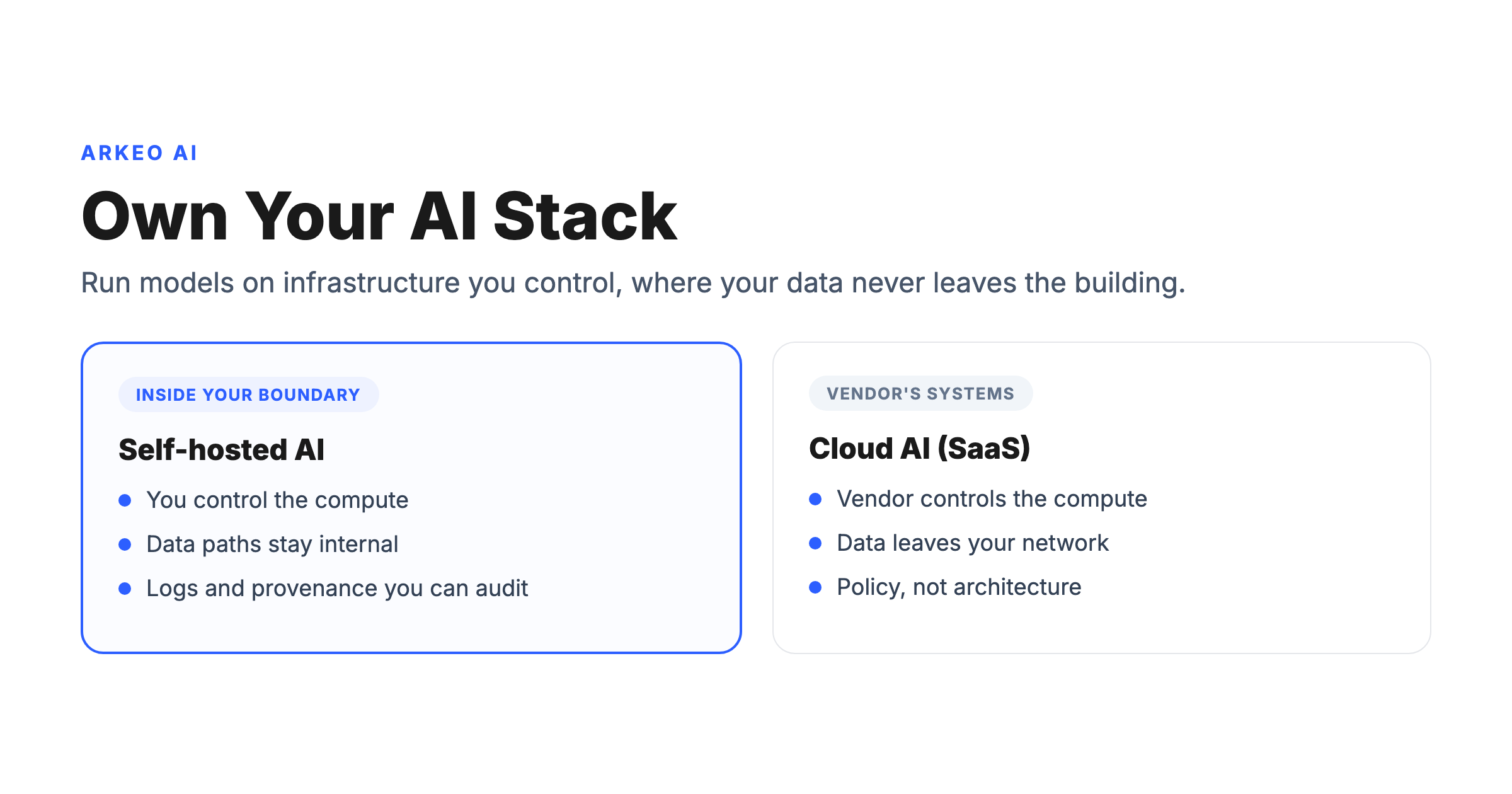
A business-focused guide to self-hosted AI: what it actually means, when running models on infrastructure you control is justified, the tradeoffs nobody mentions, and how to choose between self-hosted, private, hybrid, and cloud deployment.
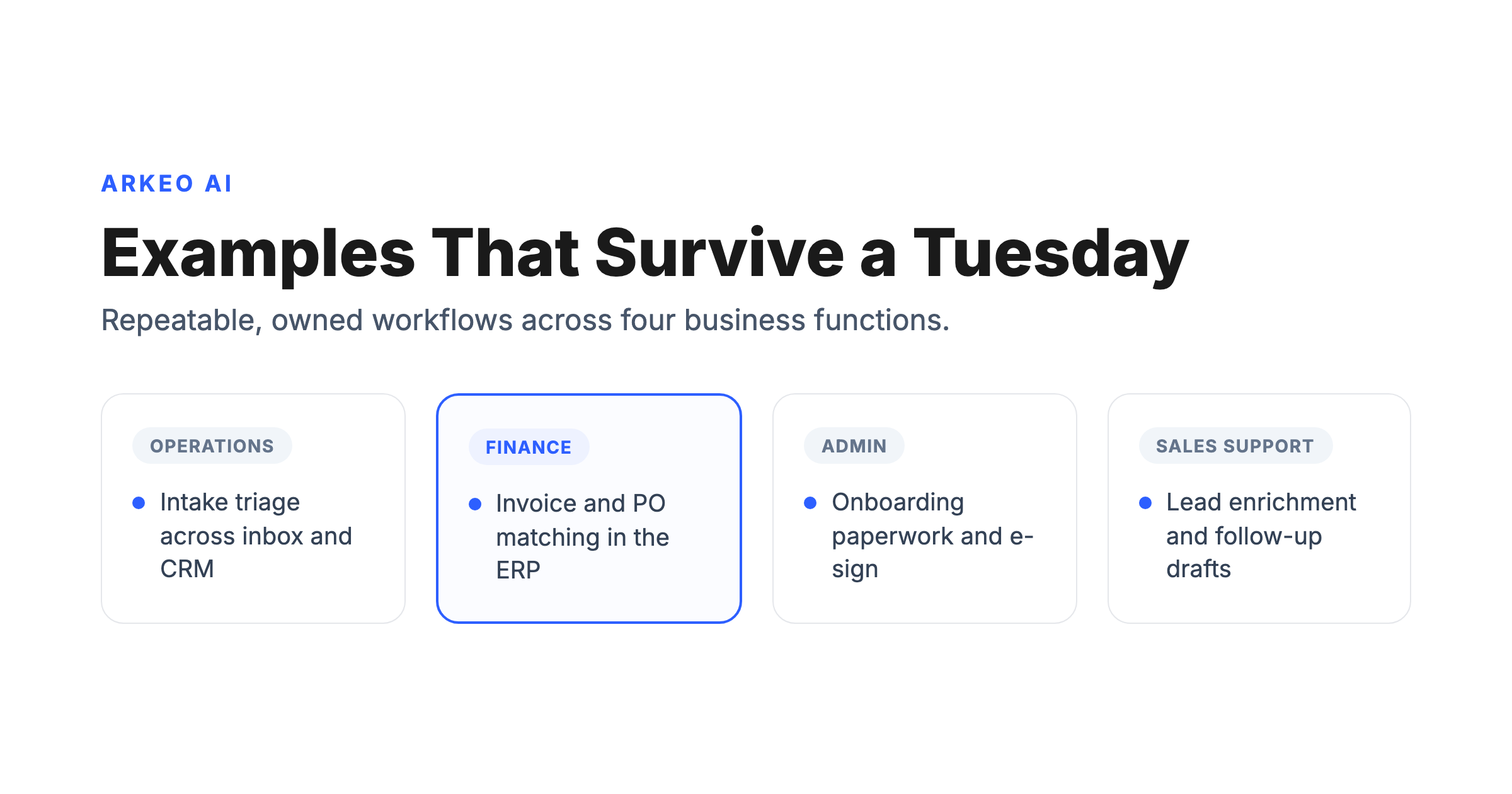
Concrete AI workflow automation examples by business function, each with the systems involved, what the AI does, the human checkpoint, and the expected result.
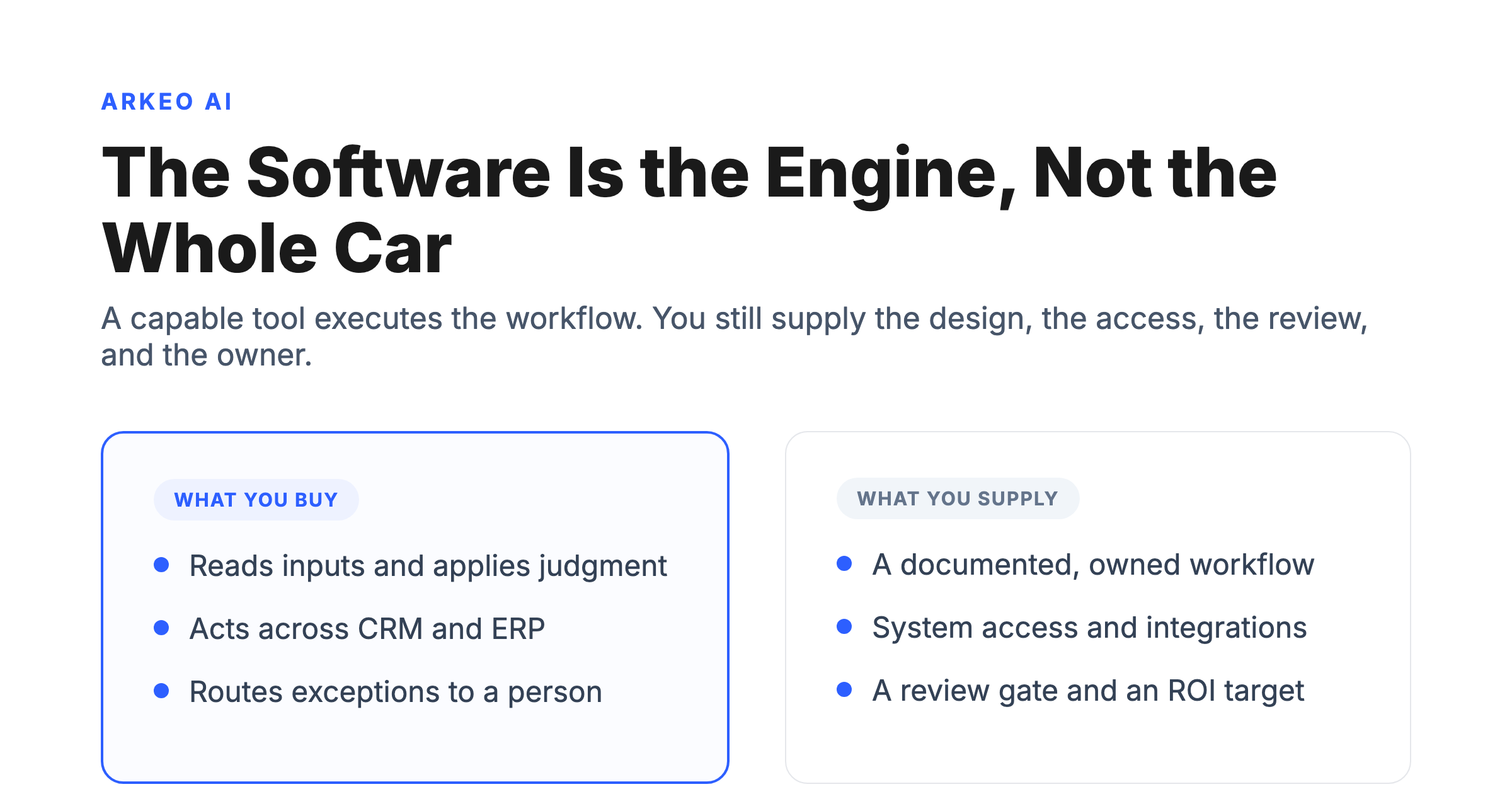
AI workflow automation software is necessary but not sufficient. Here is the buying logic that separates a tool that delivers from one that gets switched off.
A buyer's framework for evaluating an AI workflow automation platform on workflow fit, system access, control, and economics, not feature count.
A business-process guide to AI agent use cases by function, with a scoring table and selection criteria to identify your best first three deployment targets.
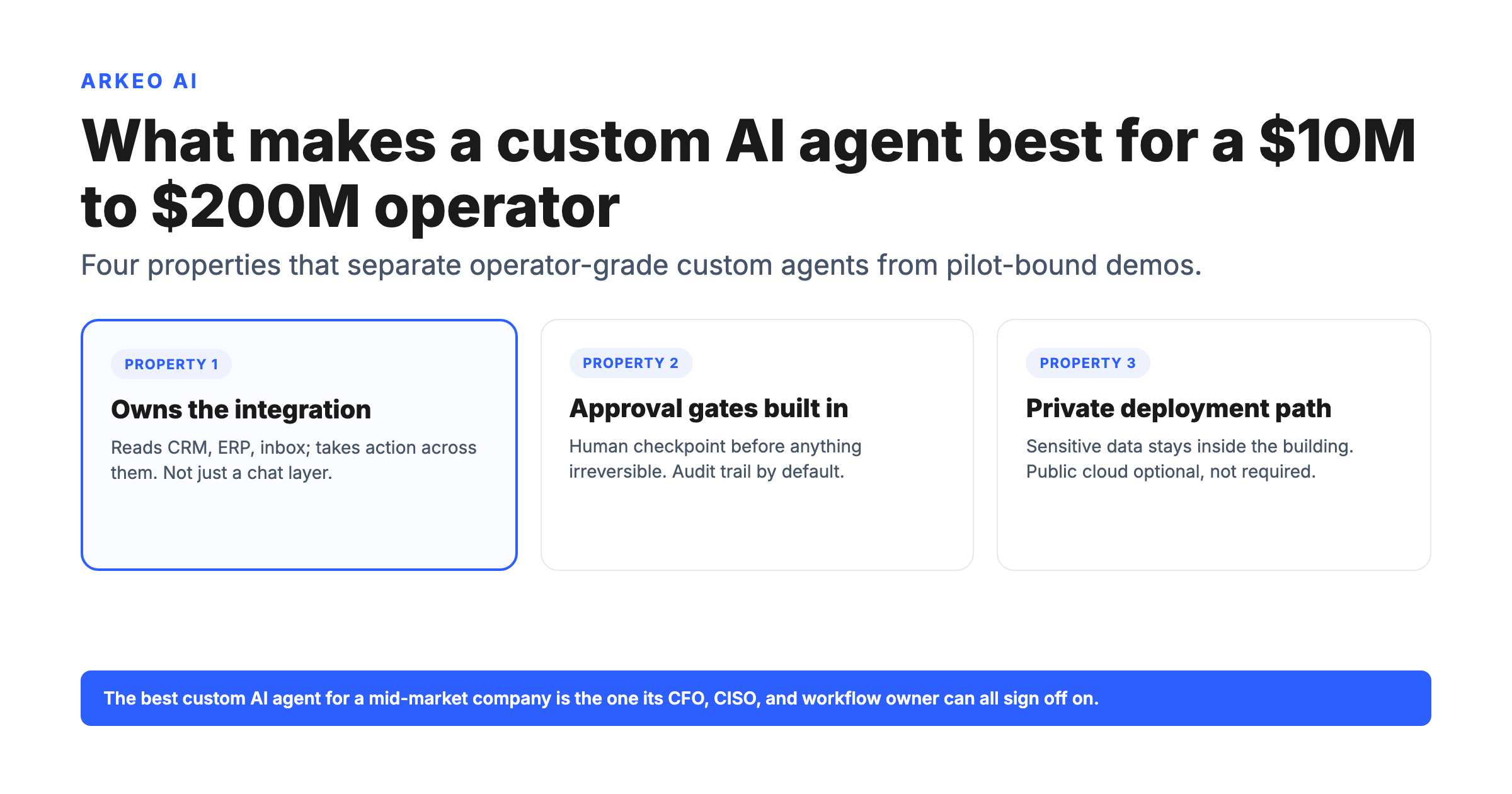
Enterprise AI agents are defined by their controls, not their features. A guide to security, approvals, auditability, integration, and support, in operator terms.
When custom AI agents for business actually pay off: real workflow examples, the buying criteria that matter, the questions to ask a delivery partner, and what a successful 30/90/12-month rollout looks like.
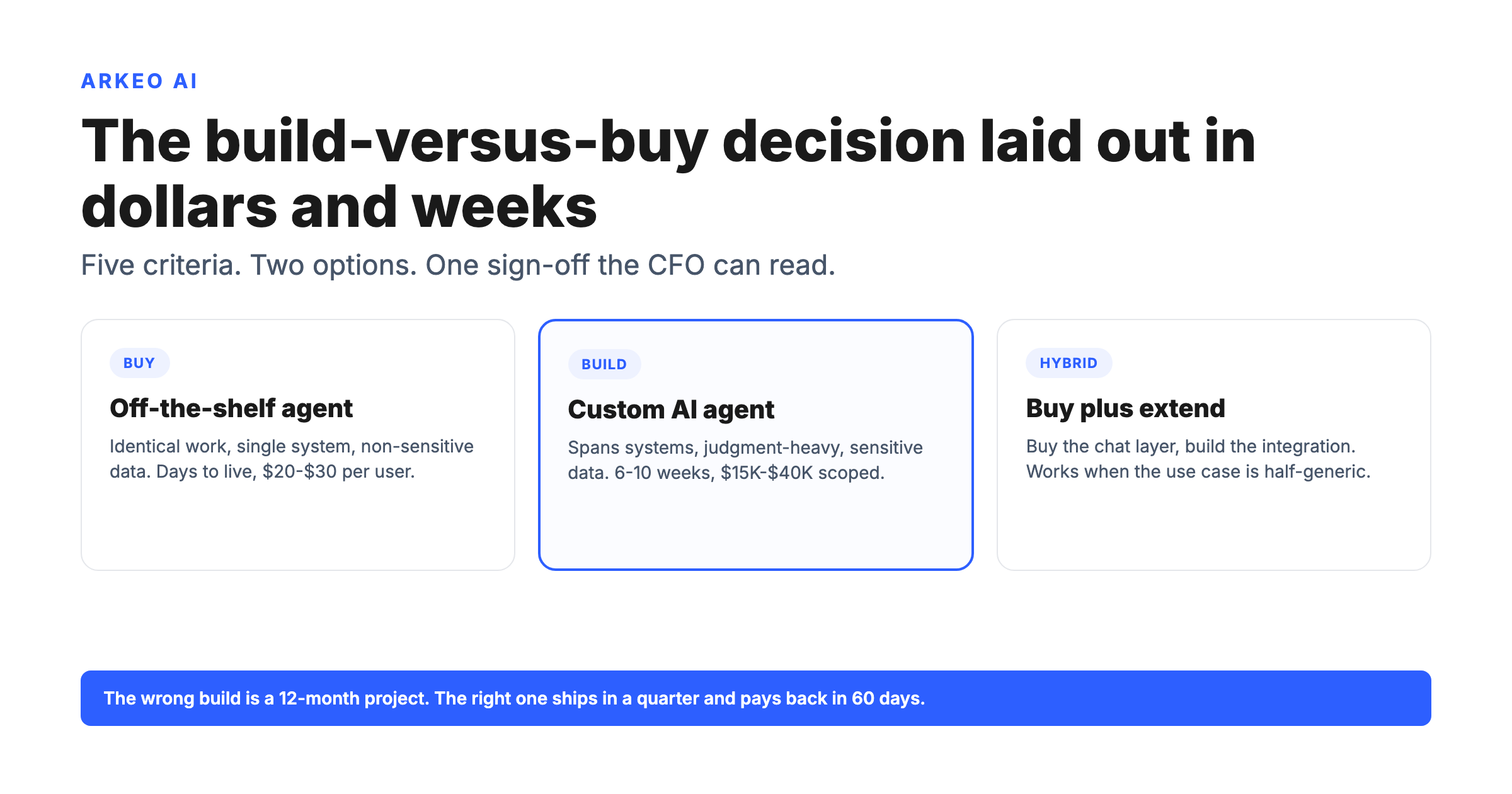
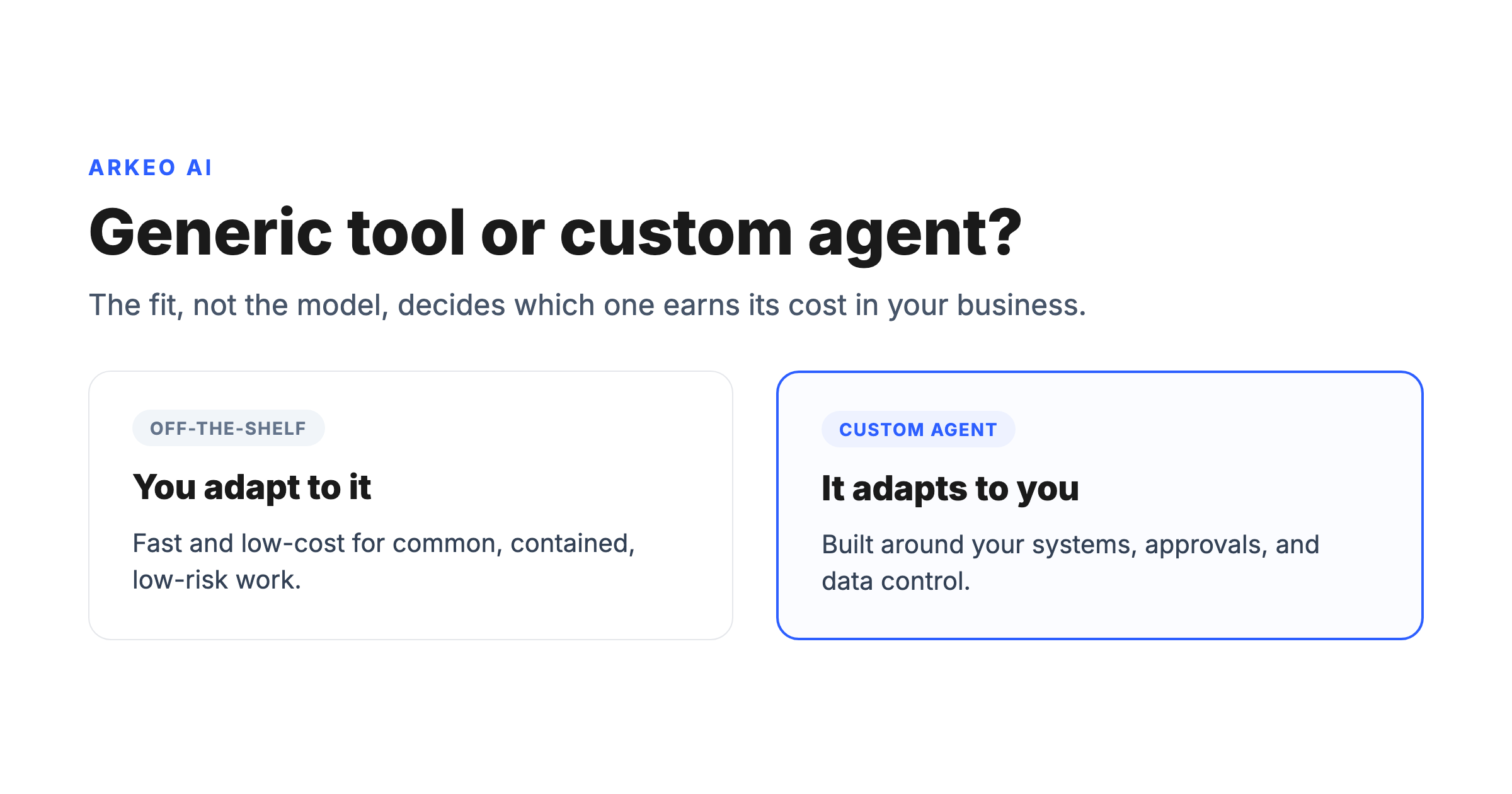
When generic AI tools stop fitting your systems, approvals, and data rules, a custom AI agent earns its cost. Here is how to decide.
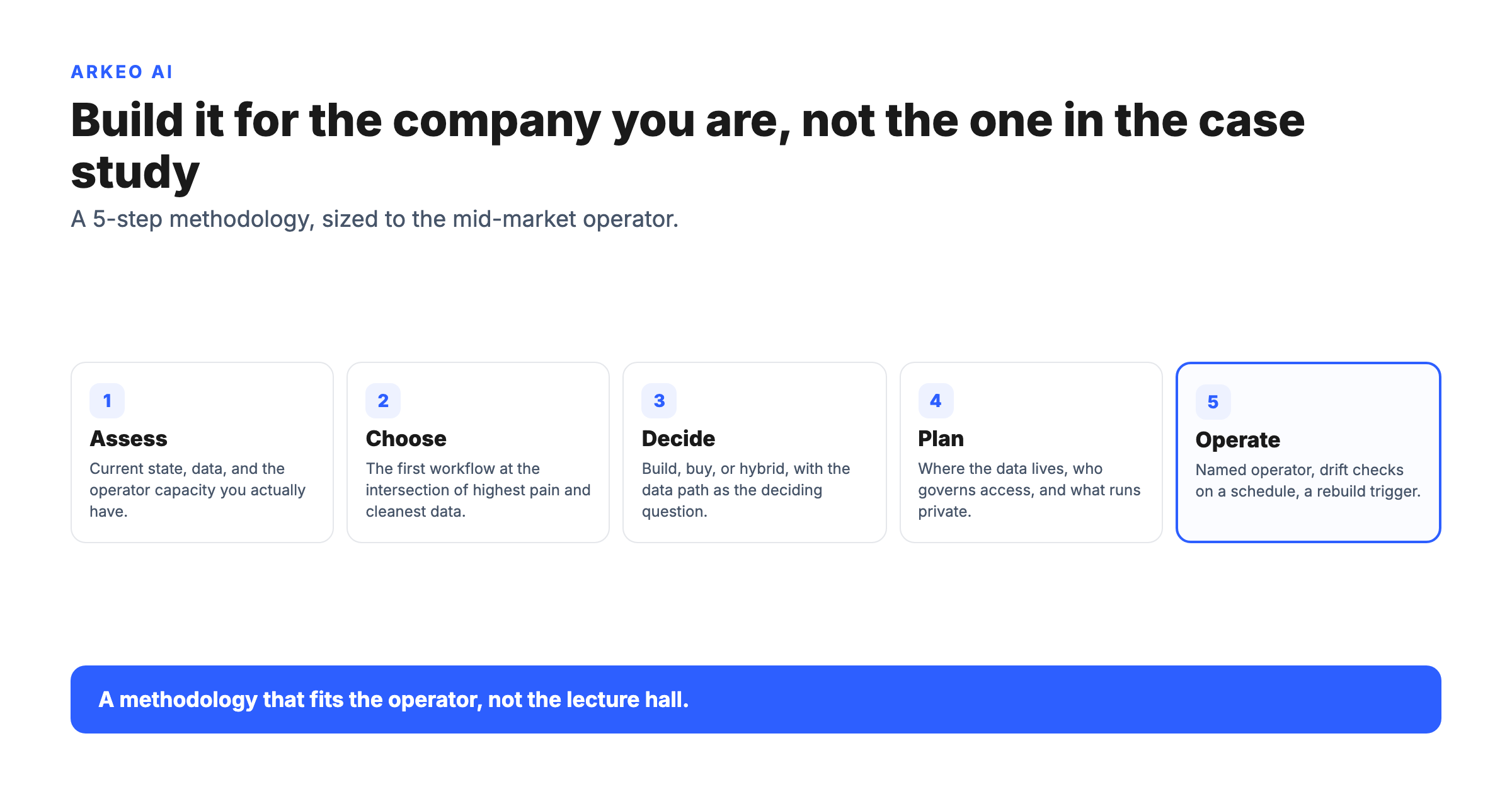
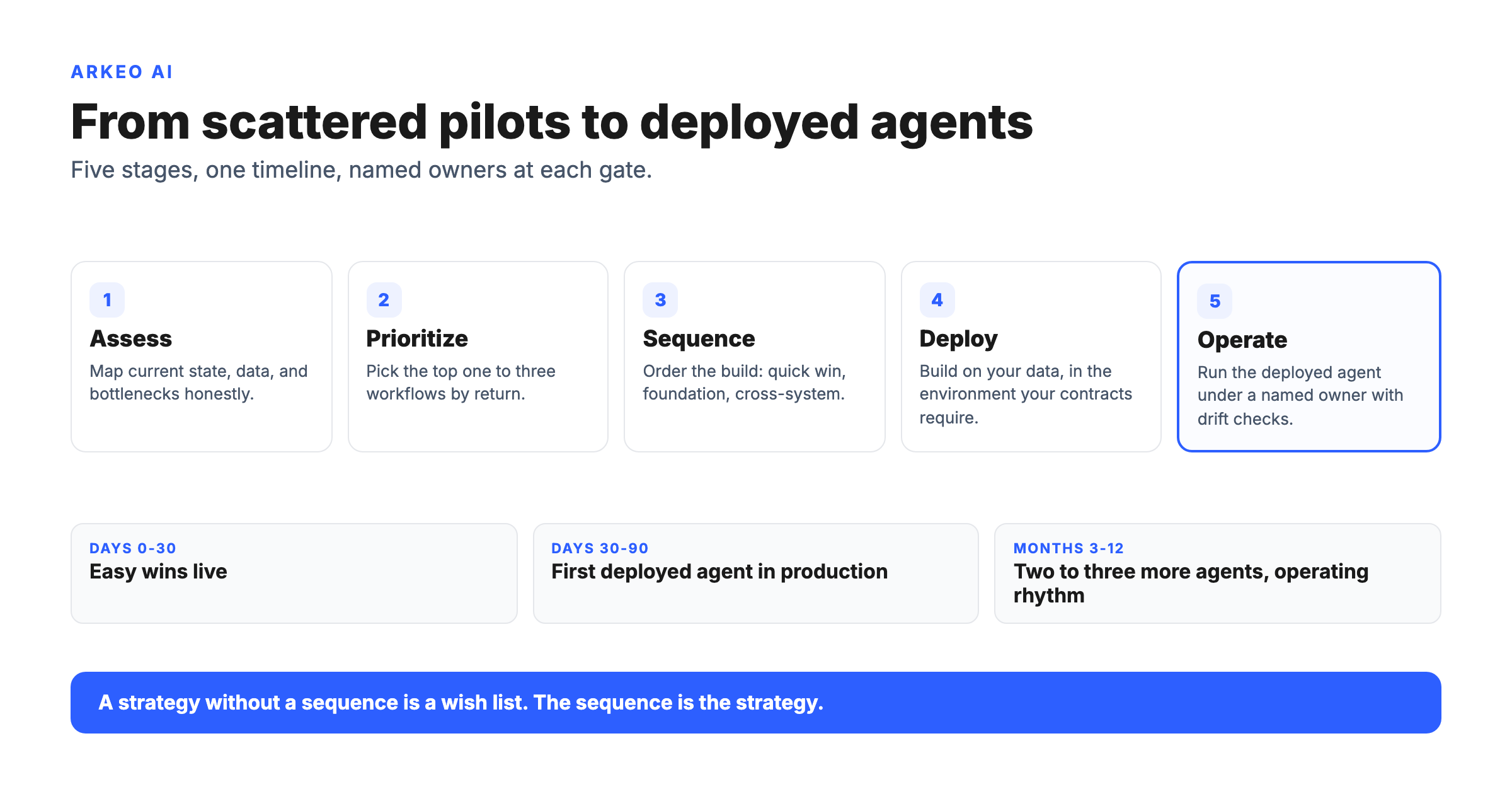
A grounded operator's guide to where AI actually pays off in manufacturing, where it stalls, and how to sequence your first use case from a 30-day win to a 12-month architecture.
AI workflow automation reads messy inputs, applies judgment, and acts across your systems. Here is where it creates value and how to choose what to automate first.
AI agents read, decide, and act inside your workflows with human checkpoints. This guide covers what they do, where they fit across sales, admin, finance, and operations, where most companies get them wrong, and how to decide what to build first.
A free, section-by-section AI readiness assessment template operations teams can copy and use internally, with the exact fields, scoring, and prompts a real readiness conversation needs.
May 22, 2026
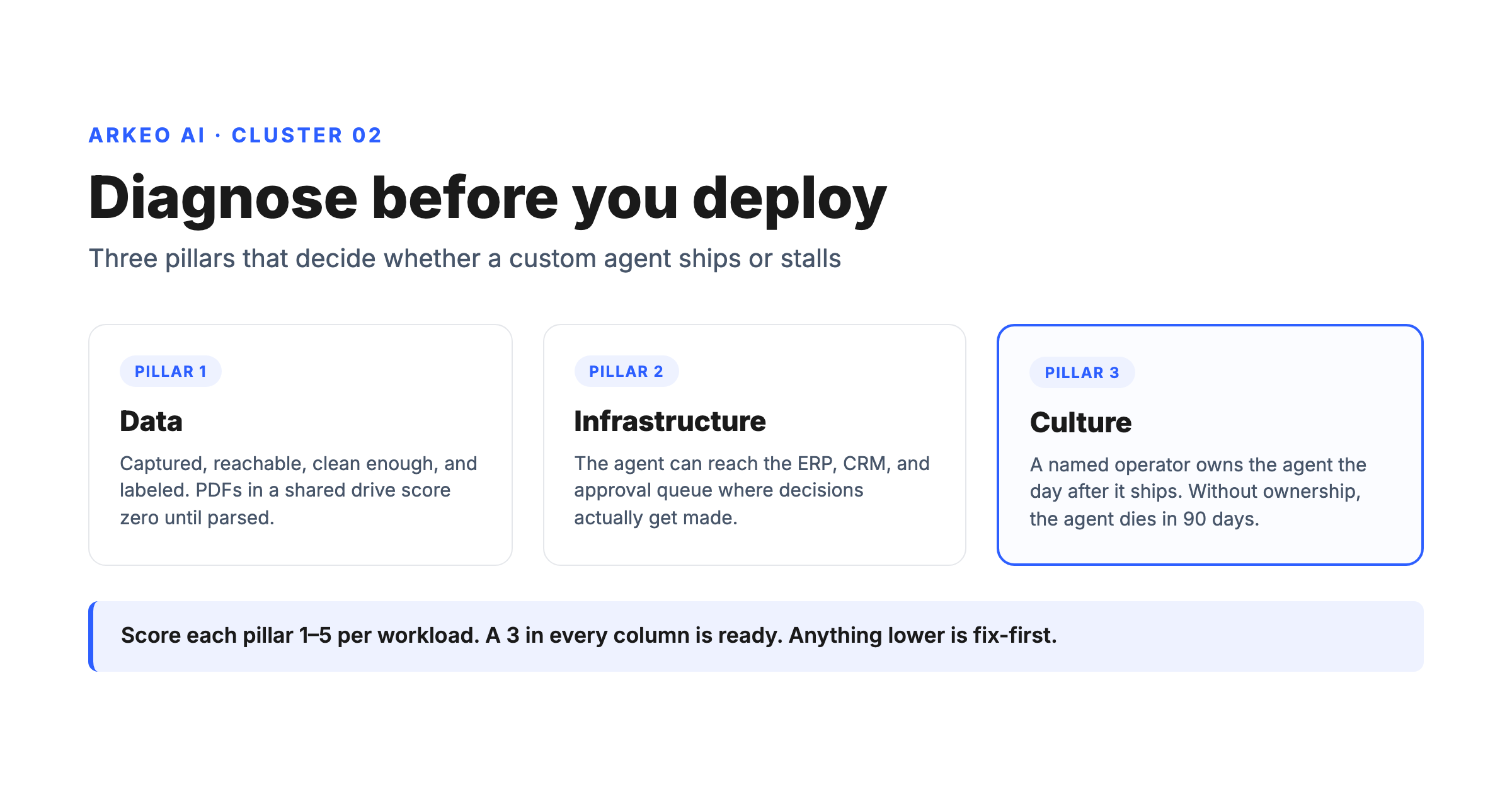
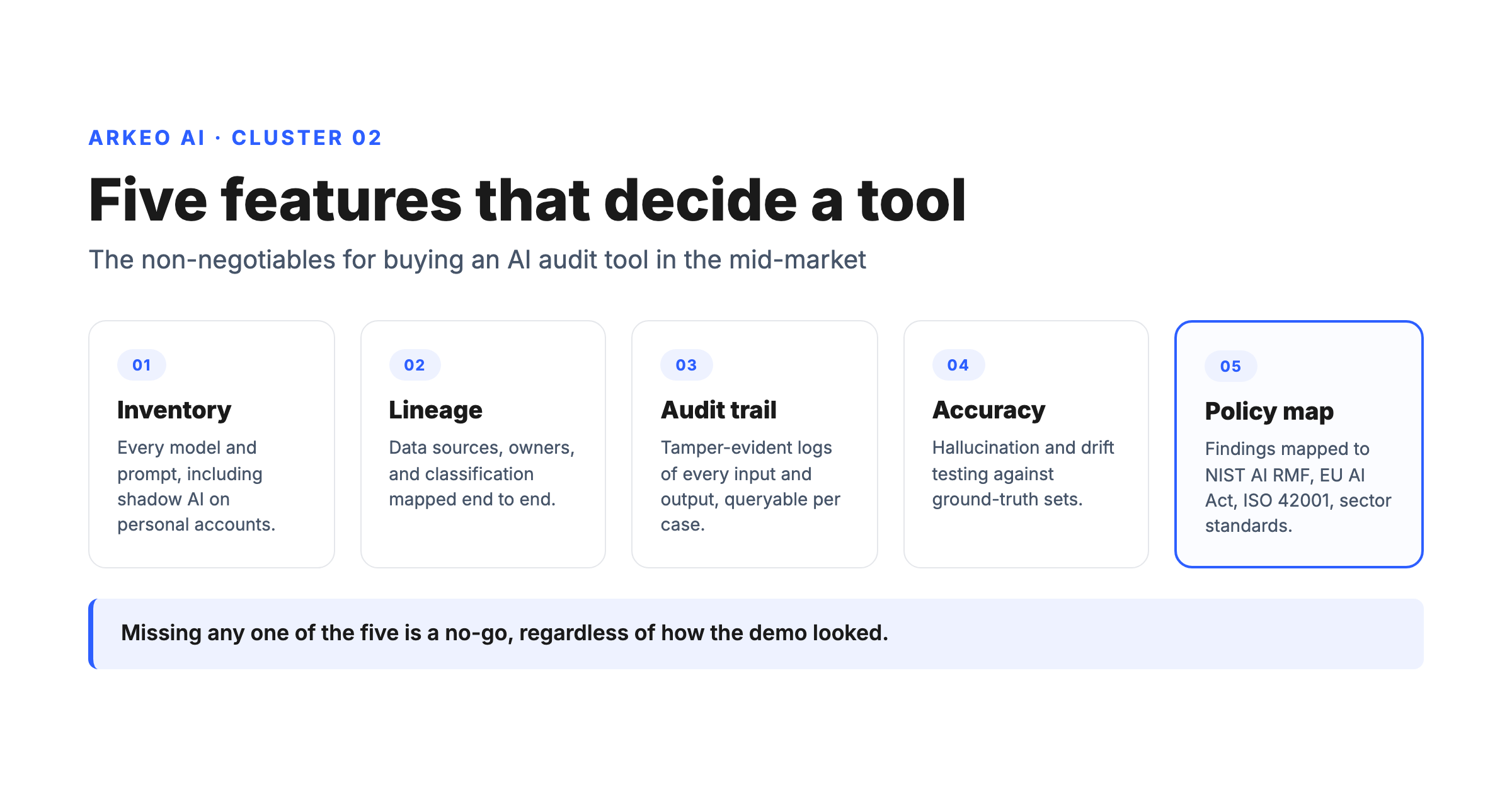
A free AI readiness assessment tool is great for a first-pass screen, but a generic quiz cannot plan your implementation. Here is what a good tool actually measures and the signals that mean you have outgrown it.
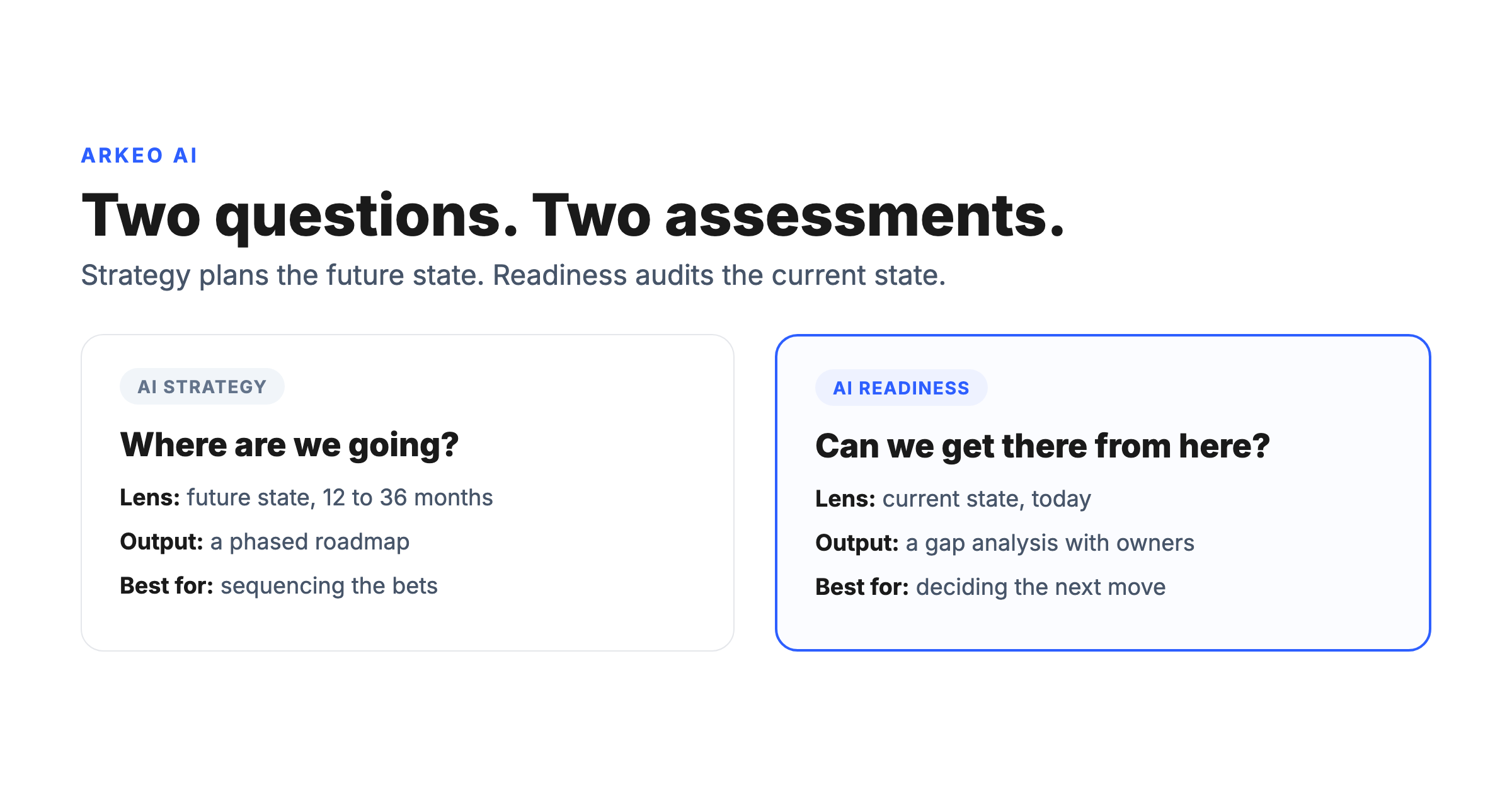
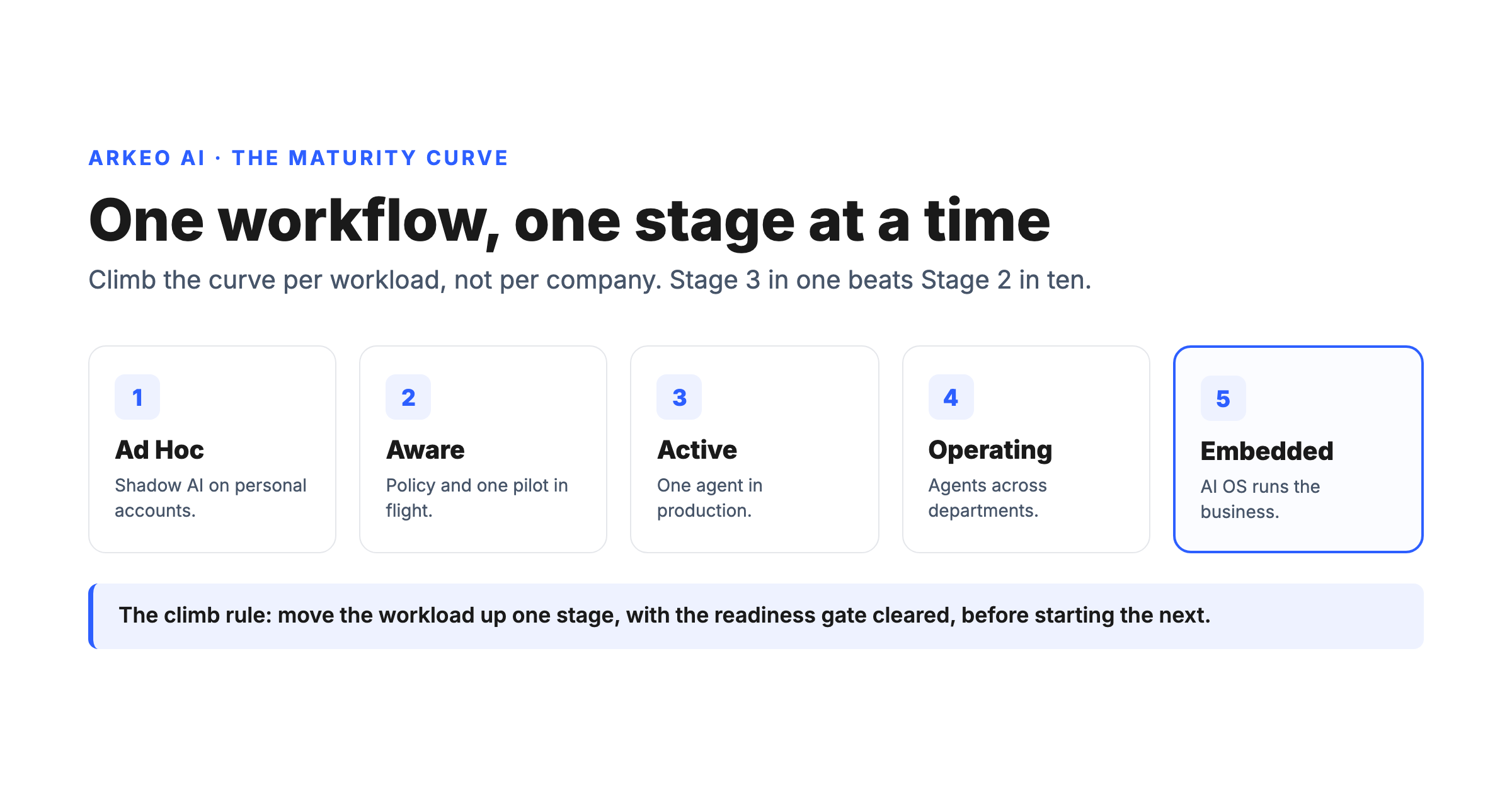
AI maturity models and AI readiness assessments are not the same tool. One benchmarks how far along you are; the other decides what to deploy next. Here is the difference and which to use first.
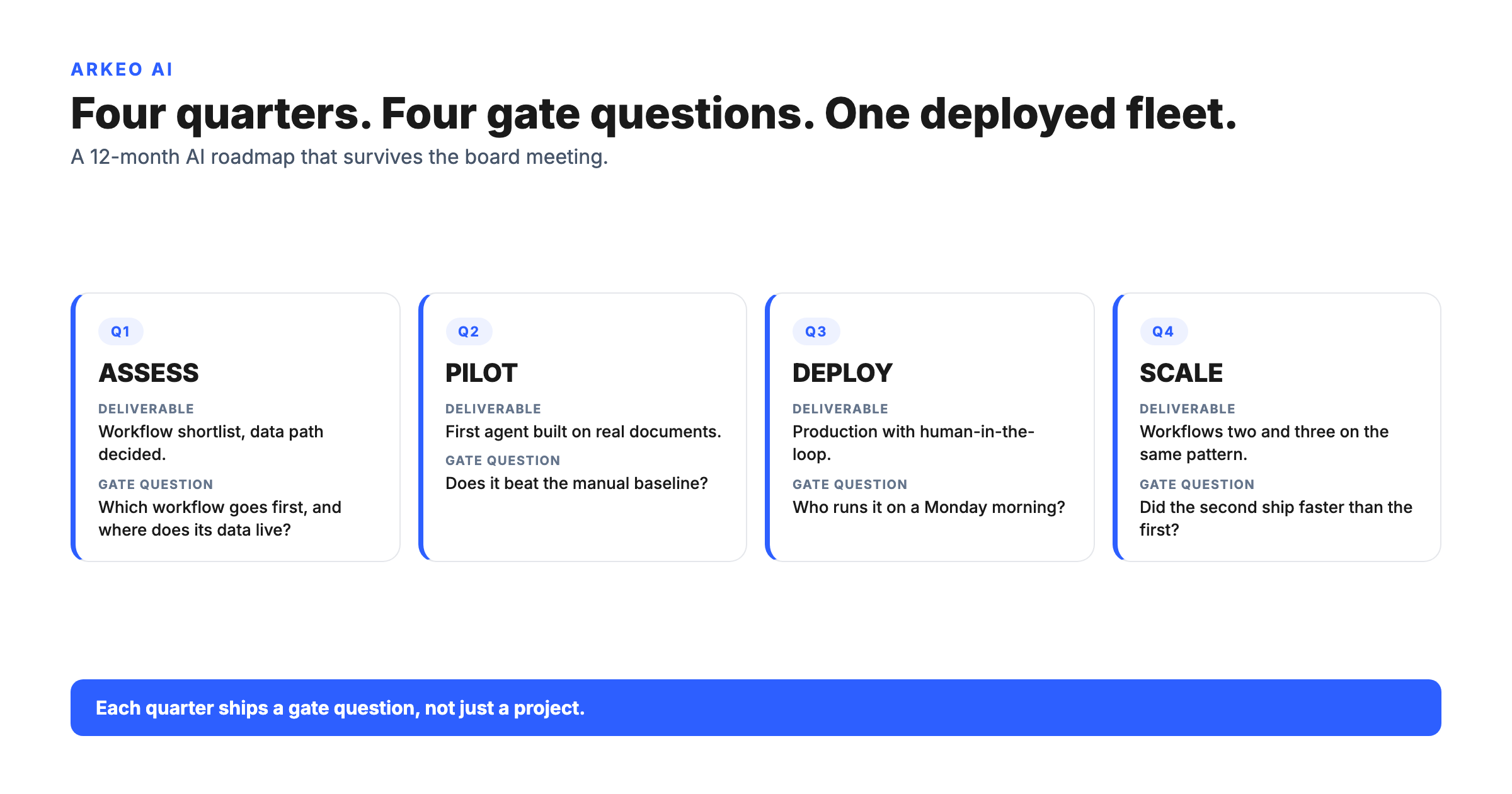
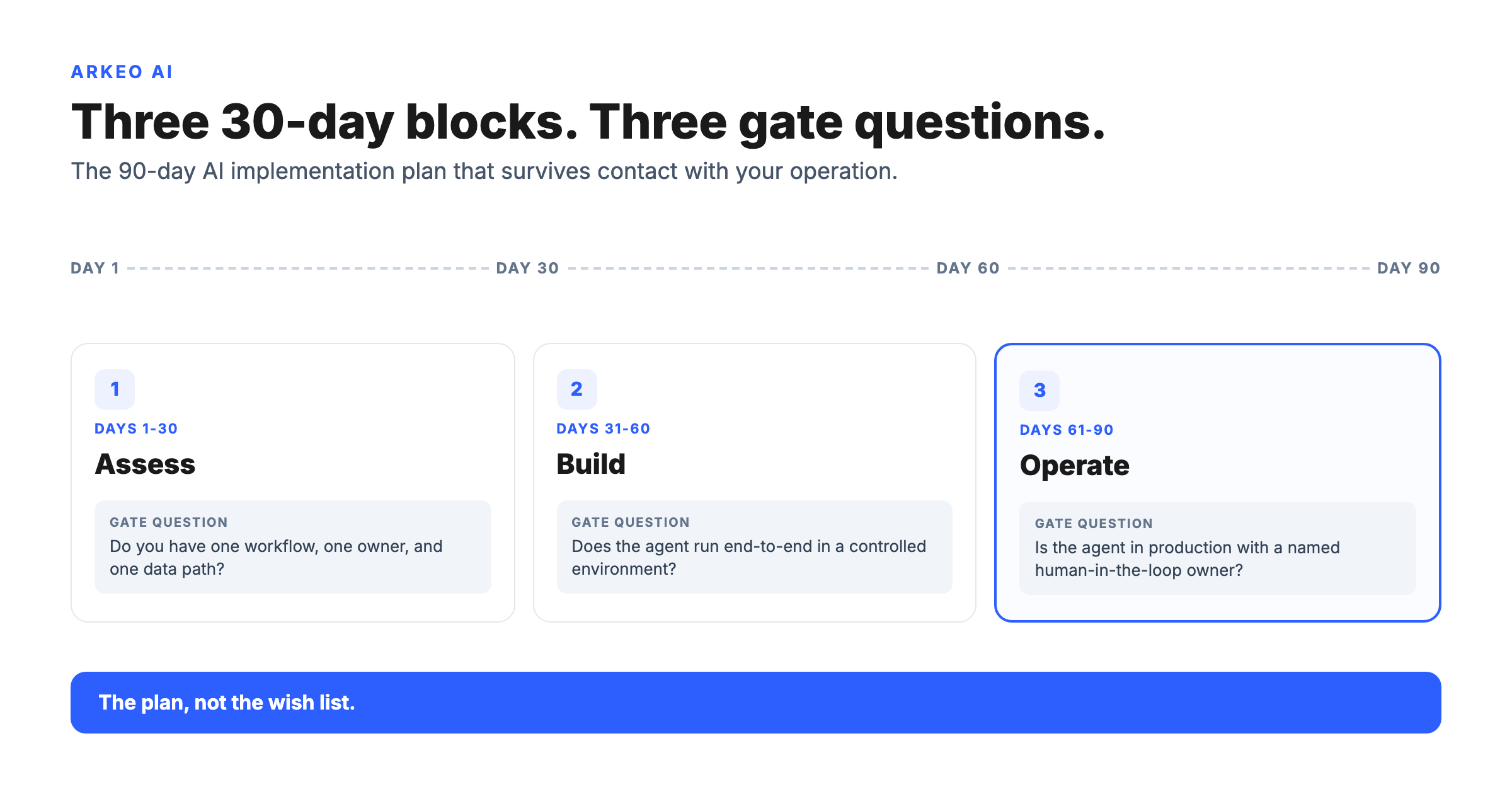
What to do after the AI assessment: prioritize use cases, sequence a 30-90-12-month rollout, assign owners, and govern as you scale.
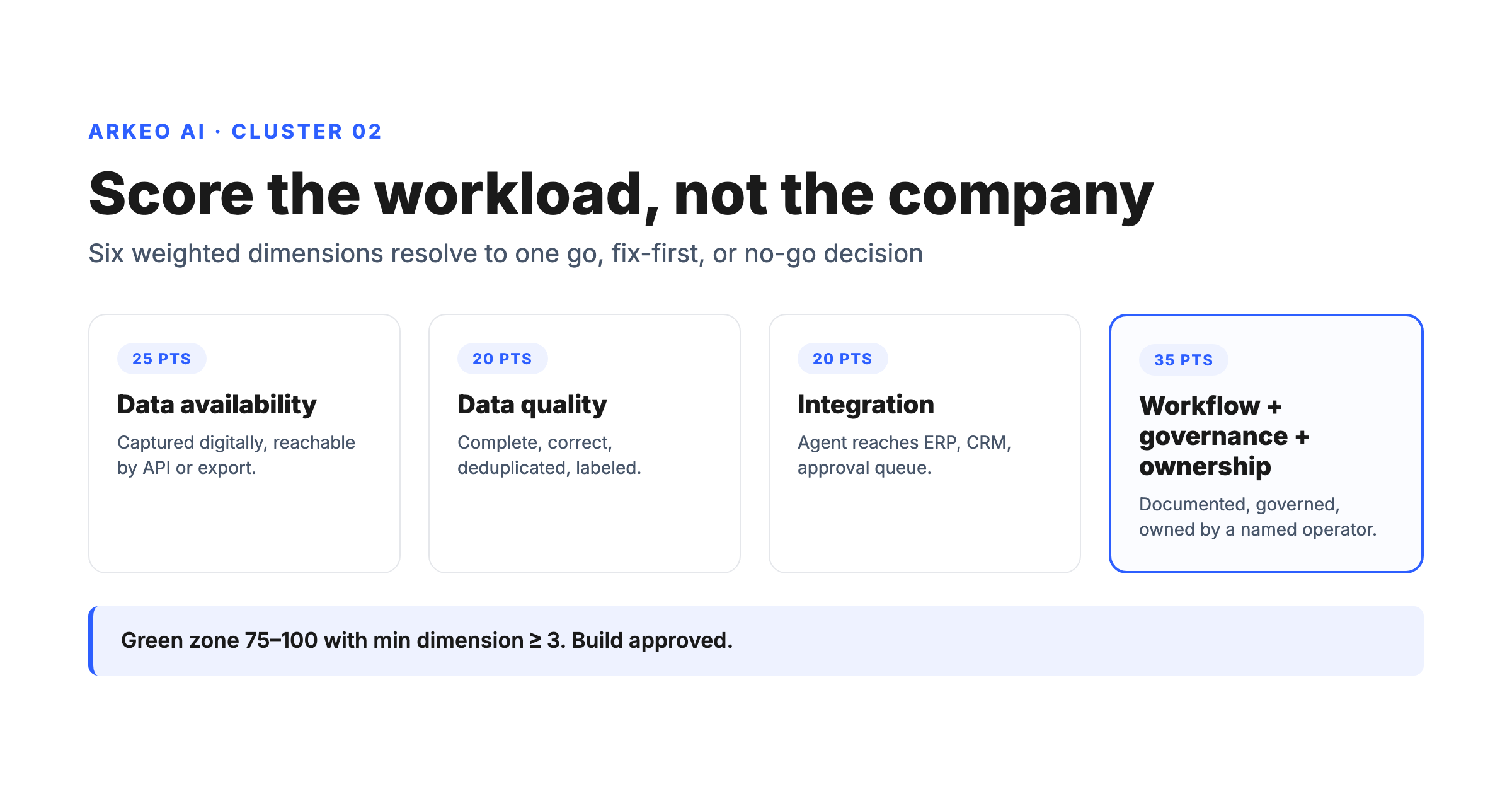
A working AI readiness assessment framework: five scored categories, diagnostic questions, and maturity bands that turn evaluation into a roadmap.
A fast, 12-question AI readiness checklist you can run in 10 minutes to find out whether your business is ready to deploy AI, close, or premature, plus how to score and act on the result.
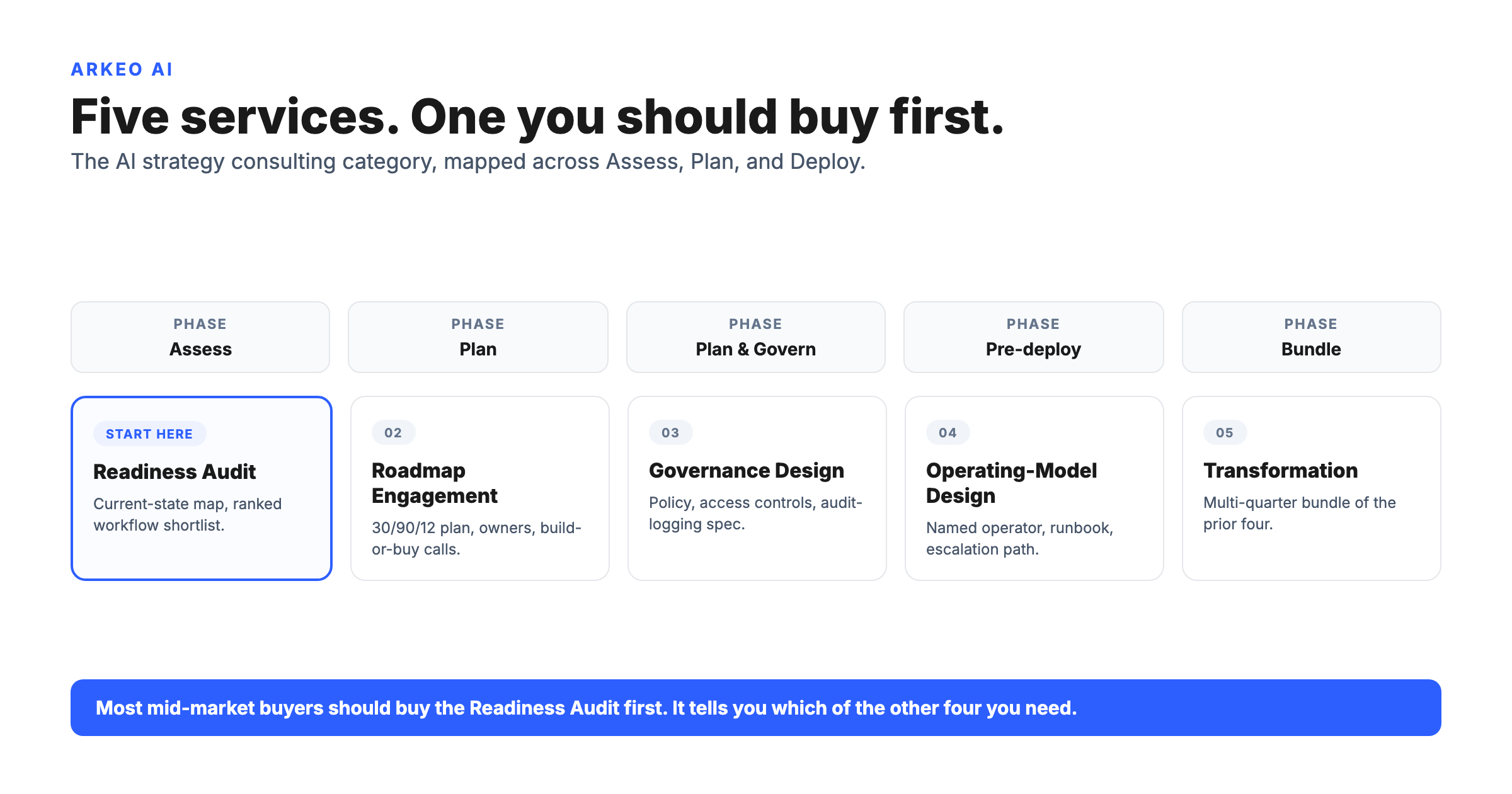
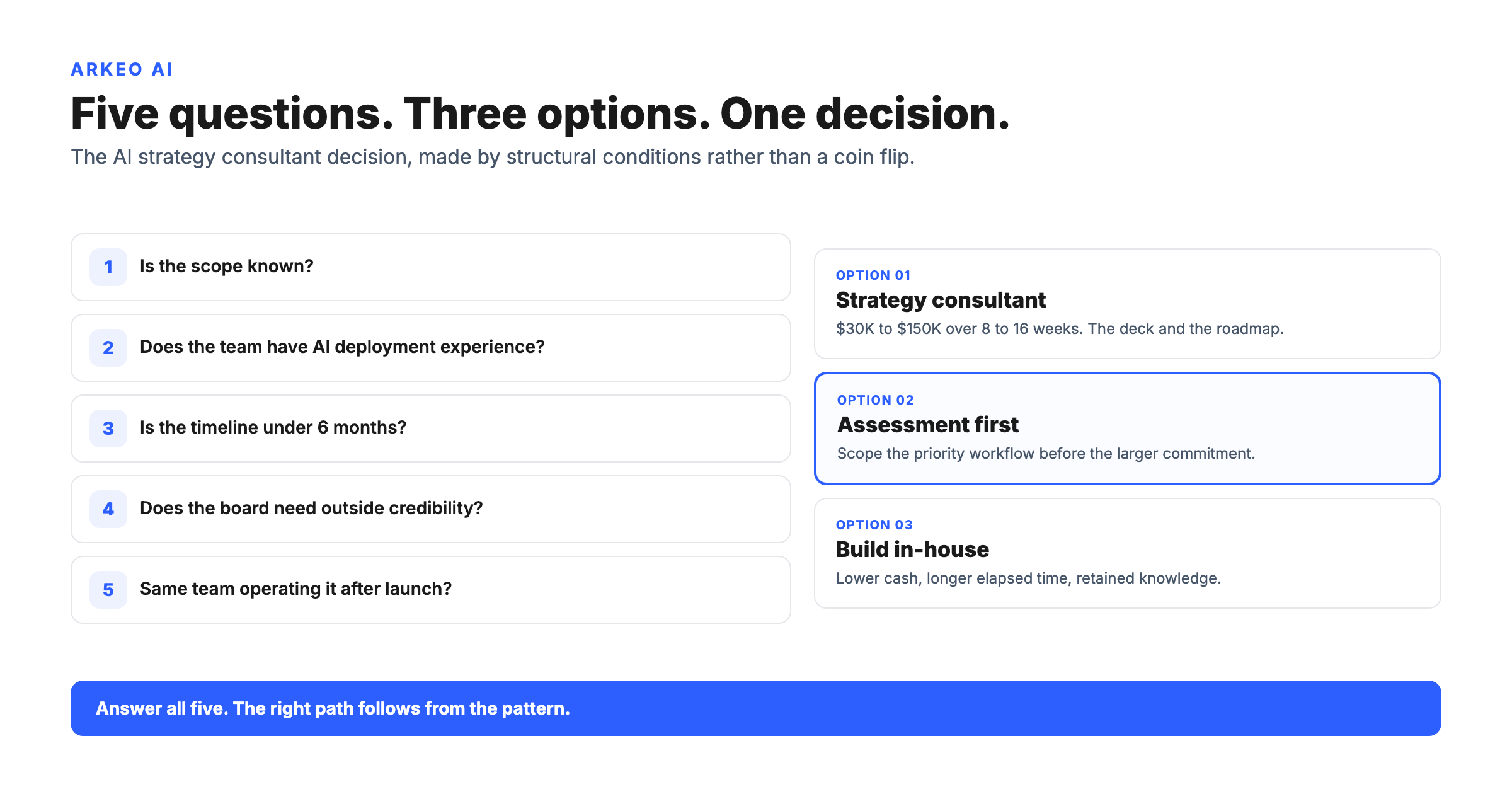
What AI readiness assessment services actually deliver, when an internal review is enough, when to bring in a partner, and the red flags that separate a real engagement from a slide deck.
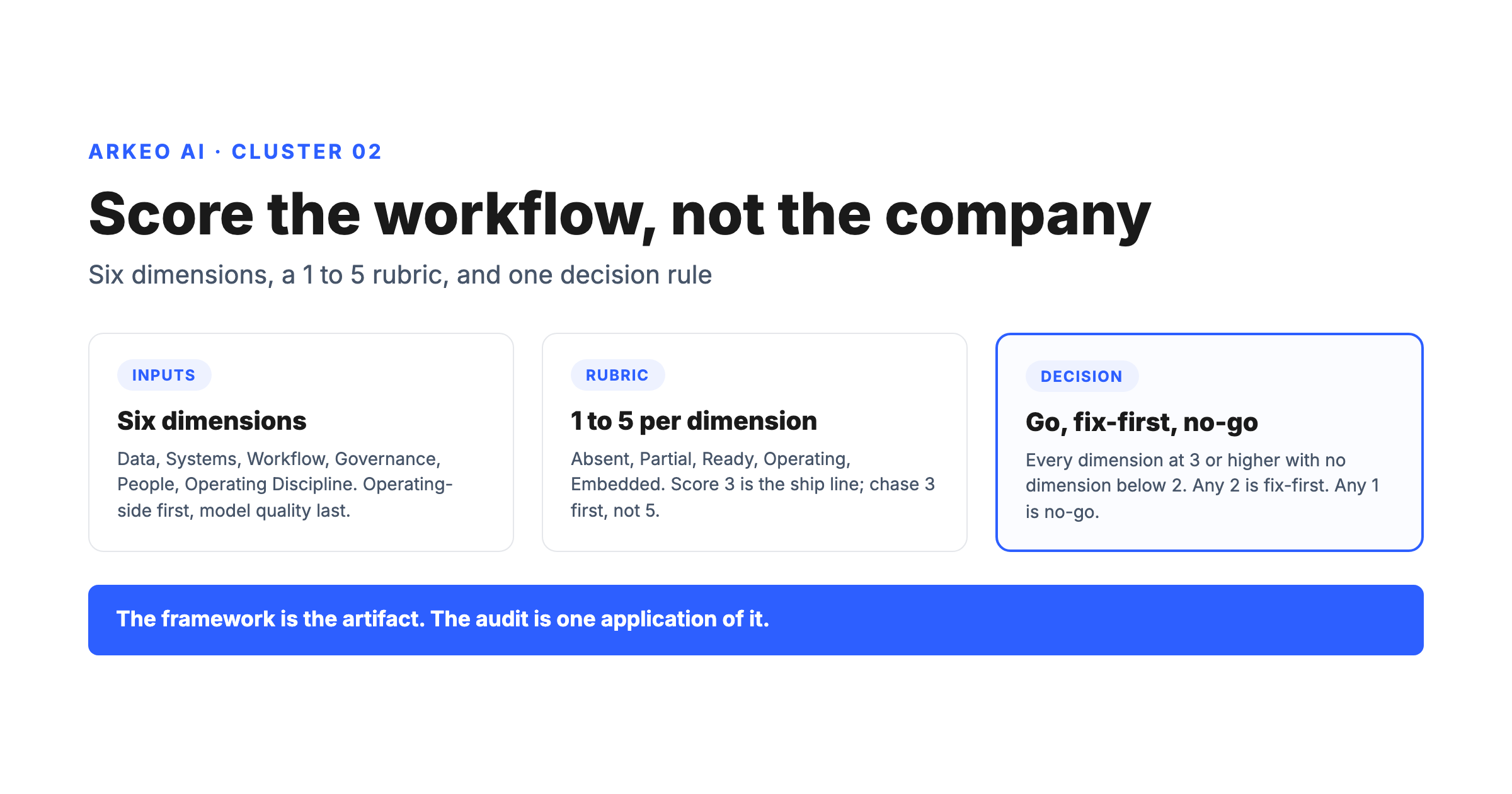
A practical operator's framework for judging whether your business is actually ready for AI, across six readiness dimensions, plus the common gaps that quietly kill projects.
Claude Code subagents let you stop deploying chatbots and start managing an AI workforce. Here's how Plan Mode, parallel execution, and approval gates actually work for a mid-market business.
Claude Code's built-in security features protect your local machine from the AI, but they do not stop your source code, schemas, and IP from leaving the building. The pre-approval checklist mid-market operators need before any AI coding tool gets a green light.
How Claude Code and the Model Context Protocol connect a private AI workforce to your internal data without exposing it to public LLMs. The right architecture, the wrong one, and the three steps every mid-market deployment must follow.
Installing Claude Code takes five seconds. A safe mid-market rollout takes a real playbook. The three phases that protect your codebase, the testing prerequisites your agents will expose, and the governance discipline that separates a successful deployment from a science experiment.
Stop buying Copilots and hoping for massive ROI. Discover how autonomous Claude Code agents execute entire workflows and become a true private AI workforce.
Discover how Claude Code shifts development from AI chatbots to an autonomous AI workforce. Learn how to secure agents and manage deployments.
Financial services firms need AI, but standard cloud models fail strict compliance and data sovereignty rules. Learn how to deploy a private Claude AI workforce.
Stop your IP from leaking. Learn how deploying a private AI workforce powered by Claude Cowork can secure your data and eliminate operational bottlenecks in manufacturing.
A deep dive into the true cost of Claude Cowork enterprise pricing and why Private AI Infrastructure is the only secure, fixed-cost solution for mid-market businesses.
May 20, 2026
A definitive guide for operations leaders on deploying a private AI workforce in construction using Claude Cowork.
Deploying Claude Cowork in a private AI workforce allows mid-market oil and gas operators to process complex data while ensuring absolute security and IP protection.
Learn how mid-market operators are transitioning from single-player AI chat tools to deploying a secure, custom AI workforce using Claude Cowork.
Learn how to deploy Claude cowork plugins securely using a private AI workforce model without exposing your company data.
Deploy Anthropic's Claude within your own secure, private infrastructure to gain the analytical power of world-class AI without compromising data sovereignty.
Claude Cowork vs ChatGPT Enterprise compared on the criteria that decide the buy: file-native autonomy vs ecosystem integration, retrieval accuracy, real pricing tiers, and the data sovereignty risk both platforms still carry by default.
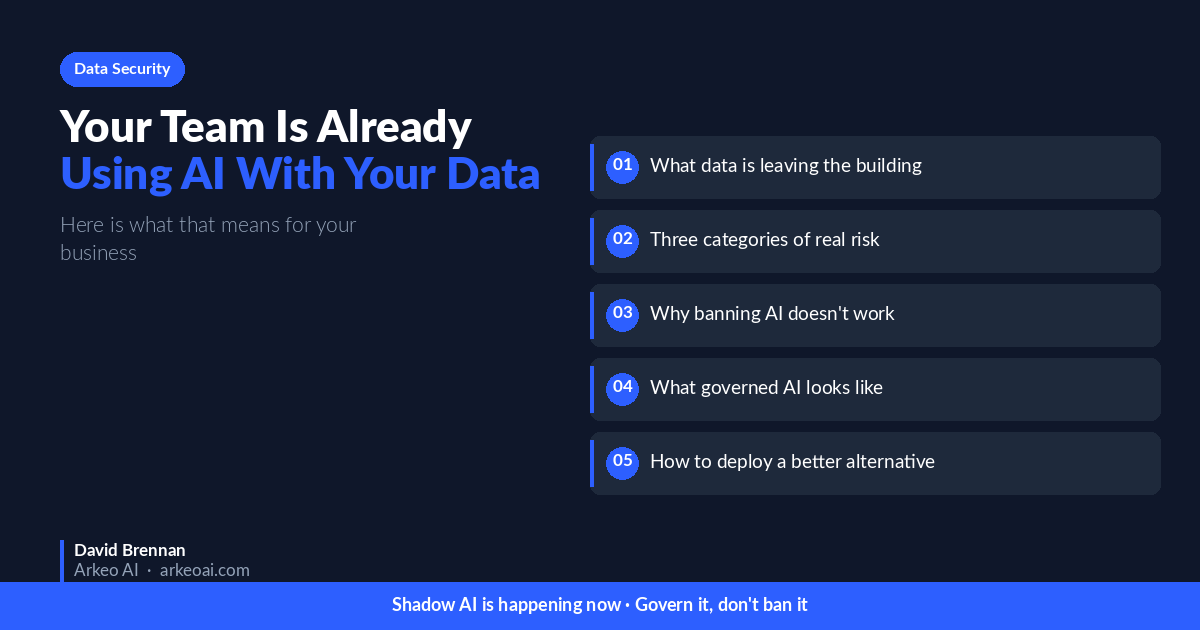
Your team is already using AI. The question is whether they are doing it securely on company infrastructure or leaking data to public models. Here is how to deploy Claude Cowork for Teams.
Shadow AI is already in your business. Discover how Claude Cowork secures your data, provides audit logs, and offers zero training retention.
Confused by the different names for the same AI agent operating system? Here is the full history of the OpenClaw rebrand and why downloading legacy versions is a massive security risk.
Installing OpenClaw is fast, but configuring it for secure enterprise operations takes planning. Here is the technical guide to deploying your private agent infrastructure.
Mid-market operators often choose the wrong foundation for their AI agents. Here is how OpenClaw and OpenCode compare, and which one your business actually needs.
Data Security
The OpenClaw Browser Relay provides your AI agents with a secure, isolated environment to navigate legacy web apps, extract data, and fill forms without brittle API integrations.
Running an AI container is easy; governing an AI workforce is hard. Learn how OpenClaw Mission Control provides visibility, RBAC, and audit logging to secure your operations.
Deploying OpenClaw via Docker gives your business a private AI workforce without data leakage. Here is the technical architecture required to run agents securely on-premise.
The real OpenClaw alternative isn't another piece of open-source software. It's moving from a DIY setup to a managed Private AI Workforce.
Business
Move beyond chatbots and shadow AI. Here are five practical ways mid-market operators use OpenClaw to build a secure, private AI workforce that handles real business operations.
Stop writing endless chat prompts. Learn how OpenClaw skills act as permanent digital onboarding to turn a generic AI into a specialized operational agent.
OpenClaw is an open-source agent operating system that allows mid-market companies to run secure, private AI workforces directly on their own infrastructure.
Installing OpenClaw is easy. Securing it for business operations is hard. Learn how to protect your proprietary data from unmanaged AI agents.
Deploying OpenClaw is more than running a Docker container. It requires mapping your business workflows. Here is the 4-step framework to build a secure, private AI workforce.
AI estimating tools cut bid prep time by 40-60% and hit 85-90% accuracy. Here is what works, where accuracy breaks down, and how to evaluate tools for your firm.
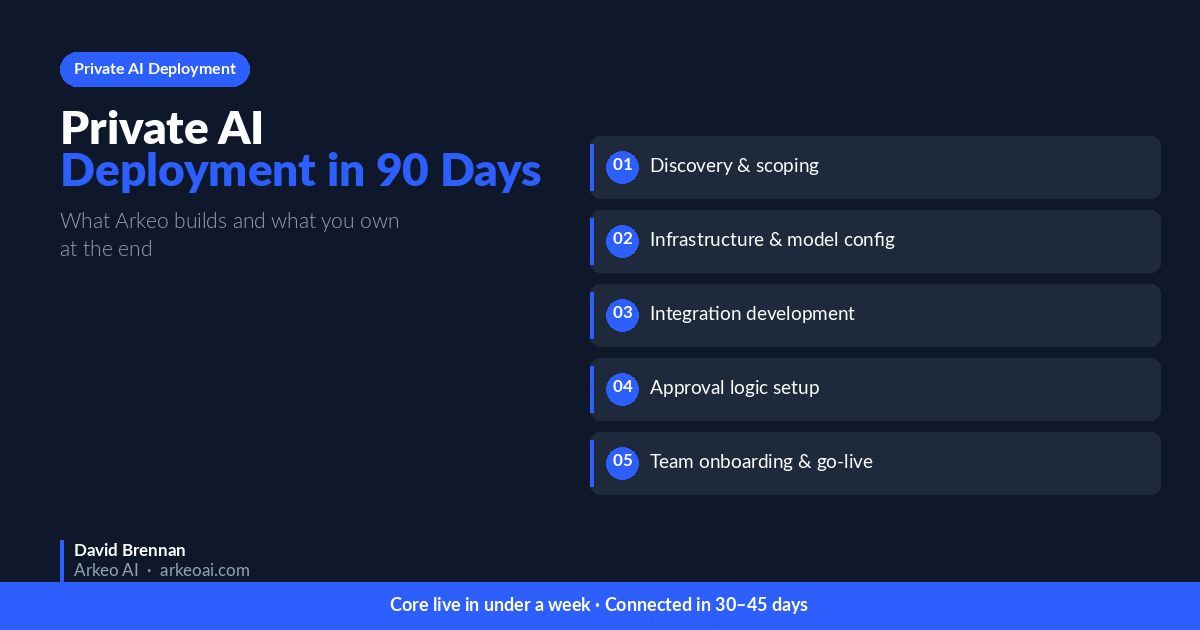
Step-by-step guide to deploying AI on your own servers. Hardware sizing, software stack, integration patterns, and a realistic 4-week timeline for mid-market companies.
Gartner predicts 40% of enterprise apps will include AI agents by end of 2026. Here is what agents actually do in business operations, which use cases deliver ROI, and why 40% of projects will fail.
Sixty-four percent of mid-market companies have now deployed at least one AI workload. The shift from cloud to private AI is accelerating because the economics changed, the risks became real, and the tools got simpler.
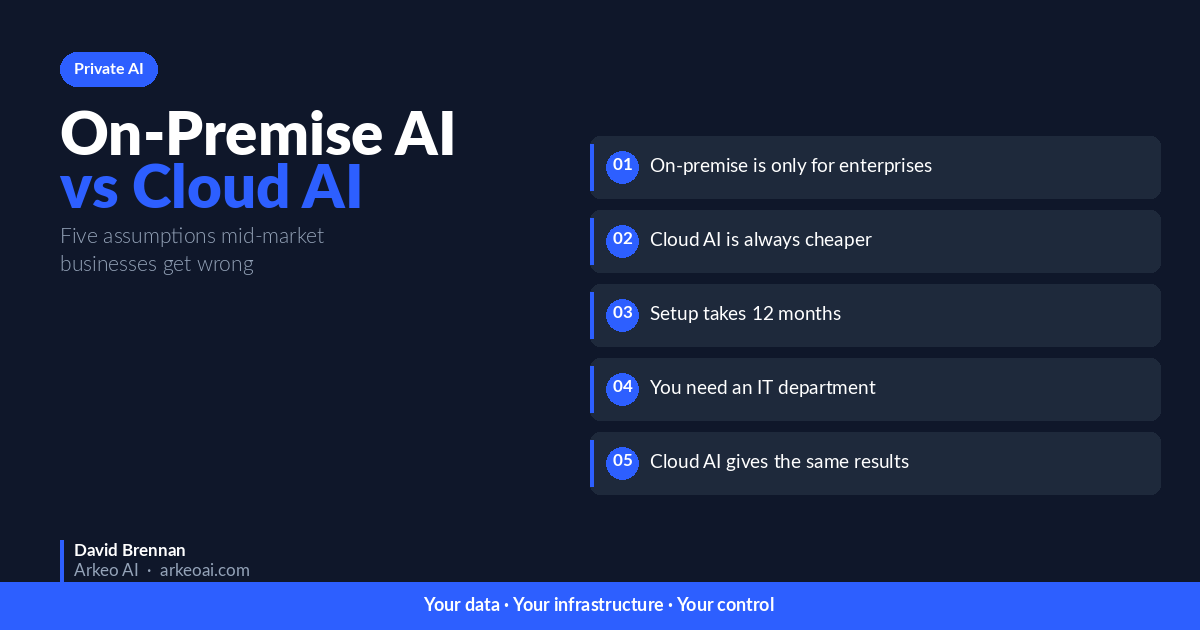
Your team is already using AI. The question is whether you chose that, or whether it just happened. Cloud AI and on-premise AI have fundamentally different cost structures, and most mid-market companies cross the on-premise break-even threshold faster than they expect.
On-premise AI keeps your data on your servers. Learn what it costs, who it's for, and what real results mid-market companies are seeing.
A practical AI implementation playbook for construction executives. Start with the audit, pick one high-friction workflow, prove the ROI, then scale.
Construction firms using AI for client communication are building trust at scale. Here is how automated updates and proactive alerts change the game.
AI-powered construction management tools improve project delivery by 20% and recover 500-1,000 hours yearly. Here is how predictive scheduling, progress monitoring, and resource allocation work in practice.
The AI in construction market reached $2.18 billion in 2026. Here are the four trends that matter most for contractors making deployment decisions today.
AI adoption is surging in construction. But the firms turning it into a lasting competitive edge are doing something most aren't. Here's the difference.
AI agents that do real operational work inside your business. How specialized agent teams are replacing generic AI tools across every department.
AI isn't coming for construction jobs. It's coming for the inefficiencies. Here's how the smartest firms are using it to win more and waste less.
AI adoption in construction doubled in 2026. Here is what is working in estimating, safety, scheduling, and document processing, with real data from firms deploying it.
Book a 15-minute call to discuss your AI situation. If it makes sense, we’ll scope an assessment.