Category
Claude Cowork Setup: Integrating AI With Your Private Infrastructure
The Shadow AI Risk vs. The Private AI Imperative
In mid-market operations, the adoption of AI is no longer a theoretical exercise. It is happening right now, whether the executive team has sanctioned it or not. Employees are using consumer-grade AI tools to write reports, analyze financial data, and draft sensitive client communications. This phenomenon—Shadow AI—creates massive data sovereignty risks. When an employee pastes a proprietary project plan into a public AI model, that data leaves the building. It becomes training fodder for the model's next iteration.
For data-conscious operators in professional services, manufacturing, and industrial sectors, this lack of governance is unacceptable. You cannot afford to let your operational truth leak into the public cloud. The solution is not to ban AI—that simply drives it further underground and cedes competitive advantage to faster-moving peers. The solution is a Private AI Workforce. By deploying advanced models like Claude within your own secure, private infrastructure, you gain the analytical power of world-class AI without compromising data sovereignty.
Consider a mid-sized engineering firm. Before establishing governance, project managers were uploading structural schematics to public chat interfaces to summarize technical constraints for client emails. This innocent efficiency hack inadvertently exposed confidential client intellectual property to third-party model training datasets. The realization of this exposure often triggers an immediate ban on AI tools, plummeting productivity. The true remedy, however, is providing a sanctioned, secure alternative. This is where the Claude cowork setup becomes critical. It represents a paradigm shift from using AI as an external utility to integrating it as a core, secure component of your internal operations.
When you build a Private AI Workforce, you are effectively hiring a digital team that operates exclusively within your walls. They have access only to the data you permit, their outputs are governed by your corporate policies, and their "memory" of your proprietary data is never shared with the outside world.
What is a Claude Cowork Setup?
A Claude cowork setup is not just an API key and a chat interface. It is the architectural integration of Anthropic’s Claude models directly into your private, controlled infrastructure. This setup allows your teams to collaborate with AI agents—your Private AI Workforce—on proprietary data, behind your firewall, without that data ever being transmitted to public training servers.
Unlike standard SaaS AI tools that charge per token and retain the right to analyze your inputs, a properly configured private deployment ensures that your data remains yours. It operates on a fixed-cost, highly governed model. At Arkeo AI, we approach this through a rigorous three-phase methodology: Assess, Deploy, and Manage. We don't just hand you a login; we integrate a custom AI workforce that understands your business logic and operates within your security perimeter.
To truly understand the value, contrast a Claude cowork setup with a standard cloud subscription. With a cloud subscription, you are renting compute and intelligence from a shared pool. Your prompts and data are transmitted over the public internet, processed on shared servers, and potentially logged for quality assurance by the vendor. In a private setup, the model weights may be hosted by a provider like AWS (via Bedrock), but the inference occurs within a private enclave. The data never traverses the public internet, and the vendor has zero visibility into your prompts or the model's responses. It is the digital equivalent of an air-gapped room where highly confidential strategic planning takes place.
Three components inside the firewall, one Agent OS, no shared state
A private Cowork setup is three components and one network namespace. The whole point of the architecture is that the boundary your audit team has to draw is the network namespace, not the vendor SLA.
Claude inference
Same Claude model class, deployed inside your VPC or on owned hardware. Inference never leaves the namespace.
Workspace boundary
Per-team or per-workflow workspaces. Isolation enforced at the container or volume level, not by prompt.
Audit and identity
SSO, RBAC, audit logs piped to your SIEM. Provable controls, not vendor promises.
Core Components of a Secure Private AI Architecture
Deploying Claude within a private infrastructure requires a robust architectural foundation. It is not enough to simply route requests through a VPN; the entire data lifecycle must be isolated and controlled. The architecture must be resilient, scalable, and inherently secure.
First, the infrastructure must support data isolation. This involves configuring virtual private clouds (VPCs) or dedicated on-premise hardware to ensure that the environment where the AI processes data is completely walled off from the public internet. All API calls to the Claude model must be routed through secure, dedicated endpoints (such as AWS PrivateLink or equivalent services) that bypass the public web entirely. This means that even if a threat actor intercepts traffic on the public internet, your AI workloads remain invisible and inaccessible.
Second, access control and governance must be baked into the system from day one. A true AI workforce operates with the same role-based access controls (RBAC) as your human employees. If an employee does not have permission to view a specific financial document, the AI agent assisting them must also be restricted from accessing or summarizing that document. Implementing this requires deep integration between your identity provider (IdP), such as Okta or Microsoft Entra ID, and the AI agent's retrieval systems. The agent must inherit the permissions of the user initiating the query, executing a real-time permission check before fetching any context.
Third, the setup requires a robust data pipeline. Your AI agents are only as effective as the context they are given. This means building secure pipelines that connect your existing systems of record—ERPs, CRMs, and document repositories—to the AI's context window, ensuring the models always have access to the most current operational truth without that data ever being stored externally. These pipelines must be designed for both batch processing (for historical context) and real-time streaming (for live operational data), ensuring the AI's knowledge base is never stale.
Fourth, auditability and logging are non-negotiable. Every prompt, every response, and every data retrieval event must be logged securely within your infrastructure. This is crucial not just for security monitoring, but for compliance and operational optimization. If an agent provides an incorrect analysis, your team must be able to trace the logic back to the specific documents it retrieved and the prompt it received.
Shadow AI exposing your proprietary data?
Stop guessing about where your company's data is going. Discover exactly how a Private AI Workforce can secure your operations and drive real ROI.
Book Your AI Assessment →Phase 1: Assess - Mapping Your Data Reality
Before writing a single line of integration code, you must understand your current data landscape. The Assess phase is where we define the operational truth of your business. We analyze where your data lives, how it flows, and where the highest-value friction points exist. This is a business analysis phase as much as it is a technical one.
During this phase, we identify the specific use cases where a Claude cowork setup will deliver immediate, measurable ROI. This isn't about deploying AI for the sake of AI; it is about solving concrete business problems. Whether it is automating compliance reporting in a manufacturing plant, accelerating contract analysis in a professional services firm, or streamlining supply chain logistics in an industrial setting, the use case dictates the architecture.
Crucially, the Assess phase also involves a rigorous security audit. We map out the data sovereignty requirements, ensuring that the planned architecture complies with all internal governance policies and industry-specific regulations. We review your existing data classification schemas—identifying what is public, internal, confidential, and restricted—so that the AI workforce is programmed to respect these boundaries from inception. Without this foundational mapping, any AI deployment is just a guessing game with high regulatory stakes.
Phase 2: Deploy - Building the Private Integration
The Deploy phase is the technical execution of the Private AI Workforce. This is where the secure infrastructure is provisioned, the data pipelines are connected, and the Claude models are integrated into your operational workflows. It is the translation of the Assess phase blueprint into a functioning, secure system.
A critical element of this phase is context management. Advanced models like Claude possess massive context windows, allowing them to process hundreds of pages of text simultaneously. However, indiscriminately feeding data into the model is inefficient, slow, and costly. We implement intelligent routing and retrieval-augmented generation (RAG) systems that dynamically provide the AI agent with only the precise, relevant information needed to complete a specific task. This involves deploying vector databases within your secure perimeter, embedding your proprietary documents, and fine-tuning the retrieval algorithms to prioritize accuracy and relevance over sheer volume.
This phase also involves building the custom interfaces your teams will use to interact with the AI workforce. These are not generic chat boxes; they are purpose-built workflow tools designed to integrate seamlessly into your existing operations, reducing cognitive load and accelerating adoption. For example, a legal team might interface with their AI agent directly within their contract management software, rather than switching to a separate application. The goal is to make the AI an invisible, frictionless partner in the daily workflow.
Furthermore, we establish the infrastructure-as-code (IaC) templates and continuous integration/continuous deployment (CI/CD) pipelines required to deploy updates safely. Because this is a private setup, updates must be managed with the same rigor as any core enterprise software deployment.
Where data physically goes during inference
The single most important question in a Cowork setup is the inference path. Where does the prompt run? Where does the output land? The fork below maps the two honest answers.
Vendor infrastructure
Inside the firewall
Phase 3: Manage - The Ongoing AI Workforce Operations
The biggest misconception in enterprise AI is that deployment is the finish line. In reality, deploying an AI agent is exactly like hiring a human employee: the real work begins on day one. AI models drift, APIs change, and business logic evolves. This is why the Manage phase is the most critical component of the Arkeo AI methodology. Without active management, an AI deployment quickly degrades from a strategic asset into a technical liability.
A Claude cowork setup requires ongoing governance. We actively monitor the performance of your AI workforce, analyzing outputs for accuracy, relevance, and compliance with brand guidelines. We implement feedback loops where human operators can flag suboptimal responses, which are then used to refine the RAG retrieval algorithms and prompt templates. This continuous learning cycle ensures the AI becomes more aligned with your specific business context over time.
We also manage the secure updates to the underlying models. When Anthropic releases a new version of Claude, we do not simply flip a switch. We test the new model against a rigorous suite of your specific business workflows within a staging environment. We measure changes in latency, cost, and output quality before rolling the update into your production environment. This ensures you always have access to the latest capabilities without exposing your infrastructure to new vulnerabilities or unexpected behavioral changes.
Furthermore, as your business grows, your Private AI Workforce must scale with it. The Manage phase involves continuous iteration—identifying new use cases, refining data pipelines, and expanding the capabilities of your AI agents to drive deeper operational efficiency. We treat your AI workforce as a dynamic, evolving capability, not a static software installation.
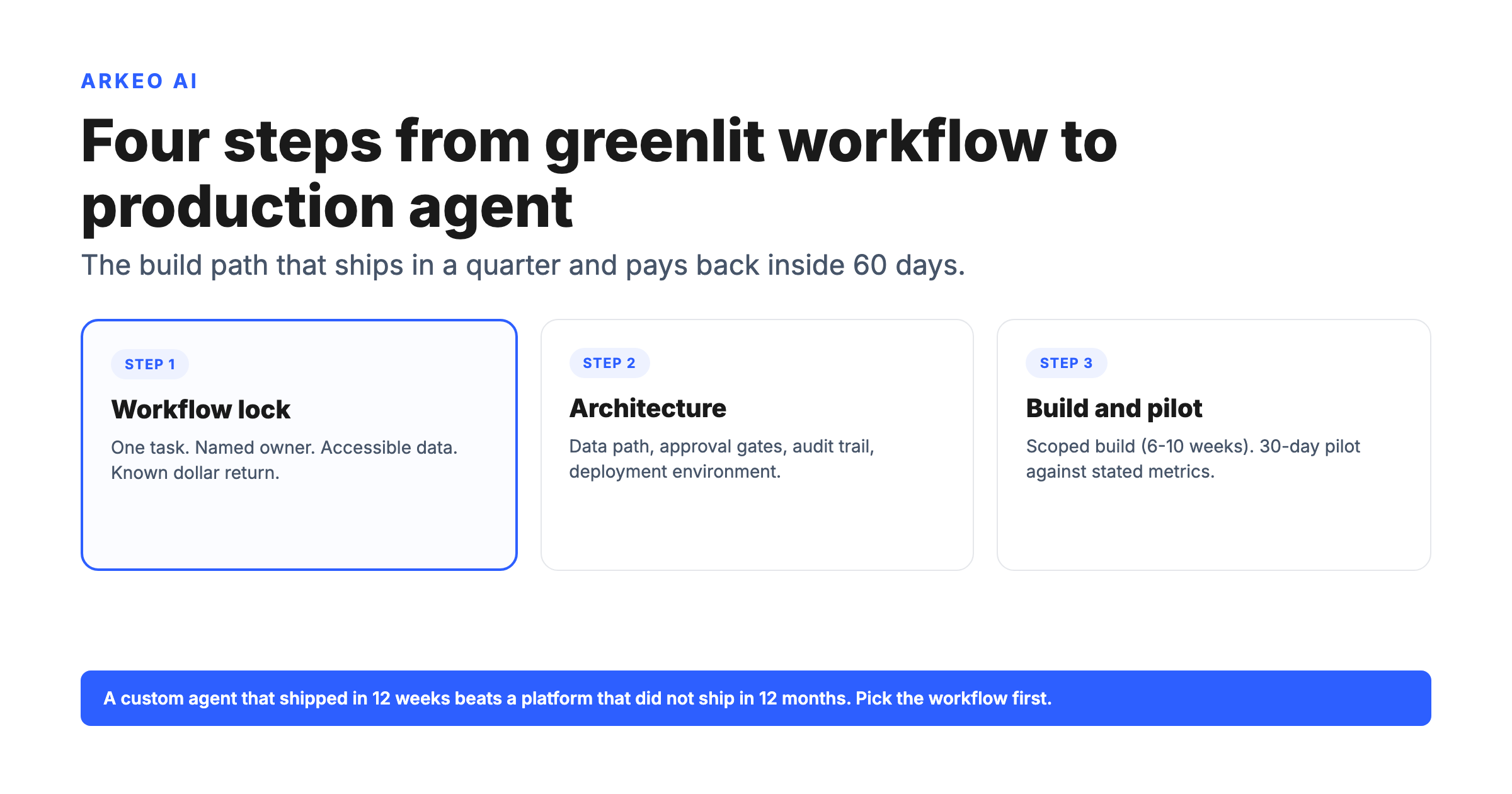
Three phases from kickoff to a managed Cowork workforce
No big-bang deployments. Each phase ships a working capability before the next one starts. Governance lands first, capability lands second.
Assess
Map shadow AI use, sensitive data flows, the three highest-payback workflows. Set the perimeter.
Deploy
Stand up the private Cowork environment. Wire SSO, RBAC, audit. Ship the first workflow.
Manage
Add workflows two and three. Continuous monitoring, audit review, regulatory updates.
Cost Control at Scale: Predictability Over Per-Token Chaos
One of the hidden risks of public cloud AI tools is cost volatility. When you pay per token, a sudden spike in usage can lead to massive, unpredictable budget overruns. A complex financial analysis task might consume 100,000 tokens in a matter of seconds. If adopted widely across an organization without controls, this can quickly erode profitability. This makes it incredibly difficult for mid-market operators to accurately forecast the ROI of their AI initiatives.
A properly architected Private AI Workforce fundamentally changes this financial dynamic. By deploying AI within your own infrastructure, you shift from a variable, per-token cost model to a more predictable, fixed-cost structure. You are investing in the capability itself, not renting it by the transaction. You provision the necessary compute resources (such as provisioned throughput on AWS Bedrock) and pay a predictable hourly or monthly rate, regardless of how many tokens are processed.
This predictability allows you to scale your AI usage aggressively without fearing an exponential increase in your monthly software bills. It enables you to encourage widespread adoption among your employees, knowing that the marginal cost of an additional query is effectively zero. At Arkeo AI, we built our own systems on this exact model because we demand the same financial predictability that our clients do. We use what we sell, and we know that true operational integration requires cost control at scale.
Ready to build your Private AI Workforce?
Don't settle for off-the-shelf tools that compromise your data security and budget. Get a custom assessment of your infrastructure and see how a secure Claude integration can transform your operations.
Book Your AI Assessment →Frequently Asked Questions
Does a private Claude setup mean we host the model entirely on our own physical servers?
It depends on the exact architectural requirements, but typically, a highly secure enterprise setup uses dedicated, isolated cloud instances (like AWS Bedrock or Azure dedicated endpoints) that are completely segregated from public traffic. While the physical hardware is owned by the cloud provider, the environment is logically isolated. The data never trains the public model, and it remains exclusively within your Virtual Private Cloud (VPC) boundary. For organizations with extreme security requirements, true on-premise hardware deployments using open-source models are possible, but for accessing state-of-the-art models like Claude, private cloud enclaves offer the best balance of security and capability.
How does this compare to just using ChatGPT Team or Enterprise?
While enterprise cloud tiers offer improved data privacy over consumer versions (by promising not to train on your data), a true Private AI Workforce setup goes much further. It integrates deeply into your specific databases via secure VPC endpoints, applies your company's rigid RBAC permissions at the data retrieval layer, and is managed as a custom operational system rather than a standalone SaaS application. Furthermore, a private setup offers fixed-cost compute provisioning, shielding you from variable per-token pricing, and provides complete auditability of all data flows within your own logging infrastructure.
How long does it take to deploy a custom AI workforce?
The timeline varies based on the complexity of your data ecosystem and your readiness. The Assess phase typically takes 2-3 weeks, during which we map your data and identify high-ROI use cases. From there, an initial Deploy phase focusing on 1-2 high-impact workflows can be operational in 30 to 60 days. The key is starting with a focused, highly defined scope to prove ROI and establish the secure baseline architecture quickly before scaling to more complex use cases.
Do we need to hire data scientists to manage a Claude cowork setup?
No. That is the core value proposition of the Arkeo AI "Manage" phase. Finding, hiring, and retaining top-tier AI engineering talent is incredibly difficult and expensive for mid-market companies. We operate as your managed AI workforce provider, handling the prompt engineering, RAG optimization, model updates, and infrastructure maintenance so your team can focus on leveraging the AI, not building it.