Category
AI Agents for Business: The Complete Guide to Agentic AI

Last updated: May 2026
Most business leaders think they are already using AI. They pay for ChatGPT Plus, tell their teams to write better prompts, and assume they've checked the innovation box. They haven't. They've just bought a faster typewriter.
There is a massive difference between a chatbot that waits for your instructions and an AI agent—an autonomous system that plans, executes, and iterates on tasks without you. While your competitors are busy typing questions into a browser, actual AI adoption has moved on to systems that do the work for you.
This is the difference between a tool and a workforce. But deploying AI in business operations isn't as simple as swiping a credit card for a SaaS subscription. If you get the architecture wrong, you don't just waste money—you expose your proprietary data.
• What it is: AI agents are autonomous systems that plan, execute, and iterate on tasks without constant human prompting—unlike standard chatbots.
• Agentic AI: A buzzword for the exact same thing; giving AI the agency to act on your behalf.
• The Security Risk: Cloud-based agents expose proprietary data. Private AI keeps your data inside your walls.
• The Cost Model: Shifting from variable token-based pricing (cloud) to fixed-cost infrastructure (private).
What Are AI Agents for Business? (And Why "Agentic AI" is the Same Thing)
Let's strip away the jargon. You will hear consultants talk endlessly about "Agentic AI" as if it's a completely new paradigm. It's not. "Agentic AI" is simply the enterprise term for an AI agent—giving artificial intelligence the agency to act.
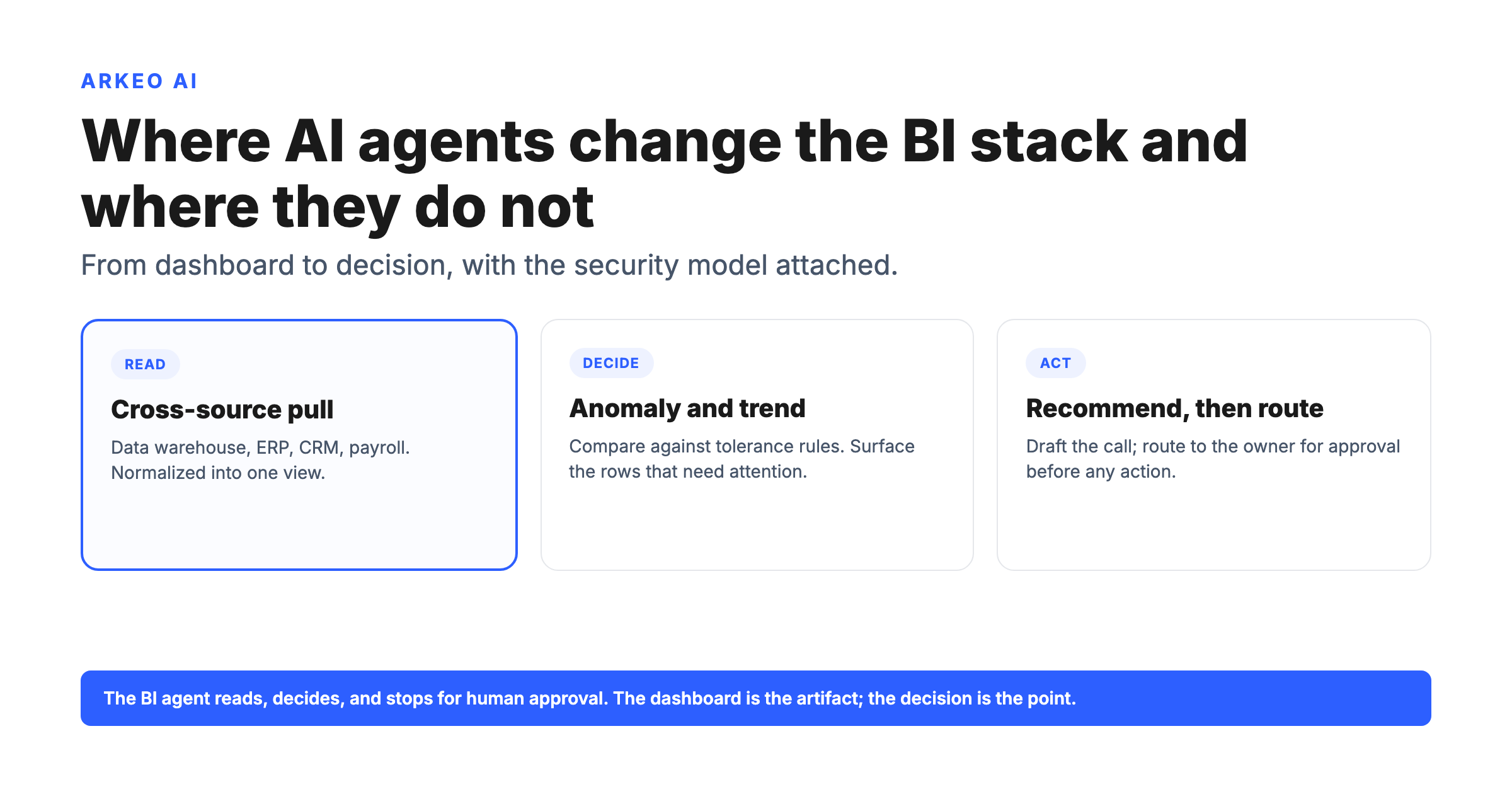
The distinction that matters isn't the buzzword; it's the behavior. A Copilot requires a human in the loop. It helps you write an email or summarize a meeting. An AI agent is given an objective ("reconcile these invoices") and it figures out the steps required, uses tools to execute them, checks its own work, and reports back when finished.
For operations directors, this is the Holy Grail. It shifts AI from being an individual productivity booster to a scalable operational engine. You aren't hiring an assistant; you are deploying digital workers.
The Blunt Truth: Why Most AI Deployments Fail
Most people think deploying AI is about picking the smartest model. They're wrong. Model intelligence is commoditized; deployment architecture is what actually determines success or failure.
Here is the uncomfortable truth: throwing a ChatGPT wrapper at an operational problem doesn't work. We have seen mid-market companies try to automate their supply chain using consumer-grade web interfaces, only to realize their employees are feeding sensitive client data into public models. This "Shadow AI"—which accounts for 68% of employee AI use—is a massive security liability.
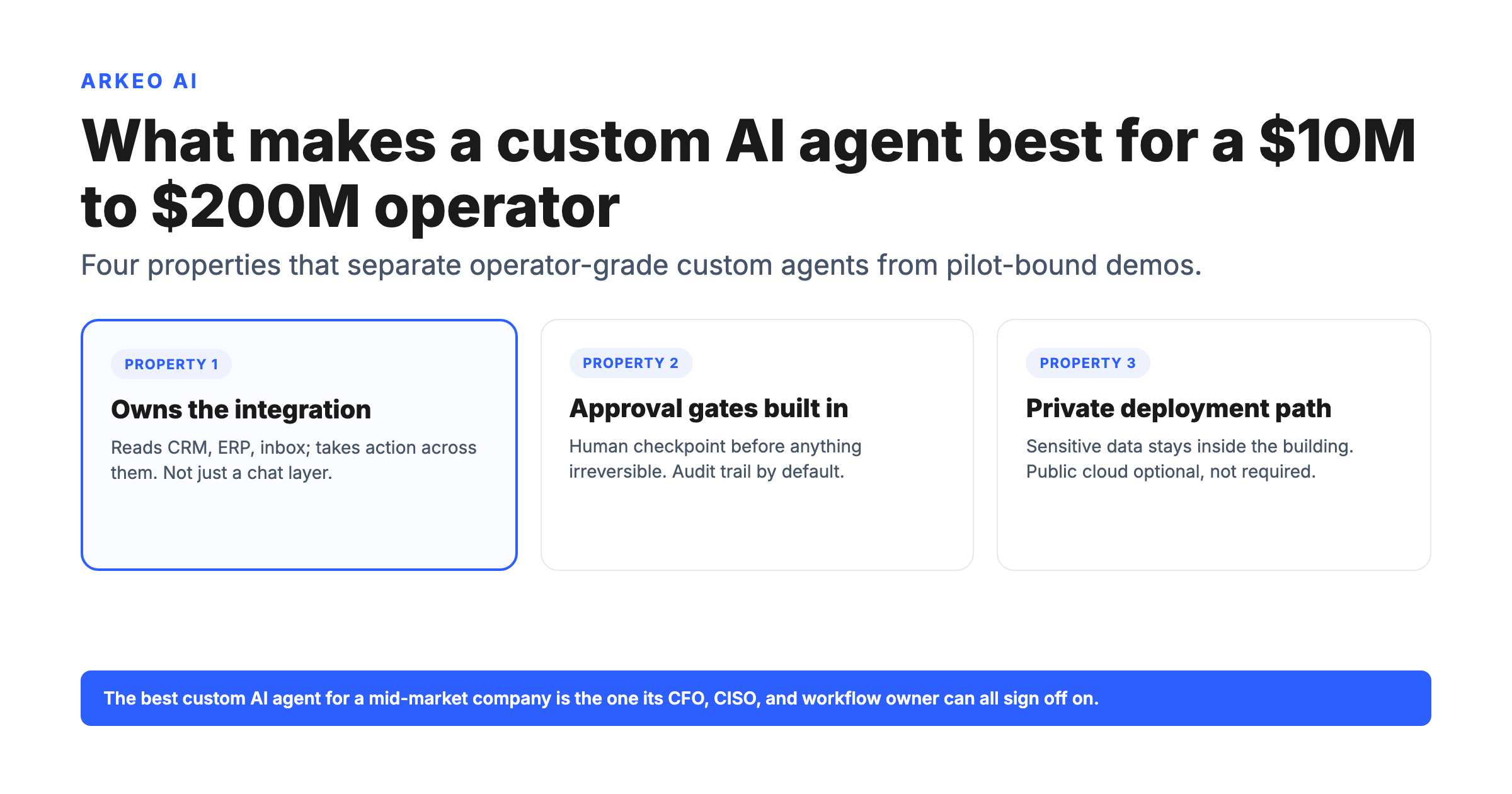
Real AI agents require deep API integrations, strict Role-Based Access Control (RBAC), and guardrails. If your AI can't securely access your ERP without exposing that data to the public internet, you don't have an enterprise tool. You have a compliance violation.
How Much Do AI Agents for Business Cost?
When you ask a vendor what an AI agent costs, they usually say, "It depends." That's because they are trying to hide the math of variable token costs. If you use cloud-based agents (like OpenAI's API), you pay per token. Every time your agent "thinks," you pay.
As your business scales its AI workforce, a variable cost model becomes prohibitively expensive. You are essentially renting intelligence by the hour. The alternative is private AI infrastructure.
With private AI, you shift from a variable operational expense to a fixed infrastructure cost. You buy the compute (or lease dedicated servers) and run the open-source models yourself. Your agents can think, plan, and execute millions of times a day, and your bill doesn't change. That is where true ROI is generated.
Ready to see where AI agents fit in your operations?
Cloud Agents vs. Private AI Agents: The Data Sovereignty Problem
If you use a cloud agent, your data leaves your building. Full stop. For a local marketing agency, that might be acceptable. For financial institutions, legal firms, or industrial manufacturers, that is a non-starter.
Private AI agents operate entirely within your Virtual Private Cloud (VPC) or on physical on-premise hardware. The data never reaches the public internet. The model never trains on your proprietary processes.
If you wouldn't send your proprietary financial models to a public server in California, you shouldn't be using a cloud-based AI agent to analyze them.
Should You Build Custom AI Agents or Buy Off-the-Shelf?
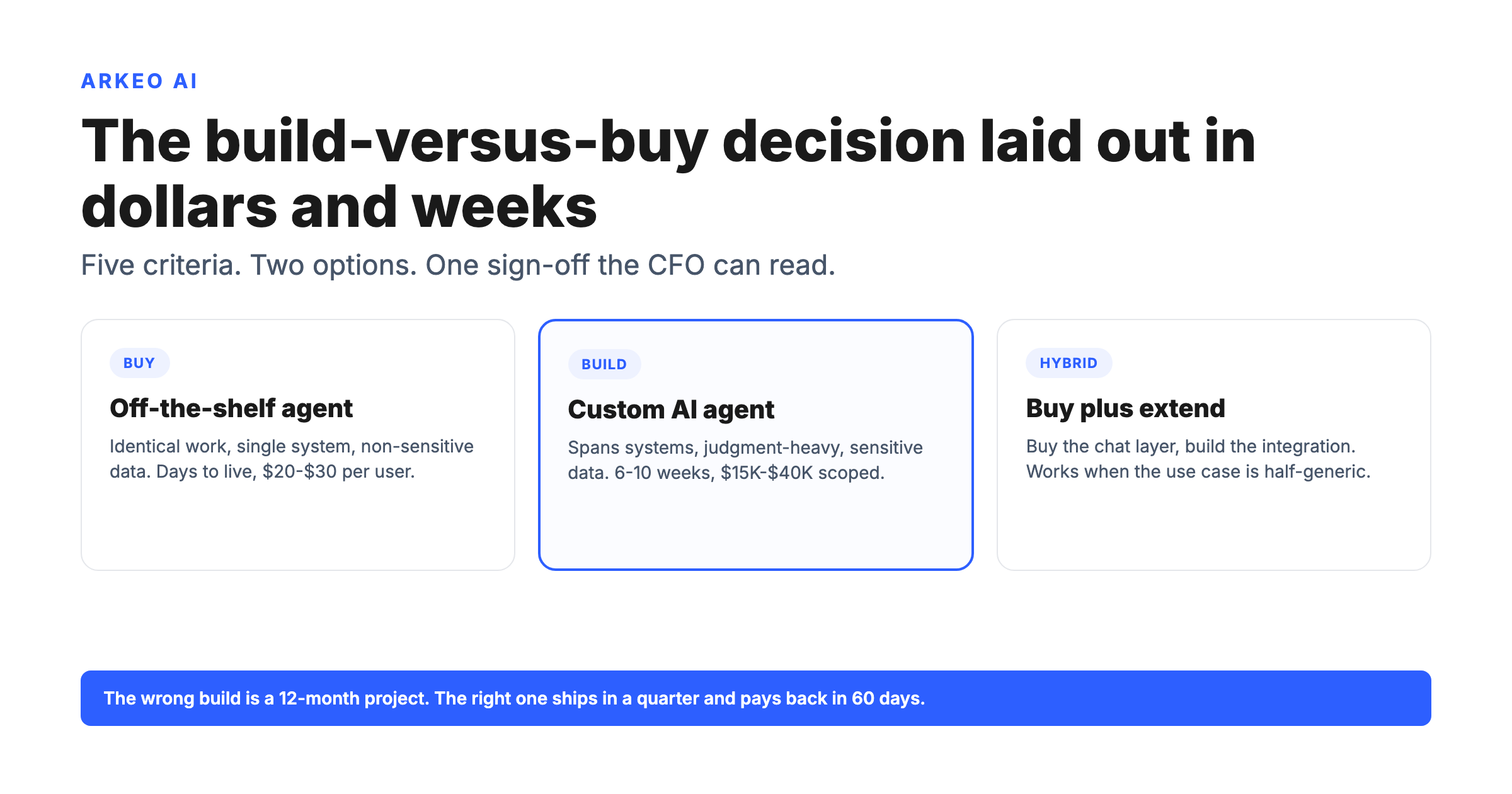
The "Build vs. Buy" debate is over. Off-the-shelf SaaS agents are great for generic tasks—like sorting customer service tickets or generating generic marketing copy. But generic tools yield generic results.
If you want an agent to execute your specific SOPs—say, cross-referencing your legacy inventory database against real-time vendor pricing—you need custom AI agents. A custom agent is wired directly into your proprietary systems. It knows your business logic, respects your data silos, and doesn't hallucinate generic advice.
You don't buy competitive advantage off the shelf.
How to Deploy Your First AI Agent
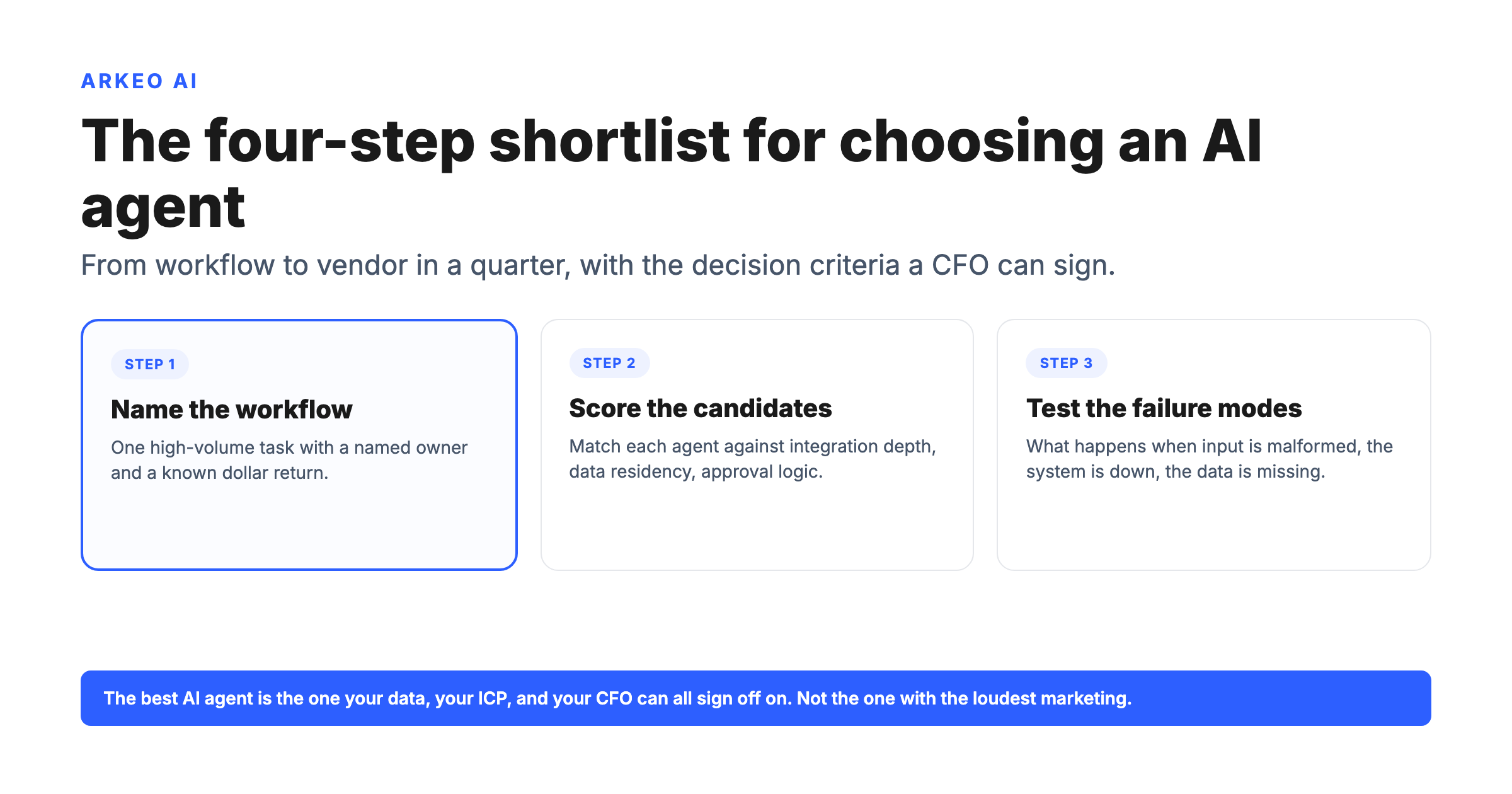
Stop trying to boil the ocean. Do not attempt a company-wide AI rollout. Instead, follow a structured deployment model.
First, audit your data. An AI agent is only as good as the data it accesses; if your data is a mess, the agent will just make mistakes faster. Second, pick one contained operational workflow—like onboarding documentation or specific data entry tasks. Finally, deploy in a secure sandbox.
A custom private AI agent deployment can be spun up in weeks, not months, if your data is ready.
Stop renting intelligence. Start building your AI workforce.
Frequently Asked Questions
What is an example of an AI agent in business?
An AI agent could monitor an inbox for vendor invoices, extract the line items, cross-reference them against purchase orders in an ERP, and automatically flag discrepancies for human review without any manual prompting.
How are AI agents different from RPA (Robotic Process Automation)?
RPA blindly follows rigid, rule-based scripts and breaks when the UI or format changes. AI agents can understand intent, adapt to unstructured data, and dynamically plan new steps if they encounter an obstacle.
Is my corporate data safe with AI agents?
It depends on the deployment. Cloud-based agents transmit your data externally, which poses risks. Private AI agents run on your own infrastructure, ensuring your data never leaves your control.
How long does it take to deploy a custom AI agent?
If your data is structured and accessible via APIs, a custom private AI agent can typically be deployed in a secure sandbox within a few weeks.
What is Agentic AI?
Agentic AI is just an enterprise term for AI systems that possess agency. Instead of waiting for a human prompt, they have the autonomy to plan and execute multi-step objectives on their own.